lect 6: animal viruses
Introduction
4 diff types of infection:
1. lysis - ~lytic, lyse cell to release virus
2. persistent - ~M13, don’t lyse the cell but alter its metabolism, virus secreted from host cell
3. transformation - cell goes from normal to tumor
neoplastic transformation - cell goes from normal to cancerous tumor cell
4. latency - NOT lysogeny but looks similar, virus infects but doesn’t do anything big, stays in hibernation state until conditions improve then goes thru lysis
some can integrate itno genome
latency developed as coincidental event that involves the virus infecting a cell diff from its usual target (meaning in diff environ)
enveloped vs nonenveloped viruses
DNA viruses: ds and ss in nonenveloped, mostly ds in enveloped
RNA: ds and ss in nonenveloped, only ss in enveloped
host affinity is dept on the ability of the virus to dock to the cell
if no specific P or molec present in potential host cell, virus can’t bind and won’t infect
Piconaviruses: Poliovirus
phylogenetics:
family: piconaviridae
genera includes: polio (infects primates), cardiovirus (ex. EMCV, infects mice), and aphthovirus (ex. foot and mouth, infects even toed hoof animals)
structure: icosahedral capsid (w/o envelope) surrounding + stranded ssRNA genome
capside made of 60 protomers, each have 3 surface P (VP1, 2, 3) and most have additional internal P (VP4)
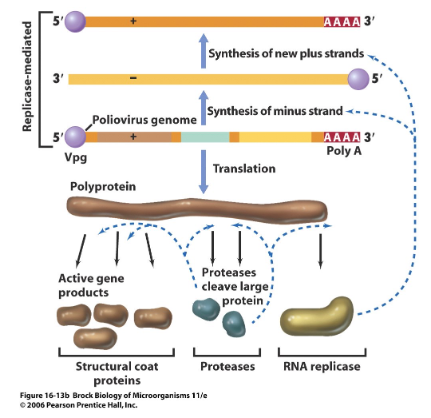
genome is +ssRNA so genome gets transl immediately to make P and has 1x ORF
UTR at both ends form secondary struct that’re essential for genome function, facilitate transl, and protect from transl
mRNA has no 5’ cap but has VPg (P) that plays same role (protect against degradation)
polyA tail is present at 3’ end and is heterogeneous in length
life cycle:
genome → make poly P → cleave → proteases, RNA replicases, structural P coat
genome → -strand → new +strands → P, packaged
both pathways happen at once - need RNA replicase to make -strand and more +strands
assemble new virions
then lyse infected host cell to release progeny virions
viruses usually multiply in GI tract but can multiply in other tissues
infections are usually asymptomatic
clinical manifestations include common cold, mild meningitis, encephalitis, myelitis, myocarditis and conjunctivitis
don’t need to memorize specifics
transmission primarily via oral/fecal route
incidence of infection inc with age of infected subject
meaning that kids infected usually aren’t affected but teenagers, young adults, and older are
inc polio when sanitation started becoming commonplace bc kids weren’t getting infected with polio so when ppl were exposed when they were older, they were affected more seriously
Rhabdoviruses
phylogenetics:
family: rhabdoviridae
genera includes: lyssavirus (rabies), vesiculovirus (VSV)
structure: enveloped, bullet/cone shapes
nucleocapsid is a helical ribonucleoP complex, made up of ssRNA, nucleoP, RNA dept RNA polymerase, and phosphoP
the lipid envelope contains envelope P that interact with the ribonucleoP complex via the matrix P
genome: -ssRNA, linear, at least 5 ORFS
genome is template for replicase to make +ssRNA → -ssRNA for progeny
noninfectious - isolated RNA don’t do anything bc need RNA dept RNA polymerase in virion to transc +strand
subgenomic RNA pieces used to make P (direct transl of viral P)
not made from long mRNA cut into pieces
humans aren’t normal host, usually seen in bats, wolves, dogs, other small carnivores
we’re an evolutionary dead end bc we don’t bite each other (spreads virus)
virus adapts host behavior to inc viral pop and spread (salivating, avoid water, bite everything)
Papilloma & Polyoma Viruses
used to be classified as same thing
small, circular, dsDNA genomes
nonenveloped
replicate and transc in host cell’s nucleus → uses all host cell machinery
makes them model orgs for ID euk DNA replication components
can integrate into host genome
have 1x oor → simple sys
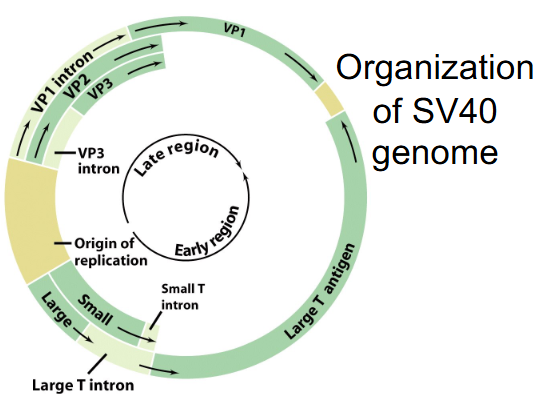
genome divided into early and late regions
can cause cancer in some hosts and specific conditions
Polyoma Viruses : SV40
phylogenetics:
family: polyomaviridae
genera includes: mouse / human polyoma, SV40
all can cause cancer / tumor growth
transc goes from early → late region
bidirectional transc, transc from opposite strands
DNA → RNA transc → alt splicing results in all necessary P
gene transcripts reg by alt splicing
early regions: P involved in DNA replication and neoplastic transformation
includes large and small T antigen - alt splicing results in conditional pdction of large vs small
large T antigen drives tumor / cancerous growth while little T can mod replication
late regions: virus particle structure P
usually infects primates (not transform them) but when infect rodents, it does transform rodent cells
mouse polyoma virus can cause tumors in nonmouse rodents
can neoplastically transform mouse cells but only causes tumors in neonatal and immunocompromised ones
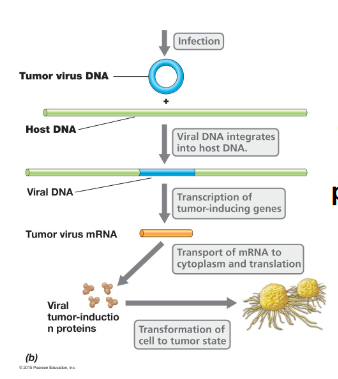
infection process:
1. infect permissive host → nonpermissive infection can happen but less likely
2. viral DNA integrated into host genome
nonspecific location of integration for both host and viral genome
usually result in fucked up viral genome or host genome, which can render either one nonfunctional
3. pdce large T antigen
4. transc tumor virus mRNA
5. transl
6. cell transform into tumor
Papilloma Virus
phylogenetics:
family: papillomaviridae
genera includes: human / bovine papilloma
cause benign or malignant tumors as well as warts
some can cause cancer
early and late genes transc from same DNA strands and both are reg by alt splicing
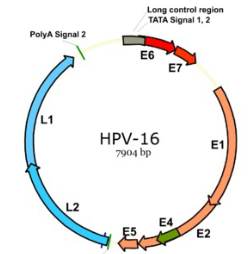
early genes: involved in DNA replication, viral transc, host cell reg, and neoplastic transformation (E1 - 7)
few are oncogenetic and inhibit cell’s tumor supressor genes → promote uncontrolled growth
late genes: virus particle structural P (E1 - 2)
all restricted to infecting keratinocytes → skin and mucosal epithelia
transmitted via direct contact
highly species specific
Herpesviruses
phylogenetics:
family: herpesviridae
genera includes: simplex viruses (human herpesvirus 1/2), varicellovirus (chicken pox, human herpesvirus 3), epstein-barr (human herpesvirus 4), cytomegalovins (human herpesvirus 5)
genome: large, circular, dsDNA
linear in virion, circularize in host cell
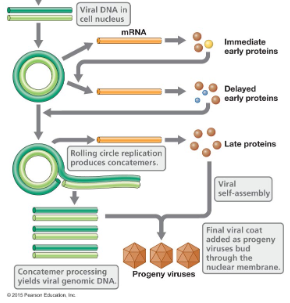
divided into immediate early, delayed early, and late regions
replic and transc in host cell nucleus
capable of latency
can infect keratinocytes, epithelial, and nerve cells
when infect nerve cells, goes thru latency and stays dormany until exp stress, then cleaves itself from the genome
when in latency, max replication capacity isn’t reached or required - only few copies made and v few viral genes expr
virus secreted to epithelial cells
can cause cancers in some hosts and under certain conditions
undergoes rolling circle replication
packaging ~lambda but use diff seq
3 big genera but 13 genera overall that fit large num of viruses
v host speciifc
most are confined to mucosal epithelial or lymphocytes but large range possible
can be separated into virulent and latent types
requires direct contact for transmission
Pox Viruses
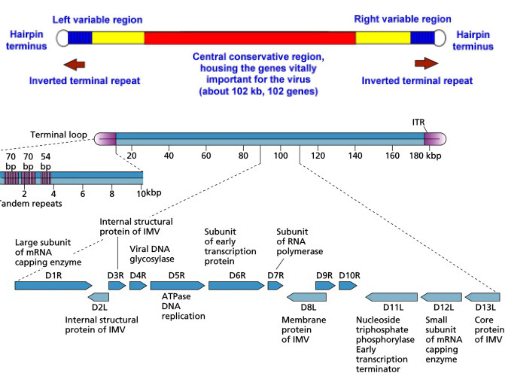
v complex mem, large
have genome, viral E, structural proteins
almost like intmd to cell
have lot of ORFs and read both strands
variable regions conserved btwn species
includes E that mod nucleotides, their metabolism, ATPase, and so on
dsDNA but weird
like ssDNA circle that collapsed on itself
dsDNA with sealed ends ~ chr
process:
1. attach to GAGs on outside of host cell
2. outermem fuses with cell’s plasma mem
3. insert inner mem (+ all contents) into host cell
4. early transc + DNA replication by viral polymerase - all happen in cytoplasm
5. inner mem gone by now and genome is free in cytoplasm, intmd genes expr
6. late genes expr → structural P made
7. progeny assembly
8. cell lysis and progeny release