Management Consulting
Lecture 1
Machine learning is Y = f(X)
How is analytics applied in business and industry?
- Control existing processes / services more efficiently
- Improve product and service designs
- Augment products with data-driven services
- Move towards data-driven business models
Data sources → Analytics → Business value
Innovation on three horizons
Horizon 1
Incremental innovation
- Improve quality, reliability, efficiency of current services
- Focus on exploitation (deliver value)
Horizon 2
Rapid scaling
- Growing new concepts into mature businesses
- Focus on growth
Horizon 3
Disruptive innovation
- Create entirely new possibilities and competencies
- Focus on exploration (learning)
Predictive models: correlational vs. causal
Causal
- Y = f(X) is a cause-and-effect relation
- If we change X, then Y will change as a consequence (“intervention”)
Correlational
- X and Y are correlated, but they are not cause-and-effect
- Correlational models cannot predict the effects of interventions
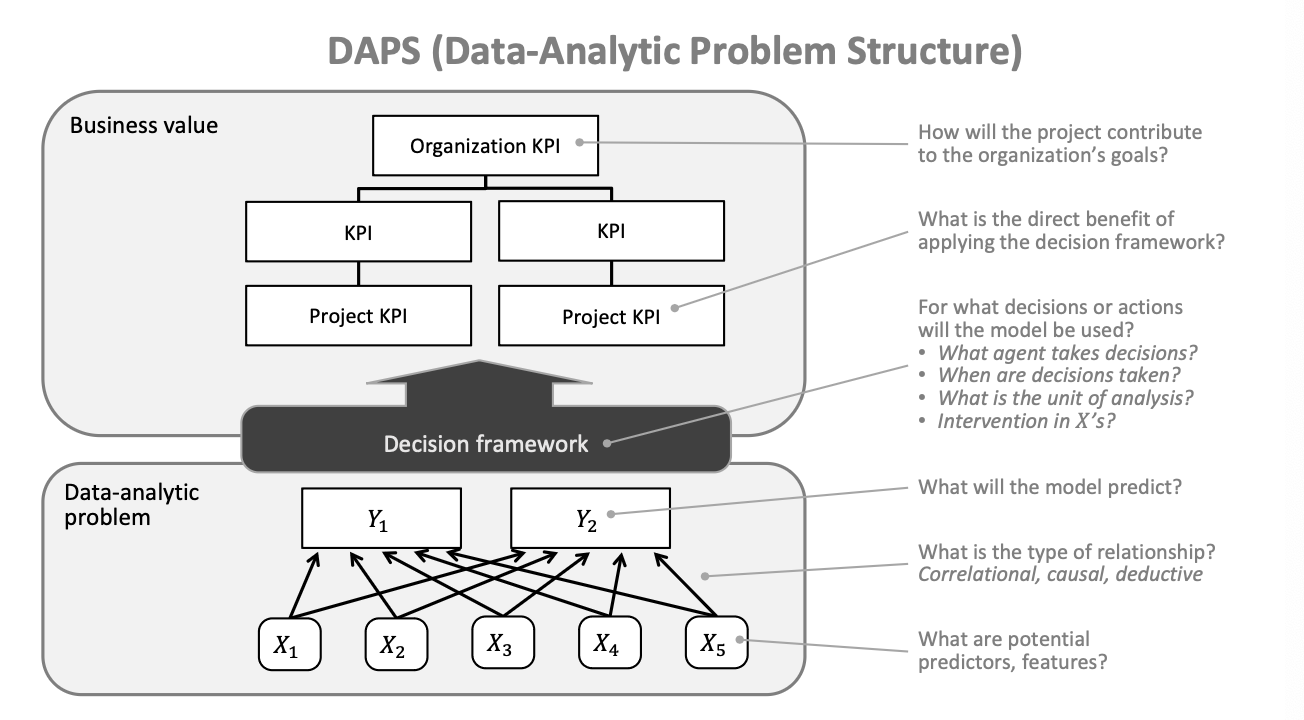
Data-Analytics Problem Structure (DAPS)
Models for analytical problem solving
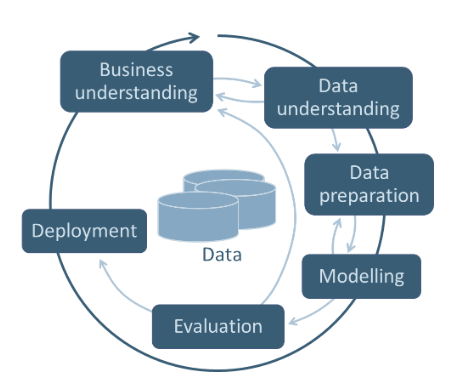
CRISP-DM
- CRoss-Industry Standard Process for Data Mining
- De-facto standard in machine learning
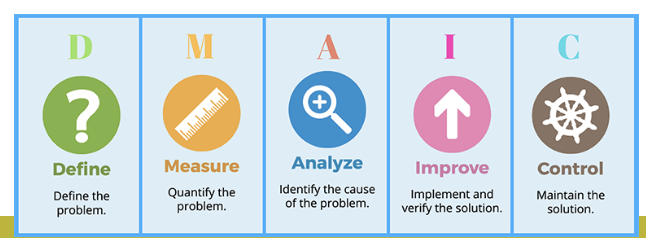
DMAIC (“Six Sigma”)
- Define / Measure / Analyze / Improve / Control
- Standard in operations and process improvement
Lecture 2
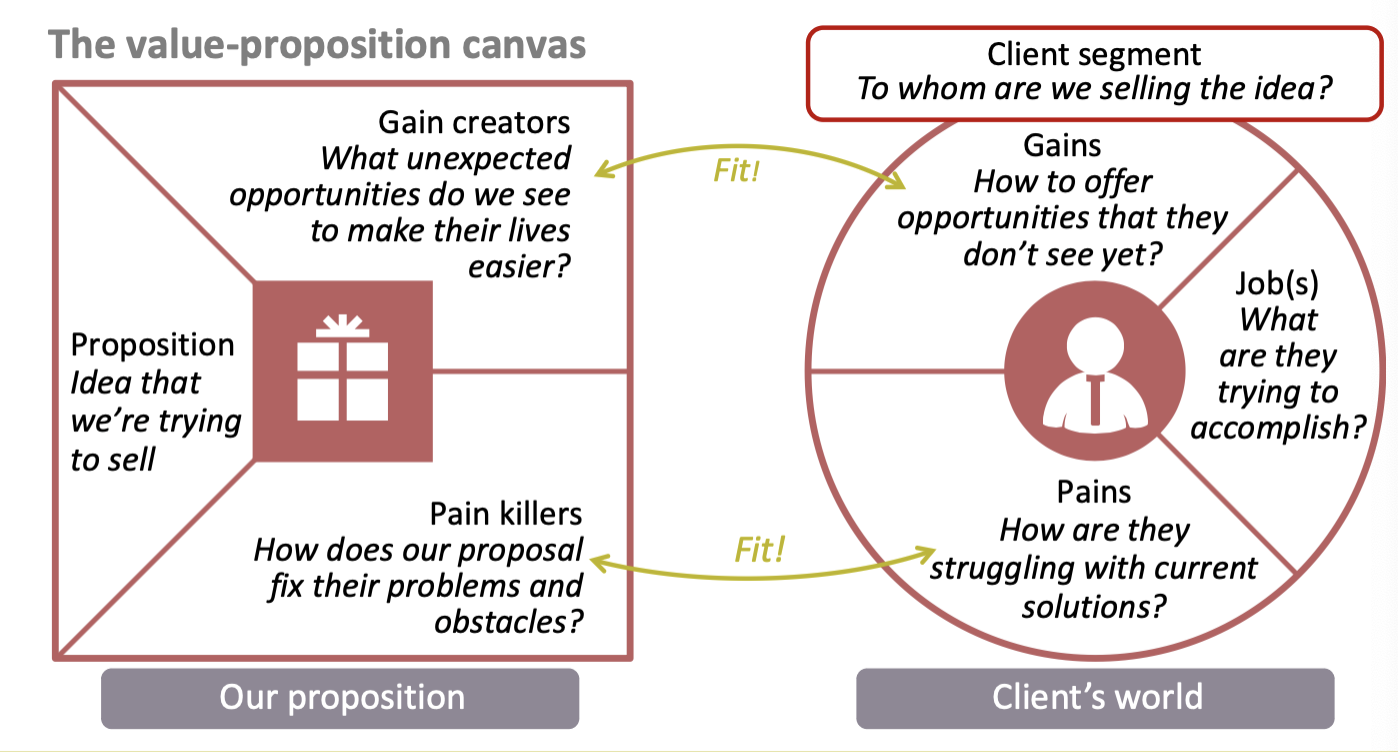
Value proposition: How to sell a good idea
Not: explain how powerful, good, interesting, ..., the idea is
But:
- Who’s the audience? (your “clients”)
- What sort of things do they want to achieve?
- What are they struggling with?
→ Show how your idea helps them achieve what they want, or helps them overcome the obstacles they’re struggling with.
A good value proposition answers these questions:
- Client (segment): who are your “clients”?
To whom are you trying to sell your idea?
- Jobs: what are these clients trying to accomplish?
- Pains: how are clients struggling with current
ways of working and current solutions?
- Gains: do we see opportunities that they don’t see
themselves yet?
Business-model development: How to develop a good idea into a business plan
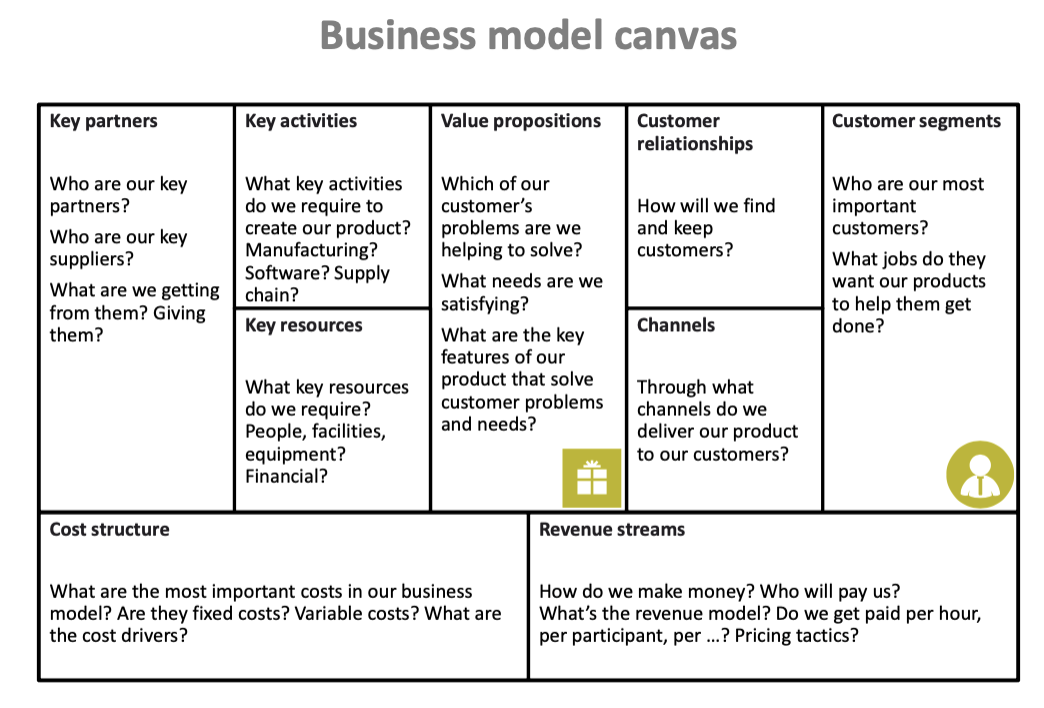
Issues in developing a new business model:
do people actually want it?(and pay realistic price)
uncertainty (new ideas are based on many assumptions)
“Validated learning”: develop your ideas in steps
Four milestones
Validated problem (we verified that there is a customer with a burning problem that they want to fix)
Validation: On a scale of 0 to 10, how big of a pain is this for you?”
Validated solution/problem fit (we verified a solution to the problem)
Validation: MVP (minimum viable product)
Validated sales channel and customer acquisition (We have verified a channel to reach customers for sale and delivery of the proposed solution)
Validation: Strong sales figures in the chosen channel
Validated that business can be scaled profitably and sustainably (We can scale activities and partners such that we deliver the solution at the right volume against acceptable cost)
Validation: metrics comparing conversion rates and cost efficiency against competition
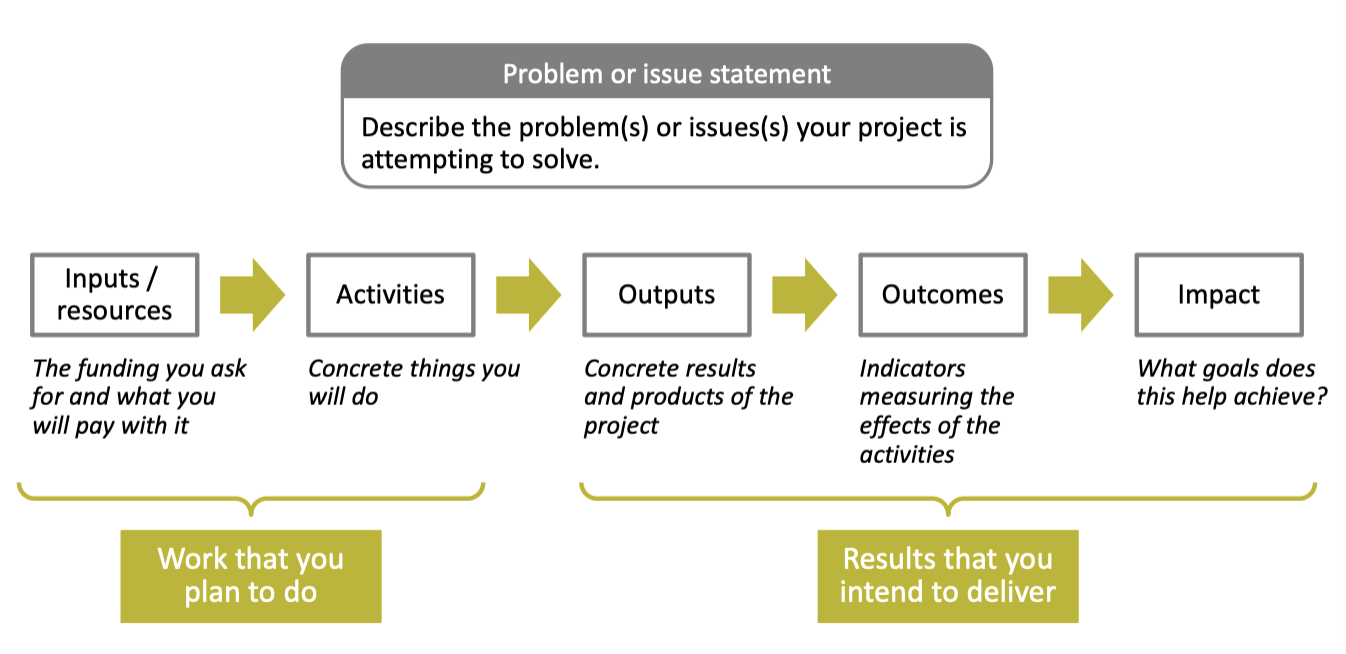
Logic models: How to explain the rationale of an initiative?
(and why they should give you funding)
Lecture 3
Personal interests
Position and influence
What you do may come across with their influence
Status, pride and recognition
what you do can come across as loss of face, make them look foolish, contribution is ignored, admit that they’re wrong
Realizing one’s ambition
what you do can hamper their ambition, may have conflicting plans
Security
they need to feel certain control over situation, sense of order
Fellowship
they want to be appreciated, liked, be a part of a group
Levels of communication
Subject matter
talking about the project, deliverables etc
Procedure
talking about the agenda and logistics of a meeting
Interaction
communicate about your mutual relationship
Emotion
communicate what you feel
Issues at the interaction level
Animosity
is the other hostile or friendly
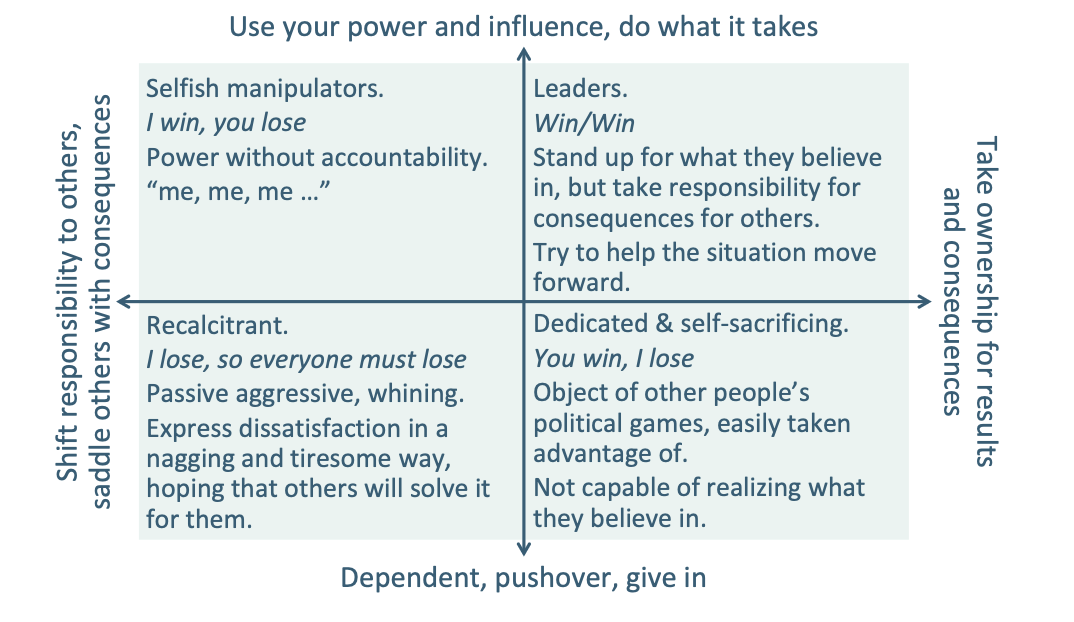
Power dynamics
does the other accept you as an equal? do you accept domination or fight back?
Respect
does the other take you seriously and with respect
Roles
does the other accept your role
Trust
do you trust them, do they trust you
Lecture 4
Stakeholder - any person affected by your initiative, and who can in turn affect your initiative’s success.
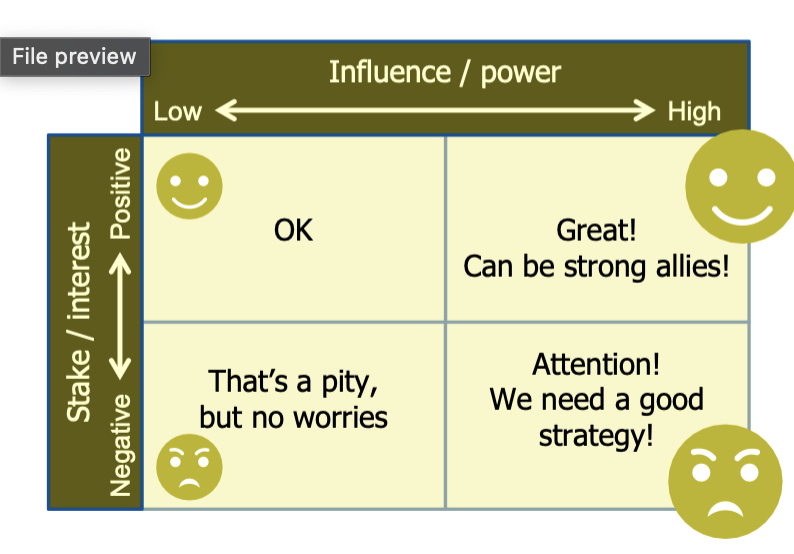
Why are people uncooperative?
Cliché: resistance to change
More realistically:
No ability (don’t know how to implement)
No acceptation (don’t recognize their role and reason)
No understanding (don’t understand the necessity)
don’t care
Building commitment
get people to care about the issue
explain what you propose and why(understanding)
they need to see how they fit (acceptance)
overcoming practical hurdles (ability)