L9- Tempo and Mode
does evolution of life on land have a big pattern (tempo and mode)?
does it differ between plant and animals?
Patterns of plant evolution:
Important features of land plants:
are very simple (40 cell types), live simple life
are sedentary (can’t move)→ adapted to all changes, only move vast distances when reproducing (pollen/spores/seeds), move on a generational scale
can react and later regenerate in times of stress
reproductive propagules can persist for very long (lay dormant)
plants readily hybridise (hybrids are generally sterile but can make them not)
lots of polyploidy
autopolyploidy→ increase in number of copies of chromosomes
allopolyploidy→ hybrid has both sets of chromosomes from parents
hybridisation + polyploidy→ get a new species
can reproduce asexually in lots of ways
very small populations can persist
mosaic evolution→ can adapt a single organ whilst keeping the same genetic makeup
→ these features make plants very adaptable
Mass extinctions:
plants aren’t affected by mass extinctions in the long term
mass extinctions shape animal evolution, what survives is luck, some groups survive and proliferate→ Gould’s contingency
the big 5:
End Ordovician→ glaciation→ cooling, wipes out animals in the oceans/tropics
End Devonian→ origin of seed plants cause oceanic/continental aquatic anoxia→ wipes out animals, only deep ocean animals survive
End Permian (P/T)→ outpouring of siberian traps, acid rain, super-heating→ wipes out forests and land plants, invertebrates can’t survive in water
End Triassic (T/J)→ heating and low oxygen
End Cretaceous (K/T)→ bolide impact, nuclear winter, sunlight is eliminated due to dust
plants aren’t affected by mass extinctions:
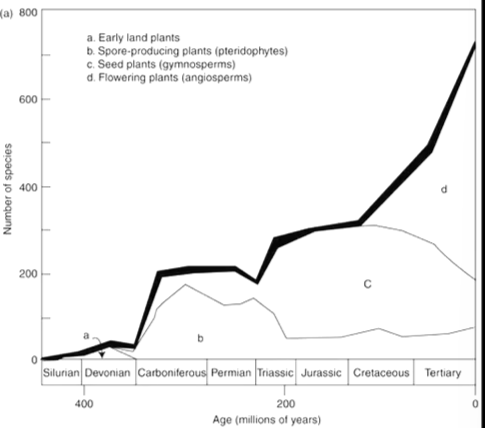
plant evolution is affected by reproductive novelty, each innovation gets an adaptive radiation, allow a new group to dominate the planet
gametophyte→ sporophyte→ heterospory→ seed→ flowers
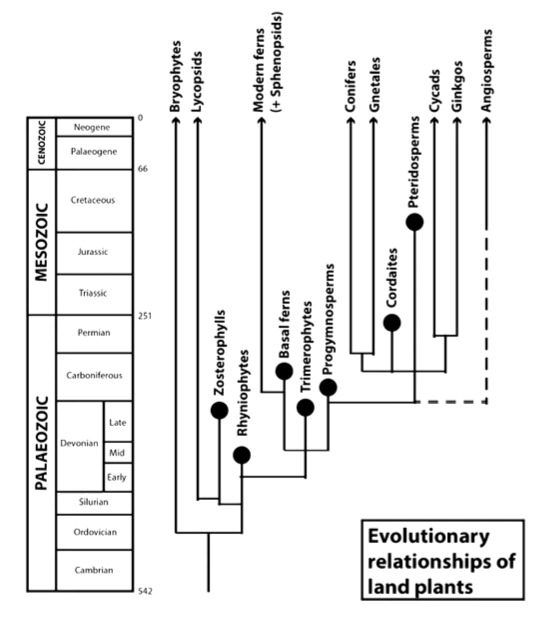
taxonomic persistence→ few higher taxonomic groups go extinct- will just get replaced and continue living in the background, plant groups persist for long times (living fossils) e.g. bryophytes, lycopsids (not tree forms), still get ferns, equisetums, cycads, ginkgos, gymnosperms
What drives plant evolution?
red queen→ evolution is driven by competition, survival of the fittest
court jester→ organisms have to change as the environment has changed
red queen dominates in plants→ increasingly sophisticated reproductive strategies
intergenerationally migrate→ get around climate change and court jester
how does co-evolution affect this? is there evidence of plant-fungal-animal interactions?
evidence from islands→ St Helena- full of endemic plants, resemble mainland plants but are a new phylogenetic group→ plants are plastic, adapt to environmental change quickly
evidence from last ice age→ no evolution of vegetation, just changes habitat
Patterns of animal evolution:
Invertebrates:
invaded lands on multiple occasions→ marine groups invading land multiple times, some go back
usually marine→ freshwater→ terrestrial
Fish:
can switch between freshwater and marine water
different groups diversified at different times
major groups taken out at End Devonian
Tetrapods:
see high turnover of speciation, very early on
can see mass extinctions affecting them
What is driving animal evolution?
multiple invasions on land
taxonomic impersistence→ severely affected by mass extinctions, court jester drives pattern of evolution, goulds contingency
Coevolution:
coevolution is an important aspect of terrestrial ecosystem
animal evolution is linked to plant evolution→ plants are the base of terrestrial food chain
plant evolution is linked to animal evolution now→ flowering plants pollinated by animals
plant-fungal interactions
plant-animal interactions (herbivory, pollination, seed dispersal)