Cluster 2
Typologies and Paradigms of Social Stratification
Foundational Dimensions of Stratification Models:
Stratification theories are fundamentally categorized by resolving two primary questions:
Temporal Permanence: Is social inequality a permanent feature of human society? Responses diverge into Critical (answering "No"; inequality is historically contingent and remediable) versus Uncritical (answering "Yes"; inequality is an inevitable, necessary, or permanent fixture of social organization).
Societal Organization: How is society structured and integrated? Responses diverge into Order perspectives (societies are cohesive systems integrated through consensus, common values, and functional interdependence) versus Conflict perspectives (societies are divided arenas characterized by struggle, power imbalances, and domination between competing groups).
The Four-Fold Typology of Paradigms:
Critical-Order Paradigm: Combines an order-based structural model of society with the view that systemic inequality is not permanent and can be eliminated.
Uncritical-Order Paradigm: Contends that society operates as an integrated order and that social inequality is permanent, functional, or biologically inevitable. Major classical theorists within this tradition include Herbert Spencer and Émile Durkheim.
Critical-Conflict Paradigm: Views society as inherently torn by conflicting group interests and asserts that social inequality is neither natural nor permanent, but rather a structure that must be transformed through collective action. The premier theorist of this paradigm is Karl Marx.
Uncritical-Conflict Paradigm: Acknowledges that conflict, power differentials, and domination are pervasive throughout social life, yet maintains that inequality is an enduring, permanent feature of complex human societies. The foremost classical theorist of this paradigm is Max Weber.
Classical Sociological Frameworks: Marx, Weber, Spencer, and Durkheim
Karl Marx and the Critical-Conflict Paradigm:
Historical Materialism: Human history and societal structures must be analyzed by examining the material economics of producing the physical necessities of life.
Substructure and Superstructure:
Substructure (Material/Economic Base): The economic engine comprising the forces of production (raw materials, physical tools, and technologies) and the relations of production.
Superstructure: The secondary institutions—including the state, legal apparatuses, religion, education, art, philosophy, and dominant cultural values—that are shaped by and serve to legitimize the underlying economic substructure.
Means of Production vs. Relations of Production:
Means of Production: The specific technologies and resources utilized to generate commodities (e.g., hunting and gathering implements, agrarian tools, craft shops, modern industrial machines).
Relations of Production: The social relationships that individuals enter into relative to the means of production, establishing objective positions and social classes (e.g., owner vs. non-owner; capitalist vs. wage laborer).
An individual's position within these relations influences family dynamics, child-rearing strategies, leisure activities, self-esteem, health, and life opportunities.
Varieties of Stratification Systems Across Human History:
Primitive Communal System: Characterized by communal ownership, absence of surplus, and minimal structured inequality.
Slave System: Direct physical ownership of one human being by another, legally codifying total subjugation.
Caste System: Rigid, closed stratification governed by birth, religious sanction, and inherited ritual purity with zero mobility.
Estate / Feudal System: Land-based hierarchy defined by legally fixed feudal obligations, dividing nobility, clergy, and serfs.
Class System: Capital-based economic hierarchy defined by market relations, ownership of productive property, and wage labor.
Criteria for a Full-Fledged Class (Hurst 2004):
A distinct relationship to and role within the prevailing mode of production.
A clear class consciousness: an awareness of existing as a unified class holding objective material interests hostile to opposing classes.
The political organization of the class into a distinct political party tasked with waging struggle for its collective interests.
A distinct set of cultural values, social practices, and a separate style of life.
Class Differences in Parental Values and Occupational Contexts (Gilbert 2003):
Middle/Upper-Class Parental Patterns:
Occupational Experience: High independence, varied daily tasks, frequent interaction with data or people, minimal direct supervision.
Parents' Own Values: Tolerance for nonconformity, openness to innovation, belief that people are fundamentally good, prioritization of self-direction.
Values Instilled in Children: Self-control, consideration for others, curiosity, personal happiness, honesty.
Working-Class Parental Patterns:
Occupational Experience: Close supervision, repetitive and routine manual tasks, direct interaction with physical things and machinery.
Parents' Own Values: Rigid punishment of deviant behavior, attachment to traditional ways, skepticism of human trustworthiness, belief in strong top-down leadership.
Values Instilled in Children: Obedience, strict manners, adherence to being a "good student," external neatness, cleanliness.
Maintenance of Class Structure:
The State: Functions as an instrument of ruling-class power, organizing the legal and coercive machinery necessary to protect property rights.
Ideology: Defined as a structured set of opinions or beliefs that directs human behavior and justifies the domination of the ruling class. Marx observed that in every epoch, the ruling ideas are the ideas of the ruling class. The capitalist market mechanism itself constructs the deceptive appearance of equal and voluntary exchange.
Evolutionary Stages of Capitalism:
Cooperation: Early concentration of wage workers under one roof performing manual labor without significant division of tasks.
Manufacture: Detailed division of labor within the workshop, wherein individual craftsmen are decomposed into specialized, repetitive task operators.
Modern (Machine) Industry: Mechanized factories where the machine dictates the pace, completely subordinating the human worker to capital.
Marxian Theory of Class Struggle and Crisis:
The transition from feudalism establishes capitalist production driven by the compulsion for capital accumulation and profit maximization.
The demand for labor initially intensifies competition among capitalists, pushing wages up and cutting into corporate profit margins.
Capitalists respond by substituting fixed capital (machinery) for living labor, which induces structural unemployment, suppresses consumer purchasing power, and precipitates crises of overproduction.
Smaller enterprises face bankruptcy, driving capital concentration into a decreasing number of corporate monopolies.
The structural consequence is acute class polarization, systematic job deskilling, pervasive worker alienation, and massive urban worker concentration.
The central structural contradiction erupts between advanced, socialized material forces of production and archaic, privatized relations of production, driving workers from objective commonality into class consciousness, political organization, and revolutionary transformation.
Factors Explaining the Non-Realization of Marx's Vision:
Rise of robust labor unions that successfully negotiated better wages and workplace safety.
Emergence of an intricate, multi-layered middle class rather than binary polarization.
Dispersion and complexity of ownership through corporate shareholding and institutional investment funds.
State welfare intervention (unemployment insurance, pensions, worker protections) buffering crises.
Salience of cross-cutting social identities (race, ethnicity, nationality, gender) fragmenting class unity.
Max Weber and the Uncritical-Conflict Paradigm:
The Tripartite Nature of Stratification:
Economic Order (Class): Structured around the distribution of economic goods and services. Classes are collectivities sharing a common market situation that dictates their life chances. Weber identifies three distinct market arenas:
Labor Market: Structural divide between employers and employees.
Money Market: Relational tension between creditors and debtors.
Commodity Market: Transactions between sellers and buyers, or landlords and tenants.
Property Classes: Entities that monopolize capital, financial assets, and material goods, leveraging them to secure privileges.
Non-Owners: Divided into the Middle Class (leveraging marketable credentials, technical skills, and administrative qualifications) and the Working Class (possessing varied skill gradations, from unskilled laborers to specialized tradespersons).
Social Order (Status): Structured around the distribution of social honor and prestige. Unlike economic class, status is an evaluative social ranking grounded in consumption practices, specific styles of life, and exclusive subcultures.
Status groups construct sharp social boundaries by extending hospitality exclusively to social peers, enforcing endogamy (restricting marriage partners), and organizing elite associations.
Political Order (Parties): Structured around the distribution of social and organizational power. A party is an association organized expressly for securing power within an enterprise, institution, or state apparatus.
Parties include formal electoral political organizations, labor unions, corporate lobbying groups, trade associations, and specialized interest factions (e.g., environmentalist coalitions).
Bureaucracy and the "Iron Cage":
Bureaucracy constitutes a rational, highly efficient mode of social organization defined by formal, written regulations, jurisdictional competencies, impersonality, and hierarchical positions.
Once established, modern bureaucracy creates an almost unbreakable institutional apparatus ("the iron cage"). Whichever group secures dominance over bureaucratic administrative levers radically multiplies its capacity for social control.
Typology of Legitimate Authority:
Rational-Legal Authority: Rests on a widespread normative belief in the legality of enacted rules and the formal right of designated administrative officials to issue commands.
Charismatic Authority: Rests on exceptional personal devotion to the perceived heroism, exemplary character, or sanctity of an individual leader.
Traditional Authority: Rests on an established belief in the sanctity of immemorial traditions and the legitimacy of those exercising authority under customary rules.
Herbert Spencer and the Uncritical-Order Paradigm:
Social Evolution and Society Types:
Differentiates militant societies (characterized by coercive central regulation, state control, and military hierarchy) from industrial societies (characterized by voluntary contracts, decentralized exchange, and functional specialization).
As societies industrialize, hereditary ranks based on kinship, feudal land tenure, and locality dissolve, giving way to reward distributions based on innate aptitudes for functional roles.
Biological Analogy and Social Darwinism:
Society functions analogously to a biological organism subjected to natural selection; superior individuals survive and advance while the unfit, indolent, or incompetent die away ("survival of the fittest").
State welfare provisions, poor relief, and legislative interference are deemed harmful because they artificially preserve and multiply "unhealthy, vacillating, and reckless" individuals at the expense of industrious citizens.
Historical Application: The American Eugenics Movement:
Spencer's philosophical paradigm provided ideological justification for 20th-century American eugenics policies documented by Edwin Black (War Against the Weak).
State bureaucracies targeted impoverished rural populations, racial minorities, mentally disabled individuals, epileptics, and institutionalized persons for compulsory sterilization.
The legal turning point occurred in the 1925–1927 Supreme Court case Buck v. Bell, which upheld the forced sterilization of Carrie Buck in Virginia; this opened the floodgates to over legal sterilizations across American states in the leading up to .
Adolf Hitler and Nazi jurists explicitly studied and modeled their racial hygiene sterilization legislation on existing American state statutes.
Émile Durkheim and the Functionalist Order Paradigm:
Mechanical vs. Organic Solidarity:
Mechanical Solidarity: Characteristic of traditional, homogenous societies featuring an elementary division of labor, strong behavioral conformity, and an overwhelming collective conscience acting as the primary source of social cohesion.
Organic Solidarity: Characteristic of advanced industrial societies featuring high specialization, complex divisions of labor, individual differentiation, and institutional interdependence.
Abnormal Forms of the Division of Labor:
Anomic Division of Labor: Arises when economic specialization outpaces moral and regulatory rules, leaving workers without clear norms, social purpose, or integration (anomie).
Forced Division of Labor: Arises when structural rules force individuals into occupational slots that do not match their natural abilities, generating acute conflict.
Internal vs. External Inequalities:
External Inequalities: Conditions of inequality imposed upon individuals by the arbitrary social circumstances of birth (ascribed statuses: inherited wealth, caste, race, gender).
Internal Inequalities: Inequalities that stem directly from native talents, psychological aptitudes, and personal merit (achieved characteristics).
A modern, healthy organic society requires a moral meritocracy in which external inequalities are neutralized so that social position mirrors internal inequality.
Critiques of the Functionalist Order Tradition:
Places excessive faith in evolutionary adaptation as a natural cure for acute structural pathologies.
Disregards the reality that the state and moral codes frequently operate as coercive instruments of ruling-class domination.
Leaves virtually no theoretical justification for direct human political intervention aimed at structurally redistributing wealth or abolishing poverty.
Functionalist Perspectives and the Davis-Moore Hypothesis
The Davis-Moore Theory of Stratification (1945):
Formulated by Kingsley Davis and Wilbert Moore as a structural-functionalist account demonstrating the universal necessity of social stratification in human societies.
The central argument states that social stratification represents an unconsciously evolved device by which societies ensure that the most functionally vital positions are conscientiously filled by the most qualified persons.
Positions—not the individuals occupying them—are differentially ranked and rewarded.
The Seven Core Propositions:
Certain positions within any social system are functionally more vital than others and necessitate specialized technical skills.
Only a finite number of individuals within any population possess the innate talents capable of being converted into these specialized proficiencies.
Transforming inherent talent into functional skills requires protracted educational periods, rigorous training, and substantial personal sacrifice.
To induce talented persons to undergo these demanding sacrifices, the positions must carry differential advantages and privileged rewards.
These rewards encompass three categories of desired goods: economic sustenance and income, leisure and diversion, and symbols of prestige and ego enhancement.
This unequal access to institutionalized rewards constitutes social stratification, which exists in every known human society.
Therefore, institutionalized social inequality is positive, functional, universal, and inevitable for societal maintenance and survival.
Criteria for Maximum Occupational Rewards:
Pervasive functional importance across the social order.
Degree of uniqueness: no other positions can easily perform the tasks.
Severe scarcity of personnel qualified to undertake the required responsibilities.
High degree of educational investment upon which downstream social functions depend.
Theoretical Critiques of the Davis-Moore Hypothesis (Melvin Tumin et al.):
Differential Functional Importance is Subjective: There is no objective standard to determine why an intellectual property attorney ( salary) or professional athlete is functionally superior to a kindergarten teacher ( salary) or sanitation worker.
Presumption of Equal Opportunity in Actual Societies: The model treats society as an open, frictionless meritocracy, ignoring how inherited wealth, class boundaries, and elite power monopolize access to elite professional schools while constraining opportunities for lower-income youth.
Neglect of Stratification's Severe Dysfunctions:
Suppresses the latent talent and creative capacities of marginalized groups (racial minorities, women, working poor).
Damages the self-esteem and social dignity of workers placed at the bottom.
Furnishes dominant elites with a convenient meritocratic rationale to self-justify their excessive privilege.
Sparks hostility, resentment, and societal disintegration when lower tiers reject the legitimacy of the ranking process.
Social Construction and Social Reproduction Theories
Social Construction of Social Categories:
Focuses on everyday linguistic practices, institutional classifications, and social interactions to demonstrate that social categories (race, gender, sexual morality, disability) are historically invented artifacts rather than biologically fixed absolutes.
Powerful social groups construct classifications to control resources and rationalize domination.
Gendered Bodily Standards and Double Standards:
Athleticism among women is socially sanctioned only when paired with conventional thin femininity; muscular, broad physical frames are labeled "masculine" and transgressive, creating gym-anxiety among female athletes regarding muscular hypertrophy.
Sexual promiscuity labels ("slut") operate as disciplinary tools dependent on social hierarchy. Popular, high-status women evade condemnation for the exact same behaviors that permanently stigmatize socially isolated or lower-status women.
The SlutWalk Movement (Toronto, 2011):
In January , Constable Michael Sanguinetti of the Toronto Police Service told York University students that "women should avoid dressing like sluts in order not to be victimized."
The comment sparked the international SlutWalk movement to challenge victim-blaming and dismantle the patriarchal deployment of the label "slut" as an ideological weapon used to police women's behavior and justify sexual assault.
Leora Tanenbaum (Slut! Growing Up Female with a Bad Reputation) documented that the term is deployed as a universal mechanism of social control irrespective of a woman's actual sexual history.
Protective Labor Legislation (1890s):
State laws restricted working hours and barred women and children from industrial occupations under paternalistic justifications:
Assertions that women's physical frailty rendered work dangerous.
Claims that factory fatigue caused irreversible degeneration of female health.
Ideological warnings that deteriorating maternal health would doom future generations.
The structural result was institutionalizing the segregation of women into subordinate, low-wage jobs while protecting male dominance in primary industrial sectors.
Social Reproduction in Education and Culture:
Reproduction theories examine how societal institutions, cultural conventions, and schooling apparatuses systematically recreate the prevailing class hierarchy across generations.
The Educational System as a Reproducing Apparatus:
Curriculum Tracking: Channels working-class children into vocational tracks emphasizing obedience, and affluent students into advanced tracks fostering autonomy and analytical inquiry.
Attitude Socialization: Penalizes working-class behaviors while rewarding upper-middle-class cultural styles.
Meritocratic Myth: Convinces unsuccessful students that their failure is individual rather than structural, dampening political rebellion.
Deliberate vs. Incidental Socialization:
Deliberate Socialization: Intentional, didactic instruction enforcing gender and class roles (e.g., historical children's books explicitly stating: "Boys are doctors; Girls are nurses," "Boys are presidents; Girls are First Ladies").
Incidental (Indirect) Socialization: Implicit cultural cues reinforcing patriarchal hierarchy (e.g., "Boys invent things; Girls use what boys invent," "Boys fix things; Girls need things fixed").
Commodification of Beauty and Media Standards:
Mainstream advertising constructs unattainable physical ideals, generating consumer insecurities that drive lucrative markets (e.g., over breast augmentations performed in the United States in ).
Corporate branding strategies co-opt progressive critique; for instance, the Dove Campaign for Real Beauty claimed to celebrate "natural, non-superficial beauty" through workshops while simultaneously marketing skincare commodities.
Psychometric Ideology and Genetic Determinism:
IQ Measurement: Formally defined as an assessment of comparative reasoning capacity, where a score of represents average cohort performance (- classified as normal).
The Bell Curve Controversy (Herrnstein and Murray, 1994):
Argued that intelligence is largely inherited, that IQ tests accurately capture innate cognitive capacity, and that low cognitive ability is the primary driver of poverty, crime, unemployment, and educational failure.
Highlighted an observed average IQ gap between Black and white test-takers to advance biologically determinist claims regarding racial inequality, providing ideological ammunition against affirmative action, welfare programs, and structural intervention.
Structural Economic Models: The Dual-Labor Market Thesis
The Dual-Labor Market Architecture:
Rejects functionalist neoclassical human-capital models by demonstrating that the capitalist economy is segmented into two structurally distinct employment spheres:
Primary Labor Market (Core / Monopoly Sector):
Dominated by massive corporations (e.g., Boeing) characterized by large capital investments, global product reach, sophisticated technology, and high revenue per employee.
Offers stable employment, high wages, comprehensive benefits, strong workplace safety, clear promotion ladders via internal labor markets, and institutional unionization.
Secondary Labor Market (Peripheral / Competitive Sector):
Dominated by small, competitive, labor-intensive enterprises (e.g., local dining establishments, retail outlets, neighborhood groceries, service stations).
Marked by low wages, absent benefits, hazardous or arbitrary working environments, menial tasks, minimal intellectual challenge, high turnover, and virtually nonexistent vertical mobility.
Internal Labor Markets and Stratification:
Primary sector firms insulate privileged positions from external competitive pressure by recruiting almost exclusively from within established internal ranks.
Upward career trajectories, salary increments, and tenure protections are institutionalized, leaving secondary workers permanently locked outside.
Race, Gender, and Market Segmentation:
Secondary labor markets are disproportionately populated by racial minorities, immigrants, and women, whereas white males historically dominate primary core employment.
The split-labor market mechanism functions to divide the working class, setting domestic workers against minoritized workers and preventing unified collective action against capital.
Empirical Critiques and Vulnerabilities of the Model:
Intra-Market Gender Segmentation: Fails to fully explain why deep gender segregation and pay disparities persist within the primary monopoly sector itself.
Wal-Mart Gender Discrimination Lawsuit (2004): U.S. District Judge Martin Jenkins certified a historic class action covering current and former female employees. Undisputed evidence revealed that women were paid lower wages than men in every geographic zone and occupational grade, that wage disparities expanded across employee tenure, that promotions took longer for women, and that women's representation declined at higher levels of organizational leadership.
Vulnerability to Global Downsizing: Disregards the fact that primary monopoly firms are not immune to macroeconomic shocks; corporations routinely react to global market competition through aggressive restructuring, automation, and mass layoffs (e.g., Silicon Valley shedding over technical positions in -, including sweeping workforce cuts by Intel).
Macro-Global Stratification: World-Systems Theory
Theoretical Framework (Immanuel Wallerstein):
Domestic stratification in any country cannot be comprehended in isolation from the overarching capitalist world-economy.
Nations participate in an integrated, hierarchical global division of labor characterized by competitive exploitation and unequal exchange.
The Three-Tier World Hierarchy:
Core Nations (Upper Class of the World System):
Economically diversified, capital-intensive, technologically sophisticated nations focusing on information, advanced services, and high-tech manufacturing.
Possess immense military power, financial leverage, and robust state institutions.
Exploit peripheral regions for raw inputs and cheap labor while remaining insulated from outside control.
Exemplars: United States, Japan, Germany, Netherlands, England, France, Canada, Italy, Austria, Sweden.
Semi-Periphery Nations (Middle Class of the World System):
Industrializing nations exhibiting intermediate levels of organizational capacity, state power, and national wealth.
Experience structural mobility (moving upward toward core status or declining toward periphery).
Exploit peripheral economies while concurrently experiencing economic exploitation by core powers.
Exemplars: Mexico, Brazil, Argentina, South Korea, Taiwan, India, Pakistan, Chile, Thailand, Ireland, Portugal, Saudi Arabia.
Periphery Nations (Lower Class of the World System):
Least economically diversified economies, largely confined to raw resource extraction, agricultural monoculture, or low-wage export manufacturing.
Characterized by weak state institutions, high domestic income inequality, and vulnerability to imperialist military and corporate coercion.
Exemplars: Chad, Uganda, Burma (Myanmar), Laos, Bolivia, Philippines, El Salvador, Haiti, Dominican Republic, Bangladesh.
Dynamics of Unequal Exchange:
Advantages Extracted by Core Nations:
Secure access to massive reserves of inexpensive primary raw materials.
Tapping deep reservoirs of ultra-cheap, unprotected international labor.
Extraction of super-profits through foreign direct investments and asymmetric intellectual property royalties.
Contradictions for Peripheral Nations:
Superficial Advantages: Peripheral economies secure markets for their commodities, obtain foreign capital infusions, and host multinational factories that generate domestic employment.
Long-Term Pathologies: Core exploitation decapitalizes peripheral states, distorts domestic agriculture toward export cash-crops, traps local workforces in unsafe sweatshops (e.g., the global fast fashion complex in Bangladesh), and foments recurring internal political instability.
Wallersteinian Long-Term Projection:
The global expansion of capitalism must eventually hit absolute limits as external, non-capitalist zones for commodification are exhausted, precipitating systemic structural crisis and the historical necessity of a democratic socialist world system.
The Dynamics of Legitimacy and Legitimation of Inequality
Conceptual Distinction:
Legitimacy: The willing, consensual acceptance of the existing institutional hierarchy, authority relations, and structured inequalities by subordinate populations.
Legitimation: The ongoing social, cultural, and political processes through which systemic inequalities are rendered sensible, just, and morally defensible.
Three Interrelated Dimensions of Legitimation:
Individual Elites and Their Status: Justifying the enormous fortunes and privileges of specific public figures through mythologies of exceptional ingenuity, perseverance, and character (e.g., media profiles of retail titan Sam Walton or the viral framing of unhoused radio announcer Ted Williams).
Particular Regimes and Policies: Cultivating public deference to a specific government administration, its policy agenda, and its statutory rules (e.g., the Ronald Reagan administration from to ).
The System of Political Economy: Normalizing the fundamental architecture of the socioeconomic order (e.g., industrial capitalism, private property, wage labor).
Four Primary Mechanisms Securing Acquiescence to Inequality:
Unawareness (Ignorance):
The day-to-day deprivations and systemic struggles of the impoverished remain hidden from privileged populations.
Media conglomerates frame urban poverty through narratives of individual pathology ("undeserving poor") while erasing grassroots community organizing (Dreier 2005).
A small oligopoly of corporate media giants dominates the American communications ecosystem (Comcast, Disney, Time Warner, 21st Century Fox, CBS, Viacom).
Despite public ignorance, over Americans experience homelessness annually.

Empirical poverty data (Statista / U.S. Census Bureau official poverty measure, ) demonstrates that poverty rates rose among older citizens, reaching for adults aged , for individuals aged -, and for children under .
Meanwhile, the wealth of the top of Americans surged to a historic high of by late , expanding the divide where the top percentile controls virtually as much wealth as the entire bottom .
Sociologist Michael Schwalbe (Rigging the Game, 2008) compares this collective denial to "wandering lost in a dark cave but refusing to light a candle because the light might reveal scary things we'd rather not see."
Coercive Force:
Coercion is deployed when voluntary legitimacy falters.
State Censorship in Burma (Myanmar): The military junta historically barred political criticism, confiscated pro-democracy literature, banned unregistered modems, conducted comprehensive surveillance of internet traffic, and billed tourists for transmitting single photographs via hotel email.

- *Taliban Subjugation of Women in Afghanistan*: Following their takeover in September , the Taliban enforced complete gender apartheid, compelling women into the head-to-toe burka, terminating female education and employment, shuttering daycare facilities, and forbidding women to leave home without an accompanying male relative (*mahram*).
Material Incentives:
Dispensing targeted economic rewards, wage concessions, consumer goods, and institutional protections to key segments of the populace, co-opting dissent and giving populations a material stake in systemic stability.
The Perception of "No Other Choice" (TINA - "There Is No Alternative"):
Cultivating political fatalism by convincing the public that no viable alternative socioeconomic system can exist.
The Stakeholder Society Proposal (Bruce Ackerman and Anne Alstott, 1999): Designed to challenge TINA by proposing a universal, egalitarian program granting every citizen an capital stake upon reaching adulthood, financed via a national wealth tax, establishing an equal launching pad for adult life and replacing stigmatizing welfare apparatuses.
Public Attitudes Toward Wealth and Opportunity:
African Americans and Latinos are far more likely than whites to evaluate existing wealth disparities as fundamentally unjust, to advocate for outcome equality, and to assert that compensation should be based on human need rather than market skill.
Women express significantly higher dissatisfaction with wage and workplace inequalities than men.
High-income white men demonstrate the highest support for the existing distribution of wealth, affirming that market compensation justly rewards talent.
Nearly American adults endorse equality of opportunity (a fair starting line) while outright rejecting equality of outcomes.
Ideological Constructs Rationalizing Inequality:
Stereotypes: Reductive generalizations applied universally to all members of a social stratum.
Paul Gorski's (2013) Five Stereotypes of the Poor: 1. Do not value education; 2. Innately lazy; 3. Pervasive substance abusers; 4. Linguistically and communicatively deficient; 5. Ineffective, neglectful parents.
Myths: Unsubstantiated collective narratives constructed to justify social arrangements.
The Model Minority Myth: Frames Asian Americans as universally prosperous, highly educated, and culturally disciplined, eliding wide socio-economic disparities among subgroups (e.g., poverty rates reaching among Chinese Americans vs. among Japanese Americans; median household incomes shifting from to in historical census cohorts) and weaponizing their perceived success against Black and Latino equity claims.
Ideological Foundations: The American Dream and Individualism
Theoretical Perspectives on Ideology:
Marxist View (Ideological Hegemony): The dominant ideology is an unconscious product of class relations that mystifies economic exploitation, generating false consciousness among workers by disguising the specific interests of the ruling class as universal human interests.
Elitist View: Ideology consists of consciously engineered doctrines constructed directly by political elites to validate their supremacy on grounds of divine right, moral superiority, or technocratic competence.
Functionalist View: Ideology is not an elitist conspiracy but an organic social consensus reflecting the shared core values, moral agreements, and integrative needs of the general population.
Core Tenets of the American Dream:
Economic opportunities are abundant and open to anyone willing to strive.
Success demands rigorous individual competitiveness, self-discipline, and industriousness.
Societal rewards (income, assets, prestigious titles) correspond directly to personal effort and competence.
The resulting differential allocation of wealth is inherently fair, just, and meritocratic.
Historical Roots of American Individualism:
The Puritan / Protestant Ethic: Formulated in Max Weber's The Protestant Ethic and the Spirit of Capitalism; theological doctrines transformed mundane labor into a religious calling, interpreted worldly success and capital accumulation as a sign of God's grace, and condemned idleness as a moral failing.
The Frontier and the Homestead Act of 1862: The physical availability of Western lands sustained the myth of boundless opportunity, codified by legislation distributing of public domain to settlers while dispossessing Native American nations through coercive federal acts, including the Dawes Allotment Act of .
Social Darwinism: Intellectual fusion of Spencerian biology and laissez-faire economics in the late 19th century, canonizing unregulated market struggle as natural selection.
The Great Depression Shock: Over workers suffered systemic unemployment in the , shattering assumptions of automatic market equilibrium and prompting state regulatory interventions (the Securities and Exchange Commission, the Social Security Act of , and federal minimum wage mandates).
The Information Technology Boom (1990s–Present):
The dot-com expansion revitalized the myth of immediate upward mobility via technological innovation.
Contemporary digital media extends this ethos into the social media gig economy, where individual creators (e.g., influencer Niccoya Thomas scaling to followers with estimated monthly earnings of -) symbolize the democratization of financial independence.
Pillars of Dominant American Class Ideology:
Individual Achievement and Self-Reliance: Individuals are exclusively responsible for their own class standing, generating deep anti-welfare sentiment.
Equality of Opportunity: Presumption of an open, unbiased competition.
Meritocracy and Universalism: Positions allocated purely according to proven technical competence.
The Work Ethic: Labor celebrated as the fundamental gauge of personal moral worth.
Liberal Capitalism: Faith in private property and competitive market distribution.
Supplementary Beliefs: Dogmatic assumptions of an immutable, selfish human nature, the absolute neutrality of existing institutional frameworks, and chronic distrust of non-capitalist political alternatives.
Simulation and Empirical Case Studies: Sociopoly and Classroom Exercises
The Sociopoly Simulation: Modeling Structural Reproduction:
Based on Michael Schwalbe's Rigging the Game (Chapters 1, 2, and 4), exploring how arbitrary rules generate cumulative inequality and how institutional arrangements secure player compliance despite profound unfairness.
Initial Resource Allocation Rules:
Team Rank | Starting Capital | Bill Denominations | Pass GO Compensation | Initial Housing Assets |
|---|---|---|---|---|
Team 1 | , , , , , , | Two Free Houses | ||
Team 2 | , , , , , , | One Free House | ||
Team 3 | , , , , , , | One Free House | ||
Team 4 | , , , , , , | Zero Free Houses |
Regulatory Mechanics:
Initial dice rolls dictate team ranking, illustrating the immense role of arbitrary birth luck.
Free Parking: The Bank injects a mandatory jackpot; eligibility requires a fee at start and upon every passage of GO.
Immediate Asset Capitalization: Teams with surplus capital (Team 1) immediately construct houses on purchased lots, exponentially increasing rent penalties levied on lower-wealth players.
Asset Calculations: Full property valuation incorporates mortgage value plus aggregate improvements (e.g., Connecticut Avenue: mortgage value, houses at each = , hotel at plus houses = ; total asset value = ).
Regional Economic Realities: Cost of Living Index (COLI Q1 2023):
Published by the Council for Community and Economic Research (C2ER), evaluating after-tax expenses across based on six core baskets: housing, utilities, grocery items, transportation, health care, and miscellaneous services (National Average = ).
Ranking | Ten Most Expensive Urban Areas | COLI Index | Ten Least Expensive Urban Areas | COLI Index |
|---|---|---|---|---|
1 | New York (Manhattan), NY | Harlingen, TX | ||
2 | Honolulu, HI | Decatur, IL | ||
3 | San Francisco, CA | Muskogee, OK | ||
4 | New York (Brooklyn), NY | McAllen, TX | ||
5 | Orange County, CA | Tupelo, MS | ||
6 | Los Angeles–Long Beach, CA | Lawton, OK | ||
7 | Washington, DC | Kalamazoo, MI | ||
8 | Boston, MA | Ponca City, OK | ||
9 | Seattle, WA | Pittsburg, KS | ||
10 | San Diego, CA | Conway, AR |
Metro Area Income Realities (U.S. Census Bureau 2021):
National median household income stood at .
Seattle metro area reached (an increase from in ), ranking 4th nationwide behind San Jose (; ), San Francisco (; ), and Washington, D.C. (; ), and outpacing Bridgeport, CT (), Boston, MA (), Oxnard, CA (), San Diego, CA (), Denver, CO (), and Honolulu, HI ().
Classroom Polls, Discussions, and Interactive Data
Cultural Capital and Perceptions of Social Class:
The Crudité Quiz: An inquiry into knowledge of the culinary term crudité yielded: "A vegetable platter" ( correct), "A rock sediment" (), "Bad oil in a car" (), "An intelligent person" (), "A meteor" ().
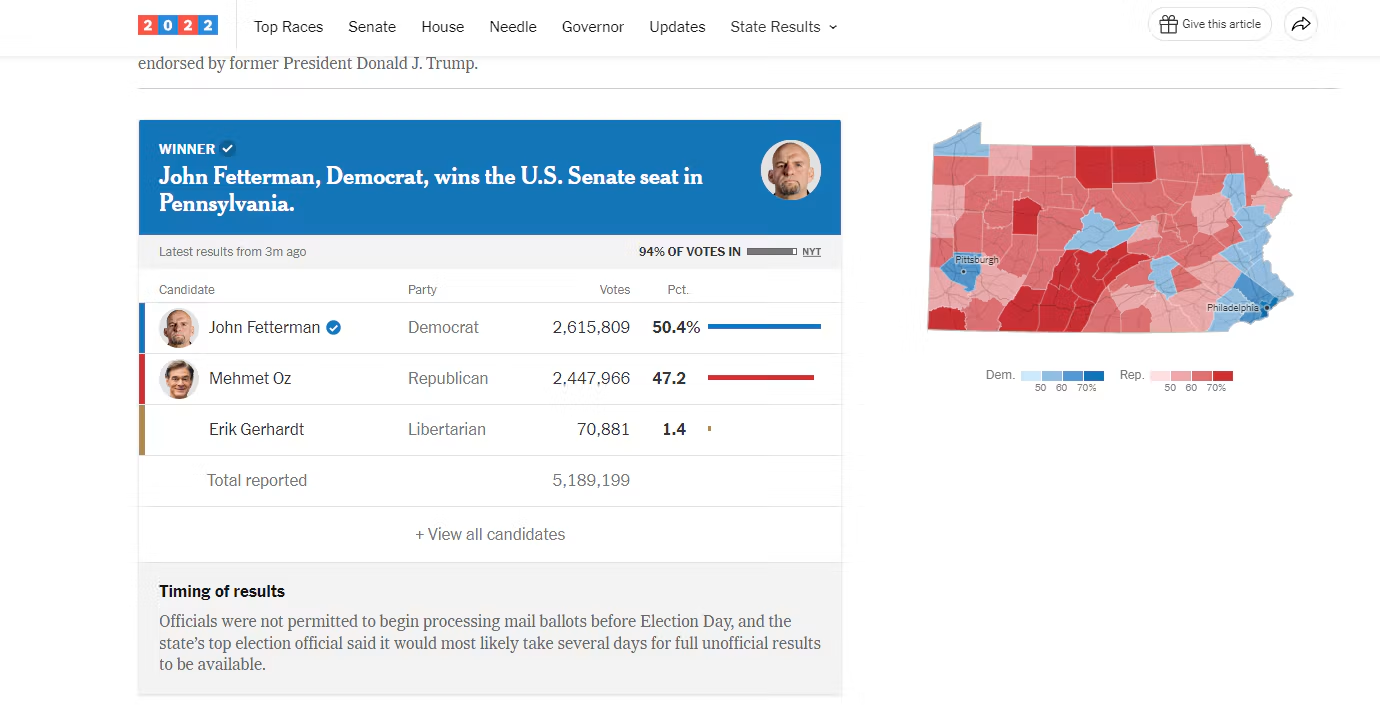
The 2022 Pennsylvania Senate Election Case: Democrat John Fetterman won with () over Republican Mehmet Oz with () and Libertarian Erik Gerhardt with () out of . The campaign illustrated cultural capital cleavages when Oz filmed a campaign video purchasing high-end grocery ingredients for "crudité," alienating working-class voters who interpreted the terminology and selection as upper-class detachment.
Social Construction and Identity Debates:
Transracialism: Historically defined by Merriam-Webster in as "involving, encompassing, or extending across two or more races" (specifically concerning transracial adoptions), the term transitioned in the into assertions of personal racial self-identification.
Notable case studies include Rachel Dolezal and internet influencer Oli London (a non-binary British national who amassed followers after undergoing plastic surgeries to alter physical features to identify as Korean and assume the name Jimin).
Class Poll: When asked "If race is a social construct, is there such a thing as transracial?", the class recorded: No (), Yes (), Maybe (), Don't Know ().
Sociological Self-Placement and Theory Testing:
Paradigm Identification: In categorizing their personal sociological outlook across the four paradigms, students responded: Critical-Conflict (), Uncritical-Conflict (), Critical-Order (), Uncritical-Order ().
Marxian Realization: When asked "Do you think Marx's vision will ever come true?", responses registered: Maybe (), No (), Yes (), Not Sure ().
Popularity and Status Ranking: When polled "Were you popular in high school?", students answered: No (), Maybe (), Yes ().
Charismatic Leadership Examples: Student submissions identifying charismatic figures included Barack Obama (), Adolf Hitler (), John F. Kennedy (), Michelle Obama (), Chesty Puller (), Mahmood Mamdani ( total occurrences), and various cult leaders.
The Island Thought Experiment (Functionalism vs. Redistribution):
Vital Roles: Students selecting five essential companions for survival prioritized hunters, doctors, emergency medical technicians, engineers, firefighters, and wilderness survival experts over entertainers or wealthy elites.
Resource Allocation: When allocating coconuts, students awarded the most resources to hunters (), emergency personnel (), and survival specialists (); the fewest coconuts were allocated to babies (), culinary chefs (), and oneself.
World-Systems Mapping Exercise:
Core Nominations: United States (), China (), Canada (), United Kingdom (), France (), Japan (), Sweden (), Russia ().
Semi-Periphery Nominations: Mexico (), Brazil (), Portugal (), India (), Romania (), Saudi Arabia (), Argentina ().
Periphery Nominations: Croatia (), Sudan (), Vietnam (), Philippines (), Chad (), Congo (), Costa Rica (), Iraq ().
Wallerstein Prediction Poll: When asked if Wallerstein's prediction of a socialist world government would manifest, responses were: No (), Yes (), Not Sure ().
The Case of Maria Sanchez and Judicial Inequality:
A clinical case study (Klass 1992 in Beeghley 2005) documented Maria Sanchez telephoning Boston's City Hospital regarding her infant suffering from severe diarrhea. An emergency physician advised her to purchase Pedialyte ( per bottle). Lacking funds, and unable to use Medicaid without a physical physician's prescription, Ms. Sanchez took the child home; later, she returned to the emergency room with the infant moribund, and he died.
Jury Representation Poll: When asked whether jurors in a legal case evaluating Ms. Sanchez should come from her same social class, students voted: Not Sure (), Yes (), No ().
Interactive Menti Knowledge Competition:
Question 1: Which theorist(s) is/are classified as being uncritical and conflict?
Options: Marx (), Durkheim (), Weber ( - Correct), Spencer (), Davis and Moore ().
Question 2: Which of the following statements is False?
Correct Response: "Secondary labor market promotes mobility" ( selections; correctly identifying it as the false statement).
Question 3: Weber's 'iron cage' is best associated with what concept?
Options: Bureaucracy ( - Correct), Organic solidarity (), Mechanical solidarity (), Dual labor market (), Peripheral nations ().
Question 4: Weber expanded Marx's work by focusing on a tripartite system of inequality; besides the economic and status realm, what was his third area?
Correct Open-Text Response: Party ( correct responses).
Question 5: According to Durkheim, a dysfunction of organic societies is when people do not know their roles, with no sense of purpose. What is this condition called?
Correct Open-Text Response: Anomie ( correct responses).
Question 6: Which of the following is not consistent with Davis and Moore's theory?
Options: "We can objectively determine what are functionally important jobs" ( - Correctly identified as inconsistent with reality/critique), "They believe that inequality is inevitable" (), "The focus of their theory is on occupations" (), "The theory is rooted in the functionalist school of thought" (), "Their theory assumes society is based on consensus" ().
Question 7: Which pairing is incorrect?
Options: "Primary labor market - not impacted by globalization" ( - Correctly identified as the erroneous pairing), "External inequality - ascribed characteristics" (), "(Marx) class consciousness - revolution" (), "Social construction - categories created" (), "Bureaucracy - rational legal authority" ().