Chapter 7: How Cells Capture Light Energy via Photosynthesis
Chapter 7 – How Cells Capture Light Energy via Photosynthesis
7.1 Overview of Photosynthesis
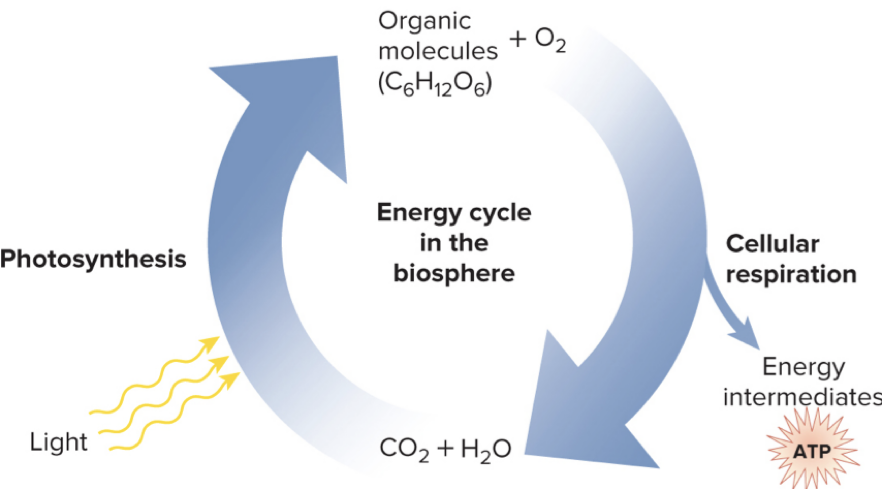
Photosynthesis is the fundamental process by which cells capture light energy and utilize it to synthesize carbohydrates.
Core Chemical Process
Carbon Dioxide ( \text{CO}_2 ) is reduced.
Water ( \text{H}_2\text{O} ) is oxidized.
General Equation: The overall process can be represented by the equation:
6CO2 + 12H2O + Light energy → C6H12O6 + 6O2 + 6H2OThis is an endergonic reaction, meaning it requires an input of energy. The standard free energy change ( \Delta G ) is +686 \text{ kcal/mol} , indicating energy from light drives this reaction.
Photosynthesis Powers the Biosphere
Biosphere: Refers to all regions on Earth's surface and atmosphere where living organisms exist.
Autotrophs: Organisms that produce their own organic molecules from inorganic sources. Most autotrophs are photoautotrophs, meaning they use light as their energy source (e.g., plants, algae, cyanobacteria).
Heterotrophs: Organisms that must consume food to obtain organic molecules from their environment. (ex. Mammals)
Life on Earth is predominantly sustained by the photosynthetic activity of photoautotrophs, forming the base of most food webs.
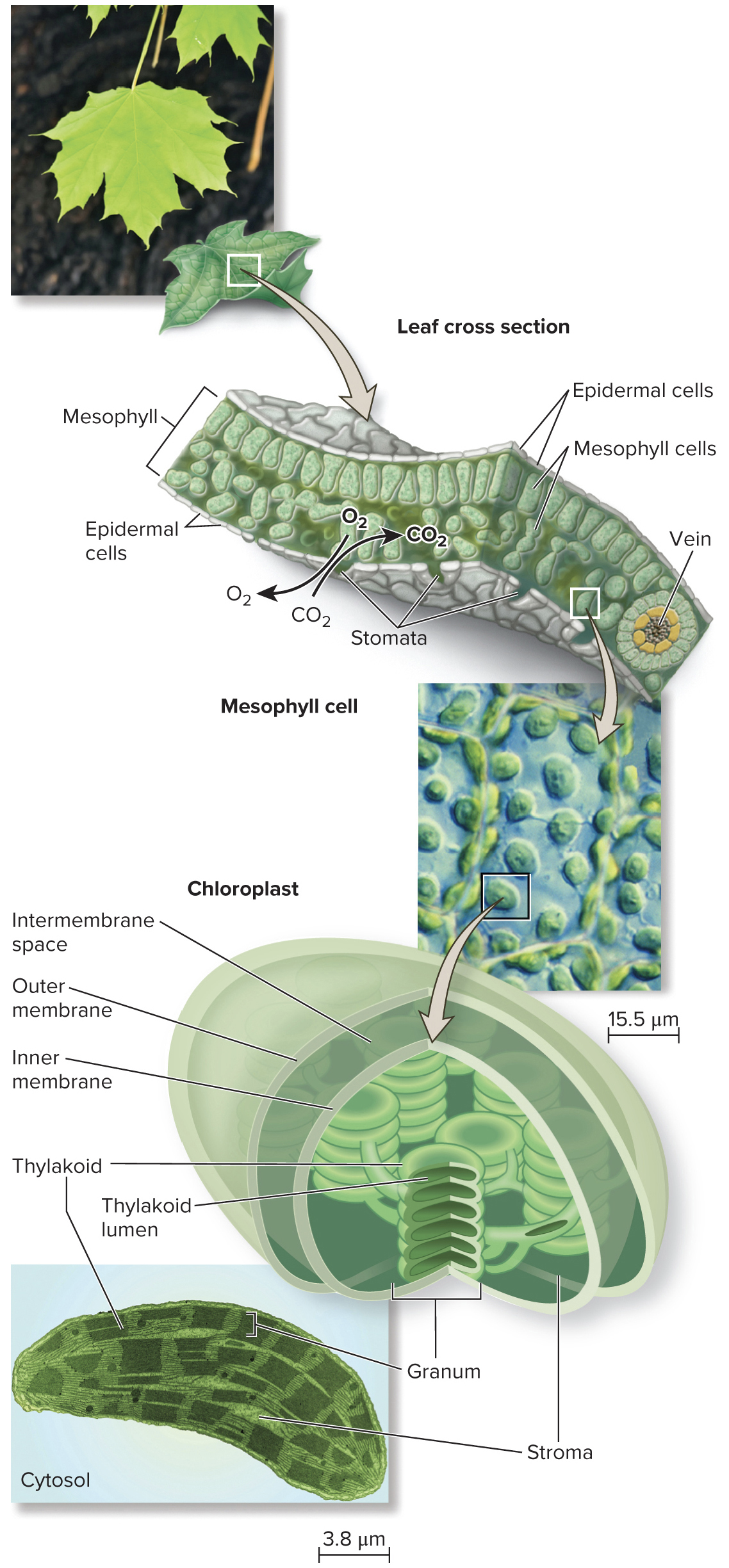
Location of Photosynthesis in Plants and Algae: The Chloroplast
Chloroplasts are the organelles within plant and algal cells responsible for carrying out photosynthesis. They contain the pigment chlorophyll.
In most plants, photosynthesis primarily occurs in the leaves, specifically within the mesophyll cells.
Stomata are small openings on the leaf surface that enable the exchange of gases, allowing CO2 to enter and O2 to exit.
Chloroplast Structure:
Outer membrane: The outermost boundary of the chloroplast.
Intermembrane space: The region between the outer and inner membranes.
Inner membrane: The membrane inside the outer membrane.
Stroma: The fluid-filled space within the inner membrane, where the Calvin cycle occurs.
Thylakoid membranes: A system of interconnected flattened sacs suspended in the stroma. These membranes contain chlorophyll and other pigments and are the site of the light reactions.
Grana (singular: granum): Stacks of thylakoid membranes.
Thylakoid lumen: The internal space within each thylakoid sac.
Stages of Photosynthesis: Light Reactions and the Calvin Cycle
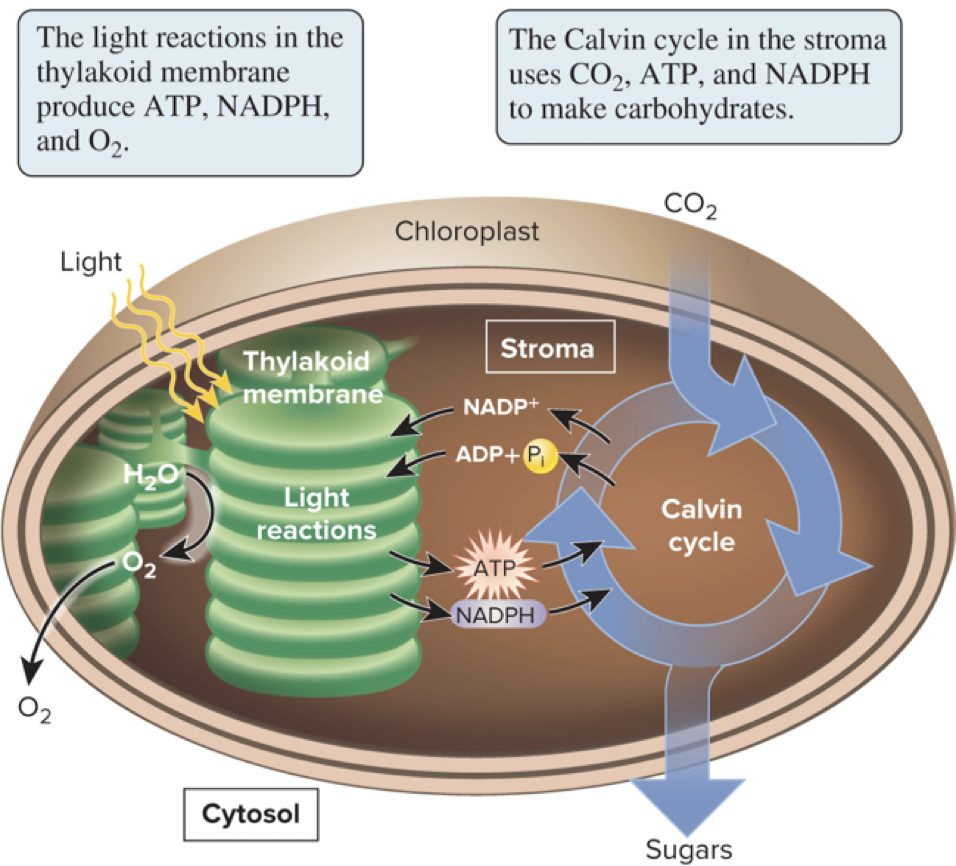
Photosynthesis proceeds in two main stages:
Light Reactions:
Occur in the thylakoid membranes.
Involve a series of energy conversions, starting with the absorption of light energy and culminating in the formation of chemical energy stored in ATP (adenosine triphosphate) and NADPH (nicotinamide adenine dinucleotide phosphate, reduced form).
Calvin Cycle (Light-Independent Reactions):
Occur in the stroma of the chloroplast.
Utilizes the ATP and NADPH produced by the light reactions.
The energy and electrons from ATP and NADPH are used to fix carbon dioxide ( \text{CO}_2 ) from the atmosphere and synthesize carbohydrates.
7.2 Reactions That Harness Light Energy
Properties of Light Energy
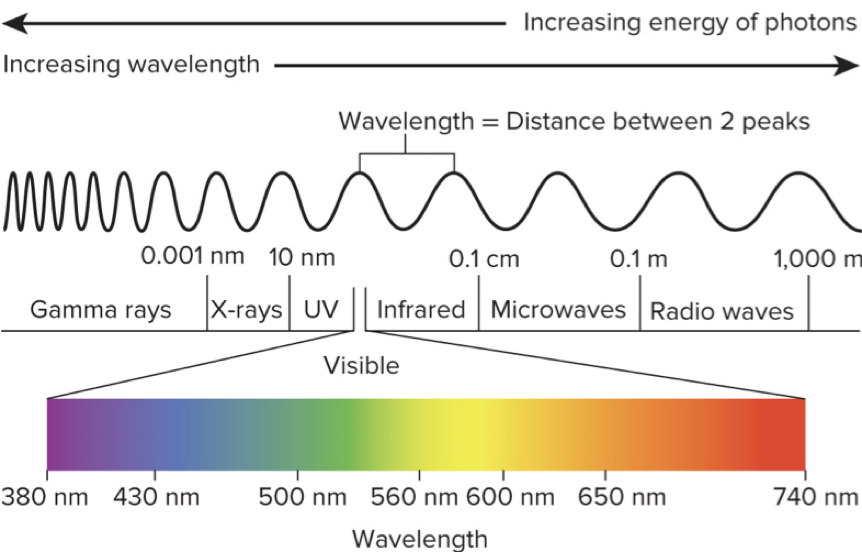
Light is a form of electromagnetic radiation, composed of energy in the form of electric and magnetic fields.
It travels in waves, characterized by wavelength and frequency.
Visible light is the specific range of wavelengths that can be detected by the human eye.
Light also exhibits particle-like behavior, consisting of discrete packets of energy called photons.
There is an inverse relationship between wavelength and energy: shorter wavelengths possess higher energy, while longer wavelengths carry less energy.
Pigments and Light Absorption
When light interacts with a molecule, it can:
Pass through the molecule.
Bounce off (be reflected) by the molecule.
Be absorbed by the molecule.
Pigments are molecules capable of absorbing light energy.
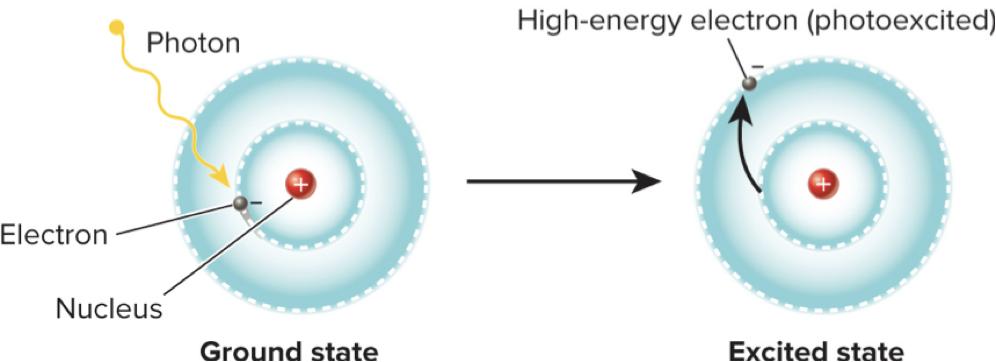
REDOX
The specific wavelengths of light a pigment absorbs depend on the energy required to excite an electron within that molecule to a higher energy orbital.
Upon absorbing energy, an electron enters an excited state, which is typically unstable.
Excited electrons can release absorbed energy in several ways:
As heat.
As light (a phenomenon called fluorescence).
They can be transferred to another molecule or "captured" by an electron acceptor, a crucial step in photosynthesis.
Types of Photosynthetic Pigments
Plants and green algae contain various pigments that allow them to absorb light across a broad spectrum:
Chlorophyll a and Chlorophyll b: These are the primary photosynthetic pigments.
Both contain a porphyrin ring structure with a central magnesium ( \text{Mg}^{2+} ) ion. Within this ring, there is a delocalized electron system that can efficiently absorb light energy.
A hydrocarbon tail anchors the chlorophyll pigment to proteins embedded within the thylakoid membrane.
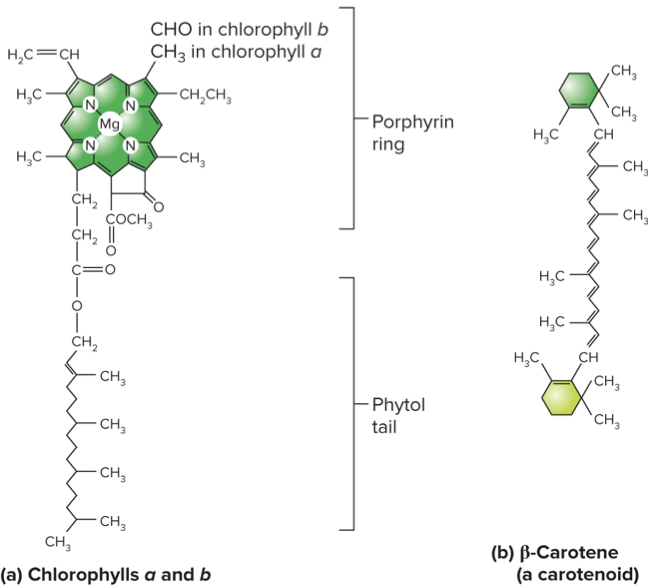
Carotenoids: These are accessory pigments.
They are abundant in fruits and flowers, imparting yellow, orange, or red coloration.
Carotenoids also possess regions with delocalized electrons that absorb light, albeit at different wavelengths than chlorophyll.
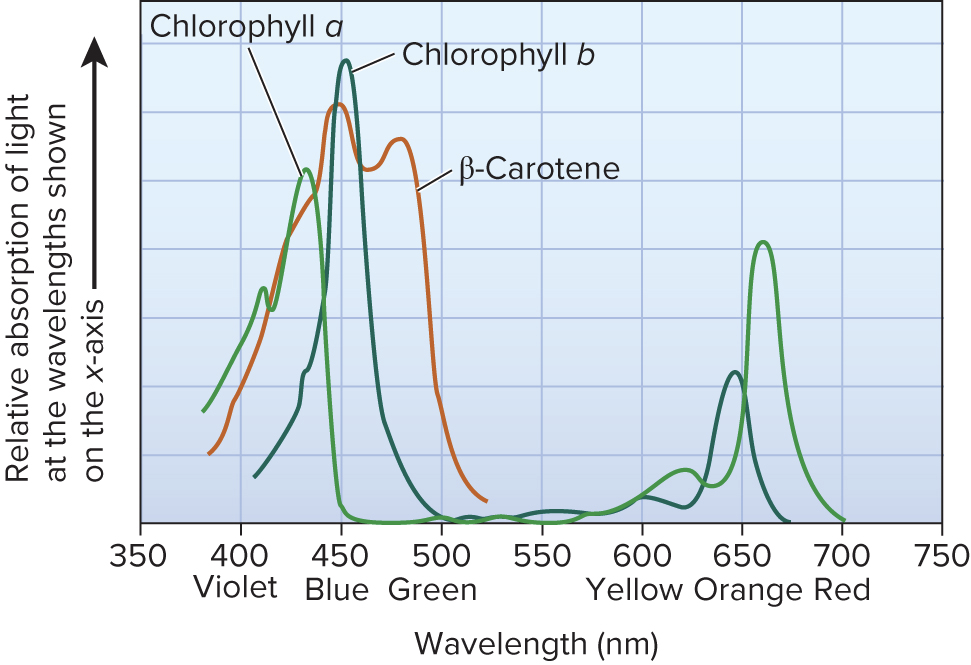
The presence of multiple pigment types allows plants to absorb light at many different wavelengths, maximizing light capture for photosynthesis.
Absorption and Action Spectra
An absorption spectrum is a graphical representation showing the wavelengths of light absorbed by different pigments.
Chlorophyll pigments absorb most strongly in the blue-violet and red regions of the visible spectrum, reflecting green light (which is why plants appear green).
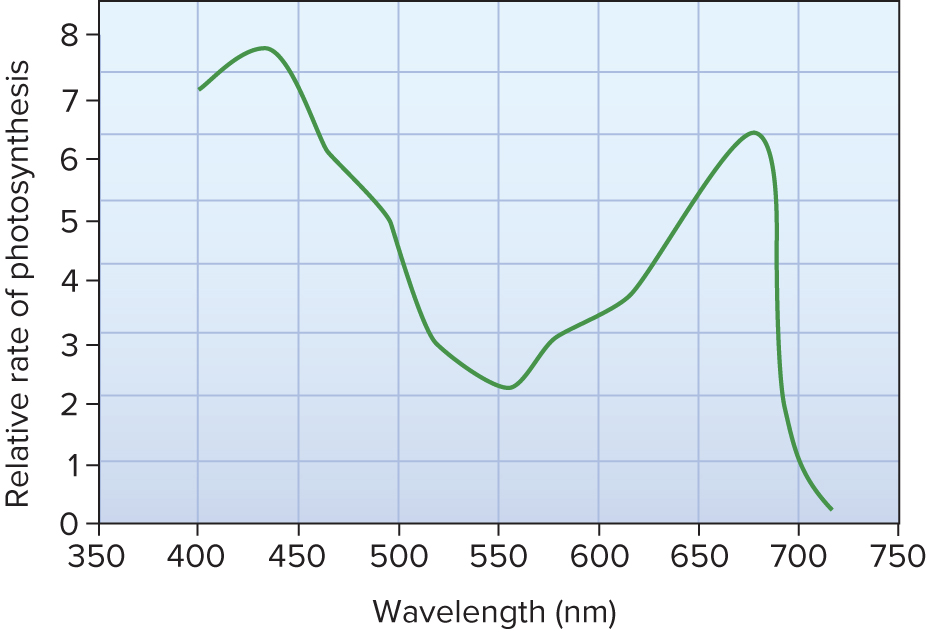
An action spectrum illustrates the rate of photosynthesis by a whole plant across various wavelengths of light.
The highest rates of photosynthesis correlate directly with the wavelengths that are most strongly absorbed by chlorophylls and carotenoids, demonstrating the functional role of these pigments.
Photosystems II and I: Linear Electron Flow
The thylakoid membranes house two distinct multiprotein complexes containing pigments: Photosystem I (PS I) and Photosystem II (PS II).
Discovery Order vs. Function: PS I was discovered first, but PS II is the initial step in the sequential process of photosynthesis.
Light energy excites pigment molecules within both PS II and PS I.
The combined action of PS II and PS I constitutes linear electron flow, which is the primary pathway for light energy conversion and results in the production of \text{O}_2 , \text{ATP} , and \text{NADPH} .
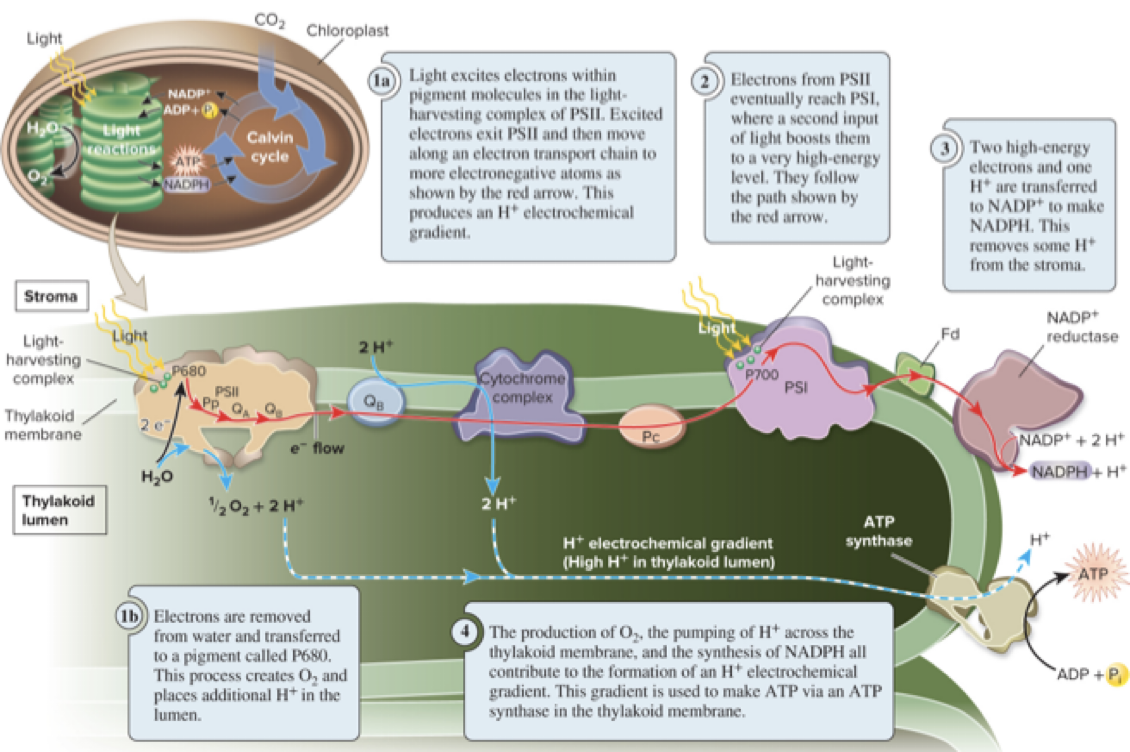
Role of Photosystem II (PS II) in Linear Electron Flow:
Initiates the electron flow. Excited electrons from PS II are passed to an electron transport chain (ETC) that leads to PS I.
Oxidizes water (H2O): PS II is unique in its ability to split water molecules, generating O2 (released as a byproduct) and \text{H}^+ ions (protons). This process also replaces the electrons lost by PS II.
Releases energized electrons to the electron transport chain.
Energy released during electron transport is used to pump \text{H}^+ ions from the stroma into the thylakoid lumen, creating an electrochemical gradient.
Role of Photosystem I (PS I) in Linear Electron Flow:
Receives electrons from the ETC originating from PS II.
Light energy re-excites electrons within PS I.
Its primary role is to produce NADPH.
Energized electrons from PS I are transferred to \text{NADP}^+ , reducing it to \text{NADPH} .
The addition of \text{H}^+ ions in the formation of NADPH contributes to the \text{H}^+ gradient across the thylakoid membrane, which drives the activity of ATP synthase.
The production of ATP in the chloroplast using light energy is termed photophosphorylation.
Cyclic Electron Flow (Cyclic Photophosphorylation)
Linear electron flow typically produces ATP and NADPH in roughly equal amounts.
However, the Calvin cycle (carbohydrate synthesis) consumes more ATP than NADPH.
To resolve this mismatch and produce additional ATP, plants can utilize cyclic electron flow, which involves only PS I.
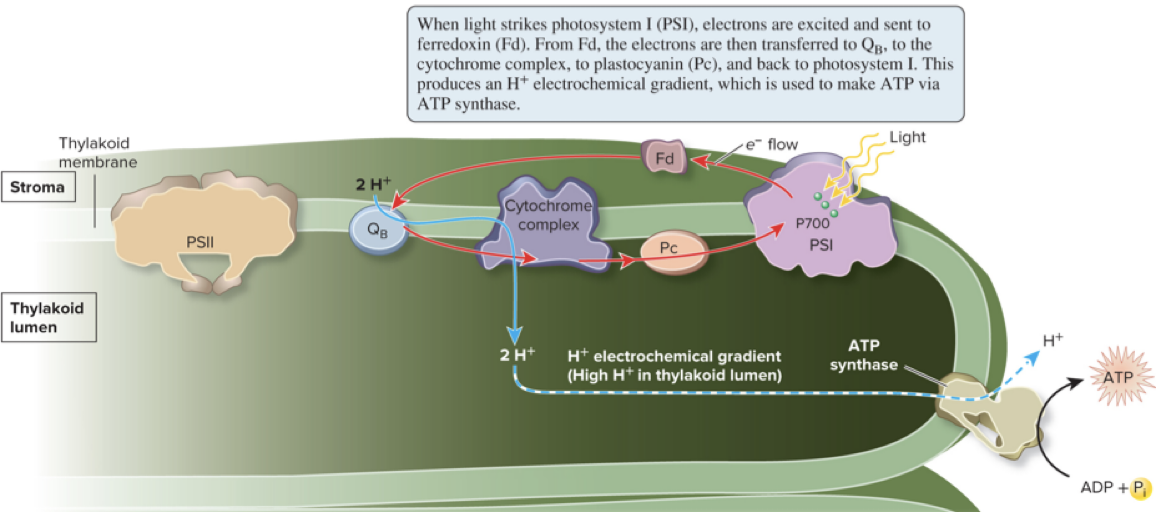
Mechanism: Electrons excited by PS I are passed through some components of the electron transport chain (specifically, back to the cytochrome complex usually involved in linear flow between PS II and PS I), release energy that contributes to the \text{H}^+ gradient (and thus ATP production via chemiosmosis), and then return to PS I.
Products: Cyclic electron flow produces only ATP, not NADPH or \text{O}_2 .
Conditions Favoring Cyclic Flow: It is favored when levels of \text{NADP}^+ are low (meaning NADPH is high) or when ATP levels are low and additional ATP is required.
7.3 Molecular Features of Photosystems
Photosystem II: Light Capture and \text{O}_2 Production
Both PS I and PS II share two main molecular components:
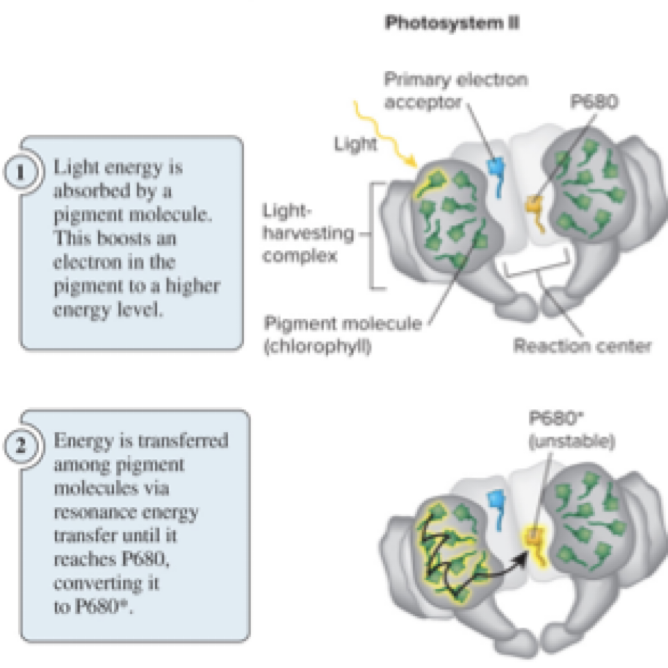
Light-Harvesting Complex (Antenna Complex):
Composed of dozens of pigment molecules (chlorophylls and carotenoids) anchored to transmembrane proteins.
Functions to directly absorb photons of light.
Transfers the absorbed energy between pigment molecules through a process called resonance energy transfer until it reaches the reaction center.
Reaction Center:
The site where the initial redox reaction of photosynthesis takes place.
In PS II, the reaction center contains a special pair of chlorophyll a molecules known as P680.
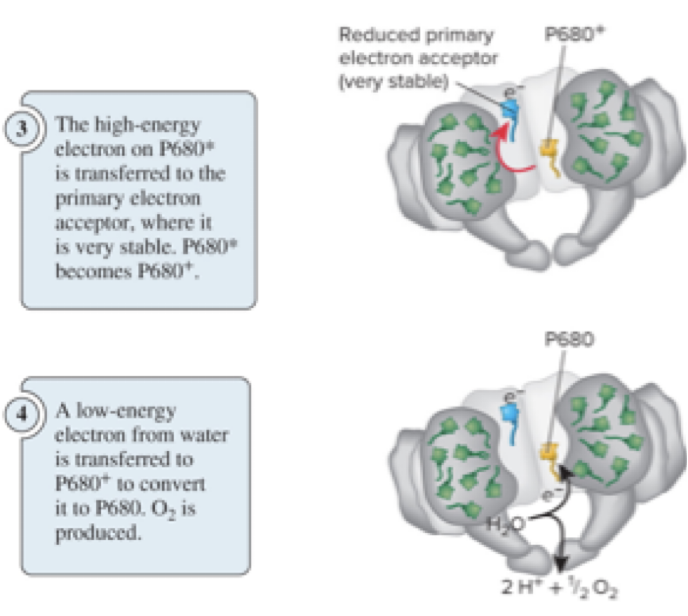
Unlike other pigments, P680, when excited (P680), releases a high-energy electron, becoming oxidized (P680 ^+ ). P680* → P680+ + e-
Water Oxidation: To replace the lost electron on \text{P680}^+ , water molecules are oxidized (split).
2H2O → 4H+ + 4e- + O2PS II is the only known protein complex that can oxidize water, a process that results in the release of molecular oxygen ( \text{O}_2 ).
Electron Energy Levels in Photosynthesis (Z Scheme)
The Z scheme is a historical model, developed in the 1960s, that elegantly describes the changes in the energy level of an electron as it moves through the light reactions.
It was proposed that photosynthesis involved two separate events of light absorption, one at PS II and one at PS I.
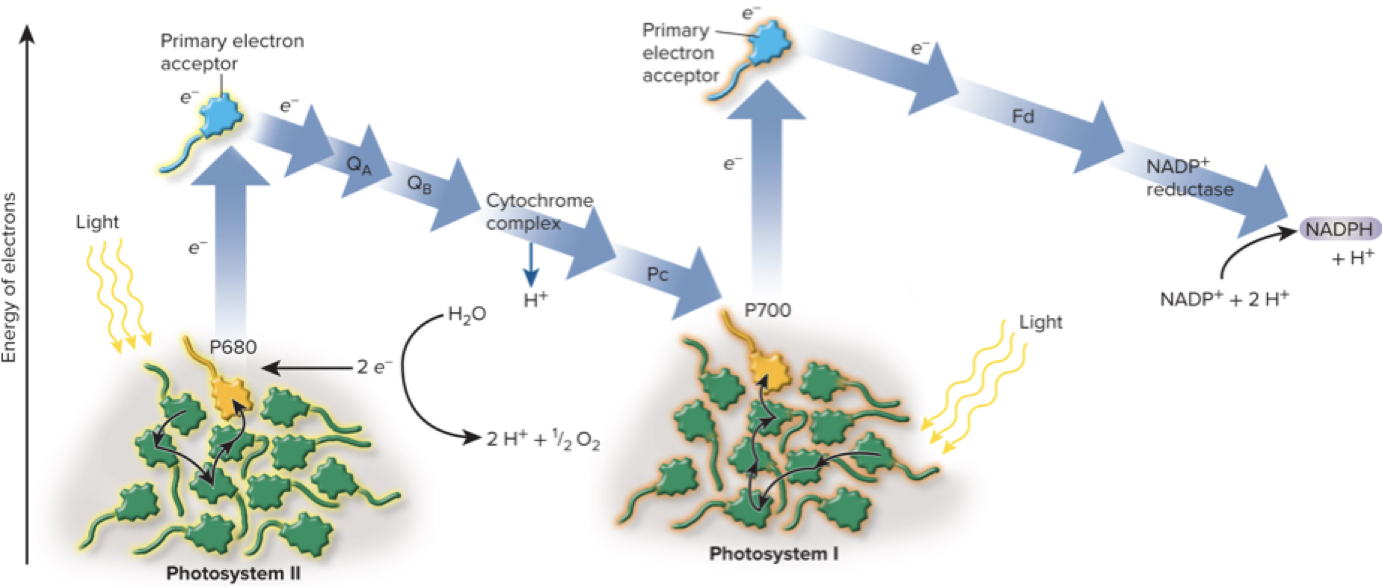
The "Z" refers to the zig-zag shape of the energy curve that an electron traverses:
Electrons at a low energy level in water are excited by light at PS II (raising their energy).
They then cascade down an electron transport chain (losing energy), contributing to ATP synthesis.
Upon reaching PS I, they are re-excited by another photon of light (raising their energy again).
Finally, they travel down another short electron transport path to reduce \text{NADP}^+ to \text{NADPH} .
This model is consistent with the linear electron flow pathway, depicting the sequential movement of electrons from PS II to PS I and ultimately to \text{NADP}^+ .
7.4 Synthesizing Carbohydrates via the Calvin Cycle
Overview of the Calvin Cycle
The Calvin cycle is the metabolic pathway that uses the ATP and NADPH generated during the light reactions to synthesize carbohydrates from \text{CO}_2 .
It takes \text{CO}_2 from the atmosphere and incorporates the carbon into organic molecules.
The cycle requires a substantial input of energy: for every 6 molecules of \text{CO}_2 incorporated, 18 molecules of ATP and 12 molecules of NADPH are consumed.
The direct product of the Calvin cycle is glyceraldehyde-3-phosphate (G3P), a 3-carbon sugar that serves as a precursor for the synthesis of glucose and other organic molecules.
Three Phases of the Calvin Cycle
The Calvin cycle is divided into three distinct phases:
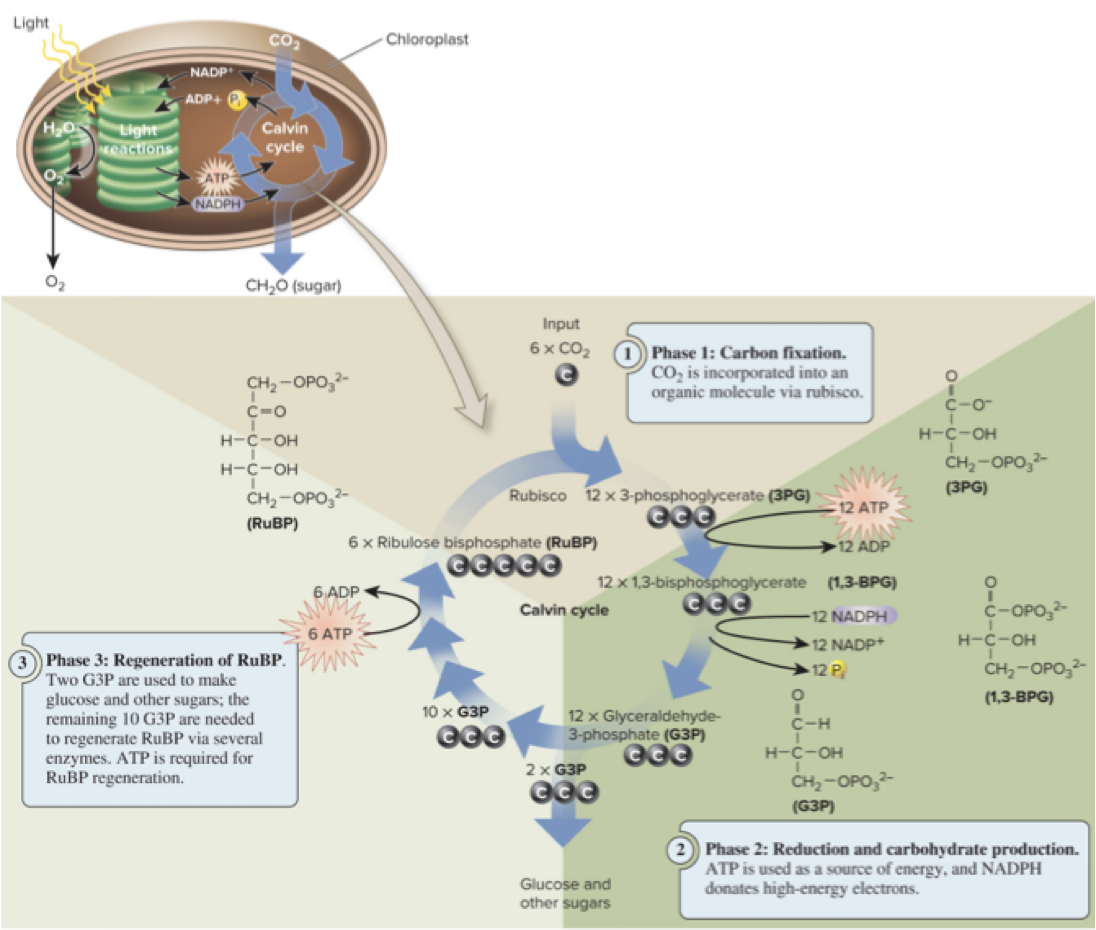
Carbon Fixation:
\text{CO}_2 from the atmosphere is incorporated into an existing 5-carbon organic molecule, ribulose-1,5-bisphosphate (RuBP).
This reaction is catalyzed by the enzyme rubisco (ribulose-1,5-bisphosphate carboxylase/oxygenase).
The unstable 6-carbon intermediate immediately splits into two molecules of 3-phosphoglycerate (3PG), a 3-carbon molecule. For 6\text{CO}_2 input, 12 \times 3\text{PG} are produced.
Reduction and Carbohydrate Production:
The 3PG molecules are phosphorylated by ATP (using 12 \text{ ATP} for 12 \times 3\text{PG} ), forming 1,3-bisphosphoglycerate (1,3-BPG).
The 1,3-BPG molecules are then reduced by NADPH (using 12 \text{ NADPH} ) to form glyceraldehyde-3-phosphate (G3P).
Of the 12 G3P molecules produced, two are released from the cycle to be used for the synthesis of glucose and other sugars. These two G3P molecules represent the net gain of carbohydrate from 6\text{CO}_2 inputs.
Regeneration of RuBP:
The remaining ten G3P molecules are rearranged and phosphorylated, utilizing ATP (using 6 \text{ ATP} ), to regenerate six molecules of RuBP.
This regeneration allows the cycle to continue by providing the \text{CO}_2 acceptor molecule.
Elucidation of the Calvin Cycle
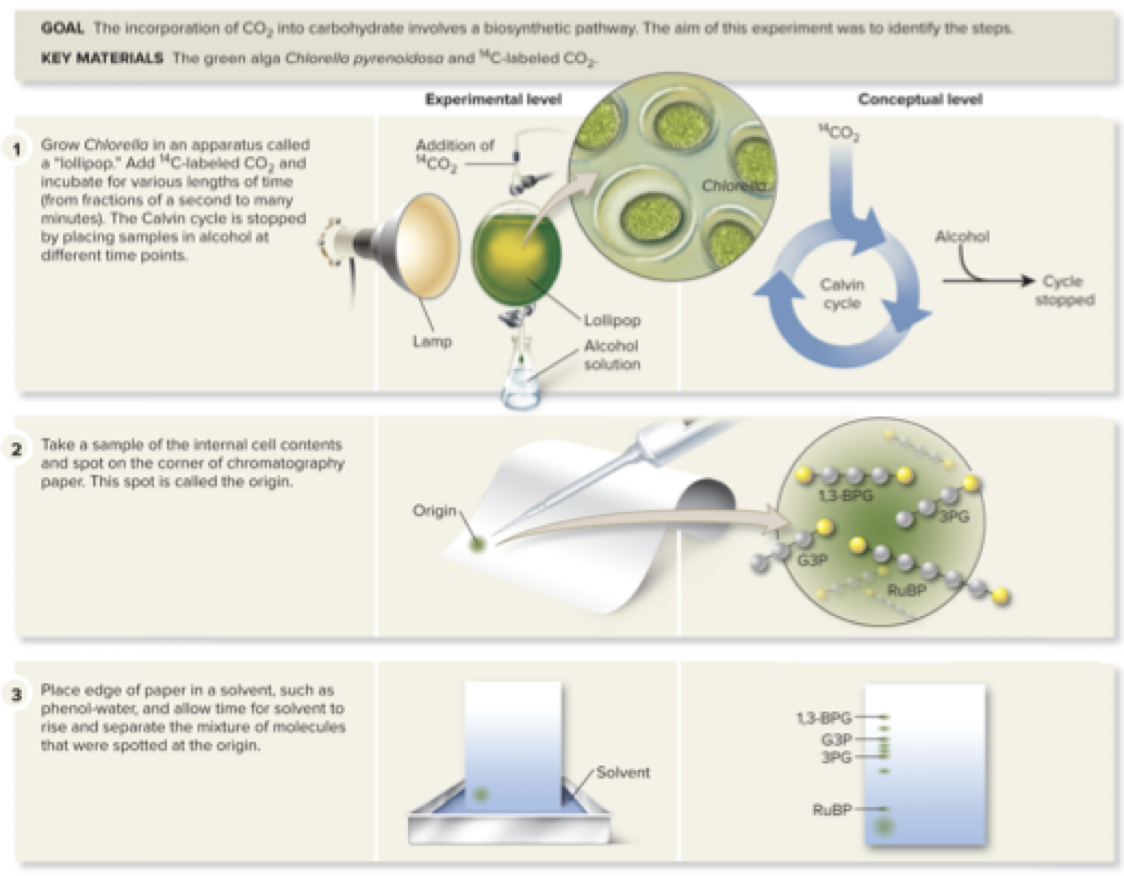
The Calvin cycle was determined through isotope-labeling methods, primarily by Melvin Calvin and Andrew Benson in the 1940s and 1950s.
They used radioactive carbon-14 ( ^{14}\text{C} ) to trace the path of carbon from \text{CO}_2 through the various intermediate compounds in algal cells, leading to the identification of the cycle's components and reactions.
7.5 Variations in Photosynthesis
Environmental Influences on the Calvin Cycle
Environmental conditions such as temperature, water availability, and light intensity can significantly impact the efficiency and operation of the Calvin cycle.
Most plants (approximately 90%) are classified as C3 plants. This designation arises because the first stable organic molecule into which \text{CO}_2 is incorporated during carbon fixation is a 3-carbon compound: 3-phosphoglycerate (3PG).
Photorespiration: A Detrimental Process
Rubisco's Dual Activity: Although the enzyme rubisco has a higher affinity for CO2, It can also add O2 to RuBP; this occurs when CO2 is low and O2 is high
Consequences of Photorespiration: When rubisco adds O2, the resulting intermediates are processed, leading to the release of a molecule of CO2.
Wasteful Process: Photorespiration is considered wasteful because it consumes ATP and releases fixed carbon as \text{CO}_2 , effectively reversing part of the photosynthetic work. This loss of carbon can significantly limit plant growth.
For C3 plants subjected to hot and dry conditions, 25-50% of their photosynthetic output can be lost due to photorespiration.
C4 and CAM Plants: Adaptations to Minimize Photorespiration and Conserve Water
To counteract the detrimental effects of photorespiration, particularly in hot and dry environments, some plants have evolved specialized photosynthetic pathways:
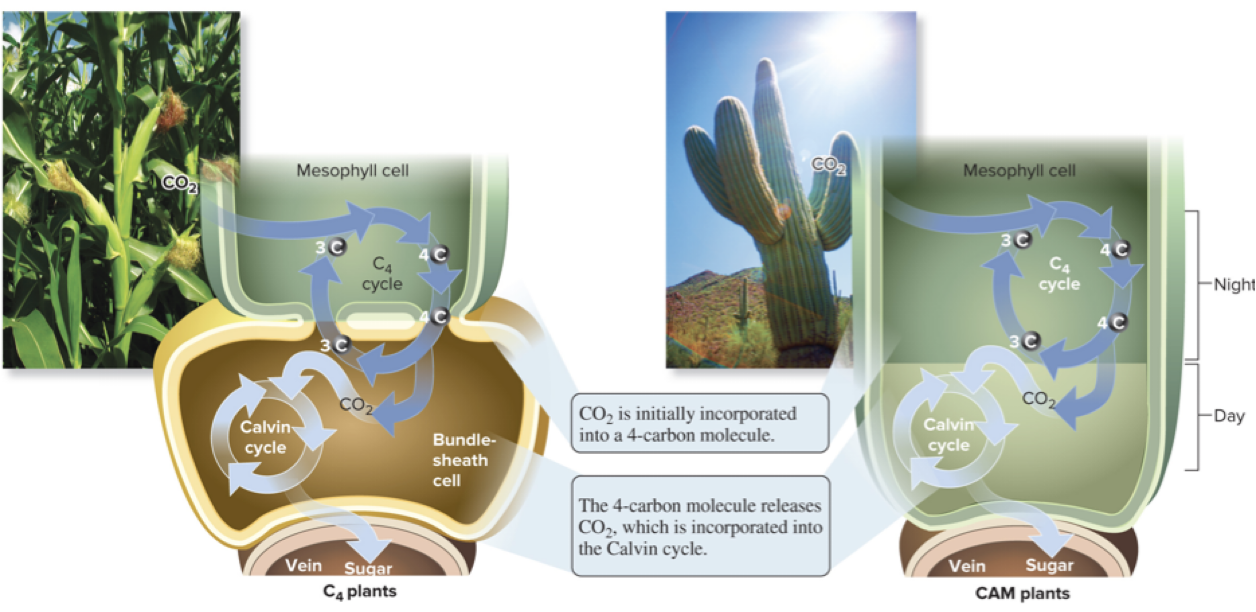
C4 Plants
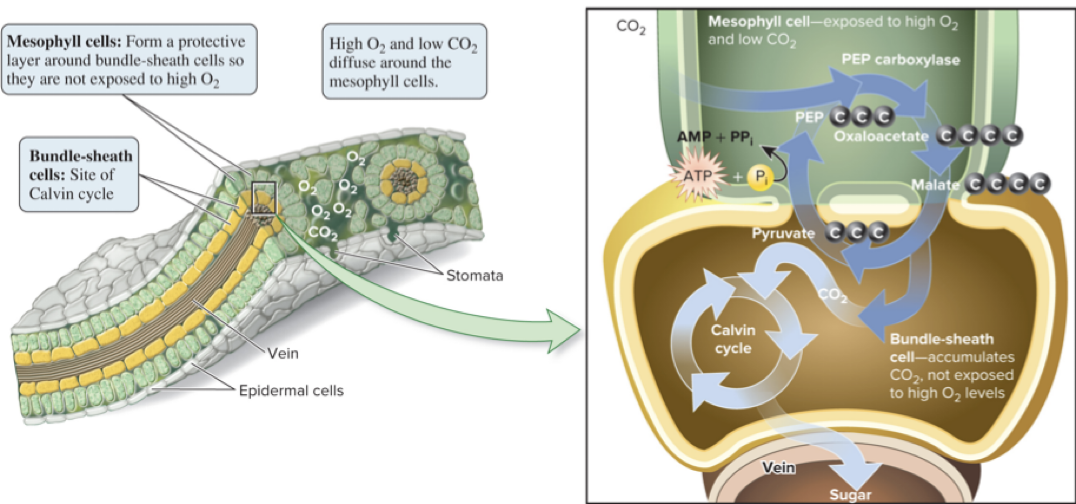
Initial Carbon Fixation: C4 plants incorporate \text{CO}_2 into a 4-carbon molecule, oxaloacetate, in the first step of carbon fixation.
Specialized Enzyme: This initial capture is catalyzed by PEP carboxylase, an enzyme that has a high affinity for CO2 and does not bind O2.
Two-Cell Layer Organization in Leaves: C4 plants exhibit a specialized leaf anatomy, typically with two distinct cell types involved in photosynthesis:
Mesophyll cells: These exterior cells capture \text{CO}_2 (using an enzyme that only binds to CO2) into oxaloacetate. The oxaloacetate is then converted to malate (another 4-carbon acid) and transported to the bundle-sheath cells.
Bundle-sheath cells: These cells surround the vascular bundles. Inside these cells, the 4-carbon compound releases the CO2 creating a high concentration of CO2 that is subsequently used in the Calvin cycle to produce sugars, effectively minimizing photorespiration and maximizing photosynthetic efficiency.
CAM Plants (Crassulacean Acid Metabolism)
Temporal Separation of Processes: CAM plants separate the initial \text{CO}_2 capture from the Calvin cycle by time, rather than by space (like C4 plants).
Nighttime Activity: CAM plants open their stomata only at night to capture \text{CO}_2 , which is then incorporated into organic acids and stored in the cell's vacuoles.
Daytime Activity: During the day, their stomata close to conserve water in the hot, dry environment. The stored \text{CO}_2 is then released from the organic acids within the cells and enters the Calvin cycle, utilizing the ATP and NADPH produced by the light reactions during the day.
C3 vs. C4/CAM: Environmental Dependence
The efficiency of C3 versus C4/CAM photosynthesis depends on the environment:
In cooler climates, C3 plants are generally more energy-efficient as they do not expend extra ATP to concentrate \text{CO}_2 . C3 plants typically thrive where water is abundant and temperatures are moderate.
C4 and CAM plant adaptations are specific evolutionary strategies that are highly advantageous in hot and dry environments, enabling these plants to conserve water and significantly minimize photorespiration, allowing them to maintain high photosynthetic rates under challenging conditions.