Year 12 Ancient History - Cities of Vesuvius
Survey
● the geographical setting and natural features of Campania (ACHAH365, ACHAH371)
EVIDENCE
“The coast of Campania, a fertile region so blessed with pleasant scenery that it was manifestly the work of nature… embracing a climate so mild. Plains so fertile. Hills so sunny. Woodlands so secure and groves so shady. Its many seas and harbours and the bosom of its lands are open to commerce.” - Pliny the Elder, Natural History Book III, 40-41
GEOGRAPHICAL FACTS
Both Herculaneum and Pompeii are located within a region known as Campania in Southern Italy.
Both would have been considered seaside towns
The weather was characterised by dry, hot summers and mild, wet winters.
The region was fertile and this was linked to the geographical placement of Pompeii (south-east) and Herculaneum (south-west) of the Campania Volcanic arc, with many volcanoes including Campi Flergi, Mount Epomeo, Palinuro, Vavilev, Marsili, Magnaghi and Mount Vesuvius.
The region supported a range of natural vegetation (oak, beech, alder, poplar and herbaceous plants)
The region produced a wide variety of agricultural produce (pears, figs, plums, grapes, olives, lemons, apricots and peaches)
Pompeii was located along the Sarno river, which further enhanced the fertility of the town, as well as allowing them to conduct maritime trade.
Both towns were in ideal trading positions as the Bay of Naples offered numerous places for overseas vessels to dock.
The ability to fish along the bay and the river allowed the fishing industries in both towns to thrive, to the extent where this became a key component of both towns economies.
EVIDENCE OF NATURAL FEATURES
NATURAL FEATURES FACTS
● the eruption of AD 79 and its impact on Pompeii and Herculaneum (ACHAH367, ACHAH372)
● early discoveries and the changing nature of excavations in the 19th and 20th centuries
(ACHAH369)
● representations of Pompeii and Herculaneum over time (ACHAH383)
Focus of study
Investigating and interpreting the sources for Pompeii and Herculaneum
● the evidence provided by the range of sources, including site layout, streetscapes, public and
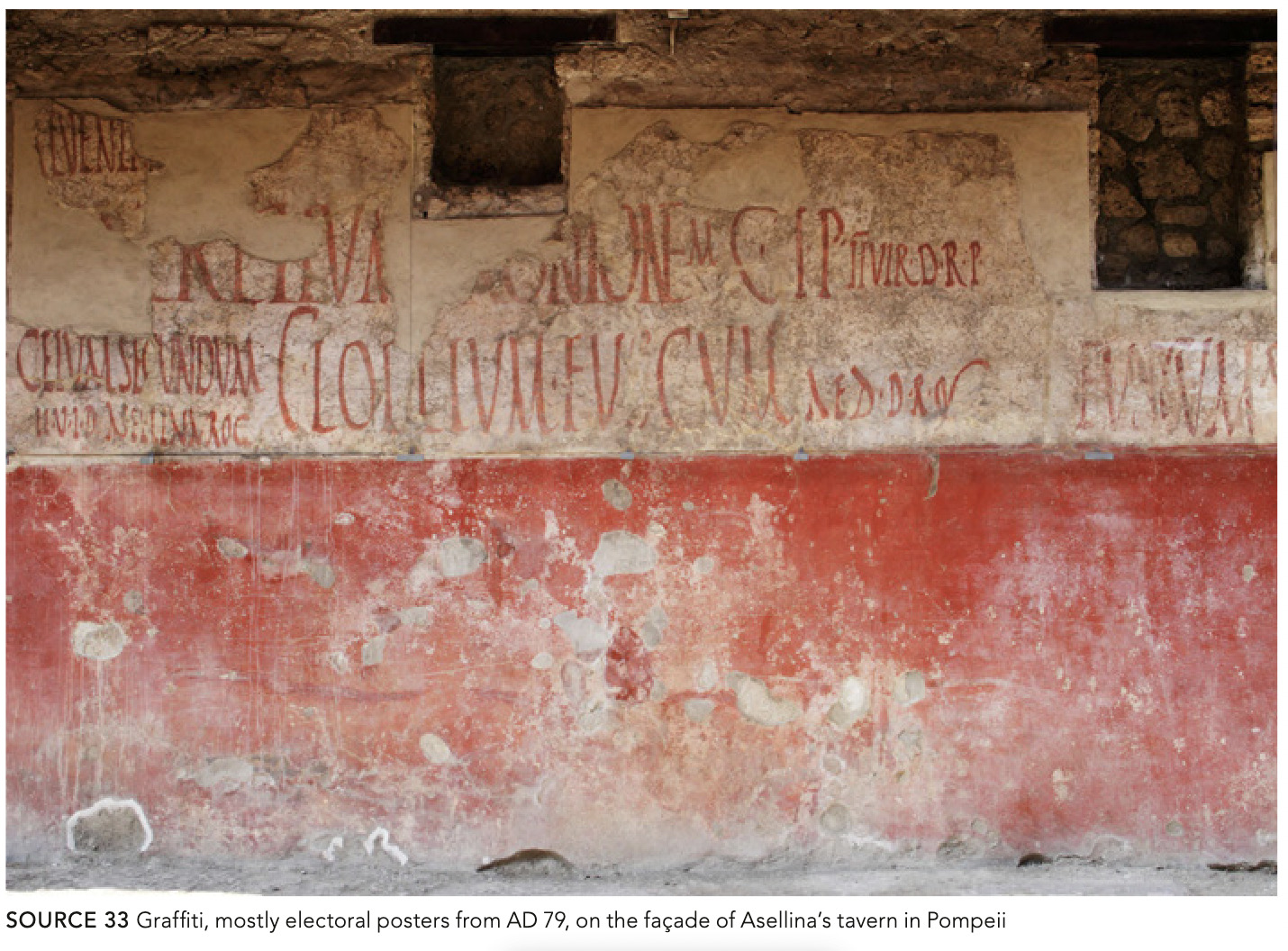
private buildings, ancient writers, official inscriptions, graffiti, wall paintings, statues, mosaics,
human, animal and plant remains from Pompeii and Herculaneum, as relevant for:
– the economy: role of the forum, trade, commerce, industries, occupations (ACHAH374)
– the social structure: men, women, freedmen, slaves (ACHAH375)
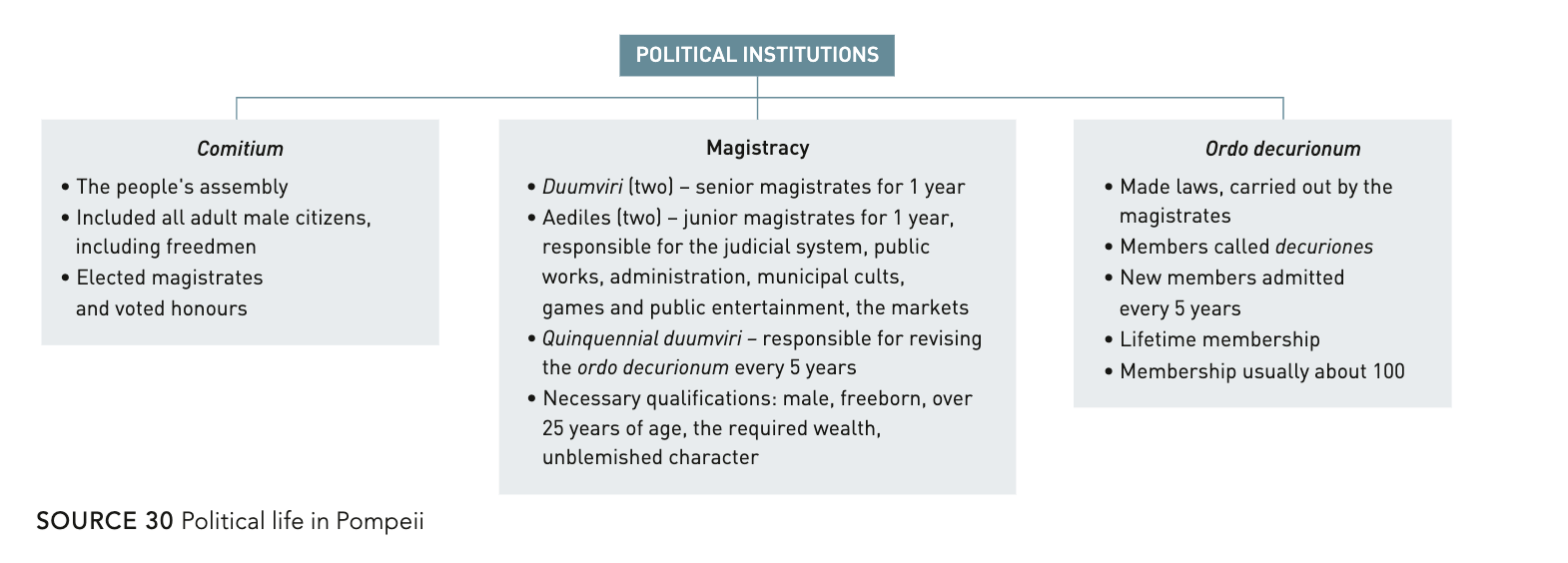
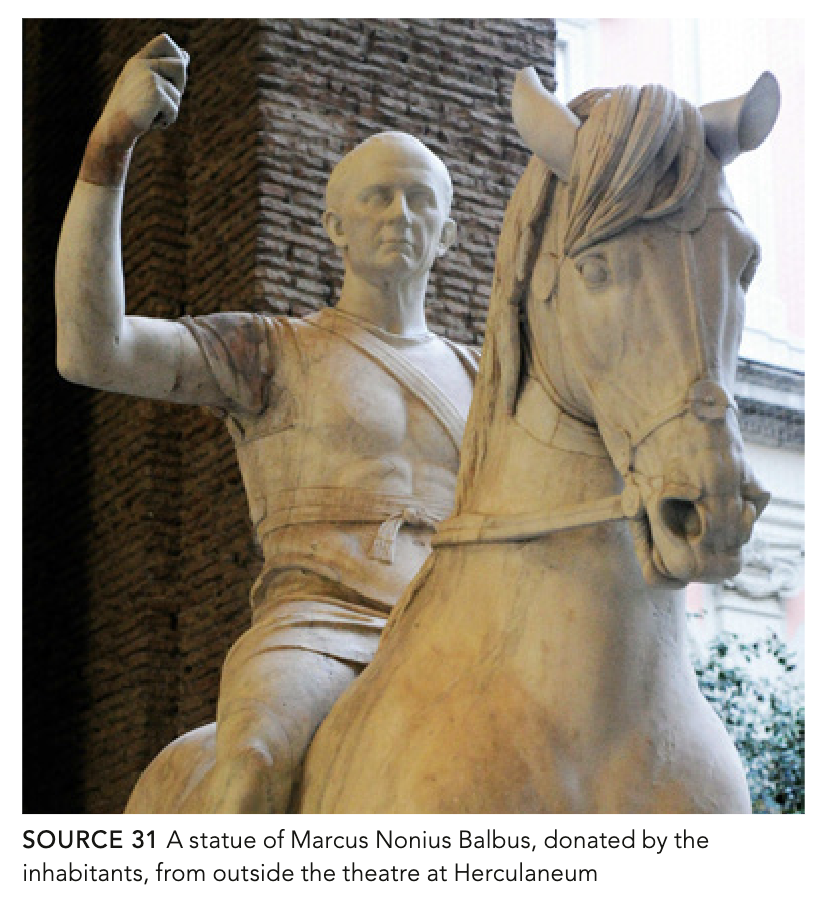
– local political life: decuriones, magistrates, comitium (ACHAH373)
– everyday life: housing, leisure activities, food and dining, clothing, health, baths, water supply,
sanitation (ACHAH377)
– religion: household gods, temples, foreign cults and religions, tombs (ACHAH376)
– the influence of Greek and Egyptian cultures: art and architecture (ACHAH378)
Reconstructing and conserving the past
● changing interpretations: impact of new research and technologies (ACHAH381, ACHAH385)
● issues of conservation and reconstruction: Italian and international contributions and
responsibilities (ACHAH370)
● ethical issues: excavation and conservation, study and display of human remains (ACHAH370)
● value and impact of tourism: problems and solutions (ACHAH370)