Biology notes
From Cells to Body Systems
Cells → Tissue → Organ → System → Human Body
Cells–Smallest unit of life
Tissue–Group of cells with the same function
Organs–Tissue working together to perform a function
Systems–Group of organs working together to perform a particular function.
Organ Systems
Each organ system has one or more functions.
Circulatory: Transports blood around the body, carrying oxygen, nutrients and waste.
Digestive: Breaks down food for nutrients and removes waste from the body
Excretory: Removes waste from the body.
Musculoskeletal: Gives the body structure & allows it to move
Nervous: Sends messages around the body so it can move and respond
Reproductive: For reproduction
Respiratory: Supplies body w/ oxygen
Circulatory System
Group of organs which work together to transport gases, nutrients, waste products and heat around the body.
This process is known as circulation
There are 3 main organs in this system
Heart–A pair of pumps made of cardiac muscle
Blood Vessels–Tubes which allow the movement of blood throughout the body
Blood–A liquid organ that carries oxygen, nutrients and water to cells and removes carbon dioxide and waste from cells.
The Heart–Functions
Muscular double-pump, slightly to the left to the middle of the chest, behind the sternum.
Constantly contracting and relaxing, which moves the blood around and its contents around the body
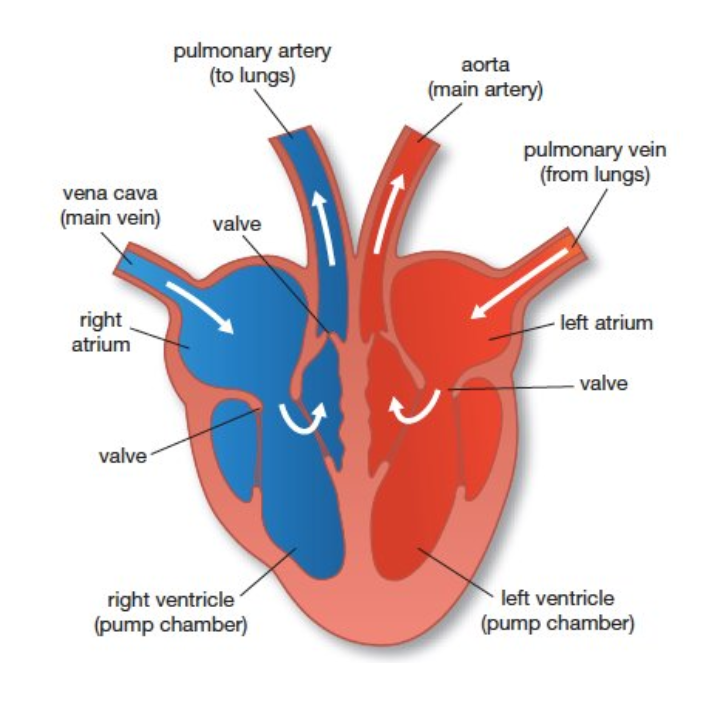
It has four chambers
2 atria–The top two chambers, where blood enters
2 ventricles–Bottom 2 chambers, where blood is pumped out.
The left and right side of the heart has valves to stop blood flowing backwards.
4 main blood vessels enter and leave the heart:
Pulmonary Artery–sends blood to the lungs
Pulmonary Vein–receives blood from the lungs
Aorta–sends blood to the body
Superior and Inferior Vena Cava–receives blood from the body

Blood Flow
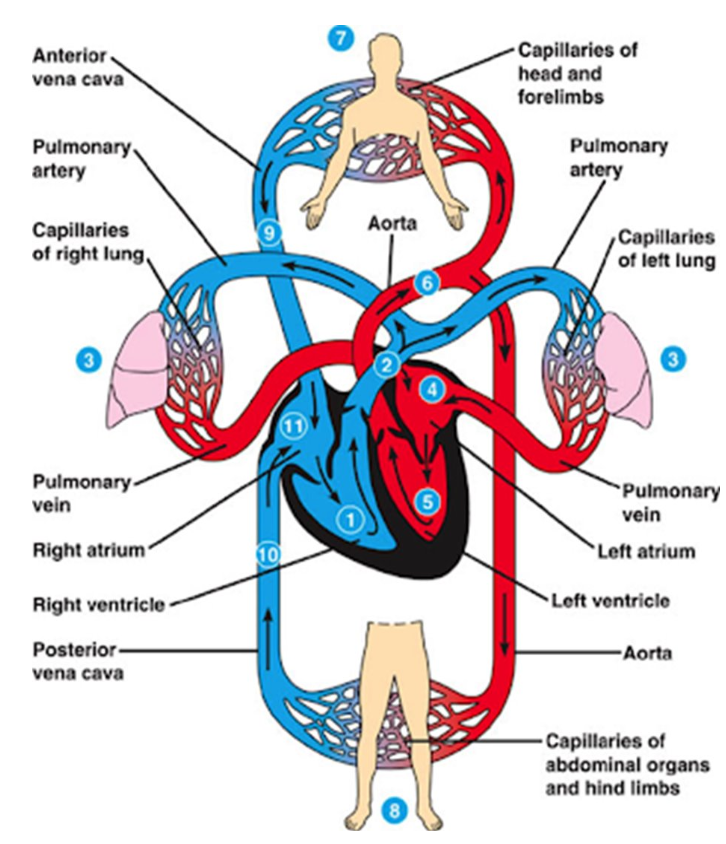
Body Circuit
The oxygenated blood flows from the left side of the heart to the body and back to the right side if the heart.
This circuit carries nutrients and oxygen to the cells, becoming deoxygenated.
At the cells, it collects waste, including carbon dioxide.
Body Circuit–In detail
Oxygenated blood fills the left atrium and is pumped into the left ventricle
The oxygenated blood is then pumped out to the body through the aorta
The oxygen is then delivered to the cells in the body
Deoxygenated blood returns through the vena cava
Lung Circuit
Deoxygenated blood flows from the left side of the heart to the body and back to the right side of the heart.
In the lungs, carbon dioxide passes out of the blood and oxygen passes into the blood.
The blood rich oxygen that returns to the left side of the body.
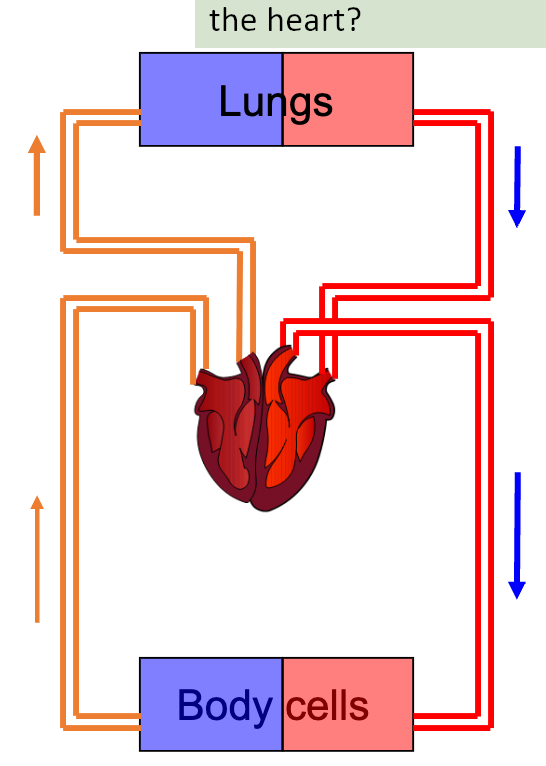
Lung Circuit–In detail
Deoxygenated blood from the body enters the heart through the vena cava
It enters the right atrium, and is pumped into the right ventricle
The deoxygenated blood then is pumped into the lungs through the pulmonary artery to become oxygenated blood and get rid of carbon dioxide.
Oxygenated blood then returns to the heart through the pulmonary vein

The Circulatory System–Blood Vessels
3 main types of tubes:
Arteries–Have thick, elastic walls and carry blood away from the heart
Veins–Have thinner walls and carry blood back to the heart.
Capillaries–Are only one cell thick and pass oxygen, nutrients and wastes from blood to cells.
Arteries
Transport blood away from the heart
Have thick, muscular walls to provide strength for high pressure pumping the blood
Elastic to maintain the blood pressure, even when the heart relaxes
Arteries dilate and constrict, which creates a pulse
Vein
Return back to heart
Have thinner, more flexible walls,
Blood travels at low speed and pressure due to distance from the heart
Veins have one way valves, which allow blood to flow only towards the heart
Movement of your muscles squeeze your veins, putting enough pressure to move the blood along,
Capillaries
Are the smallest most numerous of blood vessels
Only one cell thick allowing exchange of nutrients and oxygen into body cells and transports wastes out of the cell.
The Circulatory System–Blood
Only liquid human organ
~5.5 litres if blood in the average human
Made up of:
Plasma
Red Blood Cells
White Blood Cells
Platelets
Carries water, oxygen and waste.
Helps Maintain body temperature
Red Blood Cells
Made in bone marrow of long bone and ribs
Contains the chemical haemoglobin
Haemoglobin carries oxygen around the body
Disc shaped without nucleus
aka. Erythrocytes
White Blood Cells
Bigger than red blood cells, but less common
They have no definite shape, but have a nucleus
Helps fight disease and infection
Protect the body from disease by ‘eating’ foreign material and bacteria
aka. leukocytes
Platelets
Tiny cells w/o a nucleus
Made of fragmented bits of cells produced by the bone marrow
Form sticky dots that play up damaged blood vessels and stop bleeding
Too many: Cause clots to form in blood cells
Too few: blood doesn’t clot, causing excessive bleeding
Plasma
A clear, yellowish liquid, mostly water.
Contains dissolved materials such as nutrients to function
Helps regulate body temperature by heat transfer
Factors Affecting Circulation and Heart Rate
Blood and Circulation
All the cells in your body need oxygen and nutrients to function
Blood carries oxygen and nutrients for energy, they are producing waste products
As the cells use oxygen and nutrients for energy, they are producing waste products
Waste products are carried away from the cells in the blood
Circulation and Exercise
When you begin to exercise, your cells use more energy and oxygen and produce more waste products
This means your blood needs to move faster through your body to keep a constant supply of nutrients and removes the waste
To make the blood circulate faster, your heart needs to beat more frequently
This change in heart rate can be detected by pulse.