Passing Legislation
How Are Bills Introduced?
Based on the needs of constituents, policy concerns, and statesmanship, bills are introduced each year, and some become new laws. Any member of Congress may propose legislation by introducing a bill. Members of the House introduce a bill by either handing it to a clerk or dropping it in a wooden box called the hopper. Members of the Senate must be recognized by the presiding officer of the Senate and announce the bill's introduction. After being introduced, bills are numbered and printed. Bills introduced in the House of Representatives are given the prefix H.R.—for example, H.R. 875. Bills introduced in the Senate have the prefix S.—for example, S. 163.
The Constitution mandates that all bills designed to raise revenue or taxes must originate in the House. The Senate can, and does, amend revenue bills, but this can only be done after the House has acted first. All other bills can originate in either house of Congress.
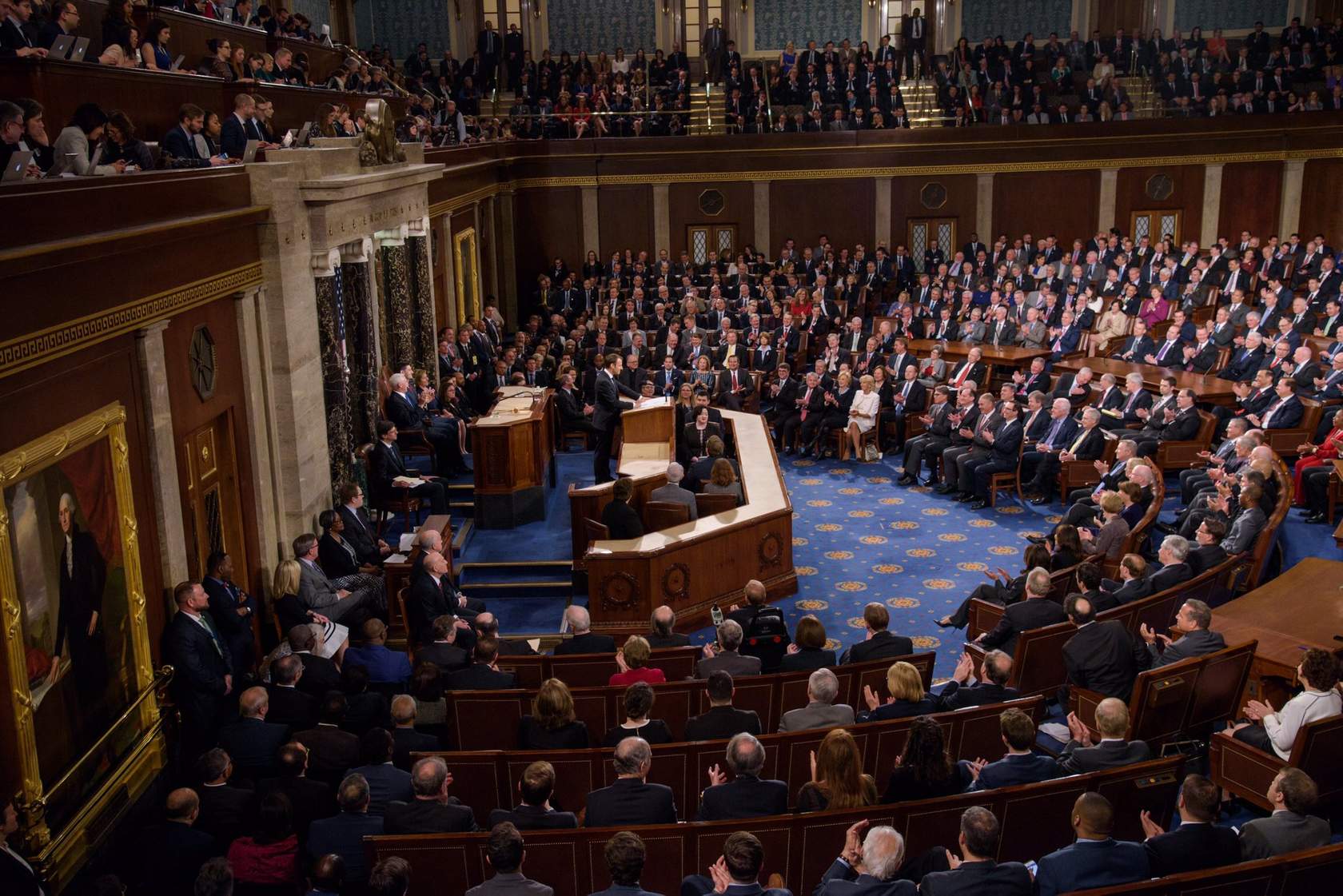
The chamber of the US House of Representatives
Committee Procedure
After being introduced, a bill is referred to a committee for consideration and debate. During this process, the committee can amend the bill or send it to a subcommittee for further research. Subcommittees are specialized subsets of larger committees. For example, the House Committee on Financial Services has six subcommittees, including the Subcommittee on Consumer Protection and Financial Institutions and the Subcommittee on Diversity and Inclusion.
After hearings, the subcommittee or the whole committee will make additions, deletions, or corrections to the bill. These changes, which are sometimes extensive, do not become part of the bill unless they are approved by the entire house. If a majority of the committee votes to report a bill favorably to the House or Senate, the bill goes forward, along with an explanation as to why the committee favors the bill and an explanation for any amendments to the bill that the committee proposes. If a committee does not favorably report a bill out to the House or Senate, this generally spells the end of the proposed legislation. The measure would have to be reintroduced at a later time by repeating the entire process from the beginning, which is a very rare occurrence.
The vast majority of proposed bills die in committees. A complex process does exist by which a majority of members of the House can sign a discharge petition that would bring a bill out of committee, but it is rarely used and even more rarely successful.
How Does a Bill Become a Law?
For a bill to come forward to the floor of either house of Congress after making it through committee, it must first be placed on a calendar. There are five calendars in the House and two in the Senate. These calendars cover different types of legislative business. The Senate, for example, has a Calendar of Business that contains legislative items like bills and an Executive Calendar that contains votes for political appointments and treaties.
Once a bill is on a calendar, it still may not make it to the floor for debate and a vote. In the House, the Rules Committee reviews most bills and sets the procedures under which the bill will be considered by the House. If the Rules Committee sets a restricted or closed rule, there will be strict limits on debate and amendments will be confined to those proposed by the committee. An open rule permits amendments to be offered from the floor. Once on the floor, the bills are debated by the members. The committee from which the bill originated guides the debate, and the final version of the bill usually looks much like the version that came out of committee.
Filibuster, Debate, and Voting
The Senate has no rule limiting debate. Because of this, a senator can use a lengthy speech designed to prevent a vote from being taken. This is known as a filibuster. A filibuster can be broken if three-fifths of all senators agree to a motion of cloture, which ends all debate on the bill.
After all of the debate has taken place and amendments (sometimes known as riders) have been proposed, the fate of the bill is decided by a vote of the members. The House has three different types of votes: 1) a voice vote in which the members shout "yea" (if in favor) or "nay" (if against); 2) a division or standing vote; and 3) a roll call vote which is recorded electronically by the representative's name. The Senate has only two methods of voting: either by a voice vote or by a roll call vote.
When a bill passes one house, it must be sent to the other house to be passed there as well. If a bill passes both the House and Senate but with different versions (because they've made different amendments to the bill), the differences must be reconciled in a conference committee. Remember that conference committees are joint committees that contain members of both the House and the Senate.
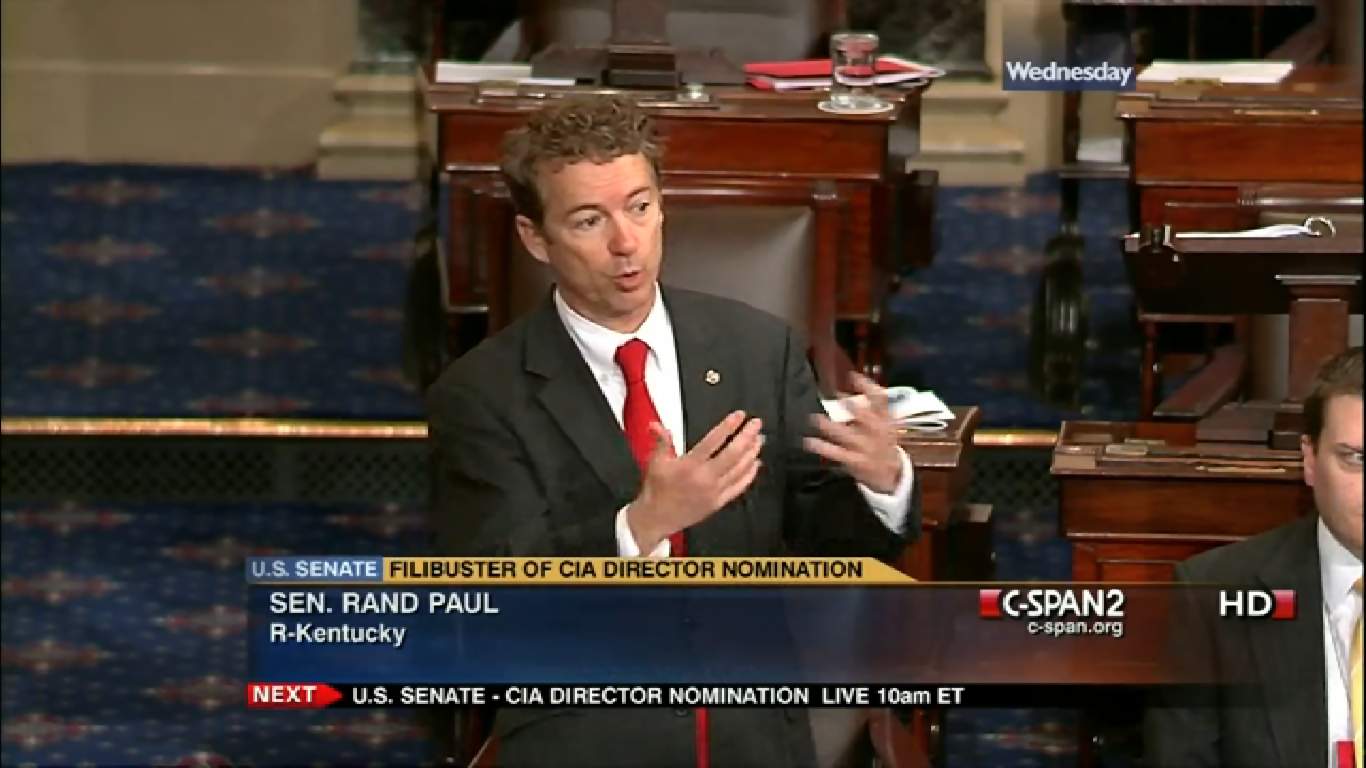
Senator Rand Paul filibustered for thirteen hours in 2013.
Presidential Authorization
Once both chambers of Congress have each agreed to the bill, it is prepared in its final official form and sent to the president for consideration. The president has ten days, excluding Sundays, to sign or veto the bill. If the bill is signed in that ten-day period, it becomes law. If the president declines to either sign or veto a bill, one of two things can happen, depending on the circumstances. If the president does not take action and Congress is in session, the bill becomes law without a presidential signature. If Congress adjourns before the ten-day period expires, then the bill does not become law. This is called a pocket veto.
Overriding a Presidential Veto
If the president vetoes a bill, it returns to the house of origin where an effort can be made to override the veto. Provided there is a sufficient number of members present to rule on a decision, at least two-thirds of the members who are present must vote—by roll call vote—to override the veto. If both houses override the veto, the bill becomes law without the president's approval. Successfully overriding a presidential veto is rare—in United States history, only seven percent of presidential vetoes have been overridden.
Enacted Bills and Resolutions
Bills that are ultimately enacted are delivered to the Office of the Federal Register at the National Archives, assigned a public law number, and included in the next edition of the United States Statutes at Large. In addition to bills, Congress can also pass resolutions. A joint resolution requires approval by both houses and a presidential signature. There is no real legal difference between a joint resolution and a bill. The difference is that bills revolve around adding, removing, or amending laws, while joint resolutions have more specialized functions such as declaring war or creating temporary commissions (such as the 9/11 Commission).
What Happens Before the Bill Is Proposed?
The sole purpose of the legislative branch is to create laws. There are many factors that affect lawmaking. A special interest group is an organization whose members share common concerns or goals and try to influence public policy. Interest groups are also sometimes known as lobbies, and lobbying is one of the ways in which interest groups attempt to shape legislation and bring the views of their members to the attention of policymakers. A lobbyist tries to influence legislation on behalf of an interest group. There an estimated twelve thousand lobbyists working in Washington, DC, and some have worked for decades trying to influence policy.
Interest groups can be classified by what types of policies they seek to influence. Major categories include economic, government, and public interest groups.
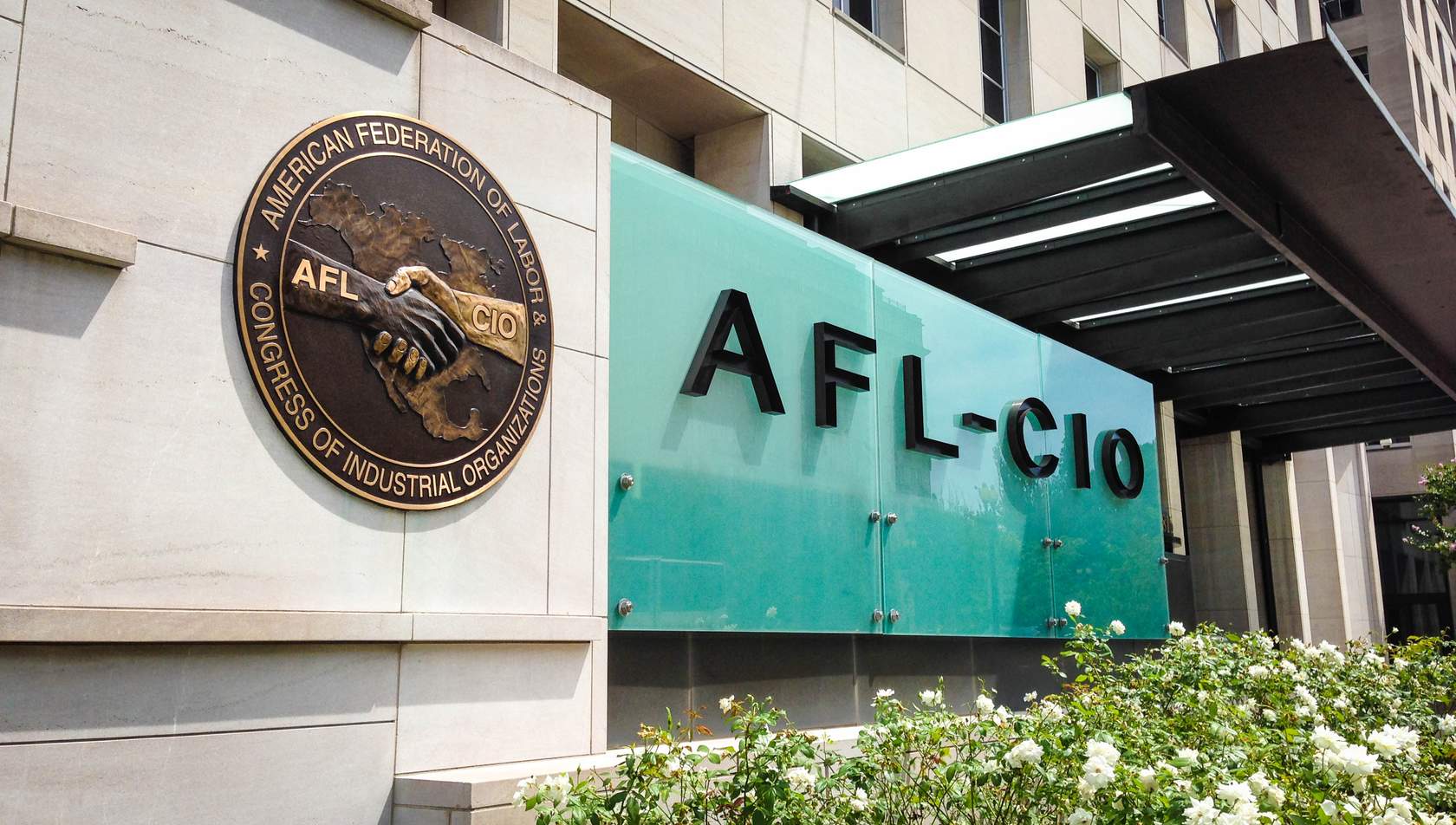
Economic interest groups include organizations that represent big business, such as the US Chamber of Commerce and the National Association of Manufacturers (NAM). They also include groups that represent workers, such as the American Federation of Labor and Congress of Industrial Organizations (AFL-CIO). Professionals also form economic interest groups, such as the American Medical Association (AMA) and the American Bar Association (ABA).
Image: Headquarters of the AFL-CIO
 Government interest groups include the National League of Cities, the United States Conference of Mayors, and the National Governors Association. One critical task performed by these groups is to help state and local governments obtain federal grants.
Image: A meeting of the National Governors Association (2017)
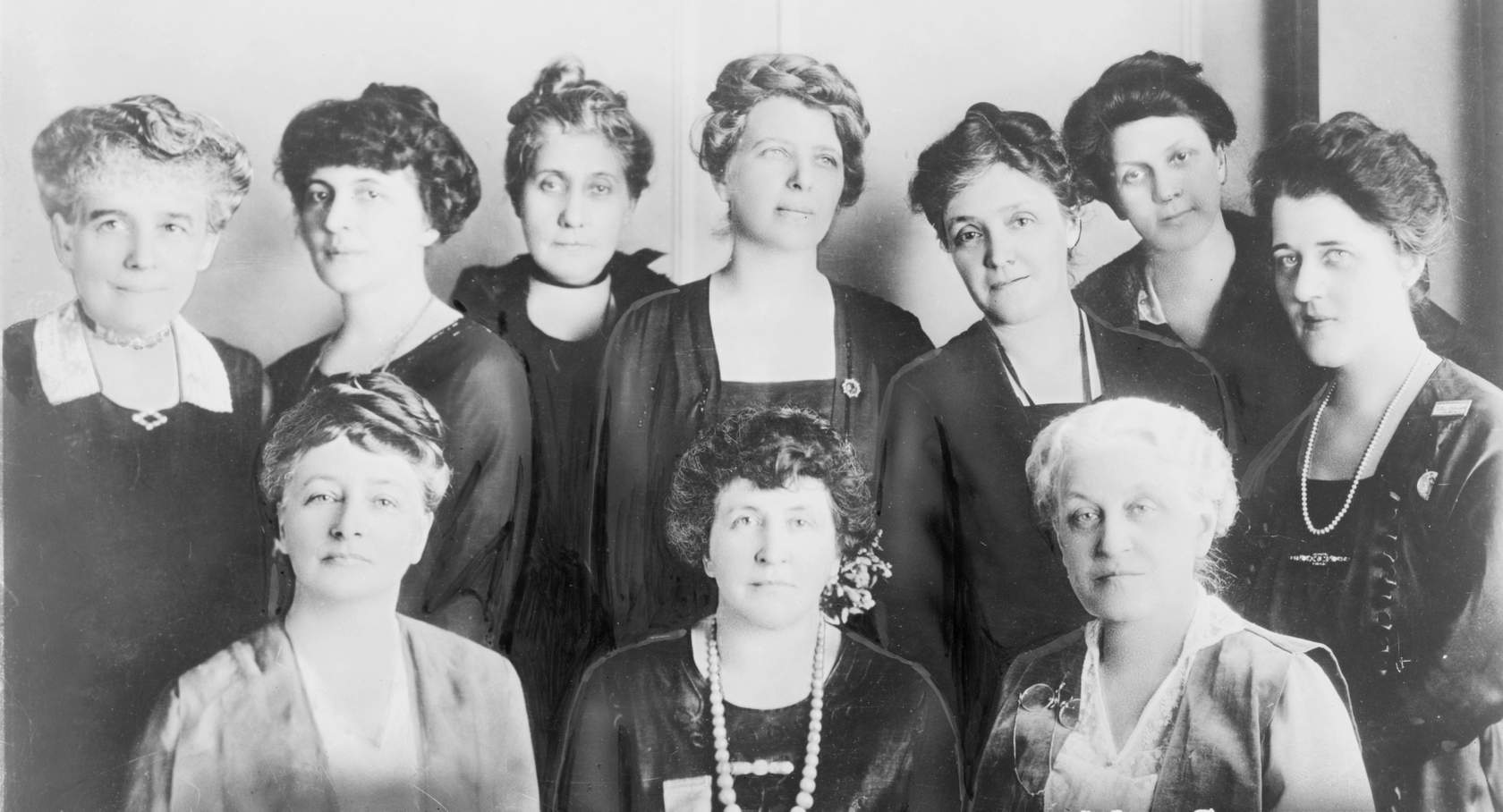
 Public interest groups do not usually expect to profit directly from the policy changes they seek. The activists who staff these groups, however, gain financially by attracting donations from individuals and foundations who support their activities. As the name implies, public interest groups enjoy an image of nonpartisanship, even though some of them engage in clearly political activities. Perhaps best known is the League of Women Voters, which promotes simplified voting procedures and an informed electorate.
Image: The board of directors of the League of Women Voters in 1920, the year the interest group was founded
 The civil rights movement of the twentieth century also gave rise to numerous civil rights interest groups that represent those who have experienced discrimination. Perhaps the best known is the National Association for the Advancement of Colored People (NAACP).
Some interest groups are formed to advocate for or against only a single issue. Perhaps the best-known interest group is the National Rifle Association (NRA). There are many others, however, such as Mothers Against Drunk Driving (MADD). MADD campaigns for stiffer sentences and mandatory penalties for driving while intoxicated.
Lobbying efforts are directed primarily at the federal level. They focus on committees of Congress that consider legislation, administrative agencies that are responsible for writing or enforcing regulations, and executive departments. Many lobbyists have served in government themselves. This means they have worked, in some cases for years, with the very people they are now lobbying. This experience gives them invaluable insights into how things are accomplished in Washington.
As previously noted, the vast majority of legislative work in Congress takes place in committees. Lobbyists testify at committee hearings, provide the staff with information, and may even draft proposed legislation. They explain why the bill is important to their members as well as what impact it will have in the respective legislator's state. Important public policy decisions are made by regulatory agencies such as the Federal Communications Commission (FCC). Lobbyists that represent corporations or trade associations use the same tactics with federal agencies as they do with Congress. They testify before administrative hearings, submit comments or file briefs, and provide proposed drafts for regulations under which their clients are required to operate.
When Congress and the executive branch are unresponsive, interest groups can turn to the courts for remedy. The NAACP, for example, played a major role in the landmark civil rights cases of the 1950s and 1960s. Pro-life groups have filed suits in state and federal courts to limit abortions. Interest groups may be a plaintiff in a lawsuit, provide the attorneys, underwrite the costs of the legal team, or submit an amicus curiae brief in support of one side or another. Amicus curiae is Latin for "friend of the court."
Regulation of Interest Groups
Interest groups have both their supporters and their detractors. Critics maintain that interest groups only give political influence to those who have considerable wealth and power. Supporters argue that the system is much more open than in the past, and they point to the effective lobbying done by groups representing women, minorities, and older Americans. Supporters also claim that instances of corruption are the rare exceptions, and they champion interest groups as a vehicle for Americans to petition the government. As in other areas, however, this First Amendment right of petition is not absolute. The courts have ruled that limitations on lobbying are legitimate because its goal is to directly influence legislation.
Controls over Lobbying
Lobbyists are required to register with the clerk of the House and the secretary of the Senate and indicate what group they are representing, how much they are compensated, and what types of expenses are reimbursed to them. They also have to file quarterly financial statements.
In addition, lobbyists who represent foreign governments or corporations must register with the Department of Justice as agents of those countries. Beginning in March 2007, new regulations regarding lobbying prohibited lobbyists or firms that employ lobbyists from giving gifts of any value to legislators or reimbursing legislators' travel costs.