Cycle 11: Epigenetics
LECTURE 1: EPIGENETICS I
epigenetic markers can be viewed as punctuations
their placements can change the meaning (or interpretation) of the same words
epi = genetics
genetics = genomic sequence
epigenetics refers to all of the tags on top of the DNA
tags = methyl groups & acetyl groups
purple proteins = histones
histones wrap DNA around themselves so DNA can be compacted
DNA has an overall negative charge because of the phosphate backbone
overall charge of histones is positive
have amino acids (they are proteins!)
has tails — part of protein but not part of tertiary structure
tags are part of the histone protein — like a tail
lysine + = K
lysine amino acid is positively charged
lysine (present in histone + tail) gives the overall positive charge
methyl: CH3 — when added, methylation, when removed, demethylation
goes on cytosine nucleotide (no other nucleotide gets methylated)
acetyl: Ac — when added, acetylation, when removed, de acetylation
goes on lysine amino acid of histone
dynamic: tags go on and off
all the sequences for the tags are the epigenome
have an epigenomic sequence
epigenome controls gene expression
what determines when? where? how? life decisions
gun + bullet = genome
epigenome pulls the trigger (when parts are allowed to do transcription)
master regulator
studies on monozygotic twins — born with same genetic + epigenetic sequence
by the age of 2, epigenome changes
old age: many epigenomic changes
everyone is born with epigenome
epigenome plays important part as embryo, disease, normal processes
behavioural epigenetics (could also do aging) — controls all genetics
similar experience — similar epigenome
traumatic experience → can see similarities
can see epigenomic patterns in people who were sexually abused
using CRISPR-Cas9 to edit epigenome
catalytically inactive Cas — not cutting anything
adds methyl, removes method, adds acetyl, removes acetyl
huge correlation between psych disorders + epigenome
most drugs treat symptoms not cause
epigenetic editing treats cause
Epigenetic Modulation
epigenomes 100% look different later than at birth
these factors can affect genes through mutations (but not that different)
social interactions
psychological state
by happy and eat everything in moderation — don’t need to fixate on it
Molecular Mechanism of Epigenetics
signal transductions — overall mechanism is very straightforward
if supposed to be unmethylated + becomes methylated → counts as mutations (and vice versa)
epigenetics: the study of changes in gene expression caused by mechanisms other than changes in the underlying DNA sequence
genes can be “tagged” by our experiences — this is a dynamic process that is not random
tags can be inherited by the offspring (transgenerational epigenetic inheritance)
partially inherited by parents
partially accumulated → passed on to your offspring
done through sequencing of totipotent zygote
depends on type of experience, severity, we don’t know
DNA Methylation
DNA methyltransferase (DNMT): enzyme that METHYLATES DNA
transfers methyl groups to DNA
happens in CpG: (p is for phosphate)
5’ — CpG — 3’
3’ — GpC — 5’
both cytosines get methylated (somewhat across from each other)
hypermethylation: a lot of methylation → gene transcription is OFF
hypomethylation: very little methylation → gene transcription is ON
without acetyl group → histones are tightly wound together
lysine is not acetylated (still has its positive charge)
makes a structure called heterochromatin
gene is embedded in structure (inaccessible to transcription factors, RNA polymerase)
INACTIVE
when add acetyl, opens up → gene is accessible therefore ACTIVE
loose conformation called euchromatin
acetyl group makes the lysine neutral
Methylation and Demethylation
de novo — from scratch (new)
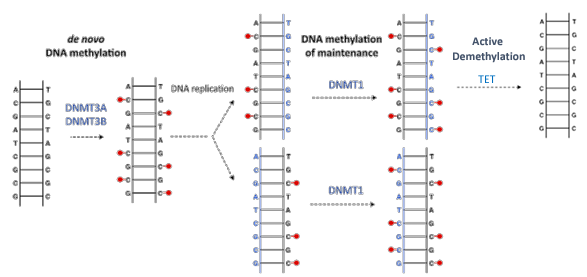
DNMT3A, DNMT3B does methylation
programmed in cell
there is signal transduction that guides DNMT where to go
Replication — same methylation
DNA methylation of maintenance
DNMT1 methylates cytosine on other strand
DNMT1 recognizes hemimethylated strands (methylates other strand)
evolved to have CpG so it can copy methyl groups over during replication
TET can remove methyl groups
active demethylation
TET: ten-eleven Translocation Enzyme removes methyl group from cytosine
DNMT: DNA Methyltransferase; converts cytosine (C) to 5-methylcystosine (5-mC)
Octamer of core histones
core histones: H2A, H2B, H3, H4 (each one x2) — blue
histone H1 — green
DNA wraps around
N-terminal tail is a bunch of lysines (K) for #5, 8, 12, 16
lysine (K) → acetylation → acetyl lysine
adds acetyl group
turns from positive charge to neutral charge
deacetylation makes lysine positive again (wound tighter — heterochromatin)
Histone Acetyltransferase and Histone Deacetylases
HATs: histone acetyltransferases
transfer acetyl groups to histones
increases transcription
euchromatin
HDACs: histone deacetylases
remove acetyl groups from histones
decreases transcription
heterochromatin
residues = another word for amino acid
acetylation of the lysine residues at the N terminus of histone proteins removes positive charges, thereby reducing the affinity between histones and DNA
makes RNA polymerase and transcription factors easier to access the promoter region
Histone Modification: acetylation or deacetylation
acetylation by HATs (euchromatin)
deacetylation by HDACs (heterochromatin)
DNA methylation: methylation or demethylation
methylation by DNMT (transcription is OFF)
demethylation by Ten-eleven Translocation (TET) (transcription is ON)
LECTURE 2: EPIGENETICS II
Epigenome of Twins
epigenetic drift: epigenetic modifications that occur with age
comparative monozygotic twins for methylated DNA
drastically change epigenome with age
methylation pattern becomes less similar
more one-sided hyper and hypomethylation
their methylation patterns are mostly similar
Behavioural Epigenetics
how genome gets methylated as you experience a behaviour
behaviour: maternal care
naturally see nurturing + non-nurturing moms
if the pups are not nurtured → difference in genome tagging
non-nurturing: not licking/grooming pups
hypermethylation of promoter that codes for Nr3c1
Nr3c1 is a gene that codes for glucocorticoid receptor (GR) protein
GR is a transcription factor
receptor for corticosterone (cortisol in humans)
stress hormone
good thing — releases it to deal with stressful situation
once done it’s job = bad (causes anxiety + other symptoms)
targets inflammation
GR binds with corticosterone and “gets rid of it”
during stress response (as transcription factor): going into nucleus, binding to promoter, activating genes, controlling moment of stress
once stress gone, needs to be taken away
if you don’t have enough GR, won’t take corticosterone away → anxiety + stress
hypermethylation → inactivation
cannot make enough GR
not getting rid of corticosterone
mice that were not groomed/nurtured were high in anxiety
high corticosterone levels in body
nurturing rats had different signal transduction
no methylation of promoter → transcription factor NGFI can bind
transcription of Nr3c1
higher levels of GR
GR binds to corticosterone and low anxiety
when pups are switched, epigenetic markers change
female pups raise their offspring the way they were raised
if you inject a drug that adds methyl tags
go from relaxed, high-nurtured rat to anxious rat
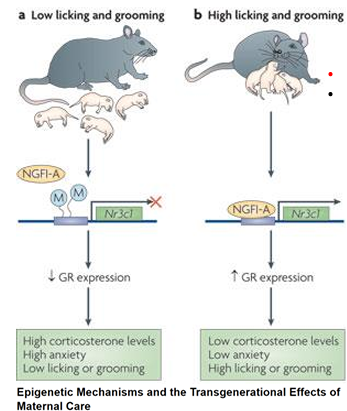
direct epigenetic proof that maternal care has an effect on epigenome
effect translates to a drastically different phenotype
Transgenerational Epigenetic Inheritance
transgenerational epigenetic inheritance: idea that epigenetic marks (i.e. DNA methylation, histone modifications) can be acquired on the DNA of one generation and stably passed on through the gametes (i.e. sperm and eggs) to the next generation
experiences and environmental exposures can change the way your DNA works (without changing the DNA itself)
this can be passed on to your offspring
early-life experiences exert long-term effects on gene expression which can be inherited by the offspring
signature of maternal care in non-human primates
separated from biological mother
others raised by human (surrogate nurse)
difference in epigenetic markers
normal monkeys
surrogate — aggressive + highly anxious
alcoholic monkeys
normal monkeys = repulsed by smell
surrogate = drank it, wanted more
Methylone
their epigenetics are the opposite
drastic differences in behaviour
methadone of the monkey raised by non-mother monkey looks the same as that of a monkey raised by biological monkey mother
experimental monkeys are different than pets/zoo
Epigenetics has been linked to all these disorders
most evidence for schizophrenia, anxiety, depression, drug addiction
epigenome that leads to these changes → can be passed on
epigenetic drugs in the treatment of anxiety disorders
acetylation + deacetylation of histones that lead to anxiety
drug = valproate (HDAC inhibitors — inhibits histone deacetylase)
tumour suppressor genes are also under epigenetic control
hypermethylation of promoter region by DNMT → cancer cells suppress tumour suppressor gene
don’t transcribe this because want to form a tumour
treated patients with adjuvant therapy (DNA methylation inhibitor)
DNMT no longer methylates promoter
methylation targets the promoter
hypermethylation → transcription factors don’t bind
need precision for adding these DNA methylation inhibitors
Using CRISPR-Cas9 for Epigenome Editing
use dead Cas9 (dCas9) — not catalytically active
don’t want to cut DNA sequence, want to change the epigenomic sequence
dCas9 goes to target (promoter) and sits there
linked with DNMT3A — enzyme that does demethylation
hypermethylate: couple Cas9 with DNMT3A
hypomethylate: couple Cas9 with TET
TET removes methyl groups
we all have an epigenetic clock
look at methylome (DNA methylation pattern)
mapped all diseases + healthy cell
biological age
epigenetic age acceleration: biological age is more than chronological age
body parts aren’t all the same age