Ultrasound
Ultrasound is sound with frequencies higher than 20,000Hz
Electrical devices can be made which produce electrical oscillations over a range of frequencies. These can easily be converted into mechanical vibrations to produce sound waves beyond the range of human hearing. This is called ultrasound and it pops up all over the place.
Ultrasound waves get partially reflected at boundaries
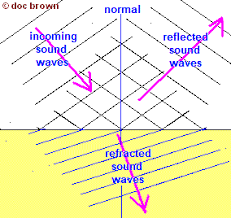
- When a wave passes from one medium into another, some of the wave is reflected off the boundary between the two media, and some is transmitted, this is partial reflection.
- What this means is that you can point a pulse of ultrasound at an object, and wherever there are boundaries between one substance and another, some of the ultrasound gets reflected back
- The time it takes for the reflections to reach a detector can be used to measure how far away the boundary is
Ultrasound is useful in lots of different ways
Medical imaging, e.g. pre-natal scanning of a foetus
- Ultrasound waves can pass through the body, but whenever they reach a boundary between two different media some of the wave is reflected back and detected
- The exact timing and distribution of these echoes are processed by a computers to produce a video image of the foetus
- No one knows for sure if ultrasound is safe in all causes but X-rays would definitely be dangerous
Industrial imaging, e.g. finding flaws in materials
- Ultrasound can also be sued to find flaws in objects such as pipes or materials such as wood or metal
- Ultrasound waves entering a material will usually be reflected by the far side of the material
- If there is a flaw such as a crack inside the object, the wave will be reflected sooner
Ec
Industrial imaging, e.g. finding flaws in materials
- Ultrasound can also be used to find flaws in objects such as pipes or materials such as wood or metal
- Ultrasound waves entering a material will usually be reflected by the far side of the material
- If there is a flaw such as a crack inside the object, the wave will be reflected sooner