Thermodynamics
exothermic reaction = a reaction which releases energy, usually as heat, from a system to its surroundings
endothermic reaction = a reaction which absorbs energy from its surroundings, usually in the form of heat
spontaneous processes = processes that can actually happen
Tend to be exothermic
non-spontaneous processes = processes that can never happen regardless of circumstance
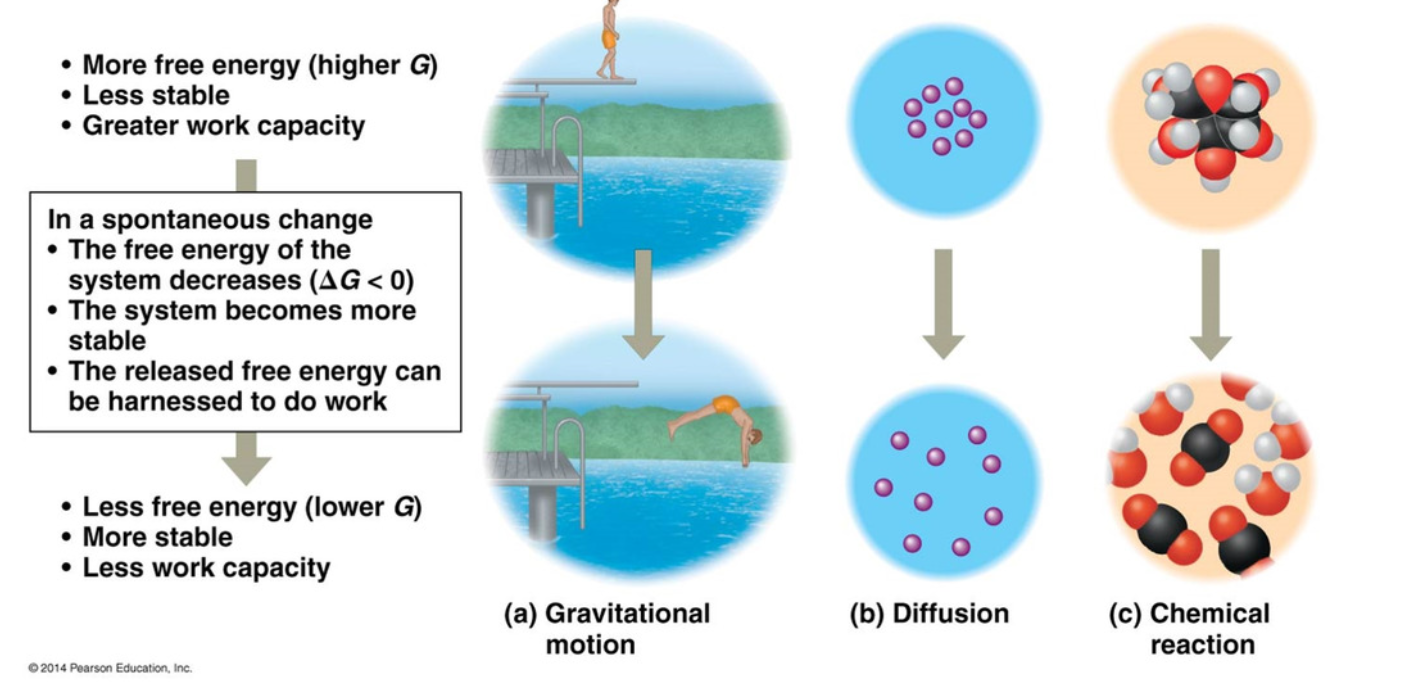
exergonic reaction = a spontaneous chemical reaction in which there is a net release of free energy
Catabolic
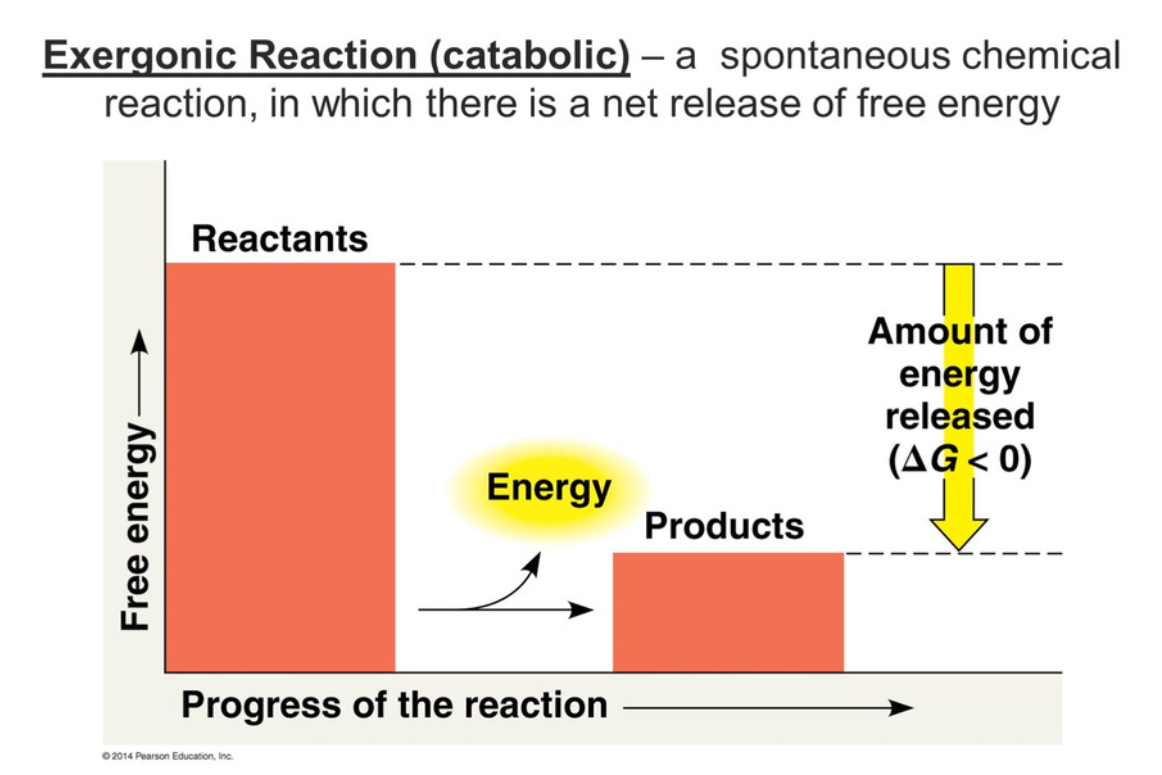
endergonic reaction = a non-spontaneous chemical reaction in which free energy is absorbed from the surroundings
Anabolic
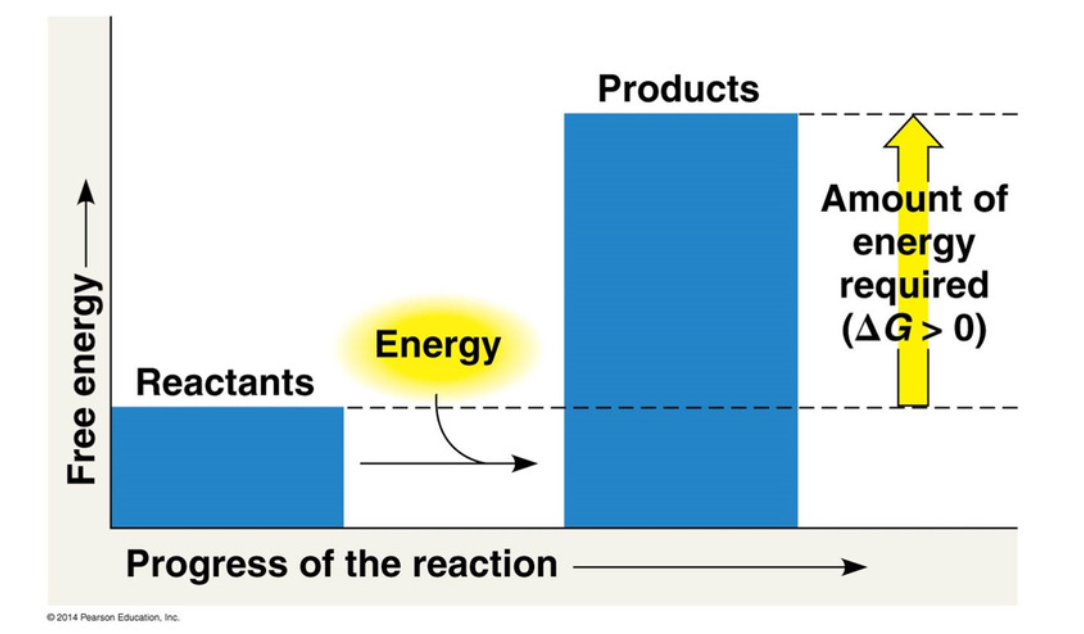
Generally, a forward reaction is spontaneous, but its reverse is non-spontaneous
Laws
The Zeroth Law
If two bodies are each in thermal equilibrium with a 3rd body, they must also be in equilibrium with each other. This law allows scientists to introduce a thermometer into a system and allow that to be the 3rd body, then defining a temperature scale for each of the 2 other bodies.
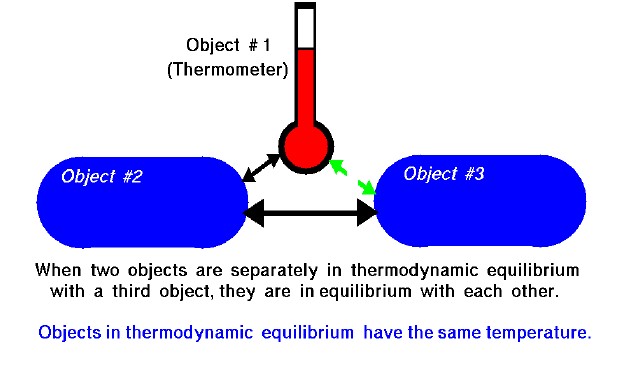
thermal equilibrium = the state where two or more objects in thermal contact reach the same temperature, resulting in no net transfer of thermal energy between them
The First Law
Energy can be transferred and transformed but not created or destroyed.
Also called the law of conservation of energy
Follows the exact same principle as the law of conservation of mass
The Second Law
Every energy transfer that takes place will increase the entropy of the universe and reduce the amount of usable energy available to do work.
Sometimes, in rare cases, the overall entropy of the universe will be unchanged rather than increased
All closed systems are attempting to reach equilibrium at which they can no longer increase the universe’s entropy
Entropy is at a maximum in equilibrium
No useful work can be done in equilibrium
The Third Law
When the entropy of each and every element (in their perfectly crystalline states) is taken as 0 at absolute 0 temperature, the entropy of every substance must have a positive, finite value.
It is impossible to achieve absolute 0
An infinite number of steps would have to be performed in order to reach absolute 0
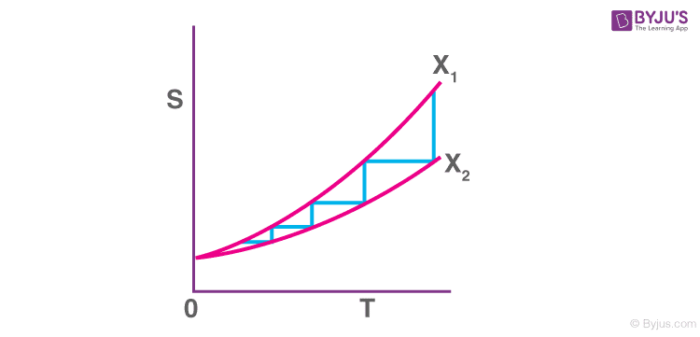
This law is based off of perfect crystals, which have an entropy of 0 at absolute 0
Enthalpy
enthalpy = a measurement of a system's internal energy
Entropy
entropy = a measurement of disorder
Gibbs Free Energy
A way to determine whether a reaction will occur on its own.
Also referred to as available energy
change in available energy = change in enthalpy − system temperature * change in entropy
If, ’s a spontaneous reaction
These can be called exergonic reactions
This reaction can occur on its own without any interference
If, ’s a non-spontaneous reaction
These can be called endergonic reactions
This reaction will need interference in order to start and continue
If, it’s an equilibrium reaction
No work can be done in living organisms
System temperature is measured in Kelvin
will sometimes be referred to as a system’s total energy
Colors
#b6c289
#e79796
#FFB284
#f7cb98
#88ae53 for other stuff