2g. Long run aggregate supply
Long run aggregate supply
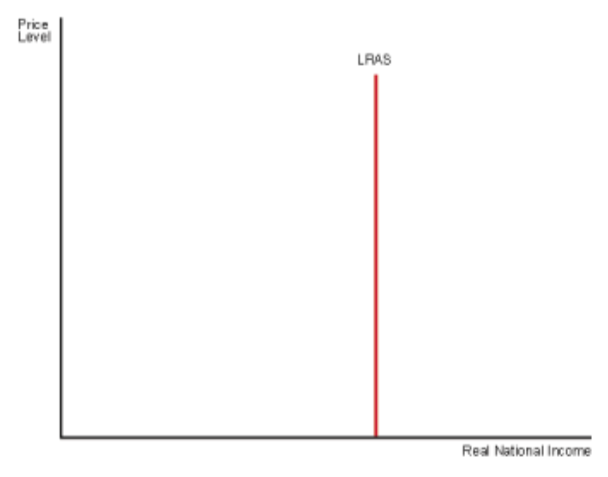
This shows the productive potential of the economy
This is the maximum that can be produced and is therefore similar to the PPF in Theme 1
Classical LRAS
- Classical economists (e.g. Hayek) believe that in the long- run the economy will always self-correct to full capacity
- They believe prices are flexible as during recessions workers are willing to accept lower wages to avoid being unemployed (so real output does not change) and hence prices will fall (due to lower incomes and less spending)
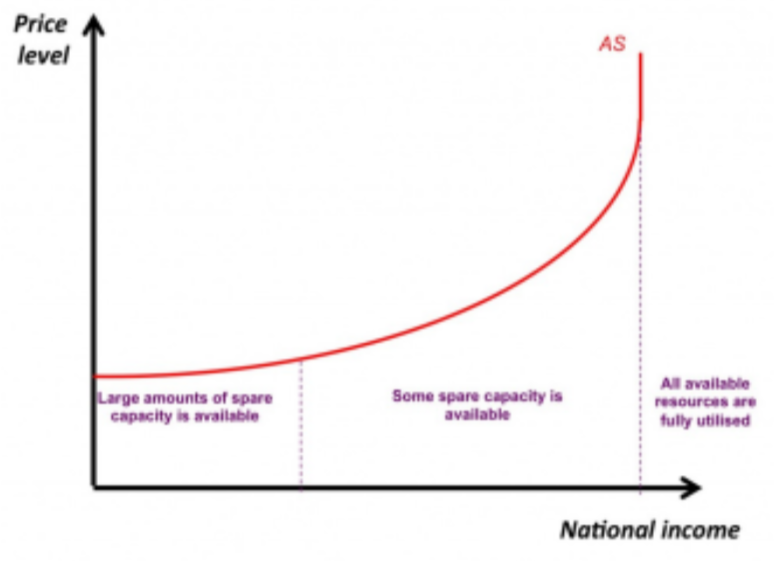
Keynesian LRAS
- Keynesians believe that wages are ‘sticky downwards’ because workers are unwilling to accept lower wages.
- If confidence is low (e.g. due to animal spirits), and firms want to cut costs, they will therefore have to make workers unemployed, as workers refuse wage cuts, reducing GDP.
- Output can be increased up until the point where all resources are used and therefore LRAS becomes perfectly inelastic
Shifts in LRAS
Shifts in LRAS occur because the quantity and/or quality of factors of production have changed.
- Land
- Labour
- Capital
- Enterprise
Shifts in LRAS
Capital
- Improvements in technology = Better machines
- Division of Labour (specialisation) = Higher Productivity
Enterprise
- More competition = More efficiency
- Lower taxes and less regulations = More Innovation
Land
- Improved mining techniques = More raw materials extracted
Labour
- More migrants/Higher Birth Rate/Higher Participation Rate/Higher Retirement Age = More workers
- Improved health = Less absenteeism
- Better education & training = Improved skills
Bottlenecks
Bottle necks occur when output is on the inelastic part of the LRAS curve with no easy way to remedy the problem. This can lead to higher price levels.
Reasons could be:
- Lack of raw materials
- Lack of land
- Lack of skilled labour
- Not enough labour
- Insufficient capital