Music Theory Notes
Sound
A disturbance (wave) that needs a median to travel
How high/low they go is amplitude, how quickly they arrive is frequency
MOST INSTRUMENTS TUNE THEIR A ABOVE MIDDLE C, 440 HERTZ
Instrument Classification

Voice
Tessitura is the most comfortable range a person can sing
Scales
Chromatic Scale: An octave divided into all half steps
Diatonic Scale: An octave divided into 5 whole steps and 2 half steps. 3 minor scales, 1 major
Major Scale: 5 whole notes, 2 half notes. Pattern is Tonic-Whole-Whole-Half-Whole-Whole-Whole-Half
Natural Minor Scale: Tonic-Whole-Half-Whole-Whole-Half-Whole-Whole
Harmonic Minor Scale: Tonic-Whole-Half-Whole-Whole-Half-1.5-Half
Melodic Minor Scale: Tonic-Whole-Half-Whole-Whole-Whole-Whole-Half ascending
Pentatonic Scale: Tonic-Minor Third-Whole-Whole-Minor Third-Whole
Intervals
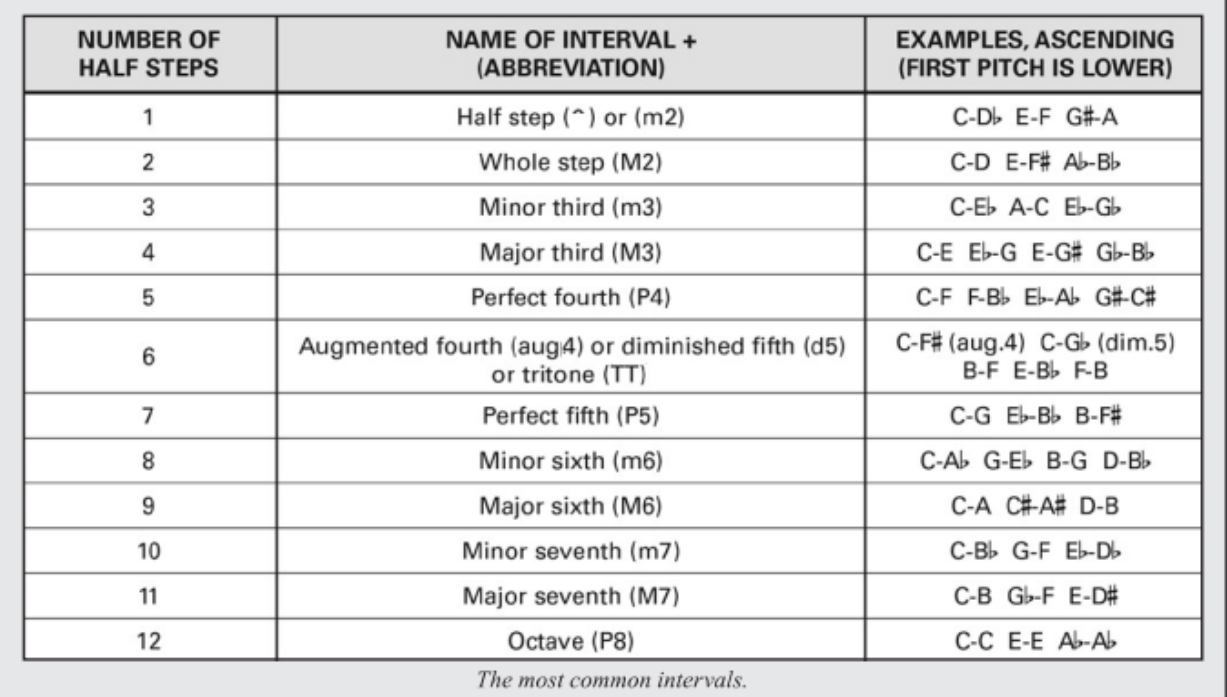
Half step = semitone
Sharp keys= raised by a half step
Flat keys= lowered by a half step
Melodic Intervals= DO NOT PLAY AT THE SAME TIME
Harmonic Intervals= PLAY AT THE SAME TIME
Pitch/Tempo/Dynamics
Tempo is how slow or fast the beat goes in bpm

Pitch refers to one single note and how high/low it is. Most drums/percussion ARE NOT PITCHED
Dynamics= how soft or loud the music is
