Notes on Archaea | I love my lavie <3
Archaea
Prepared by: Andrea Nichelle C. Moreno
Structural and Functional Diversity
Discovery of Domain Archaea
- The study titled Phylogenetic structure of the prokaryotic domain: The primary kingdoms
- First published in PNAS Vol 71 no. 11 on November 1977
- Written by Carl R. Woese and George E. Fox
- It was headlined in the front page of the New York Times for November 3, 1977
- Headline: Scientists Discover a Way of Life That Predates Higher Organisms
- According to the abstract, they conducted a phylogenetic analysis based on rRNA sequence characterization.
- Through this living systems were expected to represent 3 aboriginal lines of descent:
- eubacteria — all typical bacteria
- archaebacteria — contains methanogenic bacteria
- urkaryotes (spelling copied from the abstract) — represented in the cytoplasmic content of eukaryotic cells
Phylogenetic Diversity of Archaea
- Archaea are prokaryotes
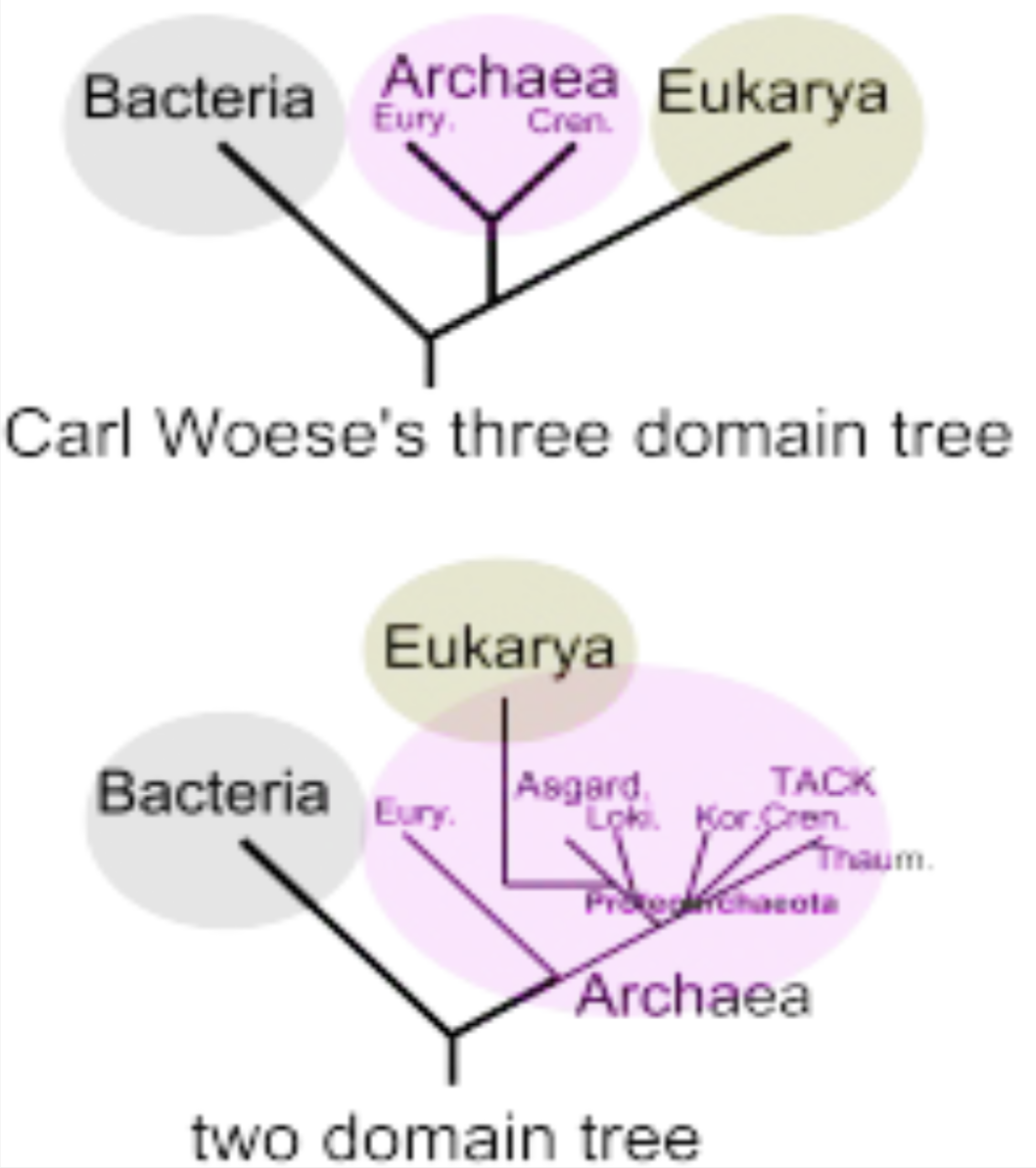
- Phylogenetically closer to Eukarya
- Archaea possess similar characteristics to bacteria and eukarya
- It is less popular in the 3 domains as it does not thrive or dominate in the same ecological niches as Bacteria and Eukarya.
Commemorating the Archaea
- There is a plaque that commemorates Carl Woese’s use of molecular sequencing and oligonucleotide cataloging of 16S rRNA
- Found in Burrill Hall, University of Illinois, Urbana-Champaign
Unique Characteristics of Archaeal Cells
- Archaea has simple cellular organization with a single bounding membrane
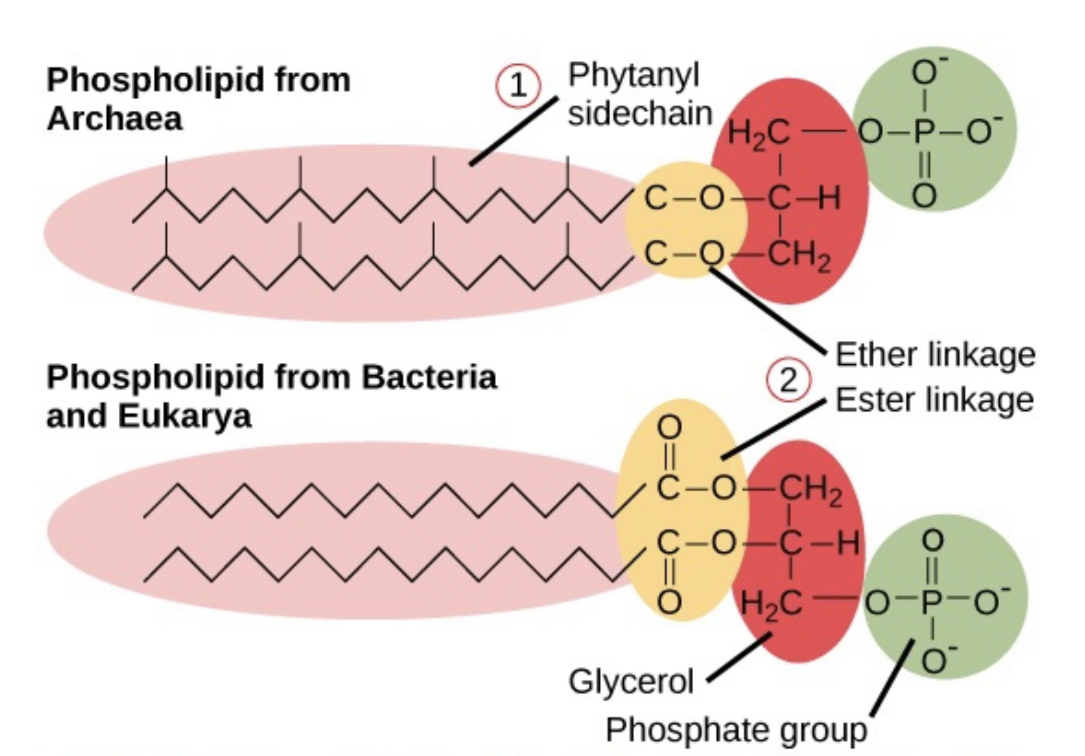
- Its membranes are made of lipids comprised of isoprenoid chains ether-linked to a glycerol backbone
- Archaea do not have peptidoglycan in cell walls.
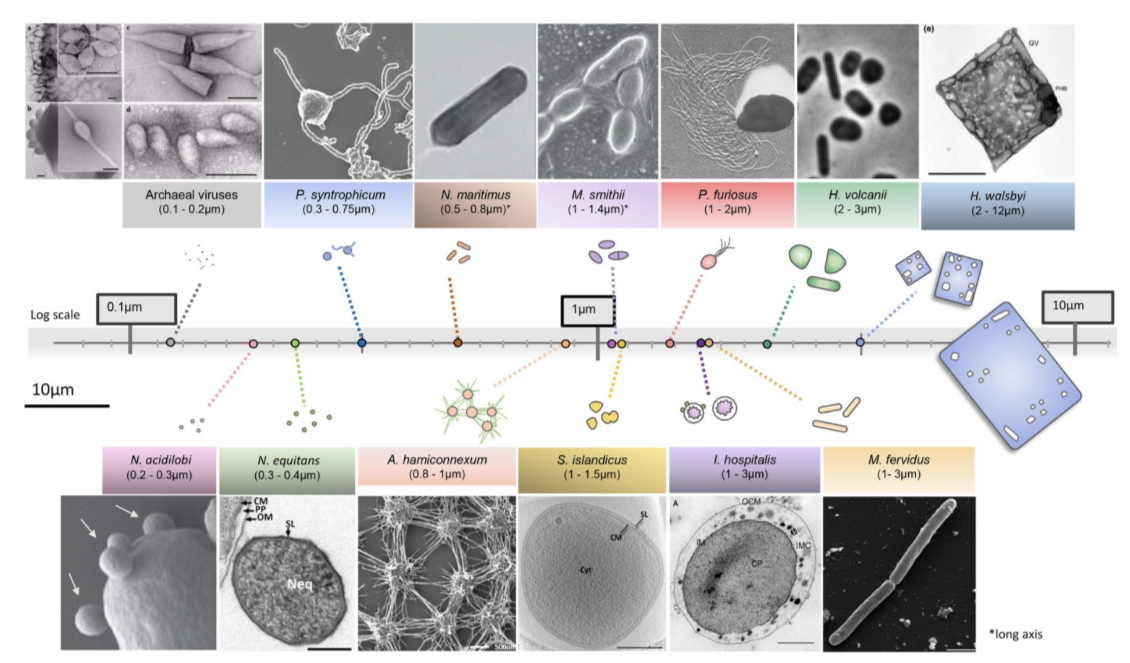
- Varied shapes and sizes
Cell Organization, Shape, and Size
- Its shapes are like of bacteria with several unique geometric shapes like flat square and triangle
- Their typical size is from 0.7 um to 4um
- Filaments can be up to 100 um
- Others can be only 300 nm
Cell Wall
- Pseudomurein — fake peptidoglycan
- Methanochondroitin
- represents chondroitin present in vertebrates
- S-layer
- a paracrystalline surface layer that is resistant to osmotic lysis, high temperature, and low pH
- Protein sheath
- this gives resistance to detergents
- The difference between methanogen pseudomurein and bacterial murein
- Pseudomurein incorporates L-amino acids, B (1-3) bonds, and N-acetyltalosaminuronic acid, along with unique isopeptide bonds. Substitutions like glutamic acid to aspartic acid and alanine to threonine or serine are possible.
- Bacterial murein consists of D- and L-amino acids, B (1-4) bonds, and N-acetylmuramic acid in the glycan chain.
Membranes of Archaea: Modifications for Thermophilic Archaea
- Ether-linkage allows stability in extreme heat
- The structure of the lipid units of extreme archaea contains an ether bond between the glycerol head and the hydrophobic tail. There will be a substitution from the ester linkage to the ether bond which results in the thermotolerant quality of lipids
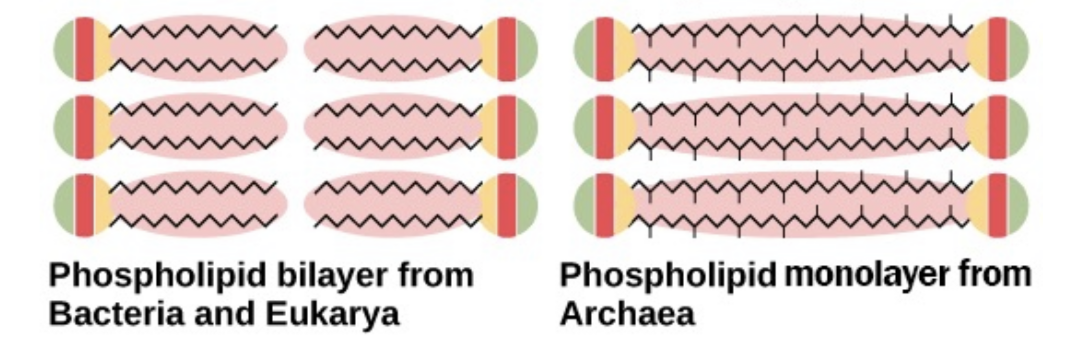
- Phospholipid monolayer is able to resist heat denaturation
Genome Organization
- Archaea are likely to have small circular genomes.
- Its genes are often grouped by function so that its transcriptions are coordinated.
- Some have many copies of the nucleoid per cell while others inherit DNA as a single copy genome. Hence, archaea replicate and organize their genomes in distinct and diverse ways.
Cytoskeleton
- In some cases, the same class of cytoskeletal filaments are found in bacteria and eukaryote.
- The cytoskeletal machinery in eukaryotes was a product from Archaea as a result of eukaryogenesis.
- Eukaryogenesis - evolutionary process that gave rise to eukaryotic cells
- The actin amino acid levels of Asgard archaea and eukaryotes are similar.
- Archaea also has homologies with bacterial-type cytoskeletal families.
- There is a correlation between the presence of actin-family cytoskeletal proteins in the genomes of archaea and its elongated cell shape.
Cell Division
- Cell division of archaea is similar to bacteria; however, there are key differences.
- A similarity to bacteria is archaea’s formation of a constriction ring to separate cells.
- The precise mechanisms used by archaea to separate the cells are not yet fully understood.
- Different constriction ring mechanisms:
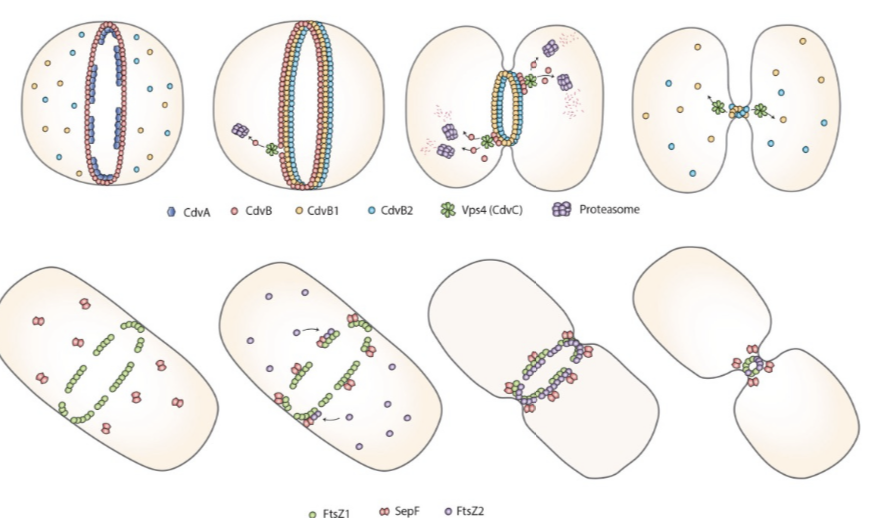
Archaea species have several varied make up for its cell envelope, cytoskeleton, membrane remodeling, and structure surface.
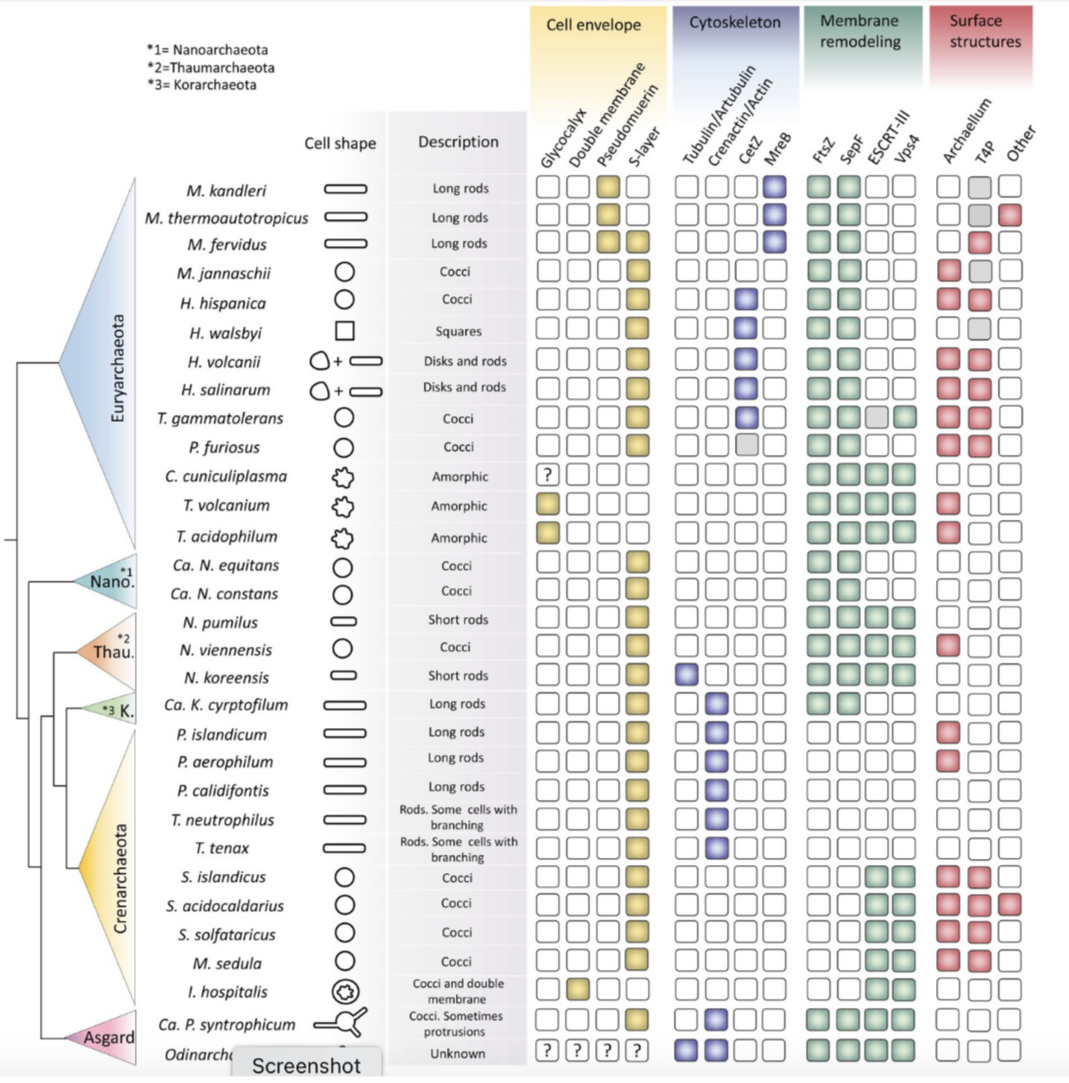
Structural and Functional Characteristics of Archaea
Comparison between archaea and bacteria:
Characteristic | Archaea | Bacteria |
|---|---|---|
Cell type | prokaryotic | |
Cell morphology | varies | |
Cell wall | varies; no peptidoglycan | with peptidoglycan |
PM type | lipid mono/bilayer | lipid bilayer |
PM lipids | branched carbon chains; bonded to glycerol by ethers | straight carbon chains; bonded to glycerol by ester |
Chromosome | circular | |
O. of replication | multiple | single |
RNA polymerase | multiple | single |
Initiator tRNA | methionine | formyl- methionine |
AB sensitivity | resistant | sensitive |
Calvin cycle | no | yes |
PM - plasma membrane; O. - origin; AB - antibiotic.
Comparison of archaea, bacteria, and eukarya:
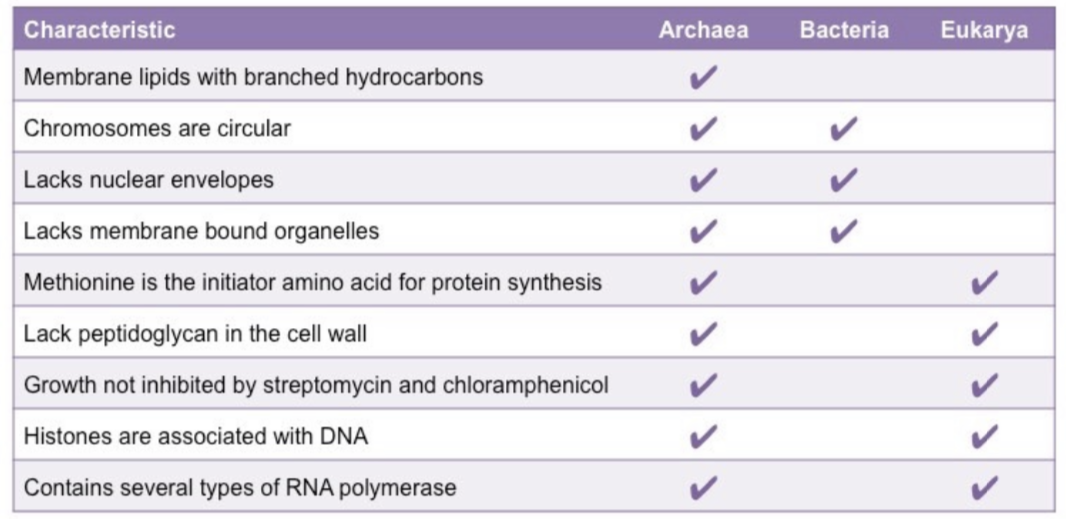
Classification of Archaea
Phylogenetic Diversity of Archaea
- The first two major groups of archaea are:
- crenarchaeota - hyperthermophiles
- euryarchaeota - contains extreme halophiles and extreme acidophiles
Phylogeny of Archaea
- Archaea are diverse and are present in all environments
- Extremophiles are a popular archaea
- The supergroups of archaea are: TACK, DPANN, and Asgard
- Euryarchaeota - an archaean phylum that does not fall within a superphylum
- TACK group contains: Thaumarchaeota, Aigarchaeota, Crenarchaeota, and Korarchaeota
- DPANN group contains: Diapherotrites, Parvachaeota, Aenigmarchaeota, Nanoarchaeota, and Nanoarchaeota
- Asgard
- It is the closest prokaryotic relative of eukaryotes.
- In 2010, members of phylum Lokiarchaeota were discovered.
Extremophiles Archaea
- extreme temperatures - extreme psychrophiles (cold) and extreme thermophiles (hot)
- extreme pH - extreme acidophiles and extreme alkalophiles
- extreme amount of solutes - extreme halophiles and methanogens
Adaptations to Life at High Temperature
- Protein folding and thermostability
- has hydrophobic cores
- increased ionic interactions on protein surfaces
- chaperonins - refold partially denatured proteins
- DNA Stability
- contains high intracellular solute resulting in a stabilized DNA
- has reverse DNA gyrase which introduces positive supercoils into DNA to make it more stable
- has higher guanine and cytosine content
- Lipid stability
- has dibiphytanyl tetraether type lipids that form a lipid monolayer membrane structure
Adaptations of Halophilic Archaea
- Water balance in Extreme Halophiles
- accumulates or synthesizes compatible solutes
- Species like the Halobacterium pump large amounts of K+ into the cell as the intracellular K+ concentration exceeds the Na+ concentration; hence, the positive water balance is maintained.
- Proteins of Halophiles
- highly acidic
- contains fewer hydrophobic amino acids and lysine residues
Adaptation of Methanogens
- Pseudomurein
- Methanochondroitin
- Protein or glycoprotein
- S-layers
Role of Archaea in Eukaryotic Evolution
How did eukaryotes evolve from prokaryotes?
- Current data proposes that the first eukaryote came from an archaeon engulfing a bacterium and merging into a single bioentity.
- The specific archaeon is hypothesized to be part of the Asgard supergroup of Archaea.
- The appearance, way of life, and evolutionary story is unknown since there are no living cells that can be studied in the lab.
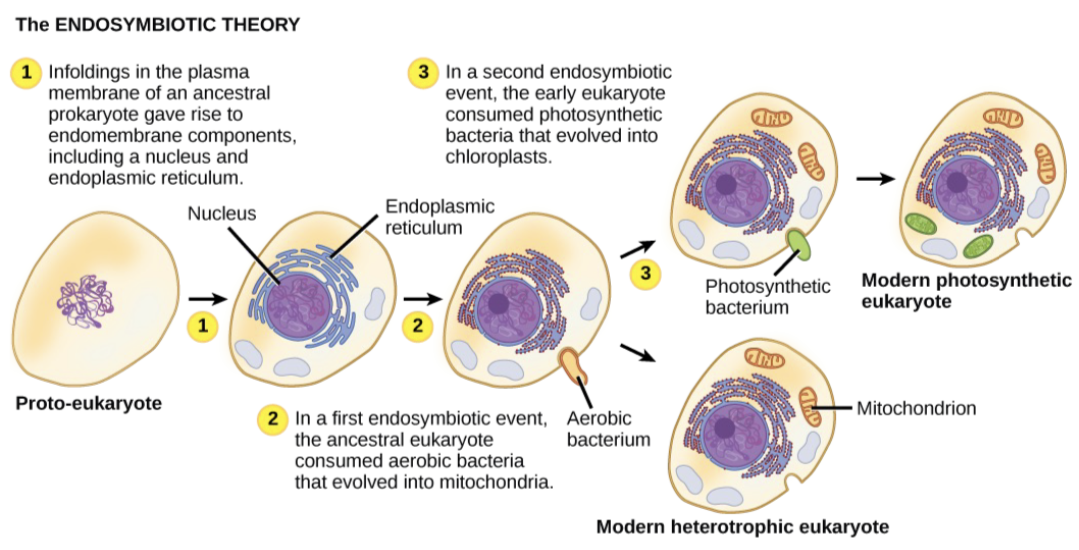
Endosymbiotic Theory
- Endomembrane components including nucleus and endoplasmic reticulum came from the plasma membrane infoldings of an ancestral prokaryote.
- The first endosymbiotic event marks the evolution of the mitochondria from the consumption of aerobic bacteria by the ancestral eukaryote. (Modern heterotrophic eukaryote)
- The second endosymbiotic event is the consumption of photosynthetic bacteria by the early eukaryote resulting in chloroplasts. (Modern photosynthetic eukaryote)
Article: Isolation of an Archaeon at the Prokaryote- Eukaryote Interface (January, 2020)
- Deep-sea methane seep sediment was collected using deep submergence research vehicle “Shinkai 6500” (2006).
- Pre-cultivation of microorganisms using DHS reactor to emulate methane seep sediment environment (2006-2012).
- Isolation and characterization of reactor-enriched organisms. Strain MK-D1 obtained (2018).
- The paper is an isolation project of an Asgard archaeon related to Lokiarchaeota from deep marine sediment.
- Candidatus Prometheoarchaeum syntrophicum
- anaerobic
- extremely slow-growing
- small coccus (~550 nm in diameter)
- no visible organelle-like structure
- creates protrusions that are long and typically branching
- Hypothetical eukaryogenesis model:
- entangle - engulf - endogenize (E3)
Etiology of Prometheoarchaeum syntrophicum
- Prometheoarchaeum
- Prometheus (Greek): a god who shaped man from mud and gave them ability to make fire
- archaeum from archaea (Greek): an ancient life
- syntrophicum, syn (Greek)
- Syntrophy - cooperative interaction of at least two microbial species to degrade a single substrate
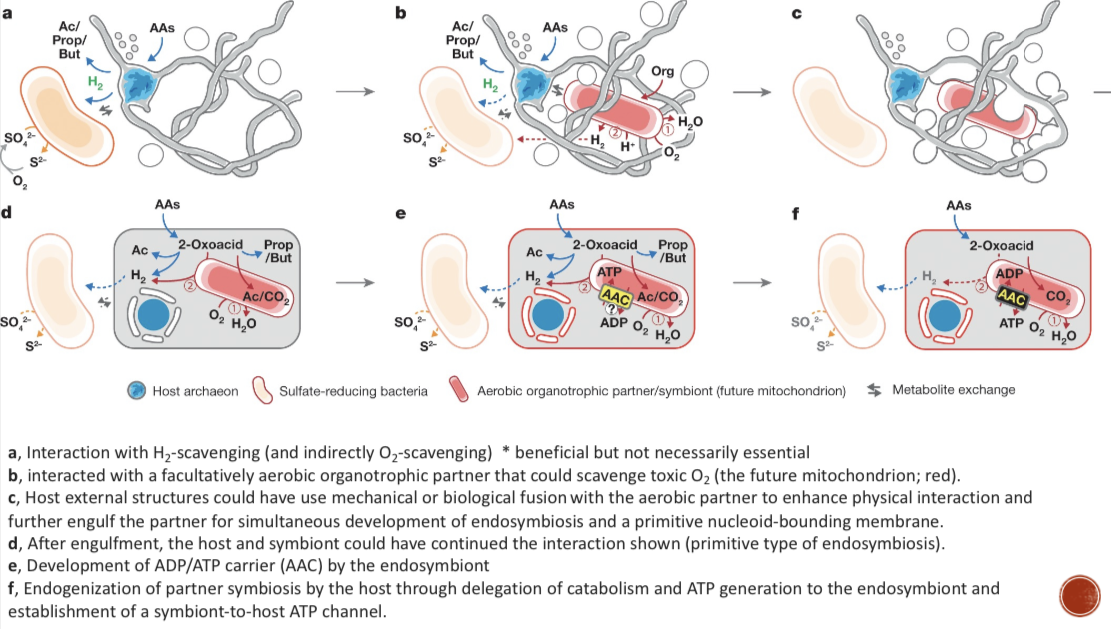
New Insights into Eukaryogenesis: Evolution Towards the Facultatively Aerobic LECA
- transition from anaerobiosis to aerobiosis
- aerotolerance might be caused by a symbiotic interaction with facultative O2-respiring organisms
- gaining an O2-respiring and ATP-providing endosymbiont (the mitochondrion)
- development of intracellular structures
- Theory: The host archaeon engulfed a metabolic partner through extracellular structures resulting in a primitive chromosome- surrounding structure.
- The structure is similar to the nuclear membrane.
Proposed theory:
Future researches
- Isolation of other Asgard archaea strains which are able to grow faster is better for laboratory manipulation and analysis.
- Lokiarchaeota is not the closest sister lineage to the eukaryotes. It is suggested that the archaeon shares a RCA with the Heimdallarchaeota and its relatives.
- Whether MK-D1 cellular protrusions are shared across all Asgard archaea or not are unknown.
Importance of Archaea
Ecological Roles
- 20% of microbial cells in the ocean are archaea
- Archaea are able to recycle elements like carbon, nitrogen, and sulfur through different habitats.
- Organism interaction
- archaea may have a mutualistic and commensalistic relationship exemplified by methane oxidizers in ruminant gut
- no reports on parasitism and pathogenicity
Archaea in Health and Medicine
- Archaea as pathogens are not yet well studied; however, there are some identified species to be disease prone:
- Methanobrevibacter smithii - found in stools of people with diverticulosis and causes obesity in mice with gut problems.
- Methanobrevibacter oralis - found in gums of people with periodontal disease and 40% of human brain abscesses.
- Extremozymes and archaeocins produce medically important products discussed by a study titled:
- Antimicrobial Peptides, Polymorphic Toxins, and Self-Nonself Recognition Systems in Archaea: an Untapped Armory for Intermicrobial Conflicts
- authored by: Kira S. Makarova, Yuri I. Wolf, Svetlana Karamycheva, Dapeng Zhang, L. Aravind, Eugene V. Koonin Christa M. Schleper, Editor
Archaea in Food and Industry
- Although roles are not established, archaea can grow and survive in olive brines, salted anchovies, kimchi etc.
- In the industry, extremozymes can withstand different extreme conditions and higher reaction rates such as in:
- radioactive waste treatment
- bioremediation
- mineral extraction
- creation of microbial fuel cells
Archaea research
- The video discussed the importance of the glycine to thioglycine substitution on the methane production of methanogens.
- It was revealed that although the shift to thioglycine will not affect methane production, the thioglycine will help make the Methanosarcina enzyme stable in increasing temperatures; hence, stabilizing growth and methane production.