Biomechanics of Trans-tibial Prosthesis
Key Factors Determining Prosthetic Use
The individual: prior ability, health status, motivation, training and education
The socket: fit and comfort, total contact, type of socket
Alignment: influenced by biomechanical principles
Prosthesis Goals
Comfort: Must provide comfort whether the user is standing or sitting. If uncomfortable, the user will likely not wear the prosthesis.
Energy Efficiency: Design should allow the user to perform daily tasks with minimal energy consumption.
Cosmesis: Aesthetic appearance of the prosthetic limb is important for the user’s self-esteem and social acceptance.
The Socket
Fit and Comfort:
The fit of the socket is paramount for comfort and functionality; poor fit can lead to discomfort.
Total Contact:
Modern designs strive for total contact to distribute pressure evenly and enhance comfort.
Prevents oedema and aids venous return
Provides greater area to distribute the load
Provides greater contact to provide sensory feedback
Accommodating for differences in tissues firmness - ie. building up more pressure around soft tissues to compress them so firm tissues not taking full load
Pressure tolerance - ie. building up more pressure around pressure tolerant areas than pressure sensitive
Pressure sensitive areas: spine of tibia, head of fibula, distal end of the tibia and fibula, hamstring tendons
Selective loading - unable to weight bear on distal end
Patella Tendon Bearing Prosthesis
Patellar Tendon Shelf: Accepts a majority of body weight (approx. 2/3) and guides correct socket positioning, diameter ~20mm
High Posterior Rim: Allows knee flexion, maximises surface area, relief for hamstrings, rounded brim, minimises discomfort while sitting.
Anterior Border: mid patella level, triangular shape, liner
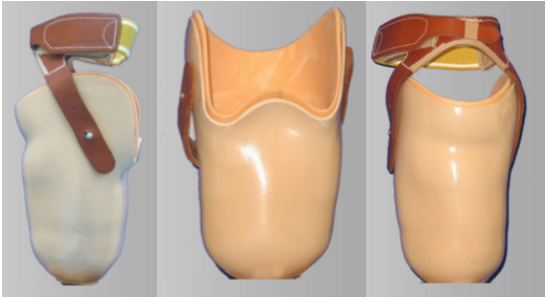
Alignment
Socket Flexion
At least 5 degrees of flexion is recommended to prevent hyperextension during stance phase. Opens up patella tendon shelf.
No contracture → 5 degrees of flexion
15degrees flexion contracture → 15 degrees socket flexion
5degrees flexion contracture → 5 degrees of flexion
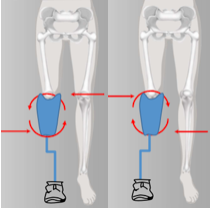
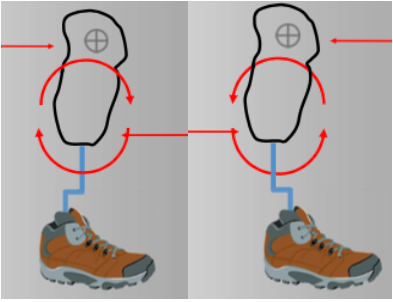
Counterforce Alignment:
Must ensure that forces acting on the socket are evenly distributed to prevent rotational issues at the stump
Socket angle = 5 degrees adduction / lateral flexion
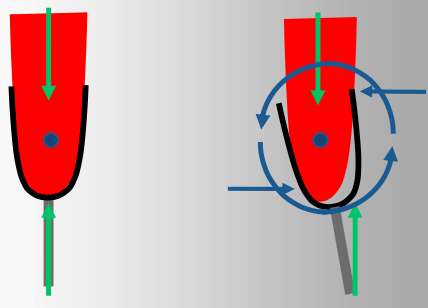
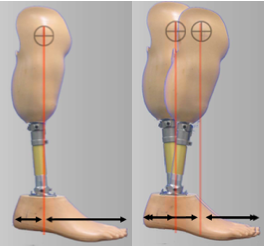
Mediolateral alignment: foot directly under socket (<5mm inset or outset)
Anteroposterior alignment: 1/3 posterior, 2/3 anterior (~9cm form heel)
Foot Levers
2/3 toe lever, 1/3 heel lever
Dorsiflexion → inc. heel lever, dec. toe lever
Plantarflexion → inc. toe lever, dec. heel lever
Observations
Foot rotated outwards
Height - up to 12mm shorter
Standing alignment
Front - height
Side - socket flexion