Unit 3 chem
Early Ideas about matter
Democritus views on matter:
Matter is composed of atoms
Atoms are solid, homogeneous, indestructible, and indivisible
Atoms move through empty space
Different kinds of atoms have different sizes, shapes, and movement
Aristotles ideas
Empty space cannot exist
Matter was composed of earth, fire, water, and air
Denied the existence of atoms
How were they different?
Aristotle disagreed with Democritus and said atoms or empty space did not exist
Rejected D. ideas mainly because it did not agree with the ideas of his nature
The public sided with A. because of his popularity, and D.’s ideas, although ahead of his time, were not believed
Daltons atomic theory
All matter is composed of extremely small particles called atoms
All atoms of a given element are identical in size, mass, and chemical propertes
Atoms of one element are different from atoms of another element
Atoms cannot be created, divided into smaller particles, or destroyed
Different atoms combine with simple whole-number ratios to form compounds
In a chemical reaction, atoms are separated, combined, or rearranged
The conservation of mass in chemical reactions is the result of the rearrangement of atoms during the reaction
They are not created or destroyed
Defining the Atom
J.J. Thomson(1897)
Cathode ray tubes-> discovered electron
Determined charge-to-mass ration of electron
Atoms can be broken down-> subatomic particles
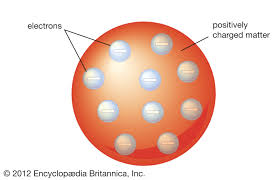
Plum pudding model
Robert Millikan(1909)
Determined the mass AND charge of the electron using “oil-drop experiment”
Earnest Rutherford(1911)
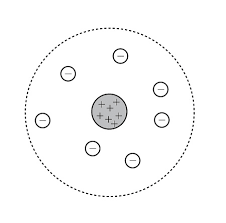
Discovered that the atom is mostly empty space-electrons move
Concluded that all atoms positive charge + most of the mass is in the nucleus
Nucleur model
How atoms differ
Number of protons (or electrons) in an atom -> identifies as an aton of a particular element
Called atomic number
Periodic table organization
Left-to-right
Top-2-bottom
ISOTOPES=same number protons and electrons, different number neutrons
MASS NUMBER= sum of protons and neutrons
Atomic mass v mass number
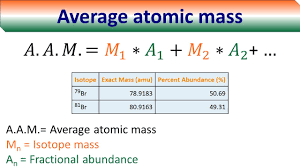
ATOMIC MASS= the weighted average mass of the isotopes of that element