Chemical Bases
Carbon
Has 4 valence electrons which can form 4 covalent bonds .
Can form double or triple bonds
Carbon to Carbon bonds are strong and not easily broken .
Organic Compounds
Are compounds in which Carbon atoms are covalently bonded.
Ex : Hydrocarbons
Hydrocarbons
Organic compounds that consist of carbon and hydrogen.
Are non polars and if they are non polars that makes them insoluble in water.
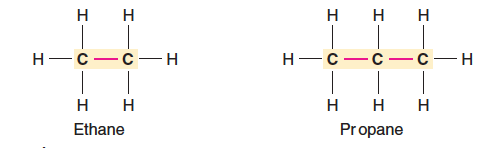
The shape of the molecules is important beacuse it determines its biological property and function.
Isomers
Compounds with the same molecular formula but diffrent structures= diffrent properties .
Types of Isomers
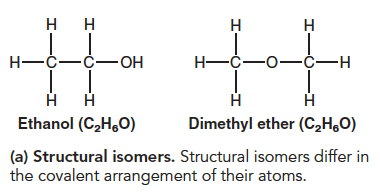
Structural Isomers
Differ in covalent arrangements of the atoms
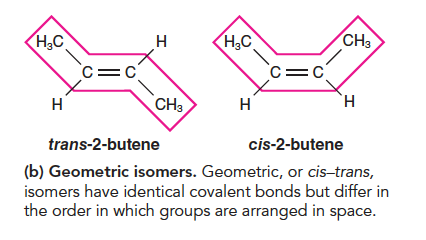
2.Geometric Isomers
Identical but differ in the spatial.
Divide into two groups
Cis = two larger components on the same side of the double side.
Trans = The larger components are on the opposite side of the double bond .
3.Enantiomers
Identical ; usually only one found in organisms.
Changes in Organic Molecules
Functional group
a group of atoms that help determine the types of chemical reactions and associations.
Types of functional groups
1.Hidraxilo = -OH = Polar = alcohol, azucar.
2. Carboxilo= - CoOH: acidos debiles = acidos grasosos y amino acidos
3.Amino= -NH2 = bases debil= amino acidos y acidos nucleicos.
4.Fosfato = - PO4 = acido debiles: lipidoss, ATP, acidos nucleicos.
5.Metildo= : -Ch3 = no polar
6.Sullfhidrito= -SH = ayuda a formar proteinas