Science
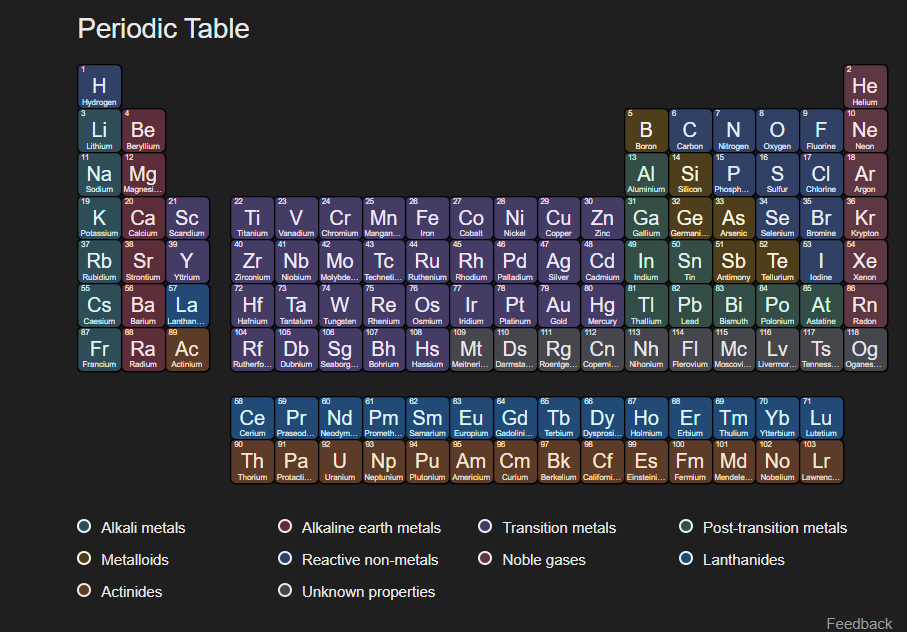
there are 8 groups in the periodic table → 1. alkali metals, 2. alkaline earth metals, 3. the icosagens, 4. carbon family, 5. nitrogen family, 6. oxygen family, 7. halogens and 8. noble gases (stable)
IONIC COMPOUND (IONIC BONDING)
→ we need a metal and a non-metal
→ transfer of electrons
IONIC BONDS: ionic bonds form between metals and non-metals. In naming simple ionic compounds, the metal is always first and the non-metal second. they dissolve easiy in water and other polar solvents, they also separate easily, they tend to form bonds with high melting temperatures.
Naming Ionic compounds:
write the metal first and the non-metal second
use subscripts (small sized button at the bottom right of the symbol) to indicate the number of atoms of each type present in the compound
no prefixes
change the last syllable of the non-metal to say ide.
COVALENT BONDING:
non-metal and non-metal
share electrons = 2 electrons → single bond, 4 electrons → double bond
→ PHYSICAL CHANGE: changing state of matter
→ CHEMICAL CHANGE: chemical reaction
→ ATOM: nucleus surrounded by electrons
→ COMPOUND: a substance made from two or more different elements that have been chemically joined.
→ MIXTURE: a physical combination of two or more substances that aren't chemically joined.
→ ELEMENT: a substance that cannot be broken down into any other substance.
CATION: positive ion
ANION: negative ion