wk1: nucleus
Cellular Organisation: the nucleus
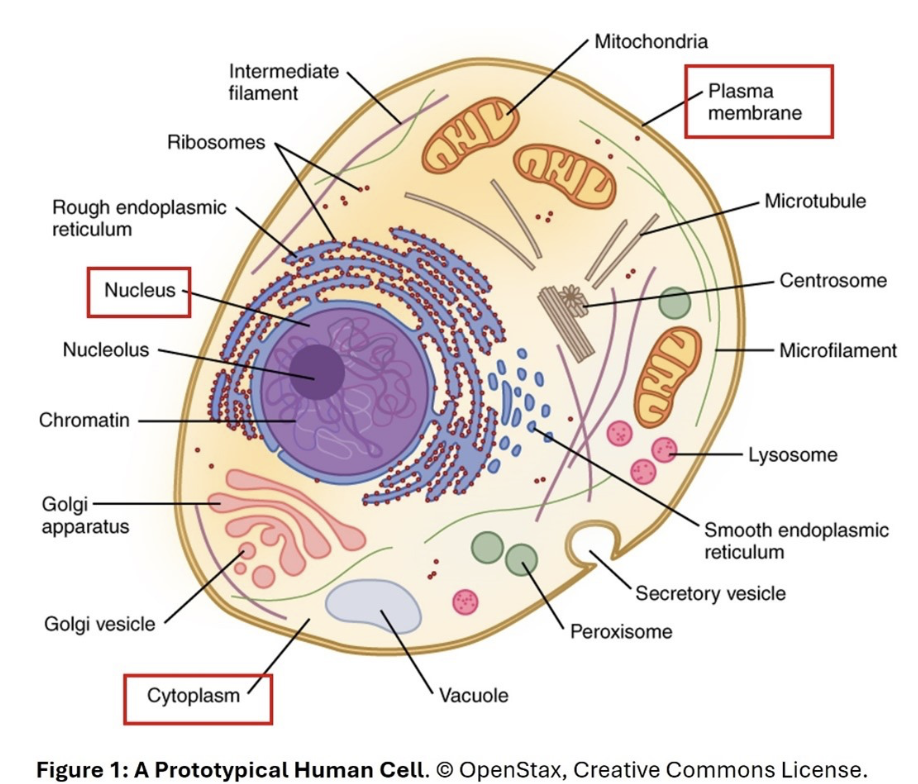
We have ~ 30 trillion cells in the body: ~200 different types of cells
white and red blood cells - specialised to protect the body against threats - carry oxygen & carbon dioxide around the bloodstream to all cells and tissue
epithelial cells - cells line the surfaces of organs and structures, playing a crucial role in protection, secretion, and absorption.
sperm cells - specialised for reproduction - carry genetic material
neurons within brain and CNS that communicate/ send messages around the body
fat cells - provide energy storage, insulation, and play a role in hormonal regulation
bone cells - provide structural support for the body, enable movement, and assist in the production of blood cells.
muscle cells - contract to enable movement & maintain posture
Each cell type is unique as they require different structural features to perform their specific functions
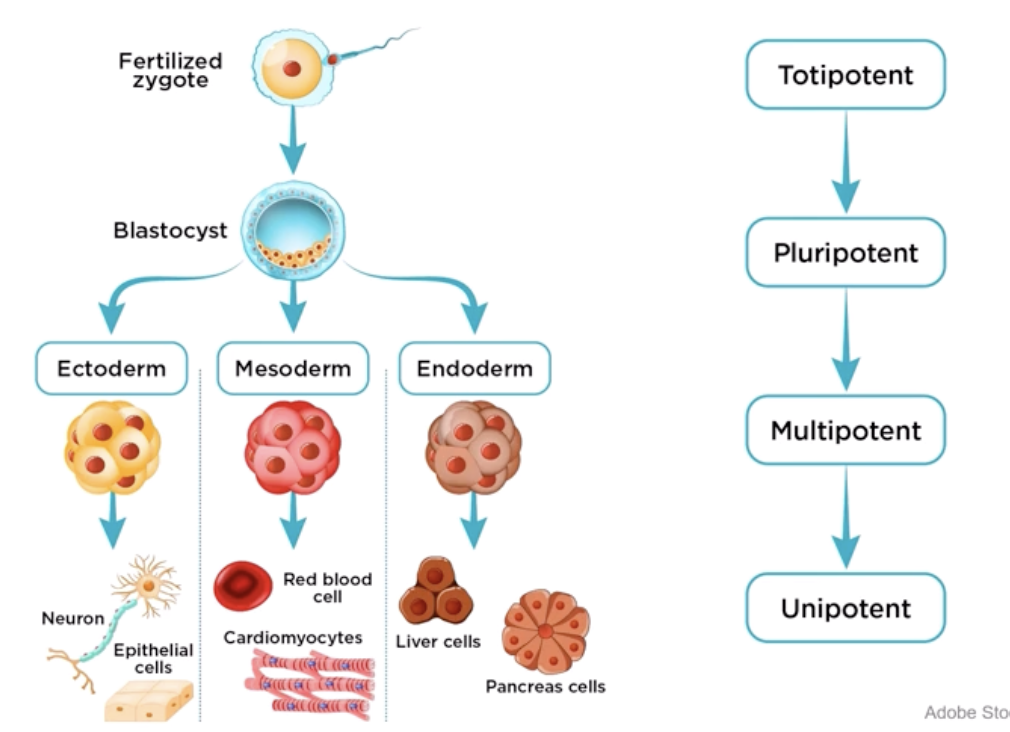
All cells descend from a single cell (fertilised ovum/ zygote)
A zygote is very large, totipotent (ability to form any type of cell)
Proliferation means cell division
Differentiation means cell maturation/ specialisation
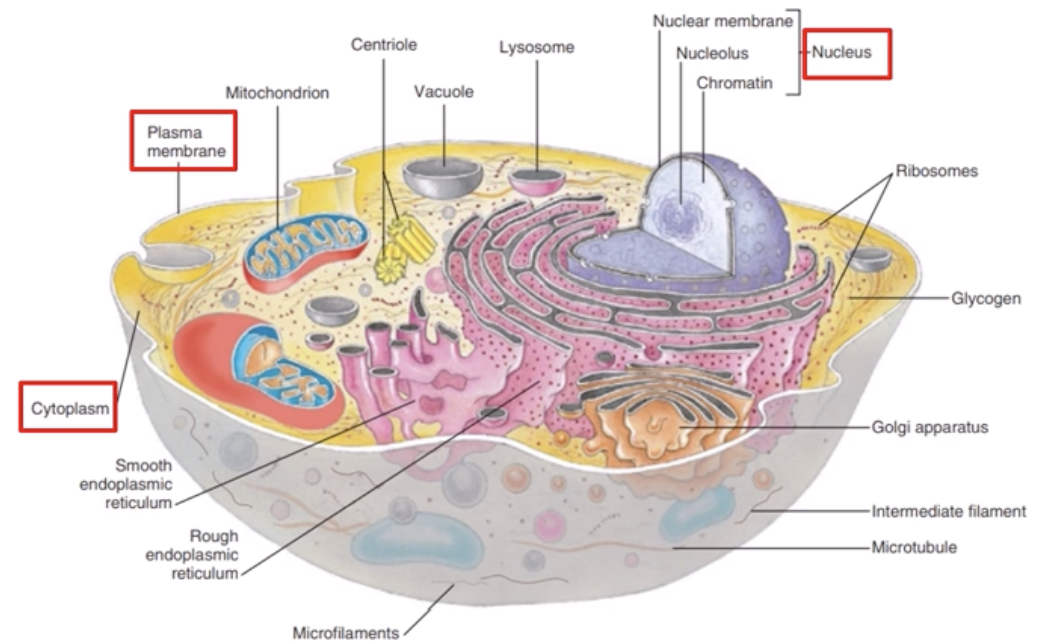
Nucleus
some cells have multiple nuclei - big cells need lots of energy, require more than 1 control centre
some cells don’t have a nucleus, such as red blood cells as this makes it easier for them to squeeze through tight capillaries
Functions of Nucleus
1) Houses and protects our DNA
2) regulates DNA activity (including expression and activation/ suppression
3) Within the nucleus is a nucleolus (NU CLE OH LUS) that produces ribosomal subunits (building blocks for ribosomes) that are transported into cytoplasm and used to form ribosomes for protein synthesis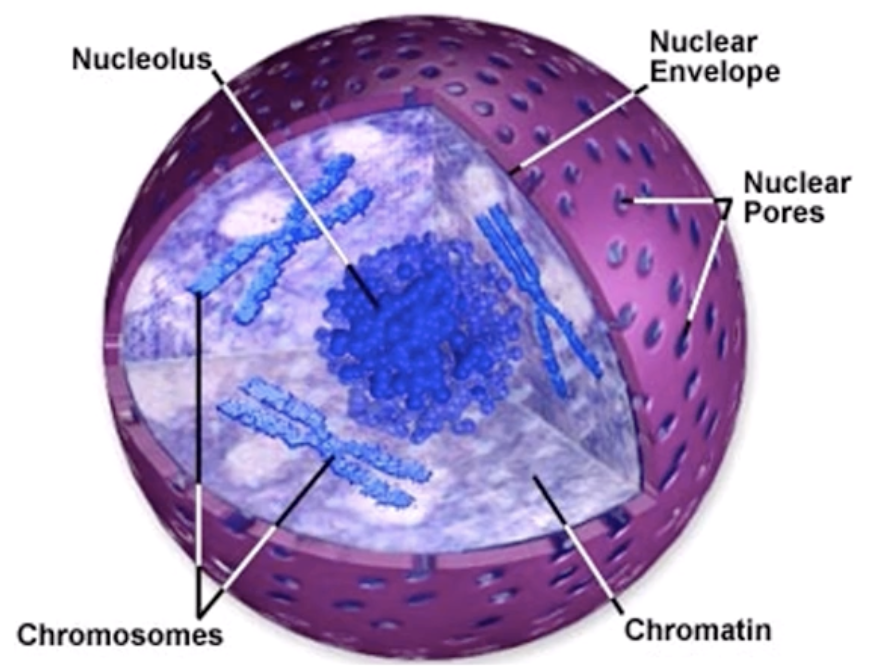
Nuclear Envelope & Nuclear Pores
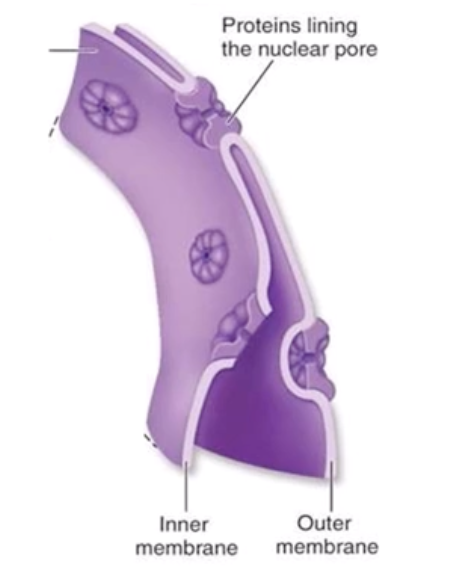
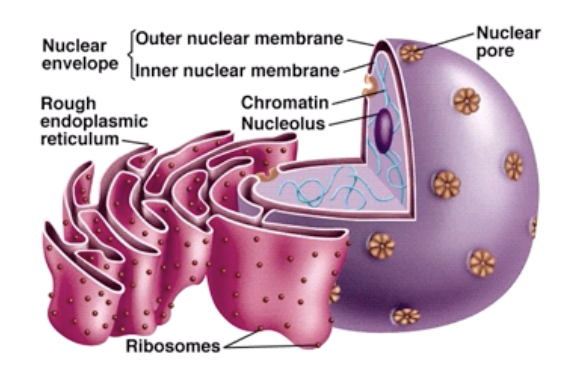
The nuclear envelope: double membrane that encloses the nucleus - protective barrier
Nuclear pores: passages that allow communication between the nucleus and cytoplasm
Nucleolus
Nucleolus: responsible for ribosome synthesis and assembly (ribosomes = protein synthesis)
Amembranous (held together by surface tension)
Contains DNA, RNA and proteins
easier to see in cells that are actively synthesising proteins
DNA
DNA contains genetic instructions
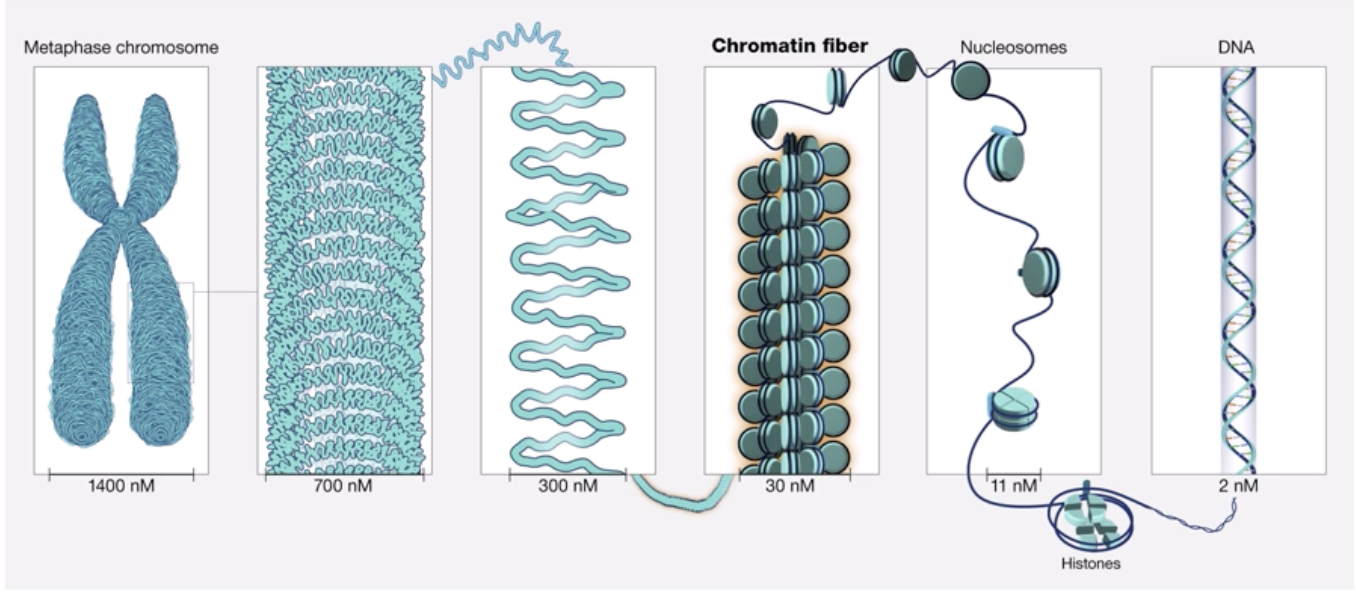
we have ~2 metres of DNA in each cell
DNA wraps itself around proteins (histones) and folds (chromatin), then assembles into 23 pairs of chromosomes in each cell
chromosome consists of a long DNA molecule encased in proteins
Chromatin - exists in two forms
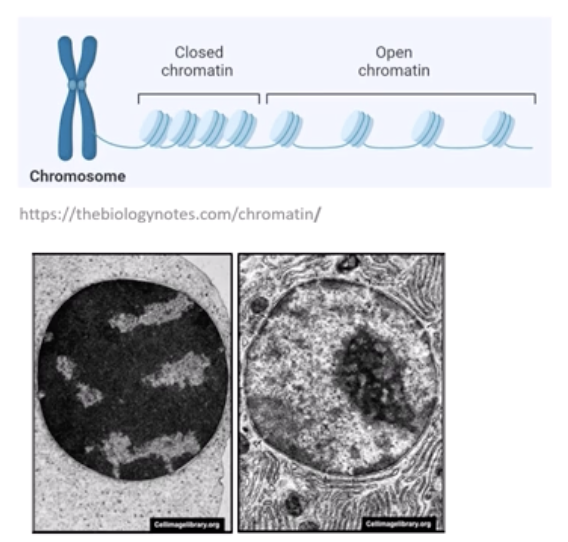
1) Heterochromatin - inactive cell - highly condensed, intensely stained
2) Euchromatin - active cell - dispersed, lightly stained
DNA to Protein
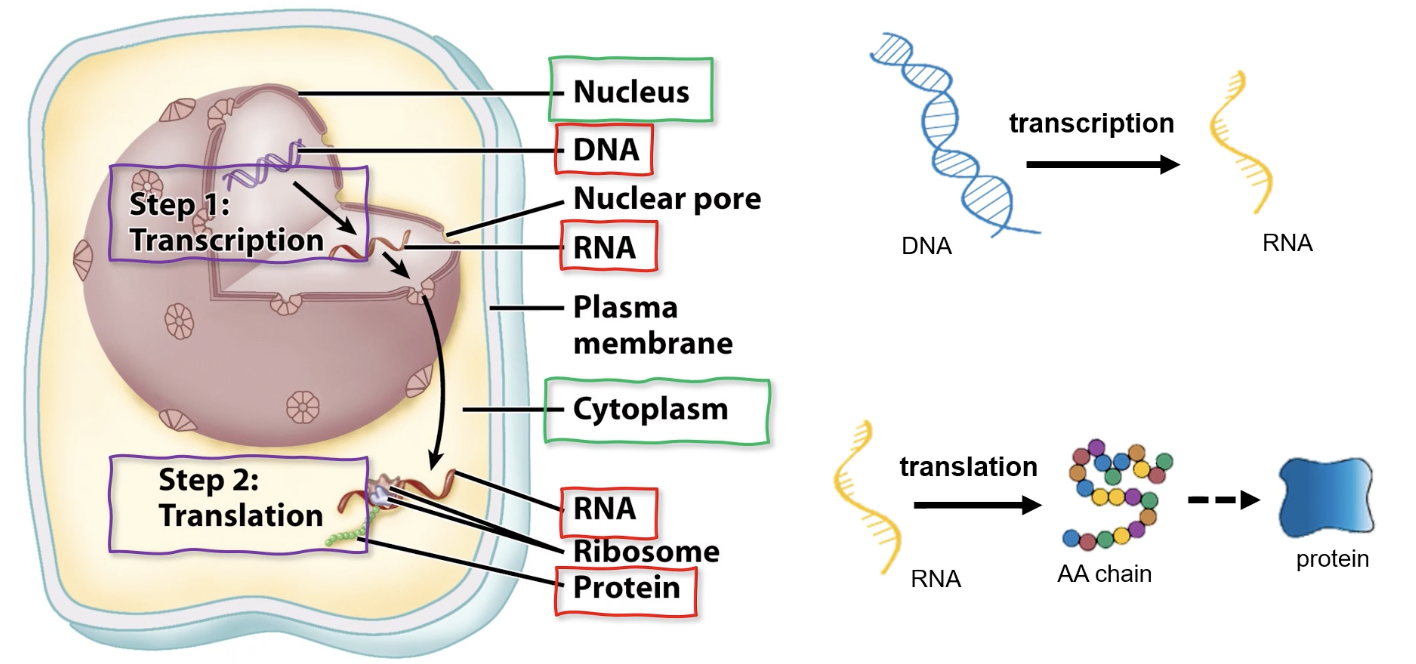
Messenger RNA (mRNA) single-stranded copy of a gene, containing instructions to make a protein: mRNA is the end product following transcription
Transfer RNA (tRNA) interpret the instructions from mRNA > bring in specific amino acid (building block) to make the protein
Ribosomal RNA (rRNA) are the structural unit for ribosomes (protein-making factories)
Translation takes place in the cytoplasm when the mRNA docks to the ribosome, where the mRNA sequence is read and the specific protein is created
Transcription
Transcription is when mRN makes a copy of the DNA instructions for a protein to be created - the mRNA is sent from the nucleus into the cytoplasm to be translated into a protein
During the process of transcription the DNA uncoils - gene sequence is exposed > enzymes bind to the exposed DNA and create a copy (single-stranded mRNA)
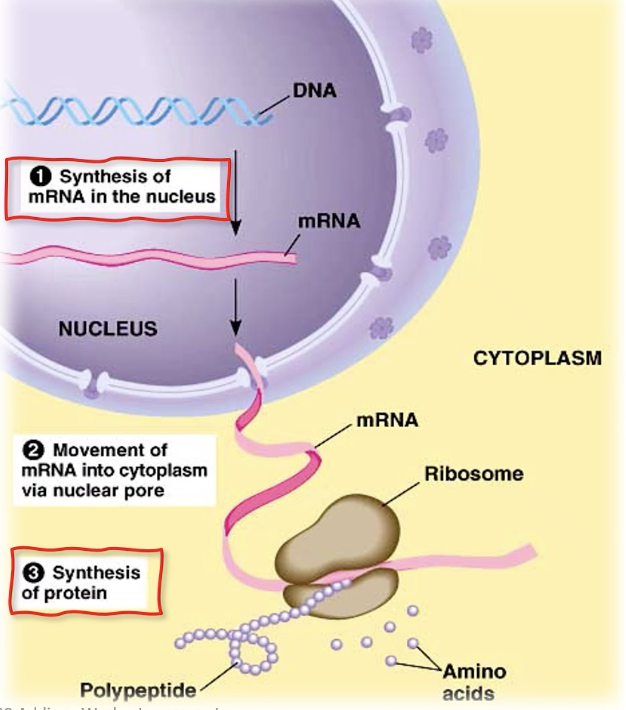
Translation: sequence of events
Initiation: mRNA binds to ribosome > ‘start codon’ is recognised & tRNAs begin delivering specific amino acids
a codon is a sequence of three nucleotides on the mRNA that specifies a particular amino acid or serves as a stop signal during protein synthesis.
Elongation: amino acids link together to form a polypeptide chain (protein)
Termination: when the ‘stop codon’ is reached, the polypeptide chain is released from the ribosome
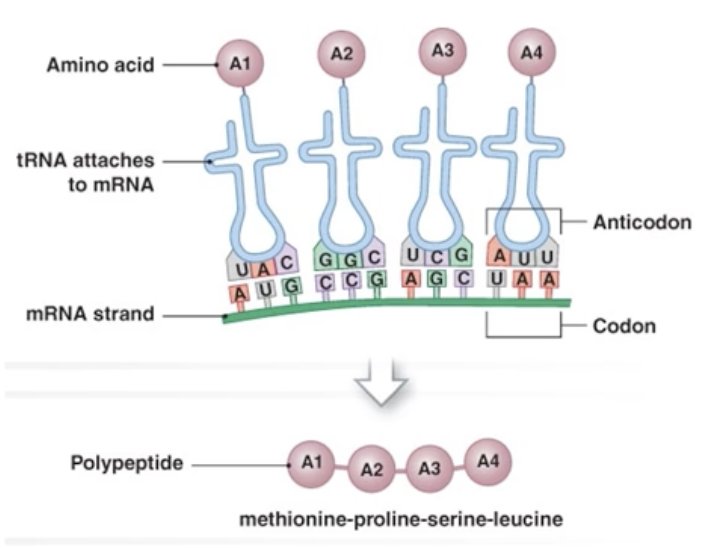
Redundancy reduces the chance that a DNA mutation will change the amino acid it codes. Multiple different codons (sequences of three nucleotides in mRNA) can encode the same amino acid.