ENGR59910 Introduction to GIS
This course will cover the fundamental concepts of Geographic Information Systems (GIS), including data modeling, spatial analysis, and cartographic visualization. Students will learn how to utilize GIS software effectively to analyze geographical data and present their findings.
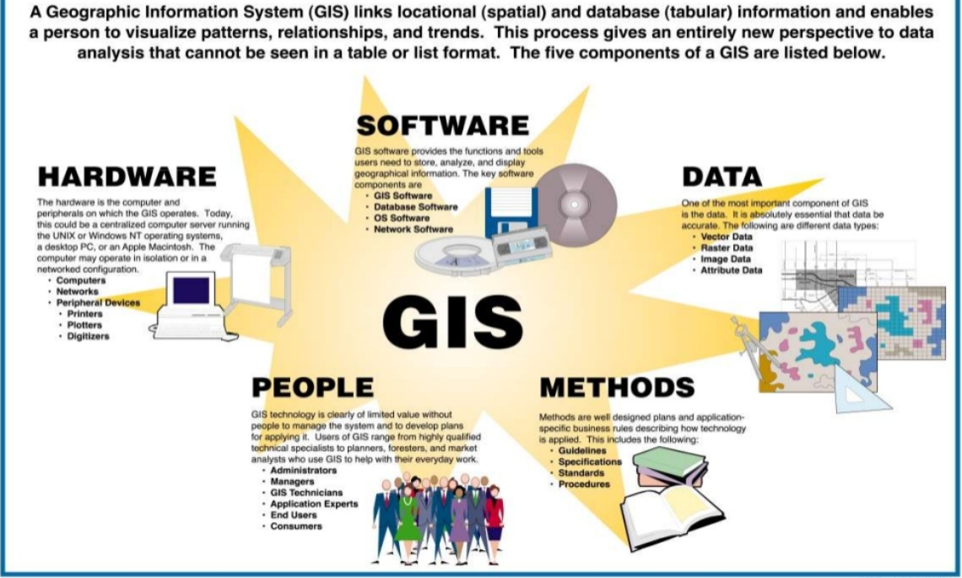
Components of a GIS
Hardware: The physical components required for GIS applications, such as computers, servers, and GPS devices.
Computers, Networks, Peripheral Devices (Printers, Plotters, Digitizers)
Software: Applications that provide the functions and tools users need to store, analyze, and display geographical information. Key software components include:
GIS Software, Database Software, OS Software, and Network Software.
Data: Geographic and attribute data that are essential for GIS analysis, which can be collected from various sources such as surveys, satellite imagery, and existing databases. Data types include:
Vector Data, Raster Data, Image Data, Attribute Data
Methods: Well-designed plans and application-specific business rules describing how technology is applied. This includes:
Guidelines, Specifications, Standards, and Procedures.
People: The users and professionals who operate GIS systems and analyze data to inform decision-making processes. May include:
Administrators, Managers, GIS Technicians, Application Experts, End Users, Consumers.