222 (Guest) L9 - Auckland Development Capacity Overview
Overview
Presenters: Kyle Balderston & Krystal Alferez from Auckland Council
Purpose: Discuss development capacity in Auckland, the framework guiding urban development, key challenges, and the implications of the National Policy Statement for Urban Development (NPS:UD).
Agenda
Reasons for current methodology and approach to development capacity
Definitions and components of Development Capacity, including distinctions among types
Q&A session to address audience inquiries and clarify methodologies
Regulation Context
Local Government Act 2002: Provides the foundational framework for council functions, outlining responsibilities related to community wellbeing, taxation (rates), and development contribution mechanisms.
LG(AC)A 2009: Establishes Auckland Council as a unitary authority, outlining its mandate for spatial planning and standardized district planning across the region to foster more cohesive development strategies.
Resource Management Act 1991 (RMA): Offers a national framework for resource management and guides development processes, particularly through the Auckland Unitary Plan (AUP), aimed at achieving sustainable development outcomes.
Land Transport Management Act 2003: Focuses on planning for transport infrastructure at a regional level to enhance connectivity and accessibility, crucial for supporting urban growth.
Building Act 2004: Enforces compliance with building regulations, safety standards, and performance codes essential for maintaining quality construction in urban development.
Need for Upzoning
Population Growth: With Auckland's population at approximately 1.7 million as of 2023, significant emphasis is placed on accommodating this growth, which is pivotal for New Zealand's national GDP and ongoing migration trends, necessitating proactive urban planning strategies.
Housing Shortage: A glaring issue highlighted is the disparity between population growth (20.4% from 2006 to 2018) and the limited increase in housing units (13.7%), pointing to an urgent need for policy intervention and upzoning efforts to facilitate additional housing developments.
AUP and Upzoning: The Auckland Unitary Plan aims to enhance the availability of medium and high-density housing options; however, certain regions remain under-zoned or lack essential infrastructure, underscoring the need for targeted upzoning initiatives.
Results of Upzoning: Past outcomes demonstrate that effective upzoning can lead to increased construction activity and contribute to lowering rents and house prices, thus alleviating housing pressures.
Development Capacity Defined
Legislative Definition: The definition of development capacity is guided by the NPS-UD within the framework established by the RMA, mandating comprehensive assessments to ascertain both housing and business supply potential.
Demand vs Supply: Essential to the planning process is ensuring that available development capacity aligns with anticipated demand levels, which informs long-term (30-year) strategic planning and short-term (10-year) budgeting approaches to development projects.
Spatial Planning Framework
Future Development Strategy (FDS): This component is required by the NPS-UD, focusing on long-term strategic planning initiatives that aim to create sustainable urban environments equipped to handle future population and business growth.
30-Year Capacity Planning: This aspect is critical to ensure that development strategies align with the anticipated demands for housing and business needs, providing a roadmap for urban sustainability and resilience.
Unitary Plan Overview
Purpose: The Unitary Plan seeks to consolidate planning requirements across Auckland, effectively addressing historical fragmentation by integrating multiple legacy plans into a singular, comprehensive strategy that better serves the city's evolving needs.
Public Consultation: Extensive community engagement efforts were incorporated to gather insights, preferences, and inputs from residents, ensuring that the plan reflects local aspirations and priorities, thereby enhancing public support and compliance.
Drivers of Development
Regulatory Environment: The regulatory framework substantially influences development potential and the attractiveness of the market for developers and investors, who seek stability and predictability in their projects.
Demand & Supply Dynamics: Effective infrastructure planning and funding are critical to support housing development initiatives, with transport and utilities playing a key role in facilitating urban expansion.
Types of Development Capacity
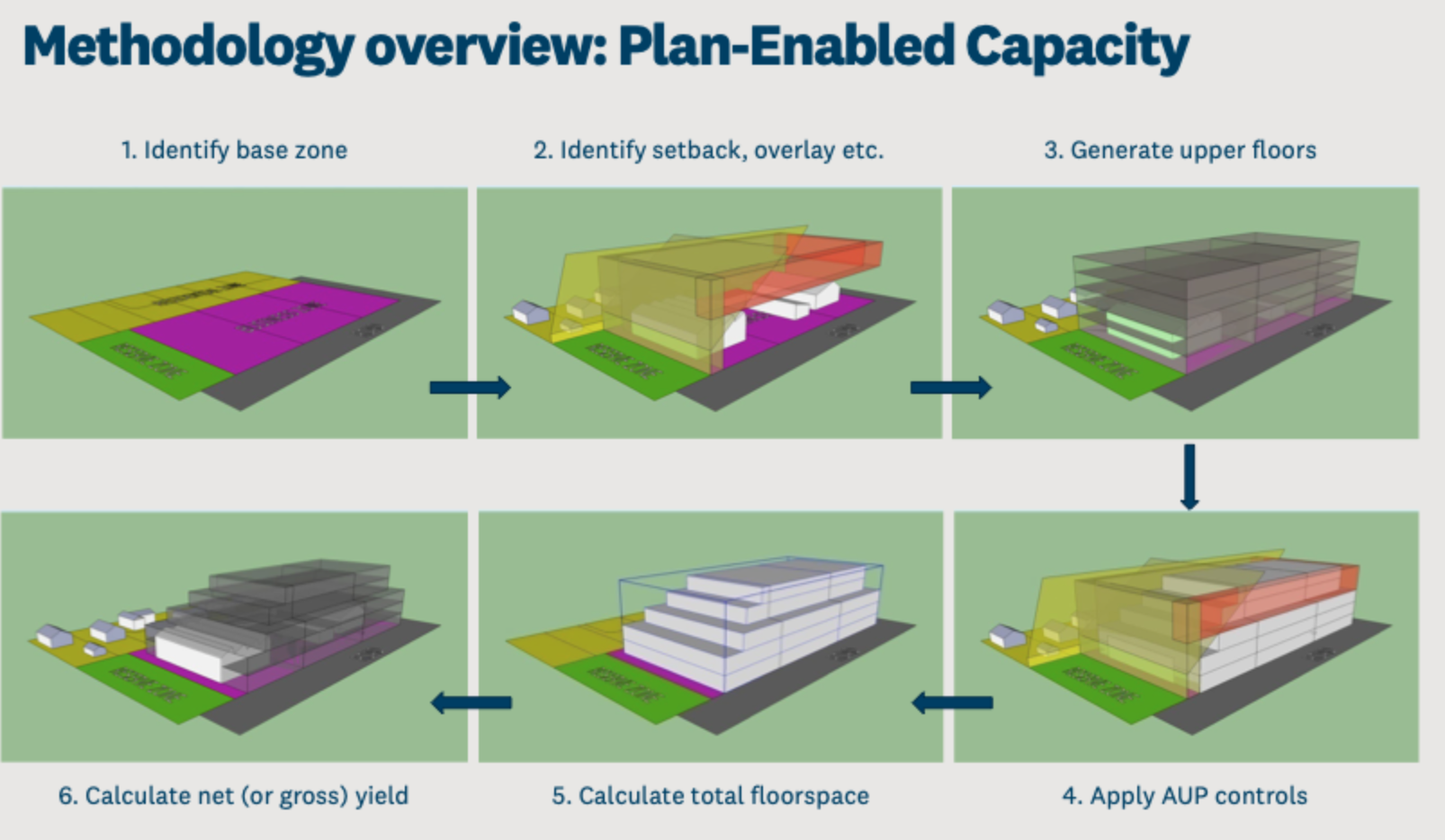
Plan-Enabled Capacity: This refers to the capacity defined by zoning regulations, which can be modified depending on existing developments and community needs, creating flexibility in urban planning.
Infrastructure-Ready Capacity: This type of capacity focuses on the availability of crucial infrastructure such as roads, water, and sewage systems to support new developments, ensuring that growth is sustainable.
Commercially Feasible Capacity: This assessment considers the profit margins potential for developers on a site-by-site basis, helping to ensure that projects are viable under current market conditions.
Modelling Development Capacity
Plan-Enabled Capacity Approach: This methodology involves assessing existing zoning alongside physical site characteristics to determine potential increases based on zoning provisions, allowing planners to project feasible growth.
Determining Capacity via Modelling: Includes the regression of existing land uses alongside considerations of physical site constraints, such as yard setbacks and other zoning limitations that may influence development potential.
Infrastructure Capacity Assessment: This component takes into account current infrastructure capabilities, evaluating whether existing utilities and transportation systems can support potential growth and identifying areas that may require upgrades or expansions.
Commercial Viability Assessment
Feasibility Determinants: In examining potential developments, basic filters related to financial assessments are applied, ensuring that potential returns can adequately cover development costs and risks.
Commercial Dynamics: This focuses on the market conditions, including construction costs, demand for housing, and necessary returns developers expect, to ensure a project’s economic viability.
Market Realities: It is important to acknowledge that not every potential development is realized due to varying economic factors that may limit developer interest or financial return on investments.
Real-World Development Outcomes
Discrepancies in Expected vs Actual Outcomes: Notably, a significant gap often exists between planned and actual development outcomes, with only a small fraction of plan-enabled and infrastructure-ready projects being fully realized.
Barriers: Market conditions, individual site characteristics, and other local dynamics can act as constraints that limit the extent of actual development activity, emphasizing the need for adaptive planning approaches.
Calculating Plan-Enabled Capacity
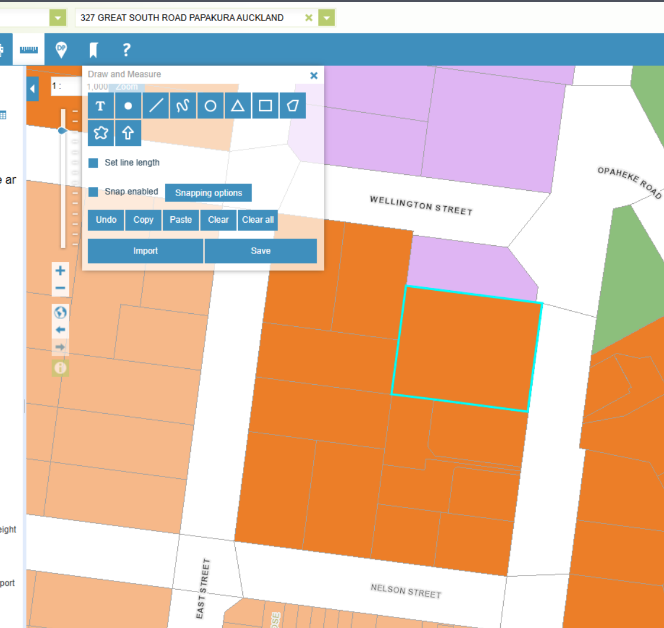
Step 0: Select a site
Step 1: Identify the AUP chapters that apply to your site
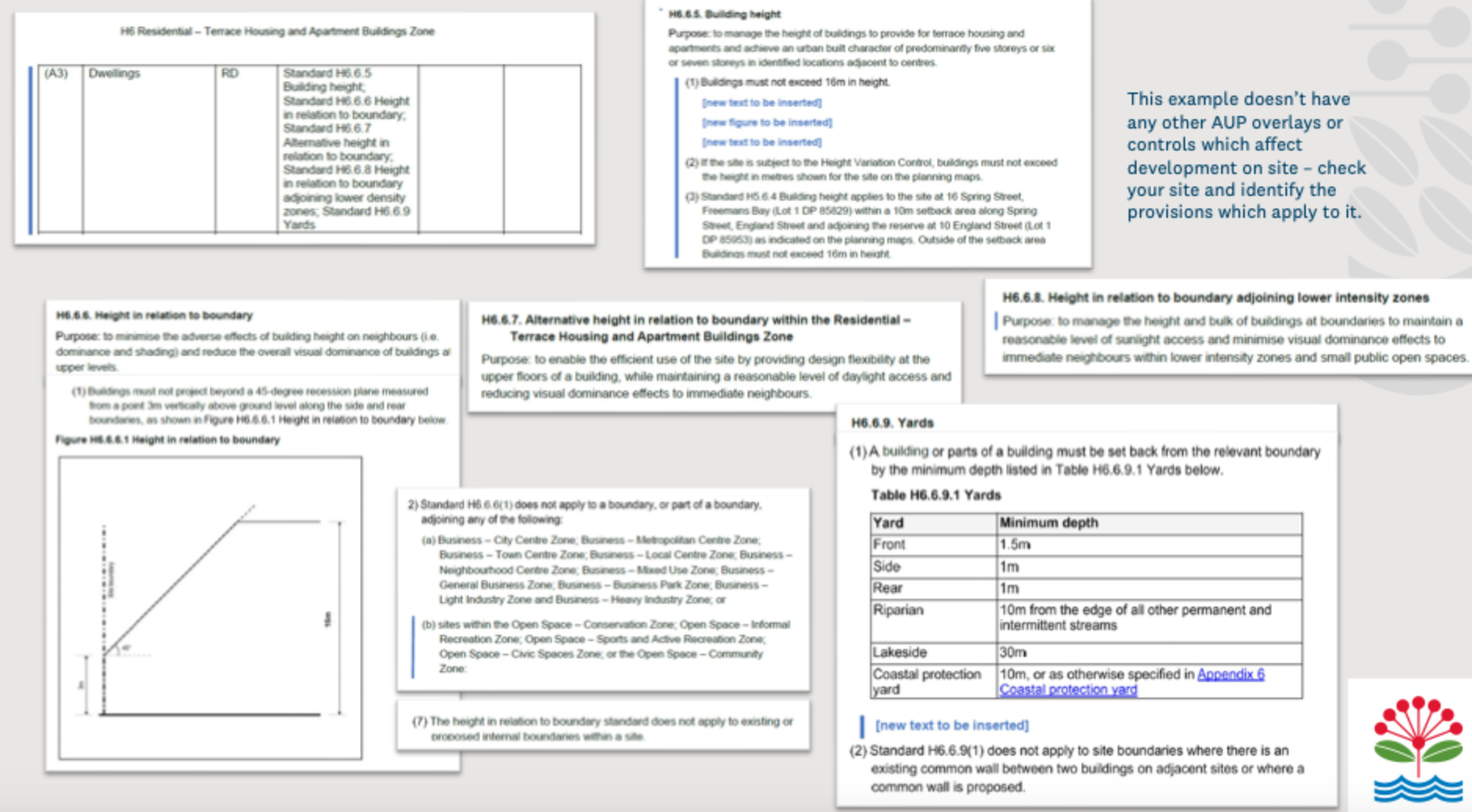
Step 2: Gather the provisions which will have an impact on your site
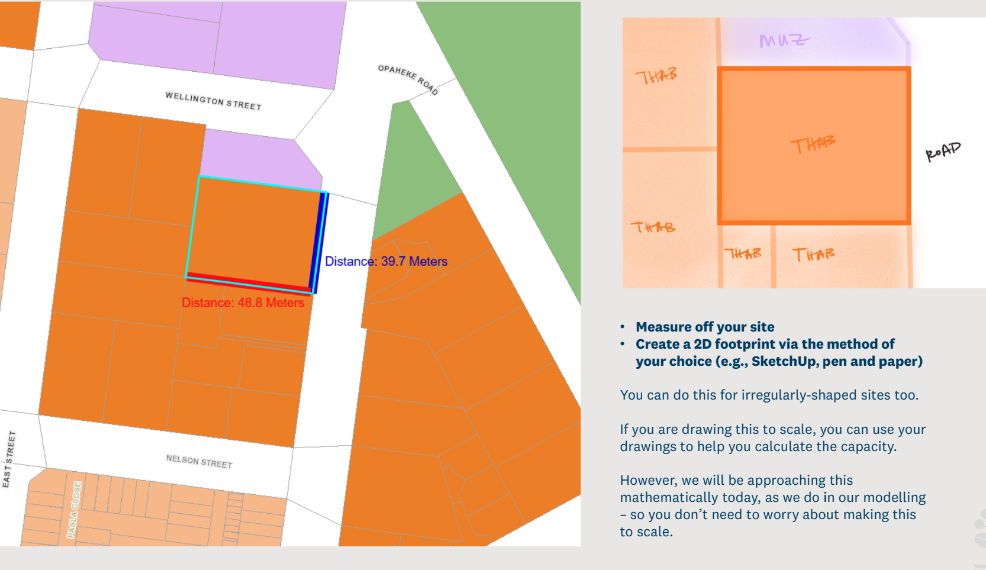
Step 3: Generate an unconstrained building envelope using the zoning
Key Takeaways
Importance of Integrated Planning: Highlighting the necessity of aligning regulatory frameworks with infrastructure planning and understanding market realities, which can enhance overall development outcomes.
Continuous Review: The urgent need for regular assessment and adaptation of planning strategies is crucial to accommodate the rapidly changing demographic and economic landscape of Auckland.
Questions & Discussion
The session concludes with an open floor for inquiries, encouraging dialogue to further clarify Auckland's development framework and practical applications of the methodologies discussed.