3.4.6 Monopsony power
What is it ? When a single buyer controls the market for a particular good or service, in essence setting price and quality levels, normally because without that buyer there would not sufficient demand for the product to survive.
A monopsony can exploit bargaining power to negotiate lower prices
This will increase profit margains, in theory
Can be in BOTH product and labour markets
Real world examples:
British Sugar buys almost all sugar beet crop produced in the UK
The NHS buys almost all pharmecuticals
Tesco renegotiating deals with haribo and exert monopsony power
Characteristics:
a) Characteristics and Conditions for a Monopsony to Operate:
Single Buyer: A monopsony is characterized by a single dominant buyer in a particular market or industry. This buyer has substantial market power and controls a significant share of the total demand for a specific product or labor.
Limited Substitute Buyers: A key condition for a monopsony to exist is the absence of readily available substitute buyers for the goods or services it purchases. This limits the options for sellers to find alternative customers.
Price Maker: The monopsonist has the ability to set the price it is willing to pay for the goods or services it buys. It can do so because sellers have limited alternatives, and the monopsonist's demand significantly affects market prices.
Downward-Sloping Supply Curve: The supply curve facing the monopsonist is downward-sloping, meaning that sellers are willing to provide more goods or services at lower prices. This gives the monopsonist the power to negotiate lower prices with suppliers.
Barriers to Entry: In some cases, barriers to entry or factors that discourage new buyers from entering the market may contribute to the existence of a monopsony. These barriers could include regulatory restrictions, high startup costs, or economies of scale that favor larger buyers.
Cost and Benefits to Firms:
Benefits:
Monopsony power is a type of internal economies of scale - through PURCHASING economies of scale
Because of this, leading to lower LRAC
Lower purchasing costs bring about higher super normal profits and increased returns for shareholders
The extra profit - producer surplus - may be reinvested into the business via new up-to-date capital which will improve productivity and therefore efficiency of a firm
In order to develop dynamic efficiency
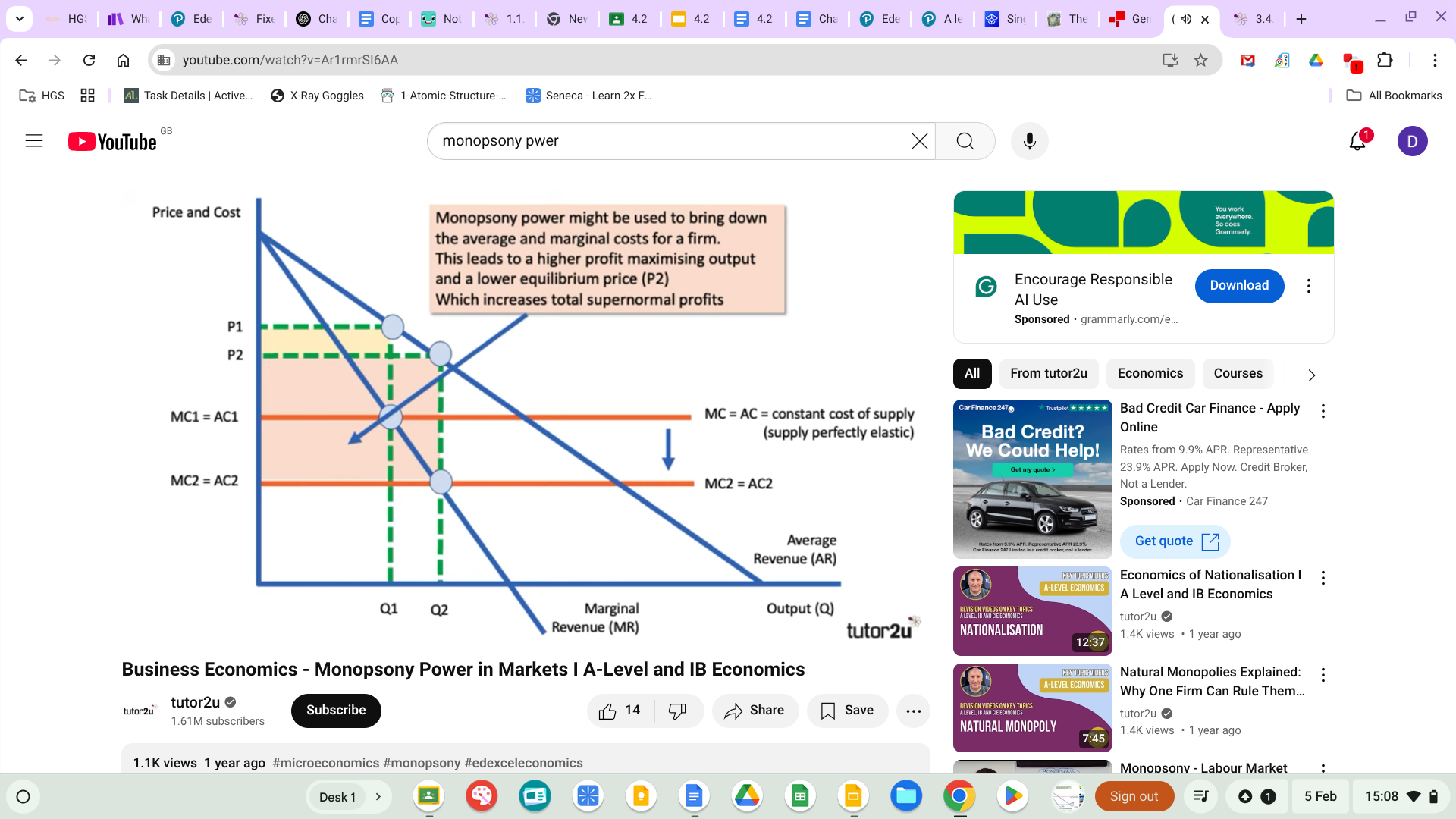
Benefits for consumers:
As a result of LRAC lowering - consumers may benefit from lower prices - i.e. Tesco and haribo
This will increase consumer surplus and real incomes
Improving their value fror money - maximising utility - and then cost saving enterprise may allow more people to experience per say NHS treatment - scarcity of resources
Effects on suppliers
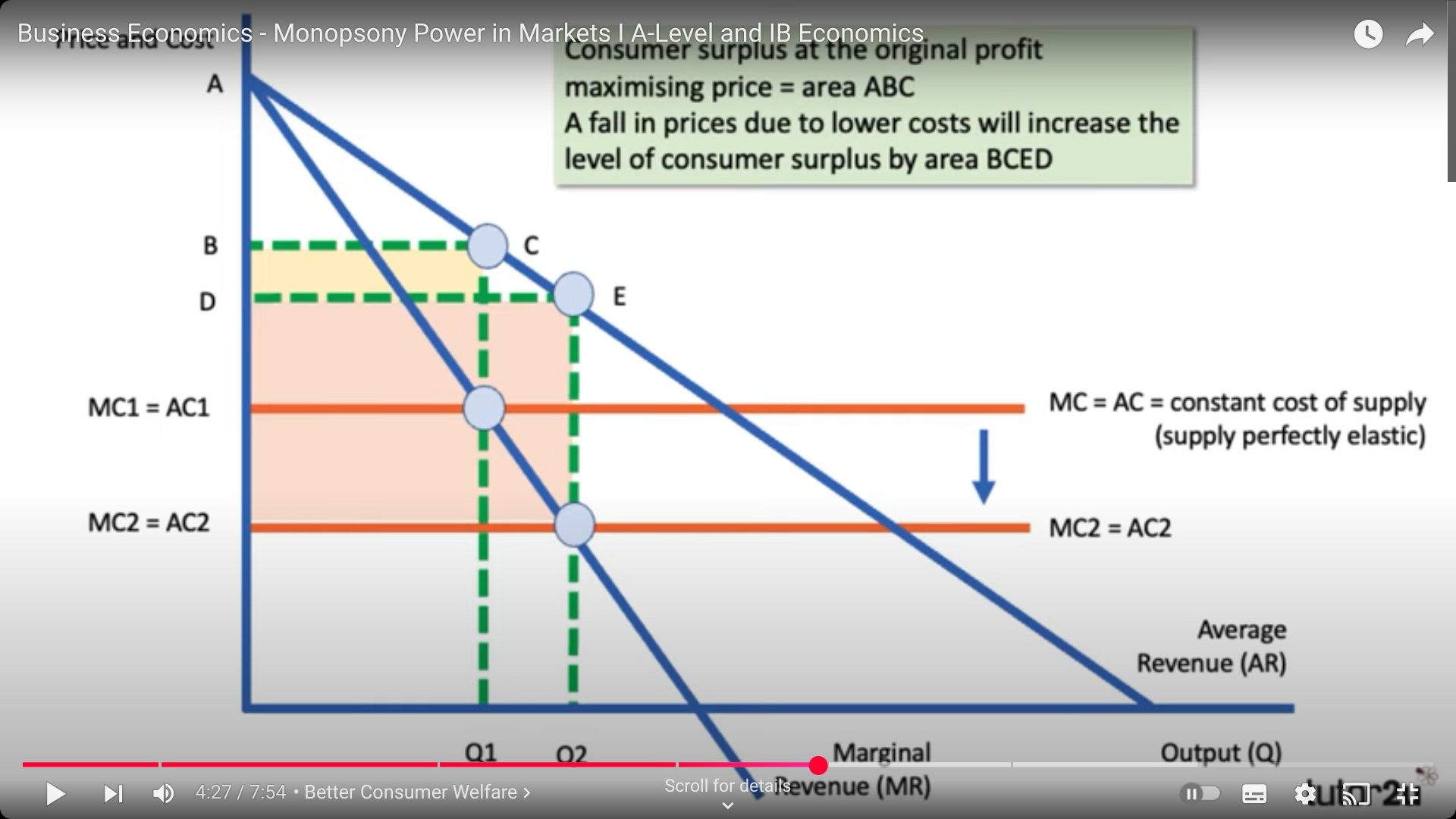
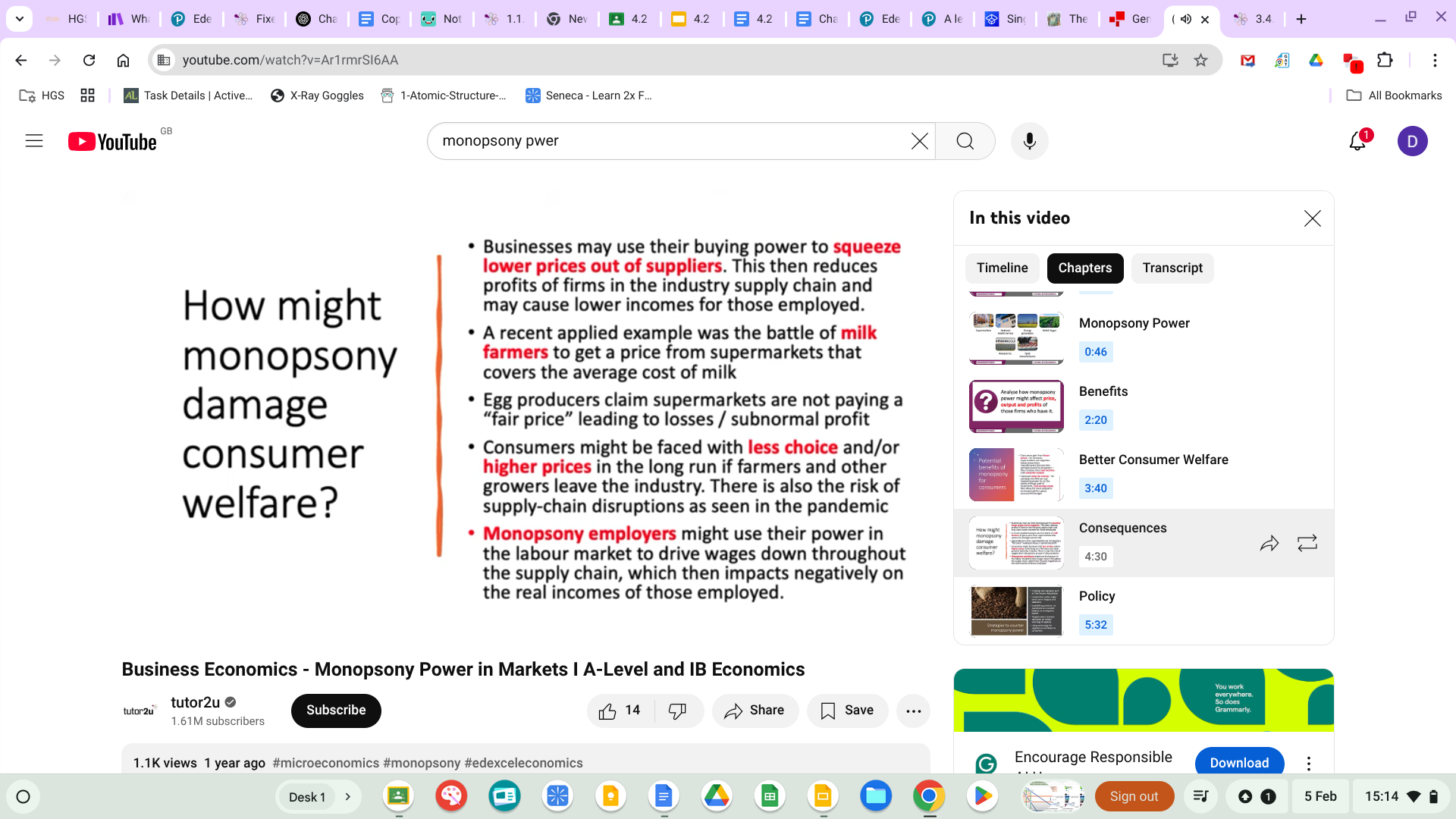
Due to being the only buyer in a market - monopsonies can benefit from purchasing EoS from their suppliers
Despite being a positive for the monopsonist this can have an inverse affect on the supplier who now have to offer lower prices - as they have no other choice in the market
This may result in financial difficulties for the suppliers due to the decrease in prices - this may have a direct impact on revenue.
Furthermore, risking suppliers making a loss if they fail to make normal profits
This may therefore put pressure on the supplier to cut costs - this may be labour costs or production costs which may in turn have an indirect affect on employment or the quality of goods and services
Evlt:
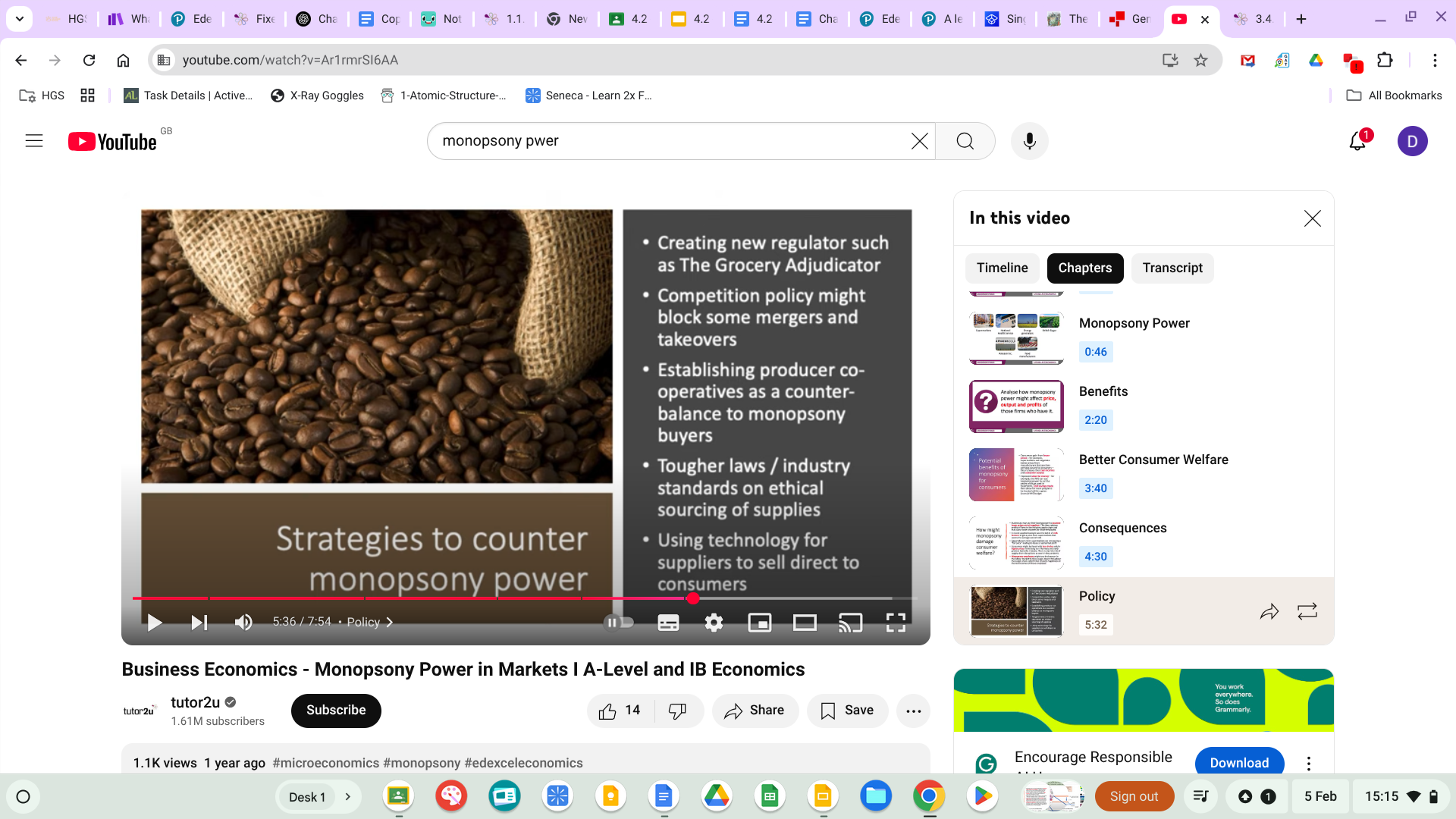
Mono may be scared to exploit suppliers with fears of reprocussions from the GCA
Consideration of bilateral monopoly e.g. large food supply firms or cooperatives.
Food suppliers may diversify e.g. farm shops.
Food suppliers may undertake vertical integration.