Biology unit 2
==motor proteins==
- dyne: moves vesicles/substances to the negative side of the microtubule (the end towards the nucleus)
- kinesin: moves things towards the positive end, peripheral side of the cell
==extra cellular structures==
- are found outside of the cell
- composed of proteins, collagen, glycol proteins
- hold cells together to form tissues
- can filter material that is passing between cells and tissues
- contributes to physical property of tissues
- can determine activity of cells through signaling
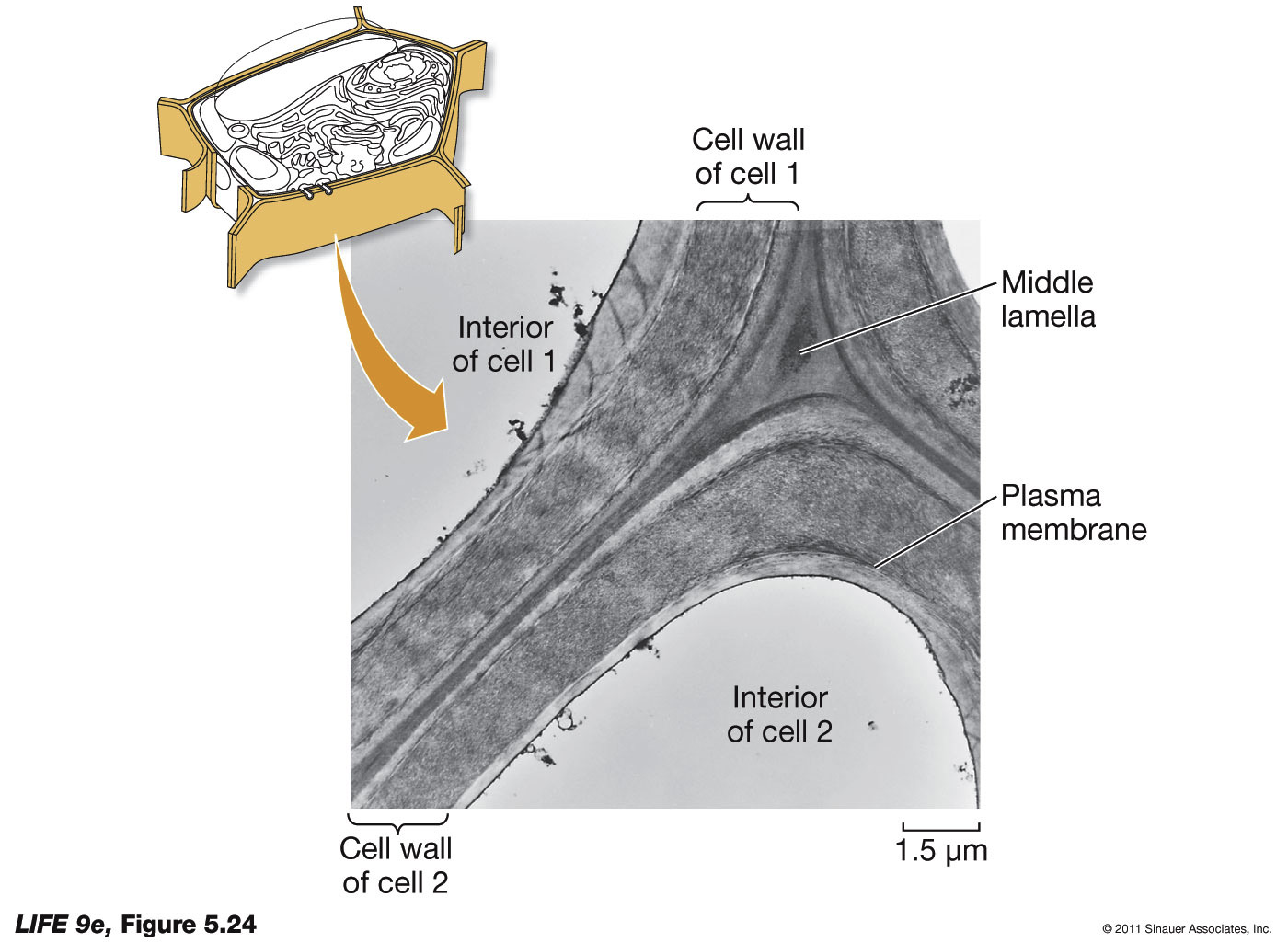
==plant cell wall==
- cellulose
- cell wall: considered extra cellular, made up of cellulose and formed outside of the plasma membrane, creates a lot of fiber, creates protection for plants and some bacteria
- turgor pressure: created by the cell wall, an internal pressure that affects the cell membrane, provides plants from rupturing plasma membrane
 ==cell membrane==
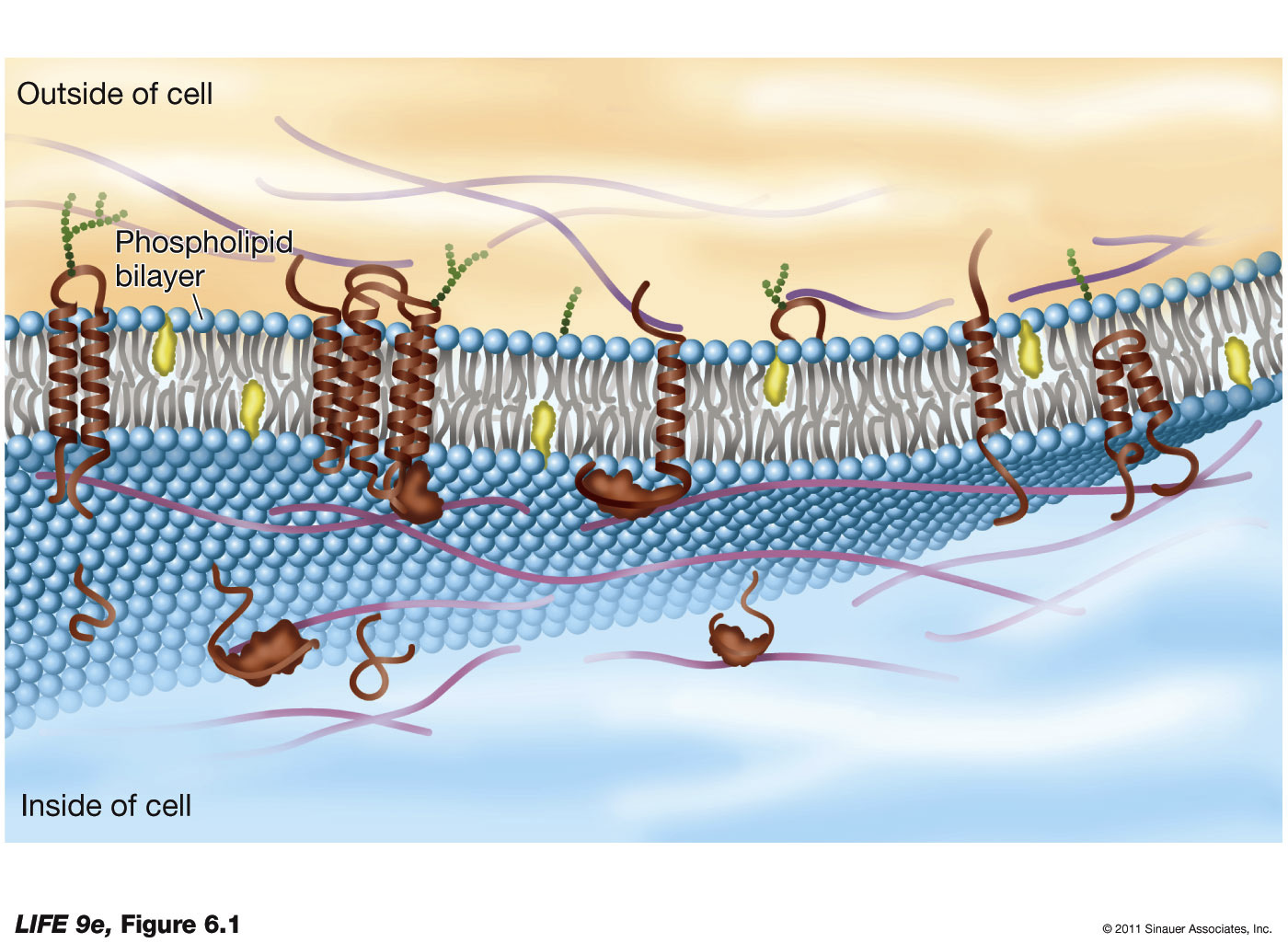
- bilayered, dynamic, always changing, constantly forming, moving and fusing with other membranes
- fluid mosaic model: interior of the membrane is fluid like, it allows molecules to move from side to side or laterally
- plasma membrane: processes information, signal information, important for energy transformation, forms a boundary between other cells and the environment, regulates what enters and exits
 ==3 major components of plasma membrane==
- lipid
- membrane proteins
- carbohydrates
==lipids==
- ==amphipathic- hydrophobic and hydrophilic==
- make up most of plasma membrane
- phospholipids
- arranged into bilayers
- fluidity of membrane depends on cholesterol and fatty acid composition
- cholesterol
- more cholesterol = less fluid like membrane
- fatty acid composition
- saturated fatty acids = less fluid in plasma membrane
- unsaturated fatty acids = more fluid like
==Proteins==
- ratio of proteins to phospholipids depends on function of the membrane
==carbohydrates==
- are associated with a lipid or a protein
- glycolipids: associated with a lipid
- glycoproteins: associated with a protein
- in the immune system: they tell your immune system that a cell should be attacked or gotten rid of
cell recognition: when one cell specifically binds to another and recognizes its generally temporary
cell adhesion: relationship between 2 cells that is more cemented or permanent
homotypic binding: binding that occurs between the same type of receptor
heterotypic binding: 2 different proteins that complement each other
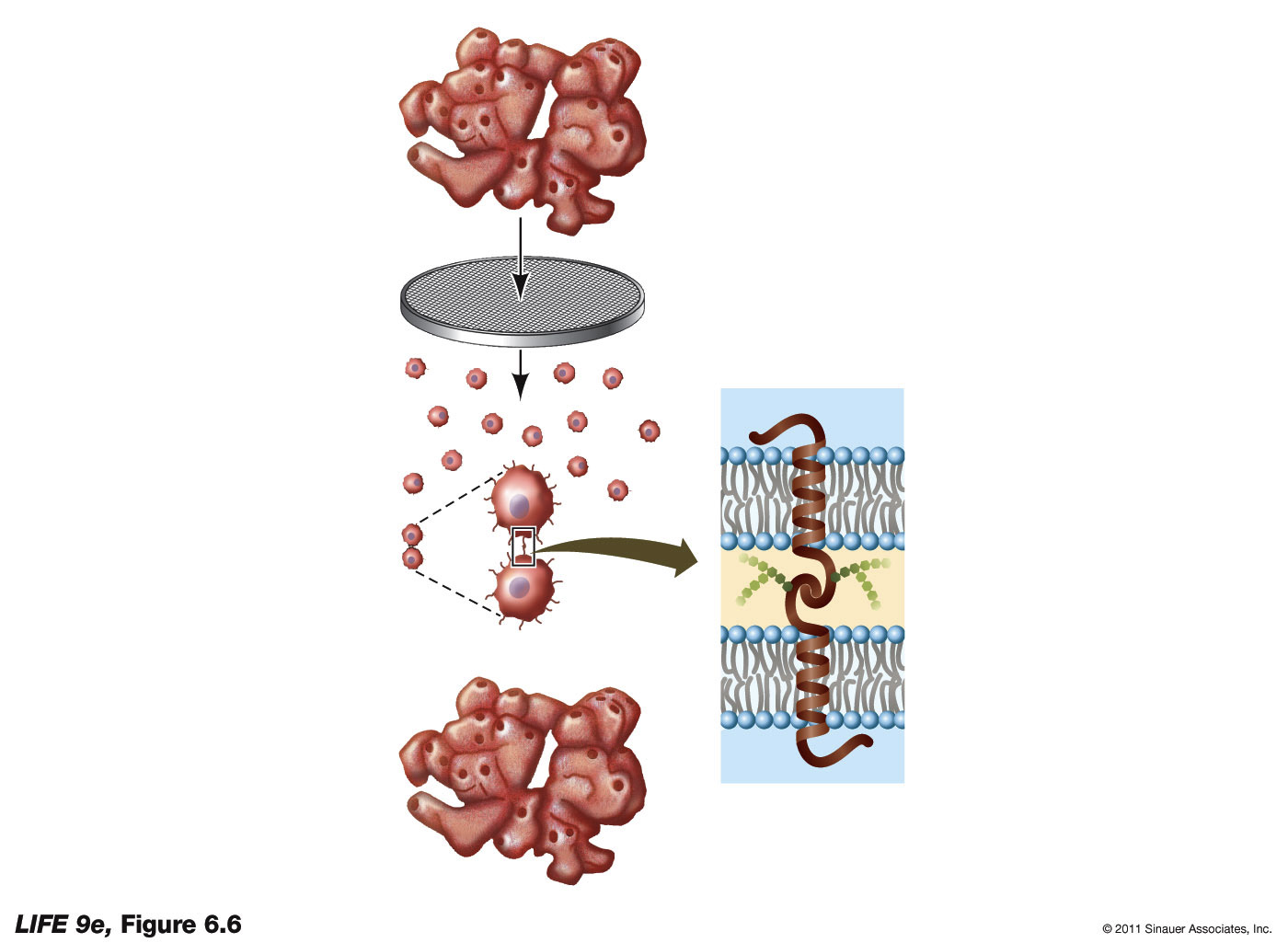
==integral==
- hydrophobic regions that will penetrate or cross the phospholipid bilayer
- the hydrophobic region will be embedded in the bilayer
==transmembrane==
- some integral proteins are transmembrane
- they have part of the protein outside and some of the protein inside the cell, it transverses the entire membrane
==peripheral==
- do not have hydrophobic regions
- attached to the bilayer but not integrated into the membrane
==freeze fracture technique==
- used to study proteins in your lipid bi-layer
- you freeze the bi layer and look for faces of proteins
==Cell Junctions 3 types==
- tight: plasma membrane junctions that link epithelial cells together. functions to stop the movement of membrane proteins so they stay in one region, they also prevent substances from moving through intracellular spaces
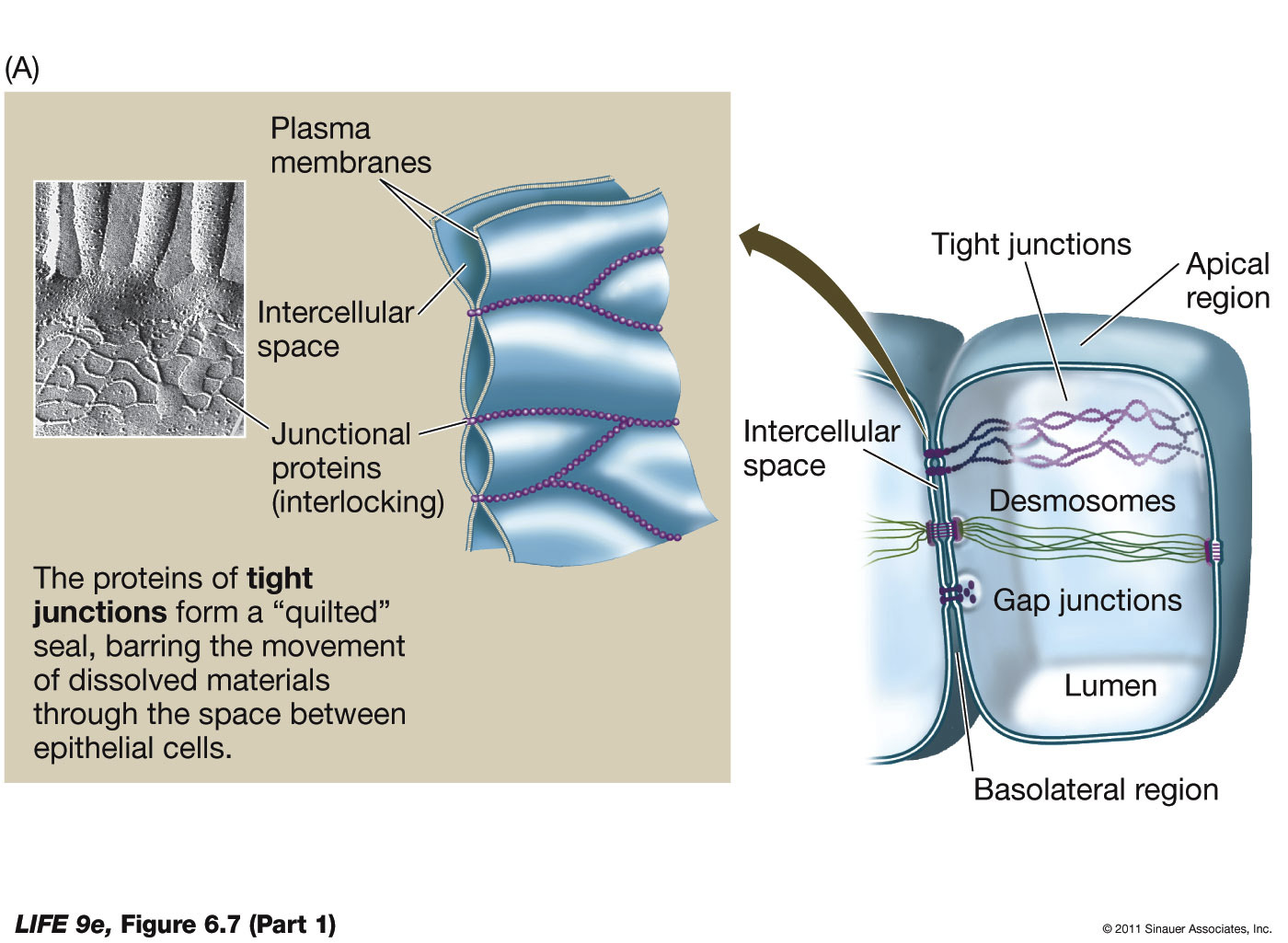
- desmosomes: involve cell adhesion molecules, dense plaque that weld the cells together, using cytoskeletal components
- gap: connections between cells that facilitate communication, create a “tunnel” between 2 cells created by connection channel proteins which allows for communication between the cells
==membrane transport==
- membranes are selectively permeable, only let certain things in
- active membrane transport: requires energy
- passive membrane transport: does not require energy
- diffusion (greater to lesser concentration): movement towards a state of equilibrium. substances move from places with greater concentration to regions with lesser concentration
- simple diffusion: substance moves through phospholipid bi-layer
- facilitated diffusion: needs a protein to get into the lipid bi-layer
==Osmosis==
- diffusion of water across a membrane, water diffuses from a region that has a higher concentration of water (it has slow solutes), to a region where there is a lower concentration of water but more solute
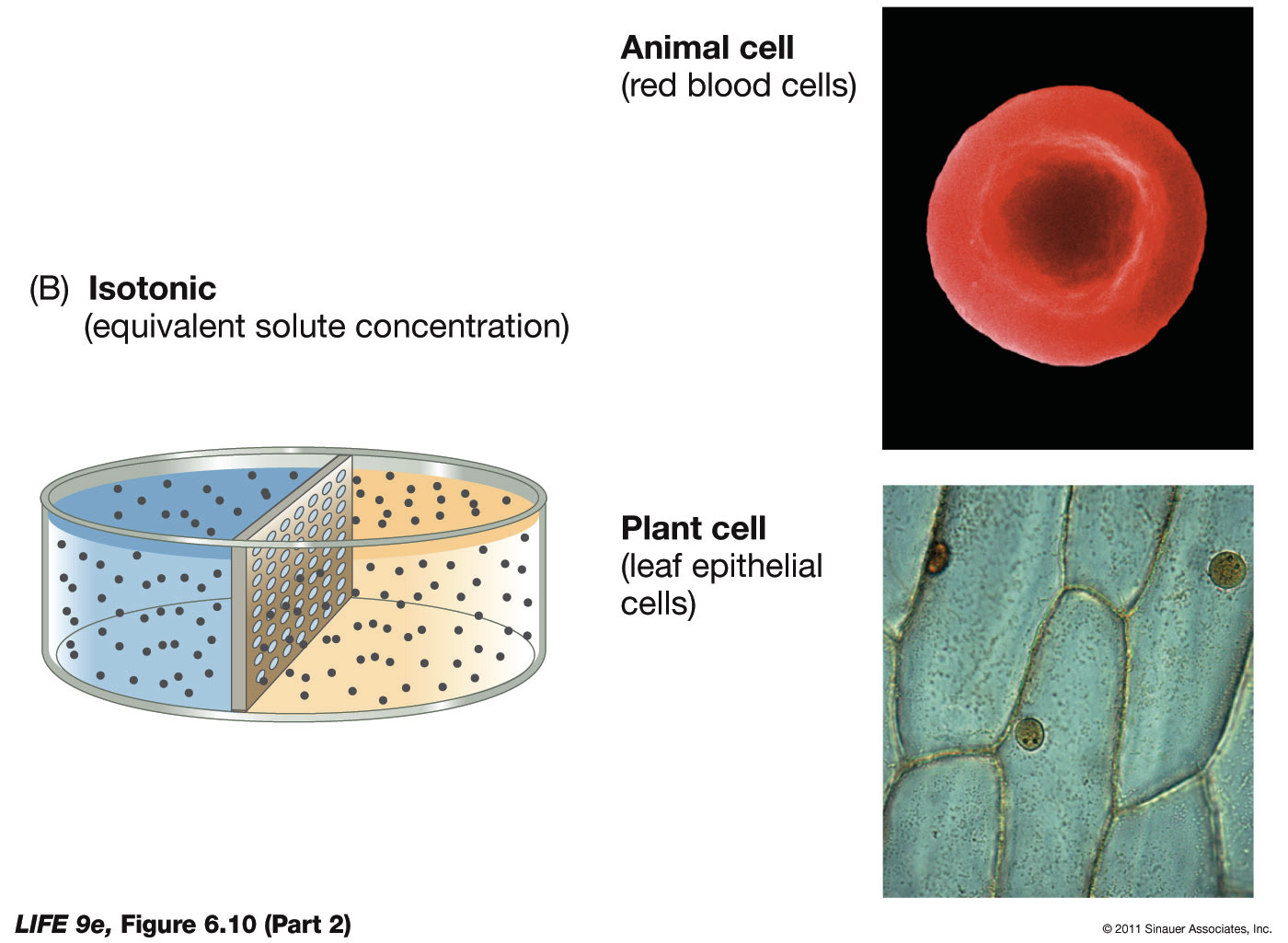
- isotonic solution: when you have equal solute concentration on both sides of the membrane, so there is the same water concentration on both sides as well
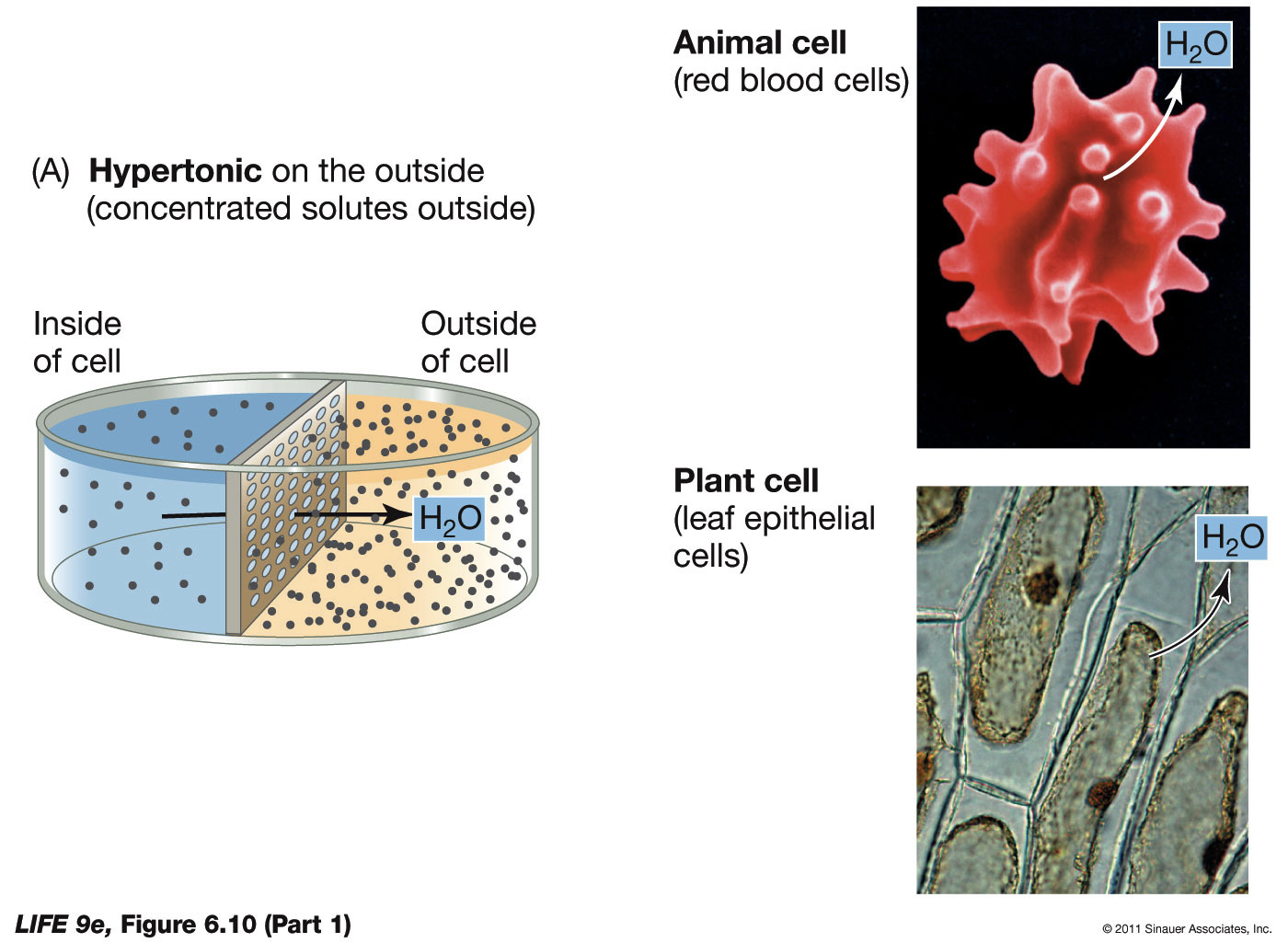
- hypertonic solution: a high concentration of solutes outside of the cell, water will follow and leave the cell
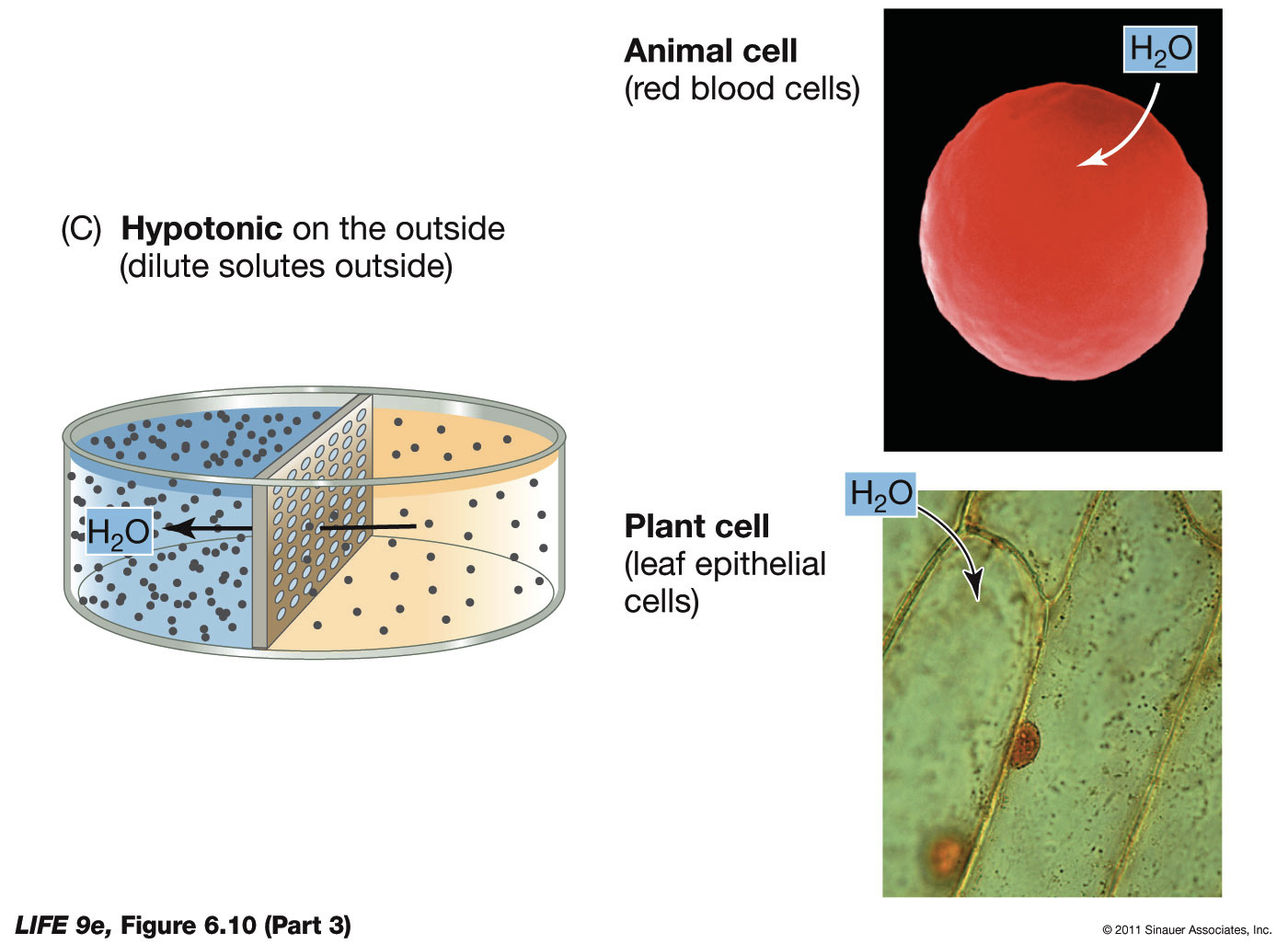
- hypotonic solution: when there is greater water concentration on the outside and a lower solute concentration outside of your cell. water rushed inside your cell to the higher solute concentration and lower water concentration
facilitated diffusion: lots of things cannot move across the membrane without a protein channel or a carrier protein (amino acids, carbohydrates, simple sugars, glucose, ions)
channel proteins: integral transmembrane proteins that form a channel that is lined with polar amino acids
carrier proteins: opening of a channel, bind transported substance, changes shape, and releases it in the cell
==Primary active transport==
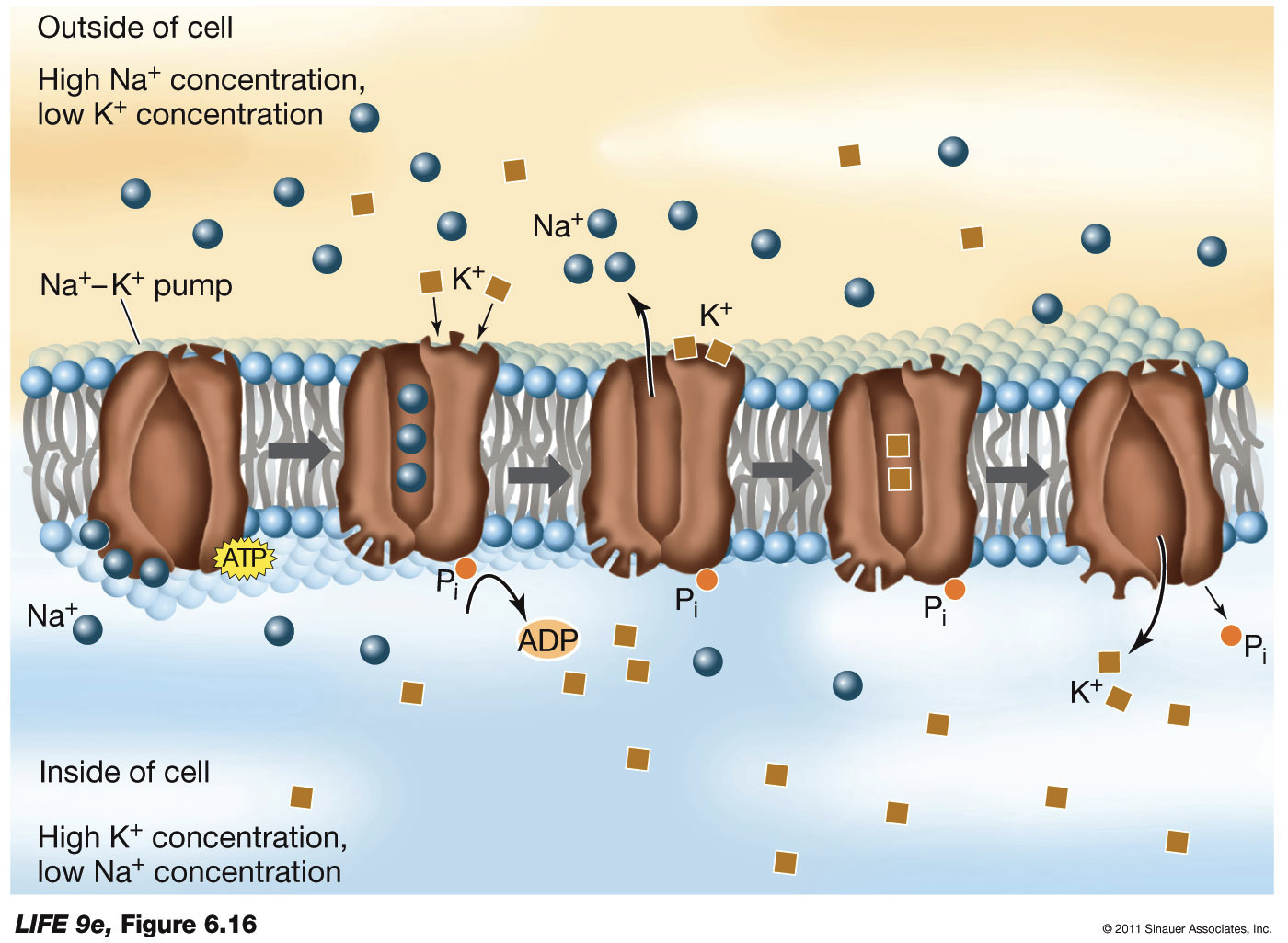
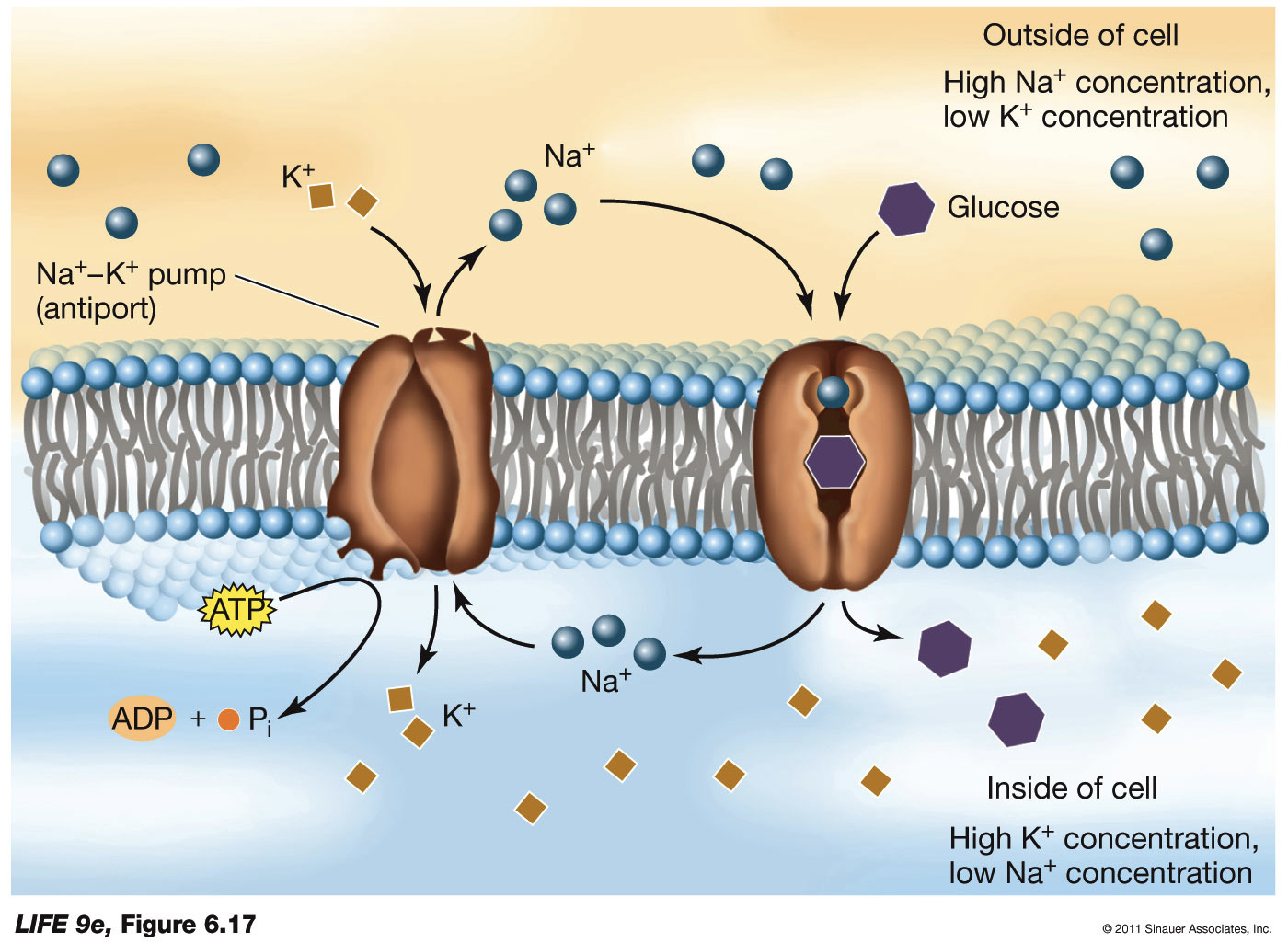
- ATP is used directly for the system, you are pumping it against the concentration gradient, you need energy to do this
- used in the sodium potassium pump: 3 sodium out, 2 potassium in with the use of ATP, you are using ATP to go against the concentration gradient so it is primary active transport
==secondary active transport==
- uses ATP directly
- when transport uses a gradient that was established from primary transport
- sodium glucose transport: as a sodium moves back inside the cell, glucose will enter and go against/up the concentration gradient
Endocytosis: anytime you bring something into the cell
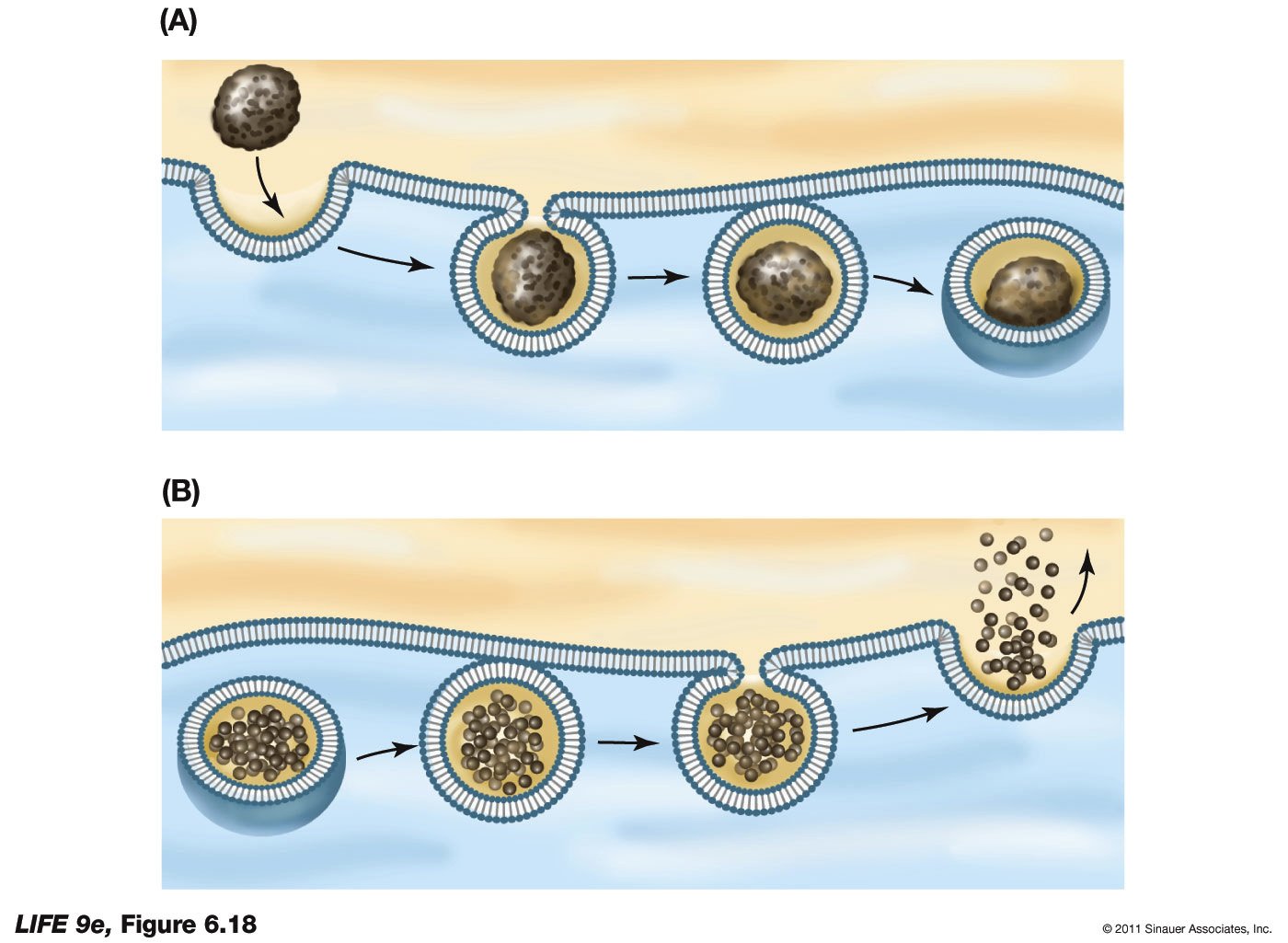
phagocytosis: cell eating, bringing large substances into the cell
pinocytosis: cell drinking, bringing in smaller molecules
receptor meditated (clathrin coated pit): receptor that specifically binds a substance, you form a vesicle and bring that into the cell. easy to tell apart because if the clathrin coated pits
exocytosis: when materials are packaged into vesicles and are secreted from the cell
metabolism: the total chemical conversions or reactions in your cell
energy transformation: all chemical reactions have energy transformations
enzymes: helps us speed up chemical reactions
==2 energy types==
- potential: stored energy, stored in chemical bonds
- kinetic: energy in motion
2 types of metabolic reactions
- anabolic: when you make a simple product from many smaller units, building something
- catabolic: an organized substances and you reduce it/break it into smaller, more randomly distributed substances, energy is released
==enthalpy==
- H=G+273xs, G= free energy, S= unusable energy
==entropy==
- the amount of disorderedness
==spontaneous reactions==
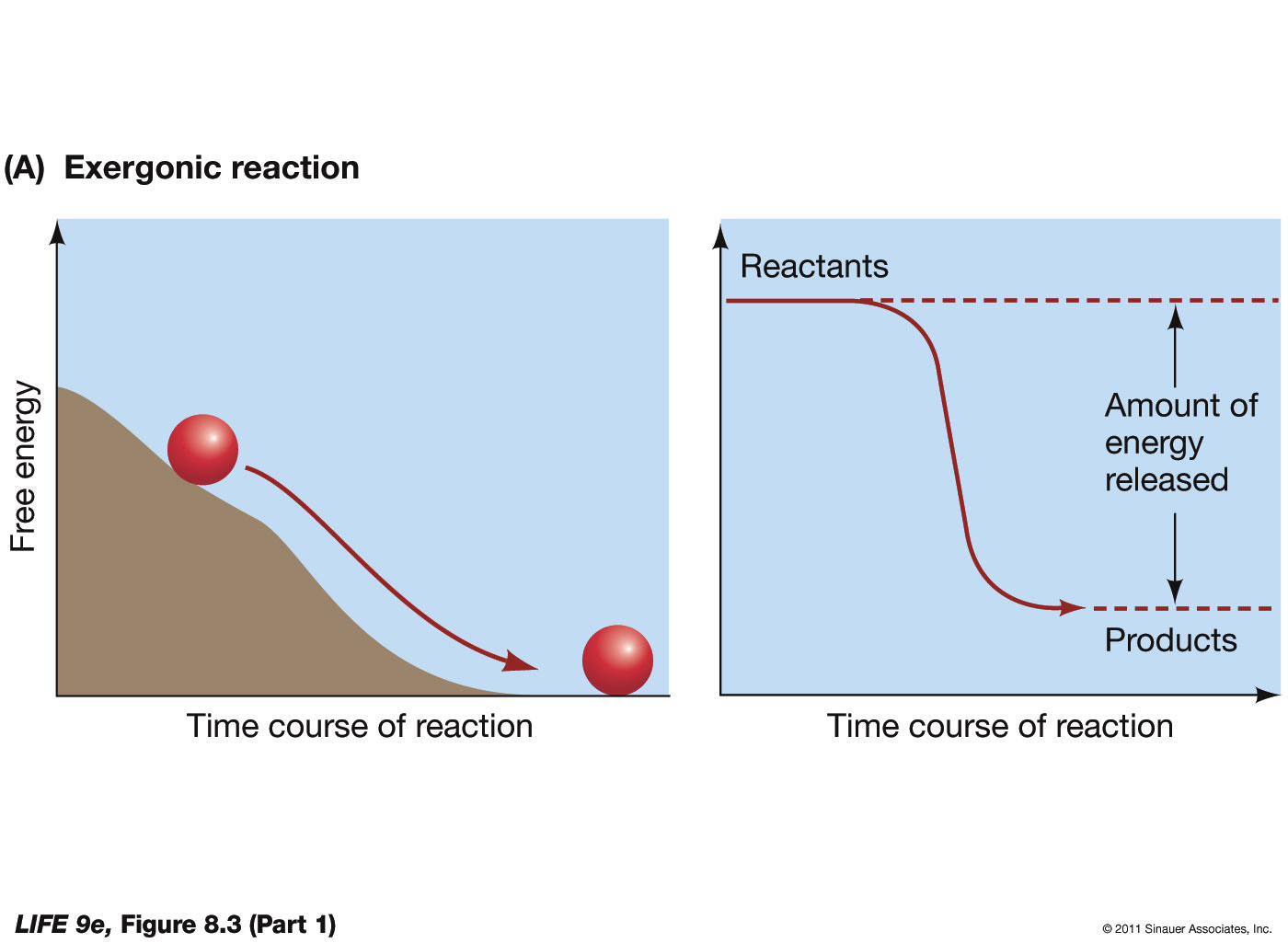
- are reactions that go more than half way to completion with out the input of energy
- exergonic reaction: are releasing energy, delta G is negative, catabolic, S is positive so you increase disorder
- cell respiration
- catabolism
non-spontaneous reaction
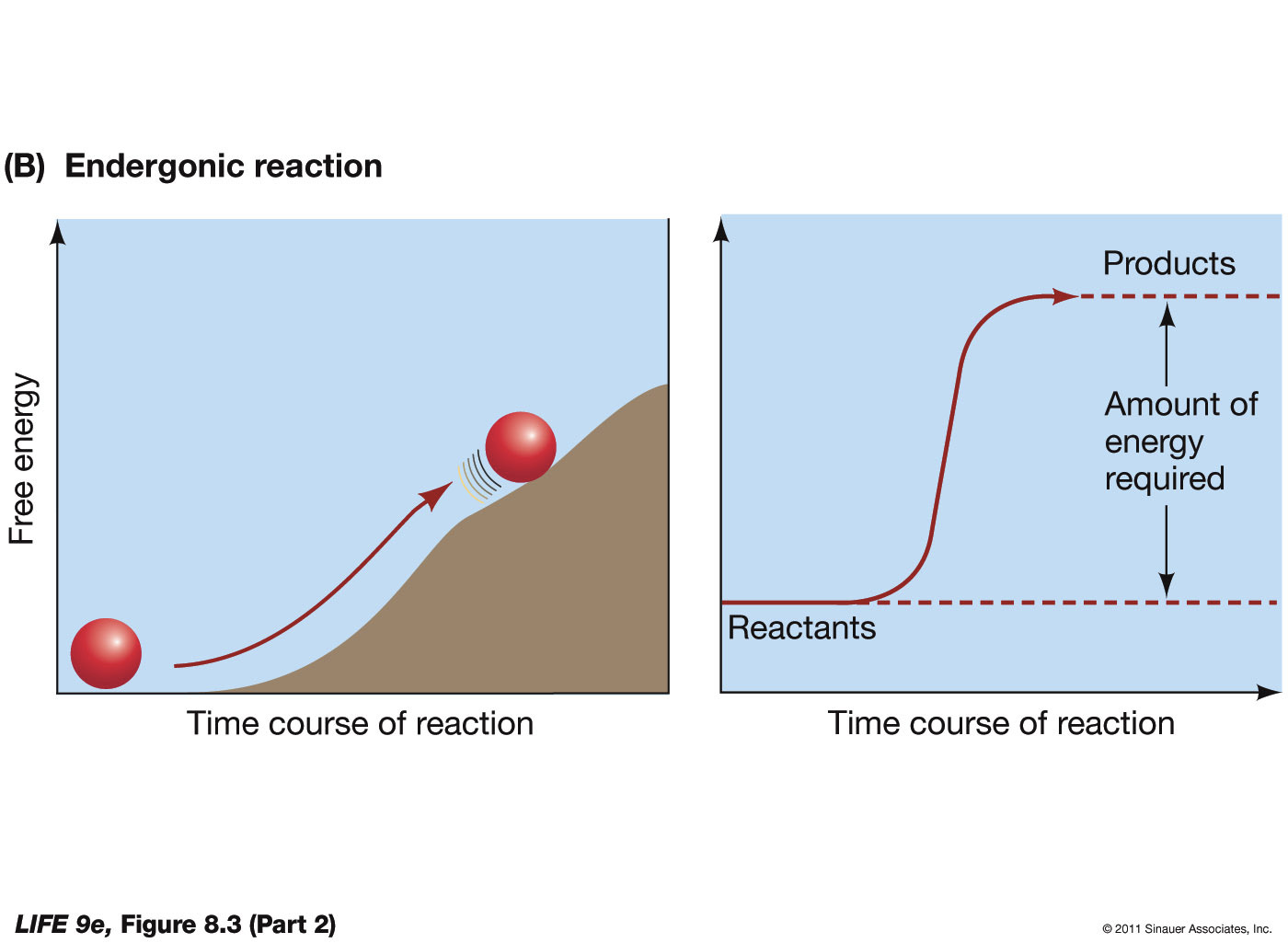
- requires the input of energy
- endergonic reaction: need/consume energy, delta G is positive, they are anabolic, S is negative, you are creating order
- active transports
- cell movements
- anabolism
enzyme: are a biological catalyst, speed up a reaction and are not used up or modified. are made of proteins and amino acids
activation energy: energy required to put your molecule into a transition state. they lower the activation energy that is required for a reaction to occur
transition state: the state where there is higher free energy than the reactant or the product
active site: surface of your enzyme, it binds a substrate
==enzymes==
lactase: breaks down lactose
alcohol dehydrogenase: made from DNA, breaks down alcohol
RNA polymerase: making RNA
RNA nuclease: breaking down
kinase: adds a phosphate to something
phosphate: removing a phosphate
ES interactions: enzyme substrate can have brief interactions that can allow for the formation of hydrogen, ionic or covalent interactions
==metabolic pathways principles==
- complex chemical transformations that occur in separate reactions
- there will be specific enzymes that catalyze each reaction
- metabolic pathways are similar in all organisms
- many pathways are compartmentalized in organelles
==glucose==
- C6H12O6
- the most common energy molecule
- oxidation: our cells obtain energy from glucose by oxidation, in a series of metabolic pathways
==Photosynthesis==
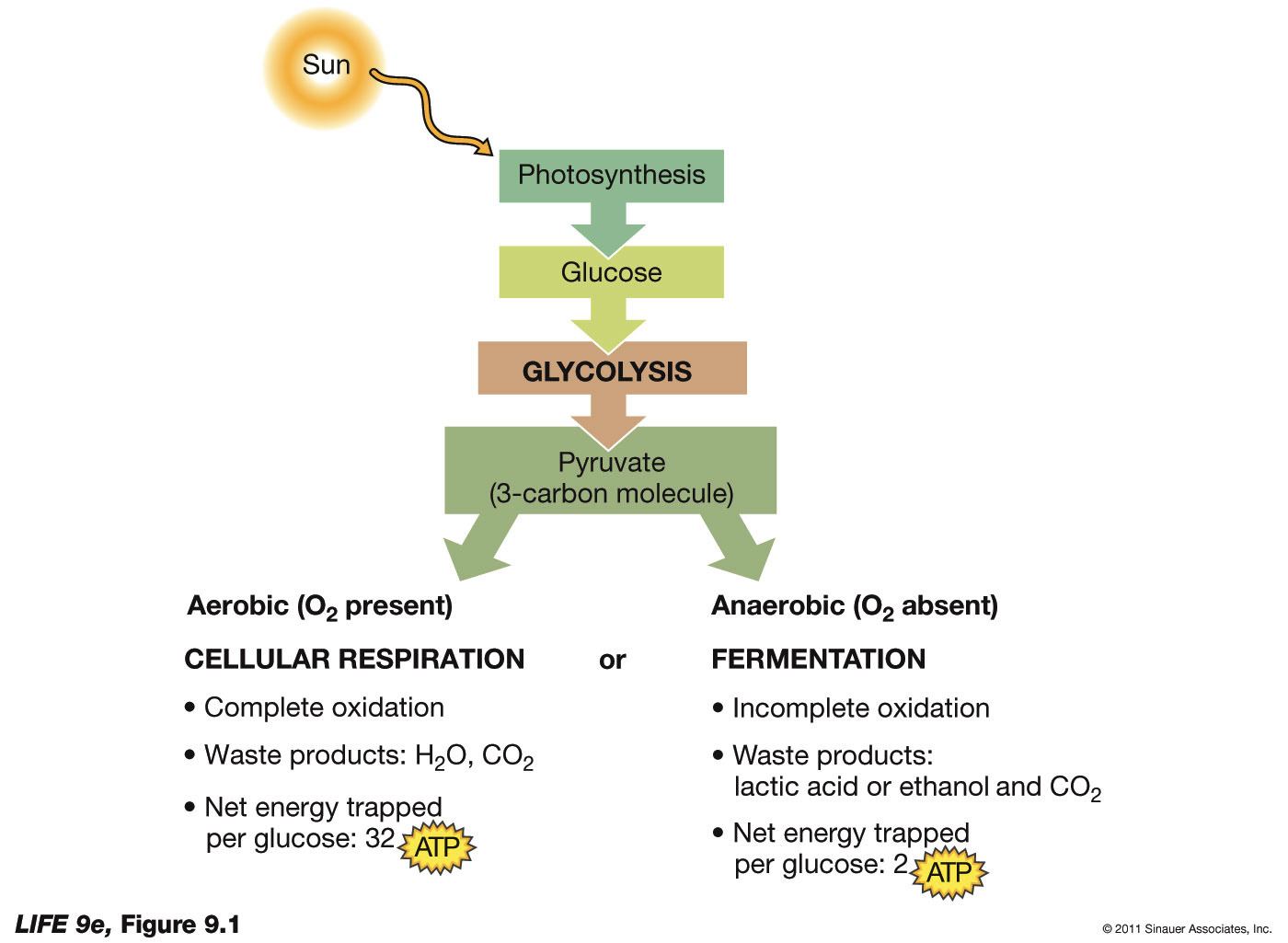
- sun
photosynthesis
glucose
glycolysis
pyruvate
cellular respiration/fermentation
==Glycolysis: cellular respiration==
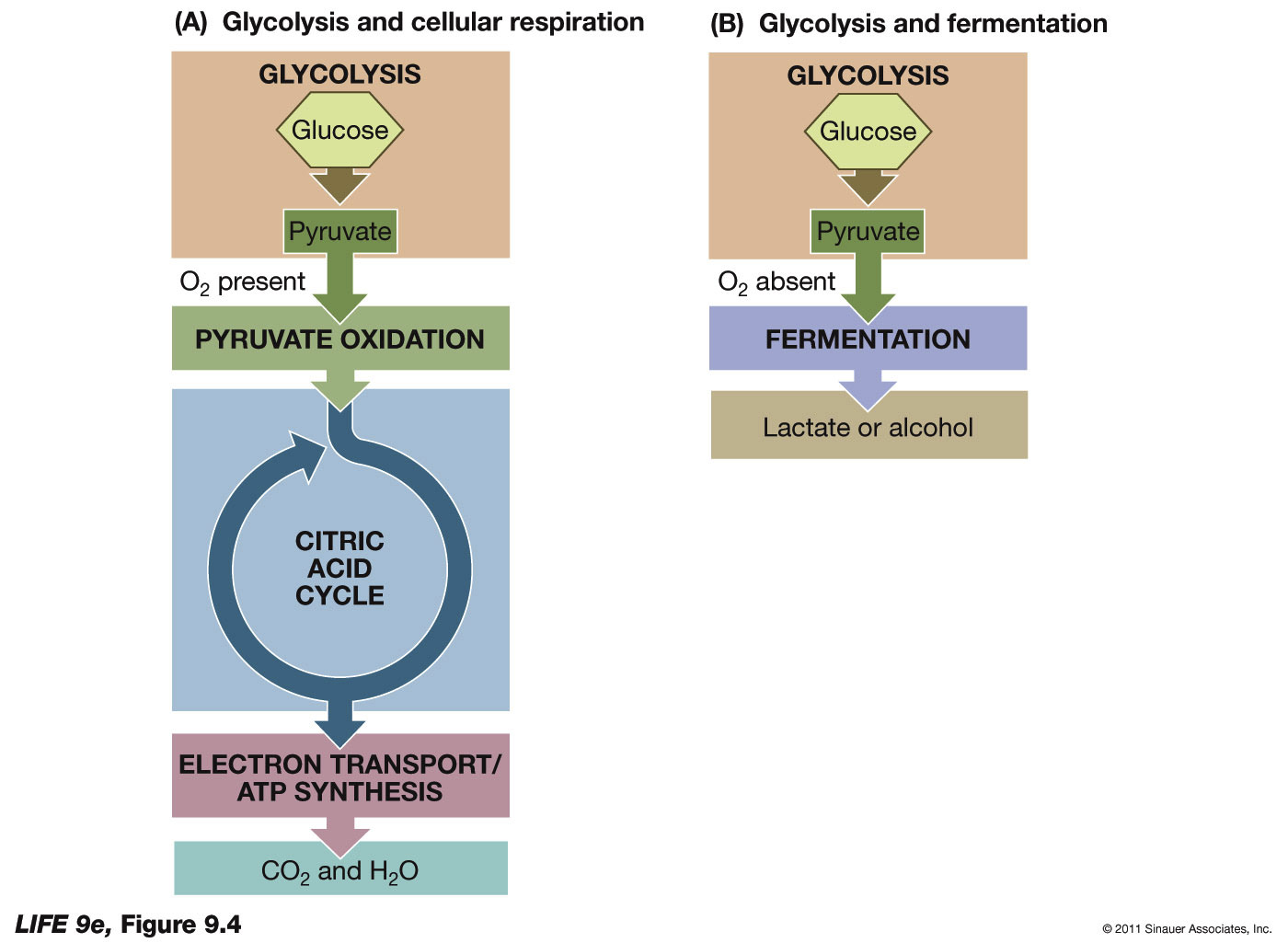
- glucose
pyruvate
pyruvate oxidation
citric acid cycle
electron transport/atp synthesis
CO2 and H2O
- STEPS:
- ATP transfers a phosphate to the 6-carbon sugar glucose
- glucose-6-phosphate is rearranged to form its isomer, fructose 6-phosphate
- A second ATP transfers a phosphate to create fructose 1, 6-biphosphate
- the fructose ring opens, and the 6-carbon fructose 1, 6-biphosphate breaks into the 3-carbon sugar phosphate DAP and its isomer G3P
- The DAP molecule is rearranged to form another G3P molecule
- the two molecules of G3P gain phosphate groups and are oxidized, forming 2 molecules of NADH and 2 molecules of 1,3-biphosphoglycerate
- the 2 molecules of BPG transfer phosphate groups to ADP, forming 2 ATPs and 2 molecules of 3-phosphoglycerate
- the phosphate groups on the 2 3PGs move, forming two 2-phosphoglycerate
- the two molecules of 2PG lose water, becoming two high energy phosphoendopyruvates
- the 2 PEPs transfer their phosphates to ADP forming 2 ATPs and 2 molecules of pyruvate
==Glycolyis: fermentation==
- glucose
pyruvate
fermentation
lactate or alcohol
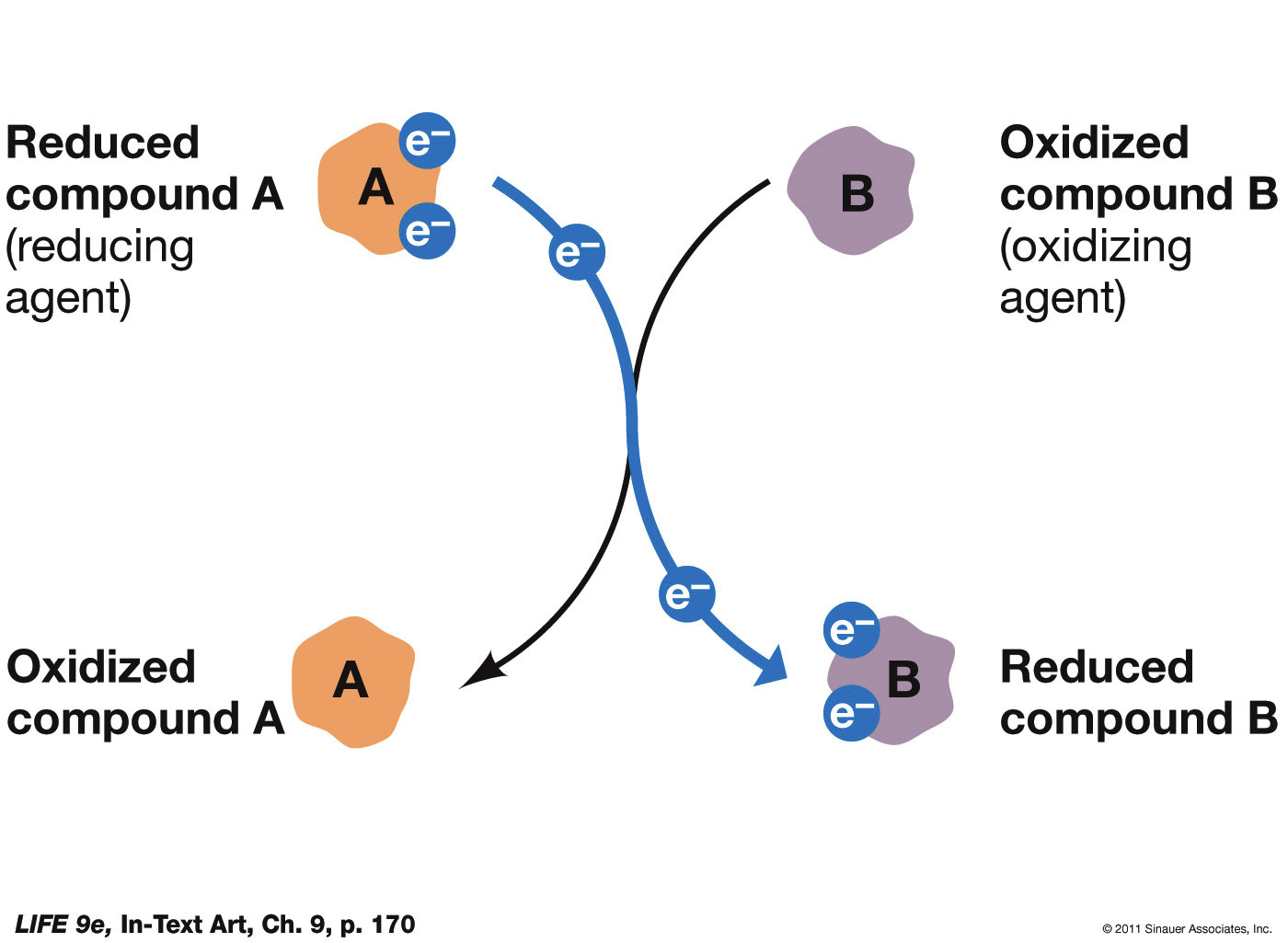
redox reaction: transfer of energy in electrons, one molecule will transfer one or more electrons to another molecule, what we use to break down glucose and get energy out of it
reduction: the gain of one or more electrons, and a hydrogen
oxidation: the loss of one or more electrons or a hydrogen, when one molecule is reduced, the other is oxidized
oxidizing agent: reduced, accepts electrons'
reducing agents: donates an electron, is oxidized
 ==metabolic pathways==
- occur when oxygen is present, they are aerobic
- glycolysis: oxygen not required but it will happen
- pyruvate oxidation: needs oxygen
- citric acid cycle
- electron transport
- cellular respiration
pyruvate oxidation: catalyzed by enzymes, attached to the inner mitochondrial membrane, inside the mitochondria matrix
==citric acid cycle==
 -
- \
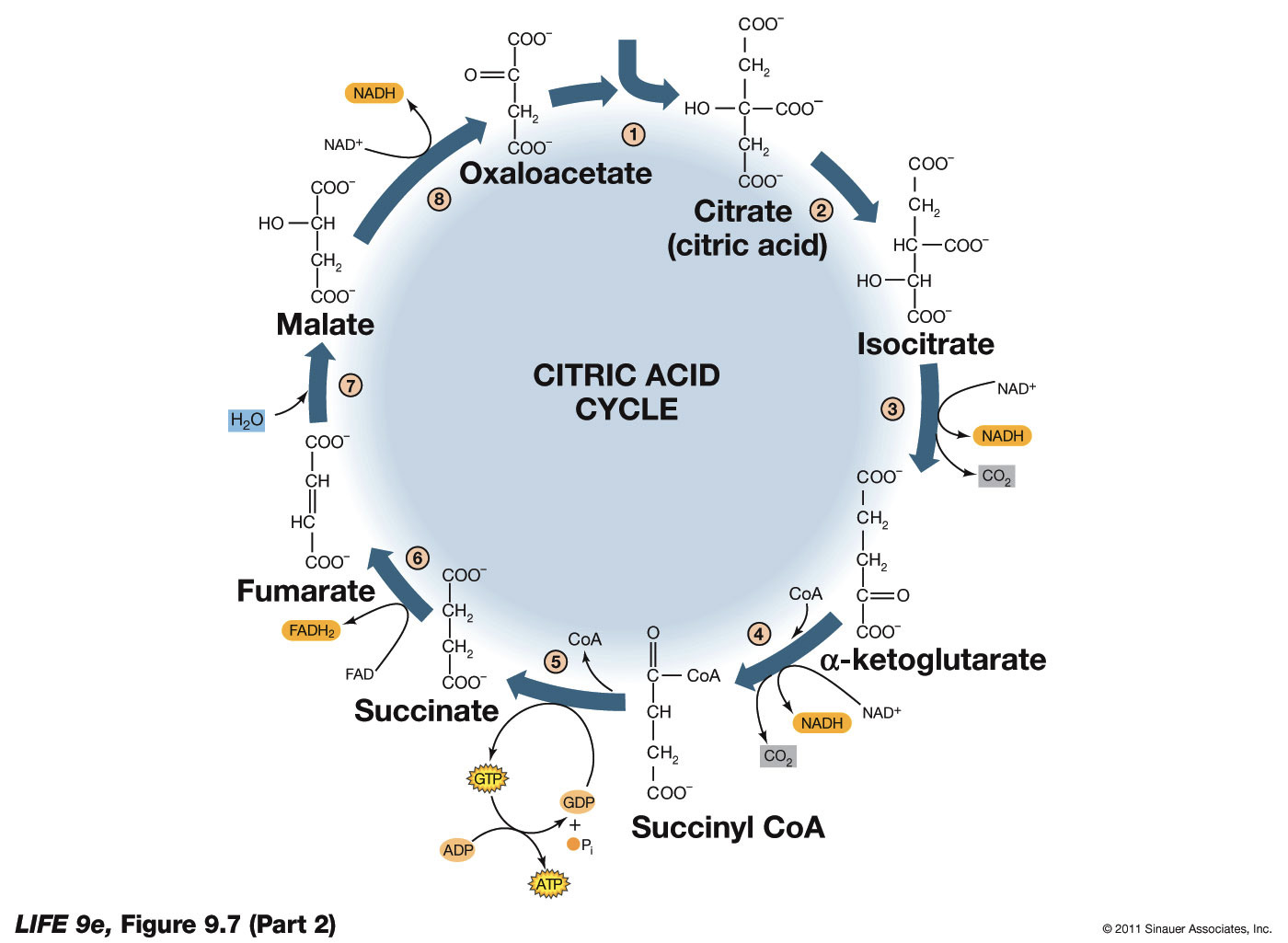
- the 2 carbon acetyl group and four carbin oxaloacetate combine forming six carbon citrate
- citrate is rearranged to form its isomer, isocitrate
- isocitrate is oxidizes to a-ketoglutarate, yielding NADH and CO2
- alpha ketoglutarate is oxidizes to succinylcholine with the formation of NADH and CO2: this step is almost identical to pyruvate oxidation
- succinylcholine releases coenzyme A, becoming succinate, the energy thus released coverts GDP to GTP which in turn converts ADP to ATP
- succinate is oxidized to fumarate, with the formation of FADH2
- fumarate and water react, forming malate
- malate is oxidized to oxaloacetate with the formation of NADH. oxaloacetate can now react with acetyl CoA to reenter the cycle
==photosynthesis==
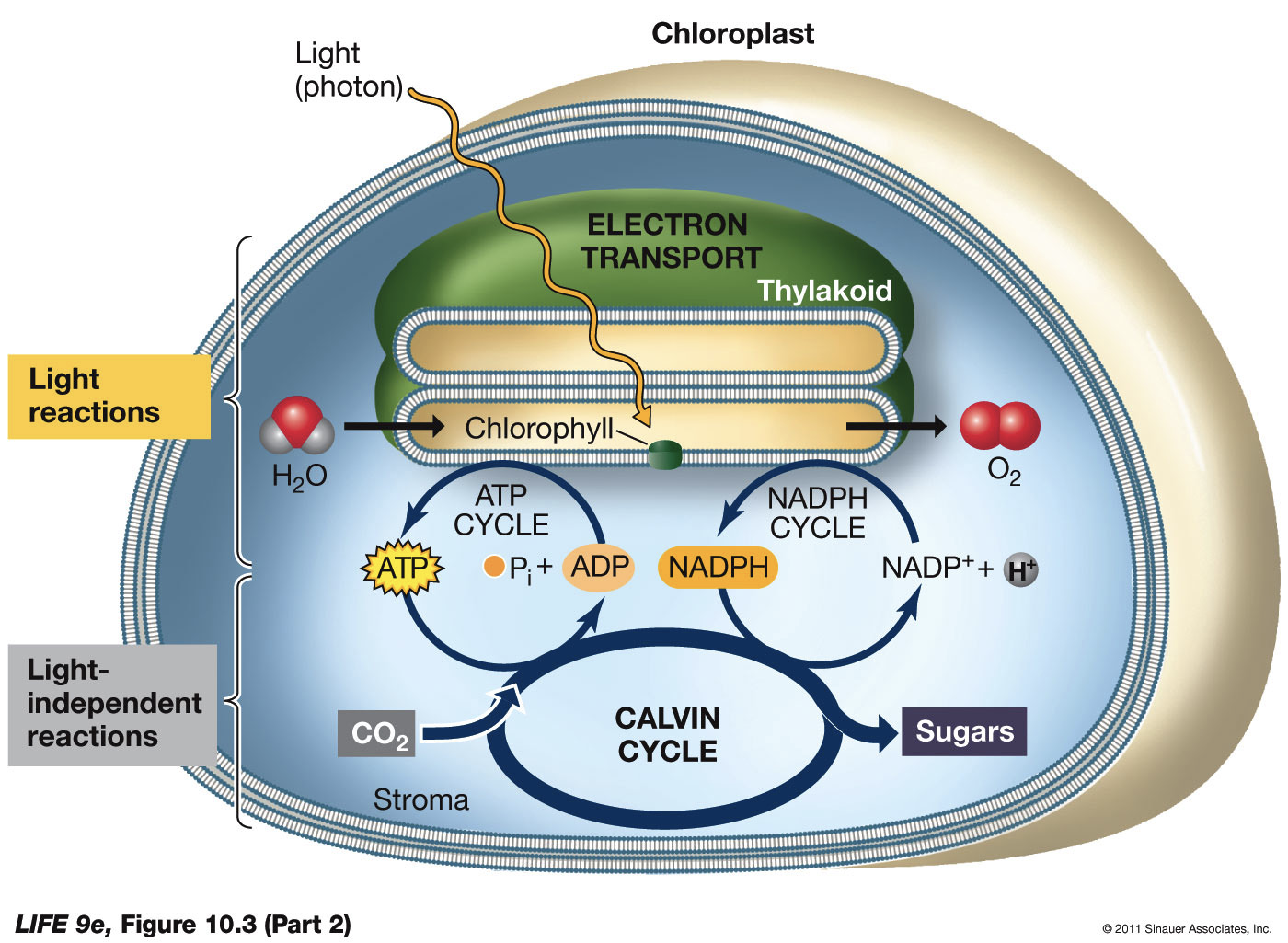
- produces glucose, happens in the chloroplast, biochemical pathway where plants capture energy from sunlight, and store it in the form of carbohydrates
- 2 pathways
- light reaction: driven by light energy that is captured by chlorophyll, produces ATP and NADPH
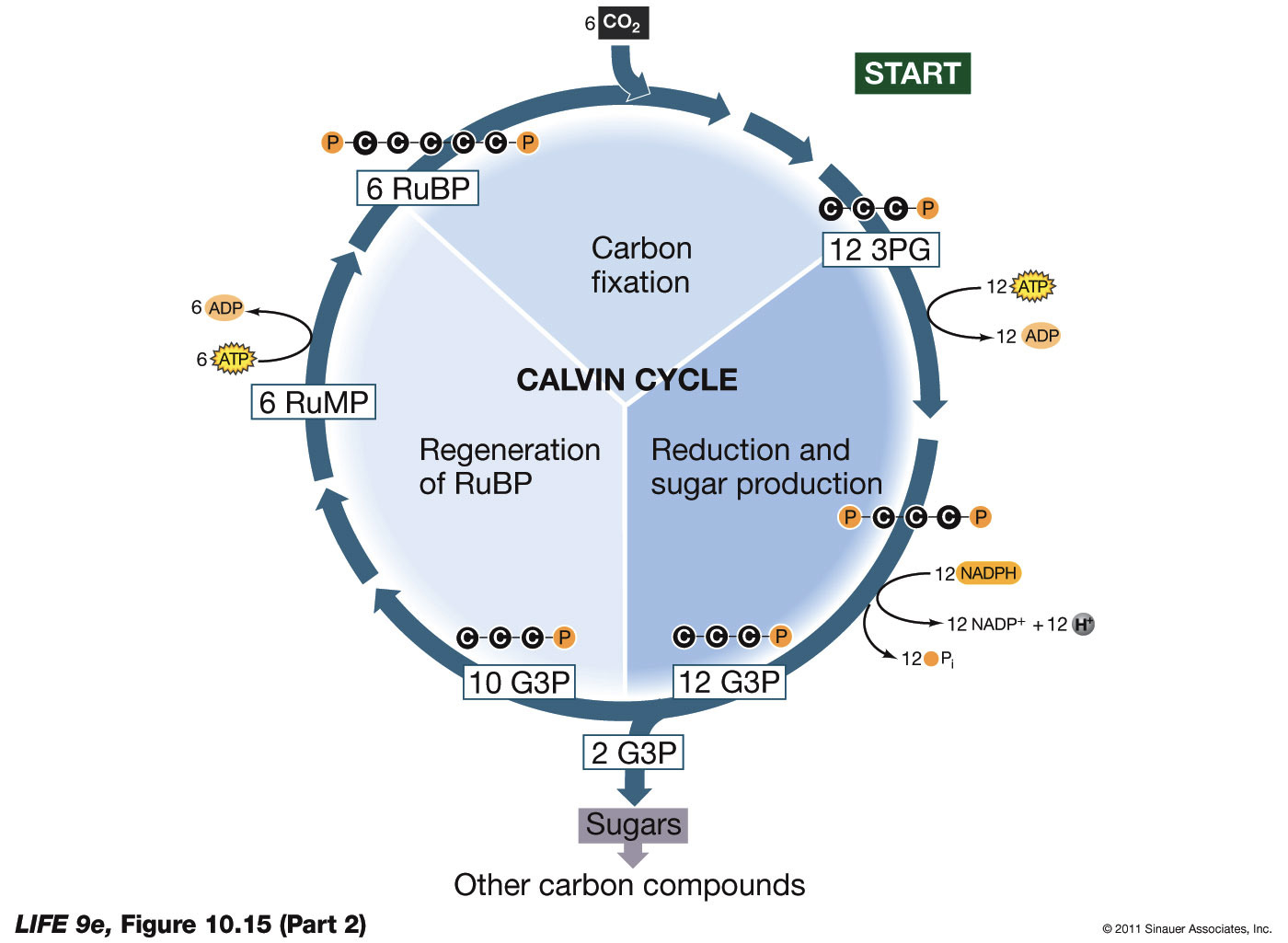
- light independent reaction: involves the calvin cycle, it does not use the light directly. it reduces CO2 into sugar, uses ATP and NADPH and CO2 to make sugar
- takes place in the stroma, uses NADPH and ATP
1. fixation: CO2 + RuBP (rubisco) * fixes CO2 with RuBP, during this rubisco makes a 6 carbon intermediate that quickle splits into 3PG 2. conversion/reduction * 3PG - G3P * converts 3PG into G3P. requires ATP and NADPH because we are reducing 3. regeneration * regenerates RuBP, to cycles the cycle
==transpiration==
- water in plants comes from the soil, it is transported through the roots to the leaves. as water evaporates, more water is pulled up from the soil
- transpiration stomata: pores on the leaves that take in CO2 and get rid of water and oxygen
photons: packet of visible light energy, are absorbed by a pigment
pigments: absorbs photons, has 3 possibilities
- scatters: the energy can be scattered, when scattered it makes the visible color that you can see
- transmitted: passes through pigment
- absorbed: important for photosynthesis, pigment absorbs energy. if it is absorbed, the pigment molecules will rise to a higher energy state
==exciting a molecule==
- gives off heat
- fluorescence
- pass energy to another molecule
==the electromagnetic spectrum==
- pigments have an absorption spectrum
- when you plot the absorption of a compound as a function of the wavelength
- plants are green because the only color they aren’t absorbing is green
==photosynthetic pigments==
- pigments like chlorophyll are arranged into an antenna system. the pigments are packages together and are attached to the thylakoid membrane proteins. this allows for the transfer of energy to other molecules and ultimately to a reaction center
==light reaction==
- when we make ATP
- during the reaction: chlorophyll acts as a reducing agent, electrons from chlorophyll will flow through electron transport, plants will make NADPH, ATP and oxygen as a bi product
- photophosphorylation: making ATP in the thylakoid membrane
==2 options for electron transport with photosynthesis==
- noncyclic electron transport
- produces NADPH, ATP and oxygen
- involves 2 photosystems, they are constantly absorbing light
- uses light energy to oxidize water, produces protons and oxygen, this energy is used to chemiosmotically produce ATP
- photosystem 1 uses light energy to reduce NADP into NADPH
- reaction center has chlorophyll A, P700, it absorbs light at a wavelength of 700
- cyclic electron transport
- produces ATP only
- electrons are transported from one P700 molecule, they cycle back to the same P700 molecule, electron transport is used, ATP us produced more efficiently
electron transport during a light reaction: protons will be moved to the interior of the thylakoid, this will create a high proton concentration, protons will then diffuse back into the stroma through ATP synthase to create ATP
==C3 and C4 plants==
- C3 plants
- are the common types of plants
- they have mesophyll cells which have rubisco
- C4 plants
- has an extra enzyme in their mesophyll
- the enzyme is pep carboxylase, mixes PEP with CO2, makes it oxaloacetate, it moves from the mesophyll to the bundle sheath cells
- bundle sheath is where the rubisco is