Pre-work week 3 Reaction Stoichiometry and Chemical Equations
Writing and Balancing Chemical Equations
Reactants: Substances undergoing a reaction, written on the left side of the equation.
Products: Substances generated by the reaction, written on the right side of the equation.
Equation Format: Plus signs (+) separate individual reactants and products, while an arrow (⟶) indicates the direction of the reaction.
Coefficients: Represents the relative numbers of reactant and product species. A coefficient of 1 is typically omitted.
Reversible Reactions: Indicated by half arrows (⇌) pointing both ways.
Physical States of Reactants and Products
Physical State Indications:
(g) = gas
(s) = solid
(l) = liquid
(aq) = aqueous (dissolved in water) this means a substance dissolved in water whereas liquid is a pure substance in its melted state
Example:
Special Conditions: Indicated by symbols/words; e.g., heating is denoted by Δ.
Law of Conservation of Matter
The total number of atoms must remain constant on both sides of the reaction. Atoms are neither created nor destroyed in a reaction
Example Reaction:
Balance check per element:
Carbon (C): 1 (LHS) = 1 (RHS)
Hydrogen (H): 4 (LHS) = 4 (RHS)
Oxygen (O): 4 (LHS) = 4 (RHS)
Balancing Chemical Equations by Inspection
Change coefficients to achieve balance rather than altering subscripts.
Initial (Unbalanced):
Balanced correctly results in:
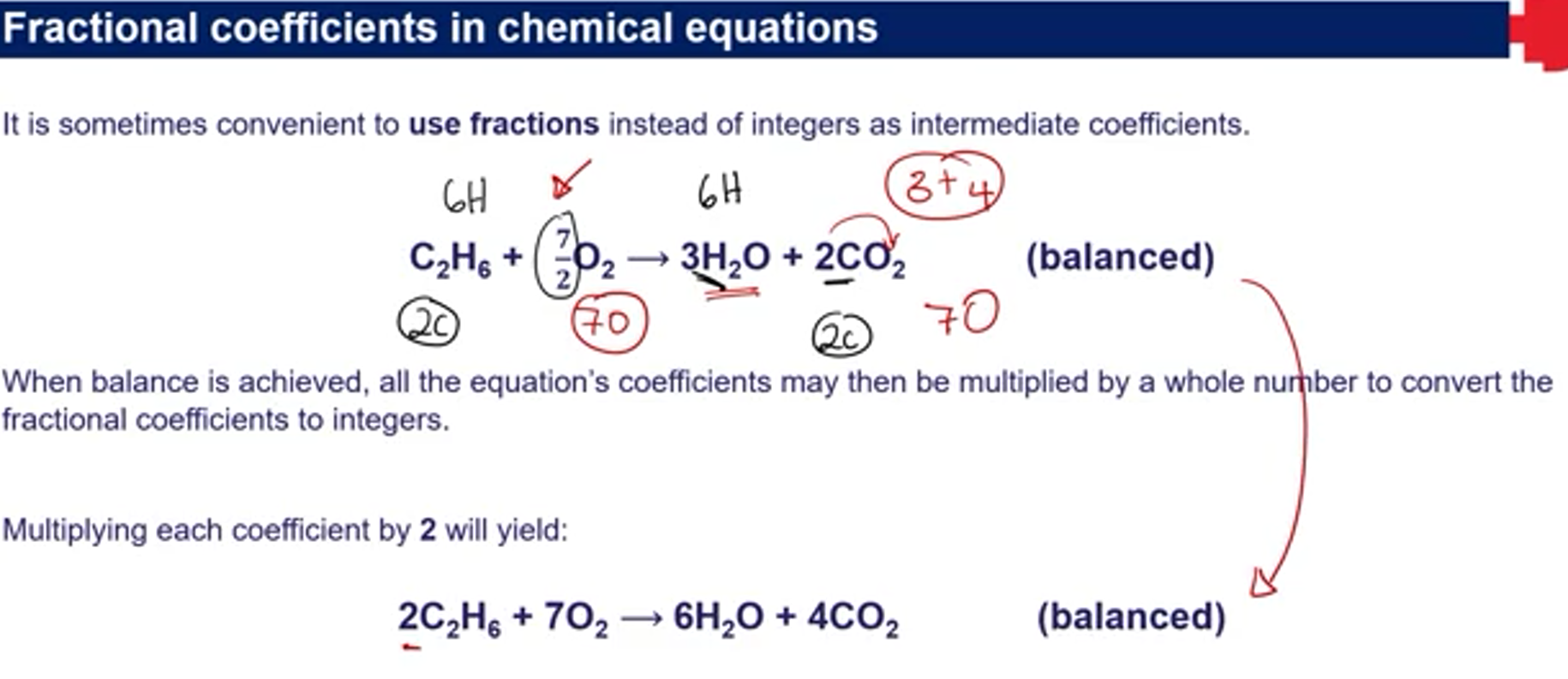
Fractional coeffcients in chemical equasions
equasions for ionic reactions
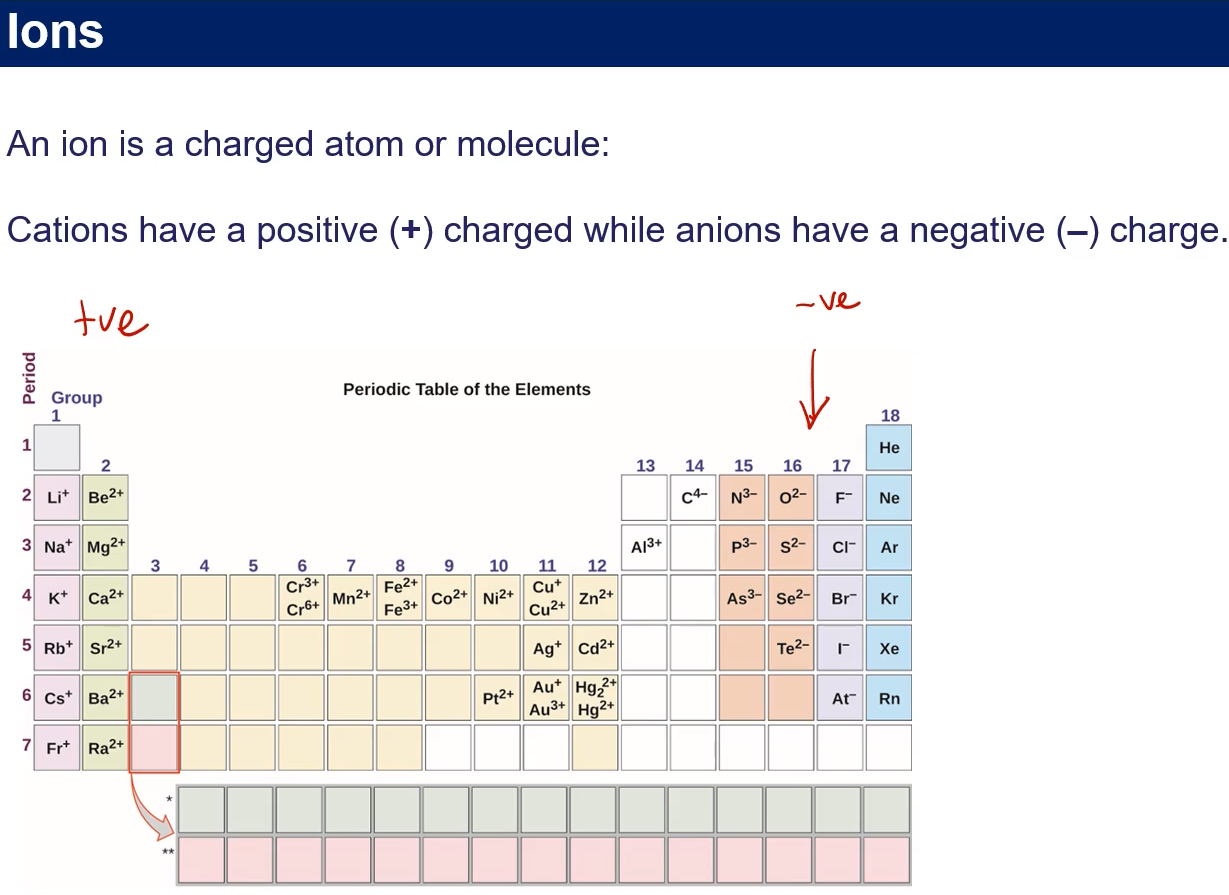
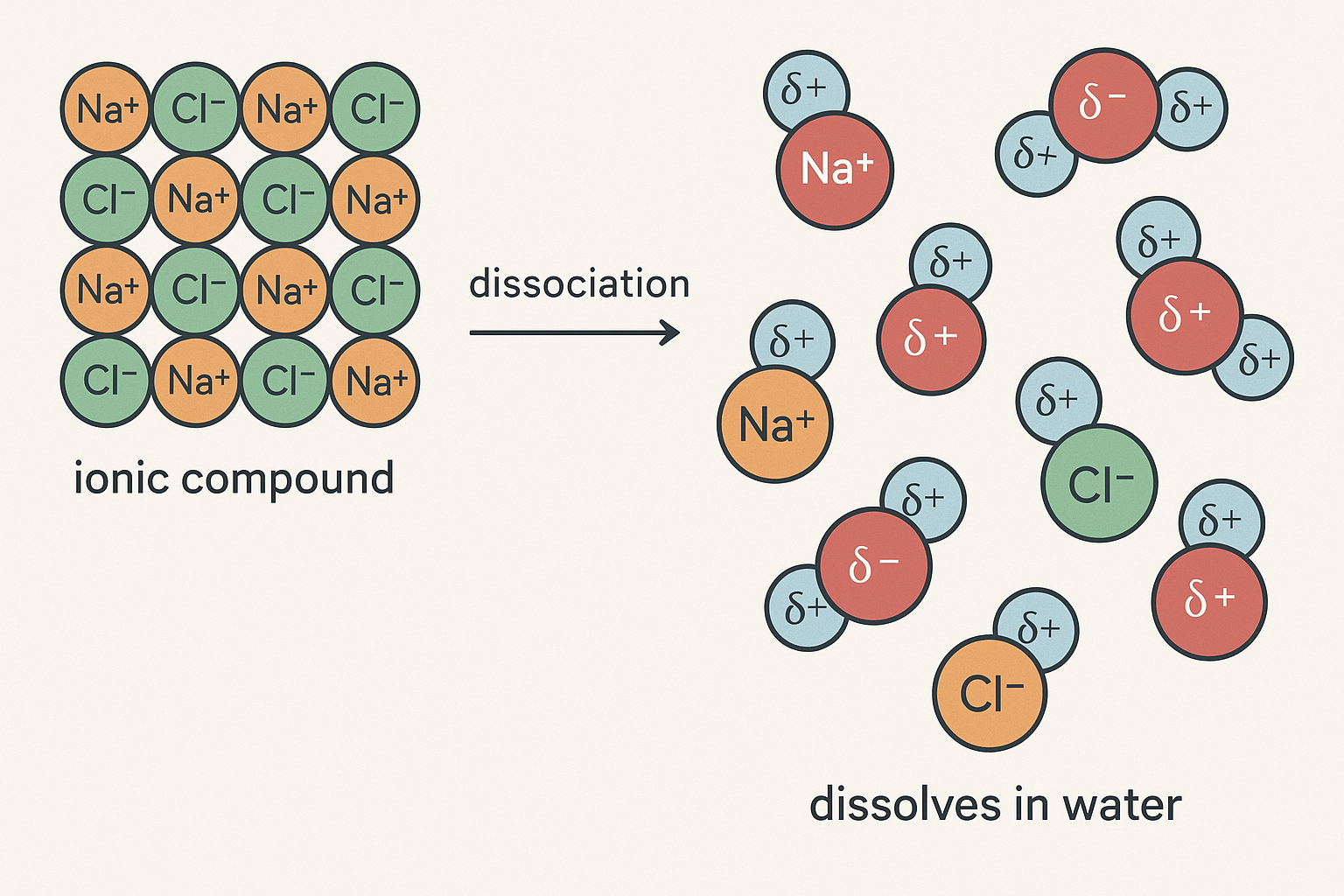
What an ionic compound is?? —-Ionic compounds are formed through the electrostatic attraction between positively charged ions (cations) and negatively charged ions (anions). They result from the transfer of electrons, typically between metals and nonmetals. Examples include sodium chloride (NaCl). Ionic compounds disassociate into ions when dissolved in water.
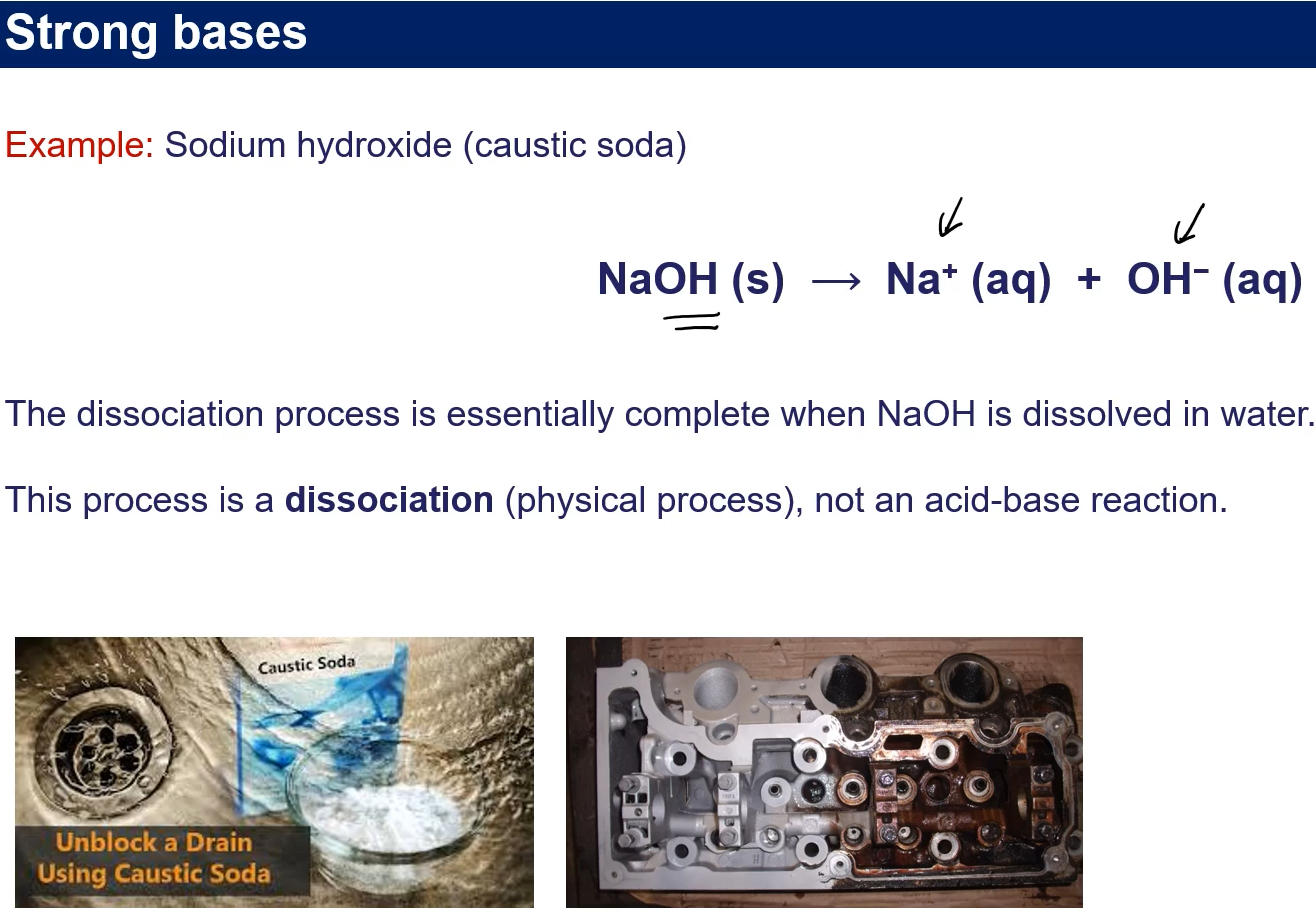
when ionic compounds disolve in water they may disassoiate into there constituents ions
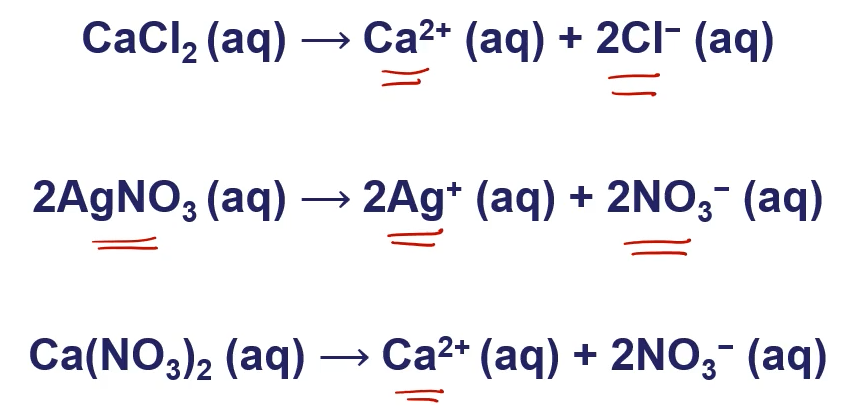
1. Nature of Ionic Compounds
Ionic compounds are made of positively charged cations and negatively charged anions held together by electrostatic forces (ionic bonds). For example, sodium chloride (NaCl) is composed of Na⁺ and Cl⁻ ions.
2. Polarity of Water
Water is a polar molecule, meaning it has a partial positive charge on the hydrogen atoms and a partial negative charge on the oxygen atom. This makes it very effective at interacting with charged particles.
3. Solvation (Hydration)
When an ionic compound is added to water:
The positive part of water (H⁺) is attracted to the negative ions (anions).
The negative part of water (O²⁻) is attracted to the positive ions (cations). These interactions are strong enough to overcome the ionic bonds holding the lattice together.
4. Dissociation Process
As water molecules surround and isolate each ion, the compound dissociates into free ions in solution. For example:
NaCl (s)→Na+(aq)+Cl−(aq)\text{NaCl (s)} \rightarrow \text{Na}^+ (aq) + \text{Cl}^- (aq)NaCl (s)→Na+(aq)+Cl−(aq)
5. Result: Electrolyte Solution
The free ions allow the solution to conduct electricity — such a solution is called an electrolyte.
/
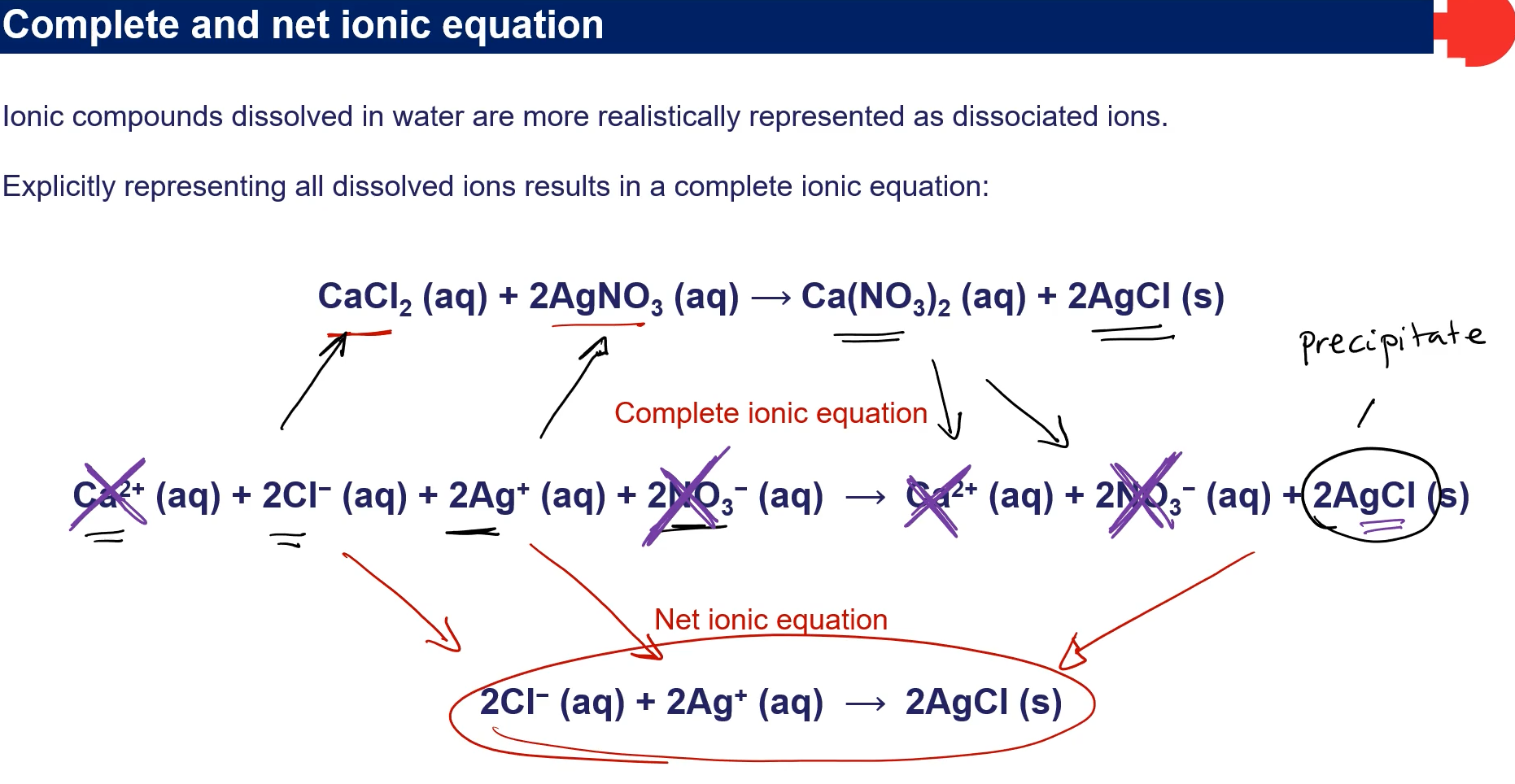
Complete and net ionic equasions
Precipitation reactions
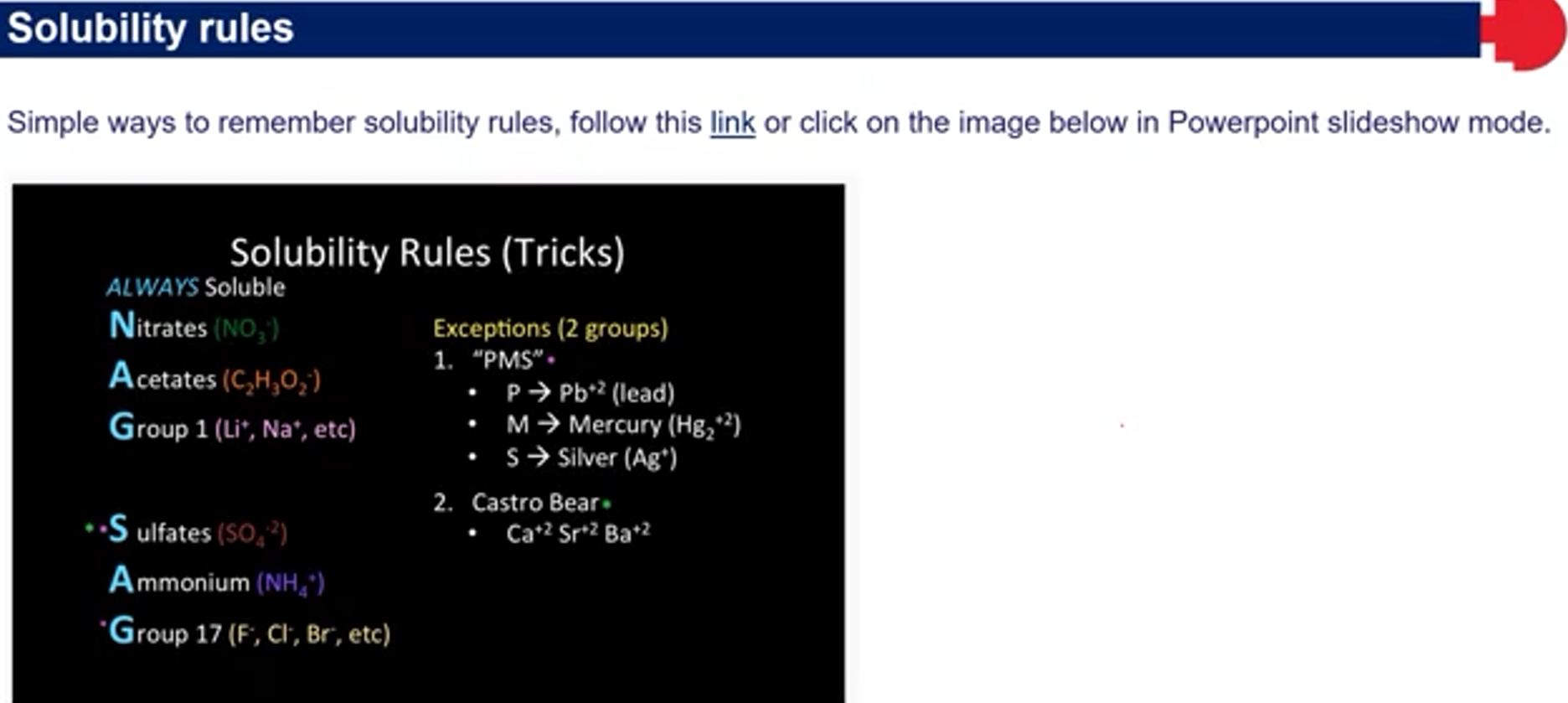
solubility
Solubility: the maximum concentration of a substance that can be achieved under specified conditions.
Substances that have a relatively high solubility are said to be soluble.
A substance will precipitate when solution conditions are such that its concentration exceeds its solubility.
Substances that have a relatively low solubility are said to be insoluble, and these are the substances that readily
precipitate from solution.
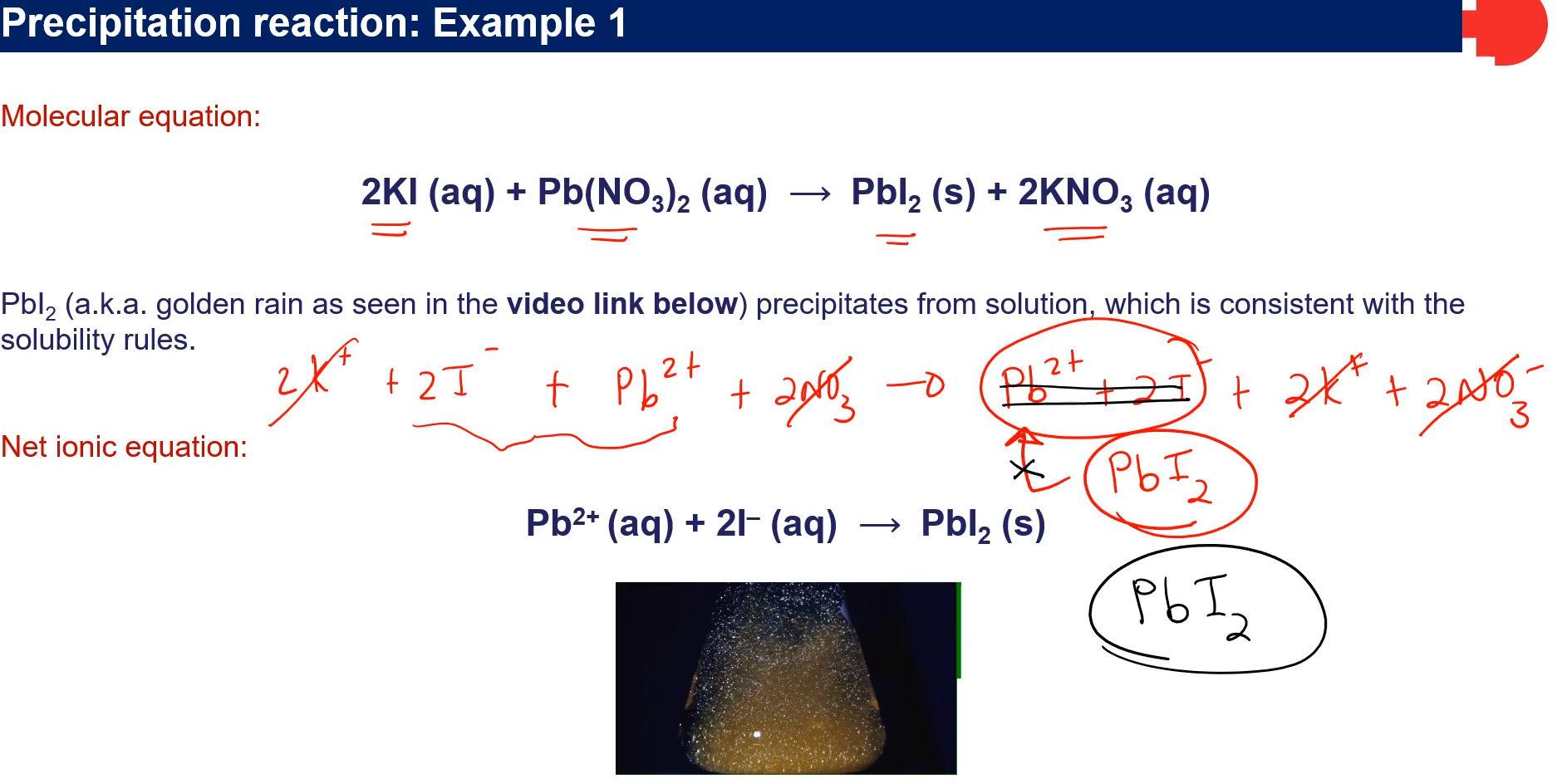
Precipitation reactions
A precipitation reaction is a type of chemical reaction that occurs in aqueous solution when two soluble ionic compounds are mixed and an insoluble solid, known as a precipitate, forms. This happens because the ions in solution recombine to form a compound that is not soluble in water, and therefore separates out as a solid.
Acid Based reactions
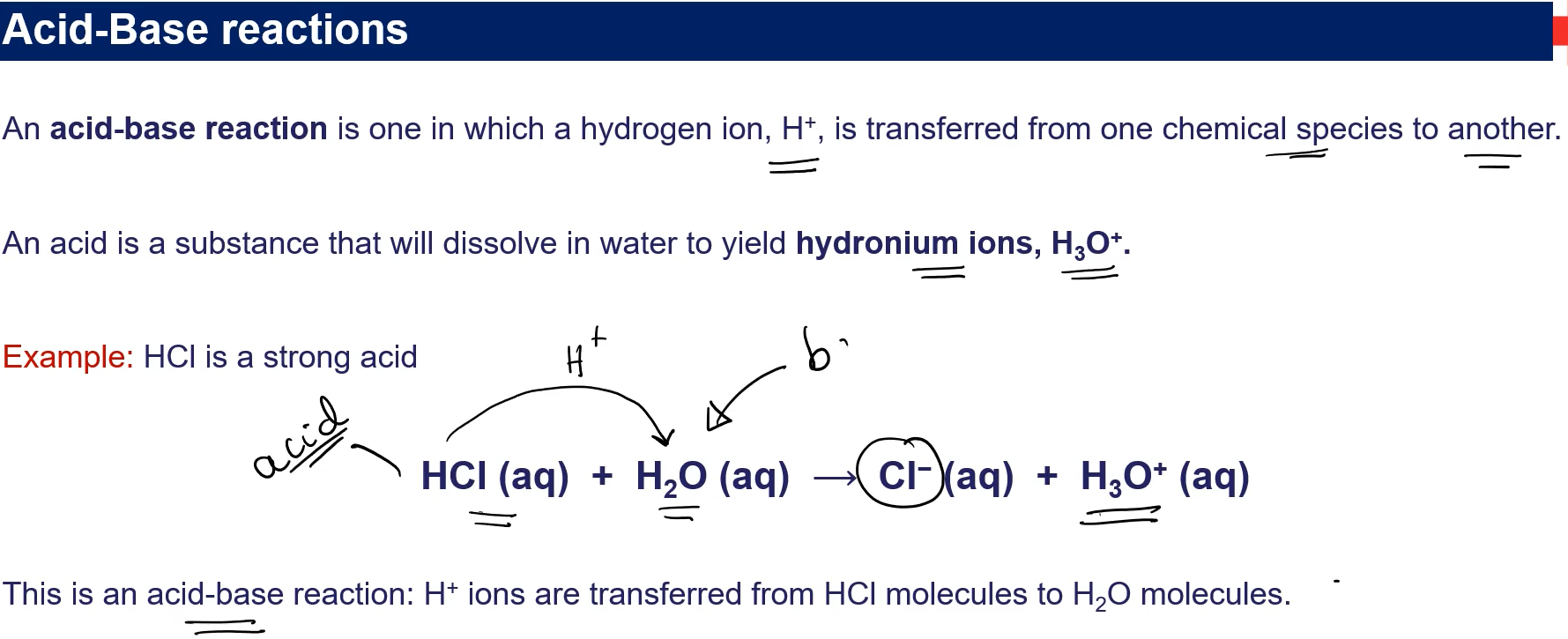
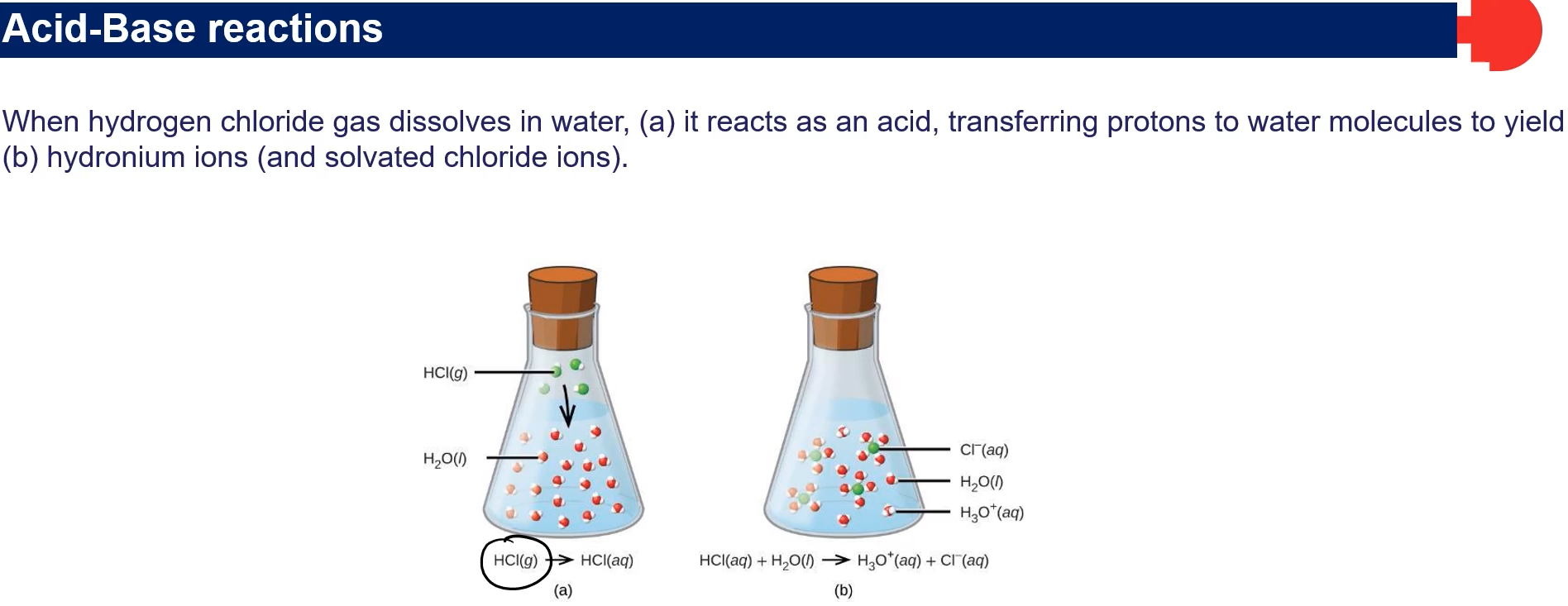
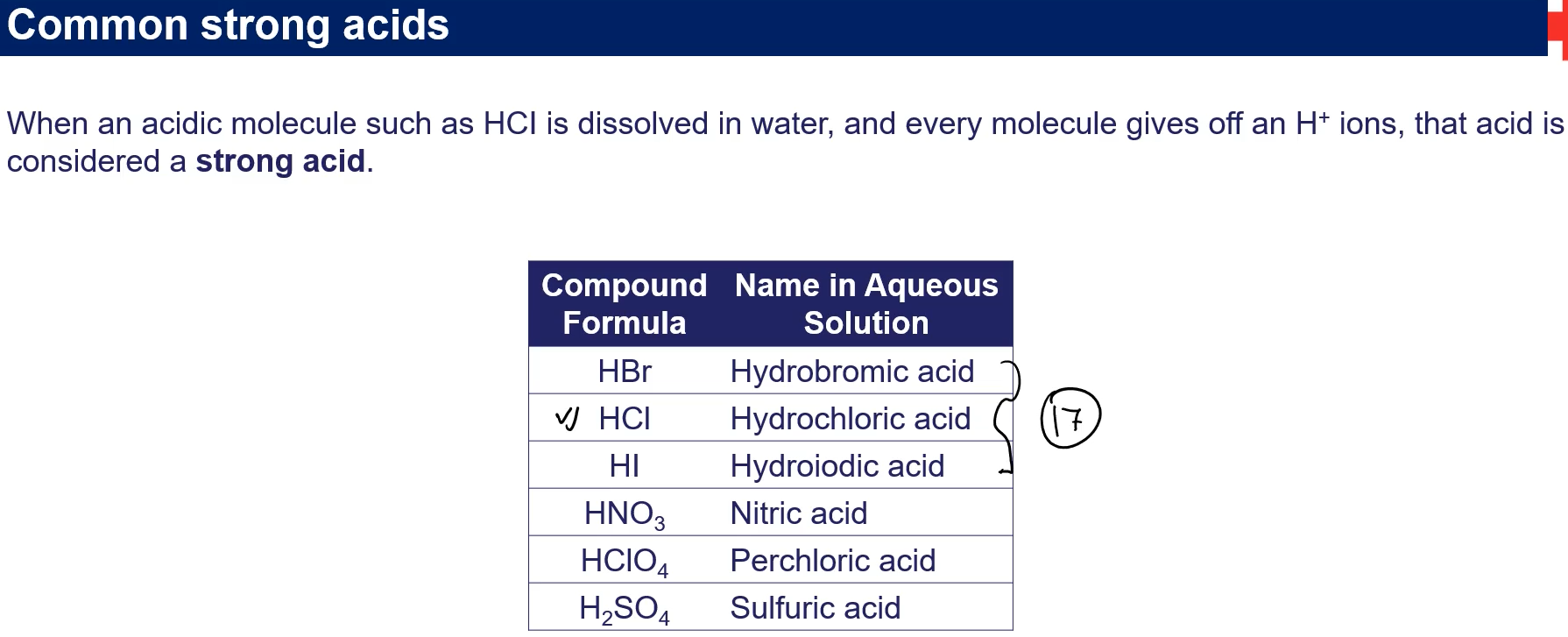
In acid-base reactions, an acid donates a proton (H⁺) to a base, resulting in the formation of water and a salt. This neutralization reaction is crucial for understanding the behavior of acidic and basic solutions, as it often leads to the production of precipitates under certain conditions.
An acid-base reaction is a type of chemical reaction where an acid donates a proton (H⁺) and a base accepts it, typically producing a salt and water. This process, known as neutralization, occurs when substances like hydrochloric acid (HCl) and sodium hydroxide (NaOH) react to form sodium chloride (NaCl) and water. These reactions help balance pH levels and are widely used in chemistry, medicine, and environmental science.
Neutralization reactions
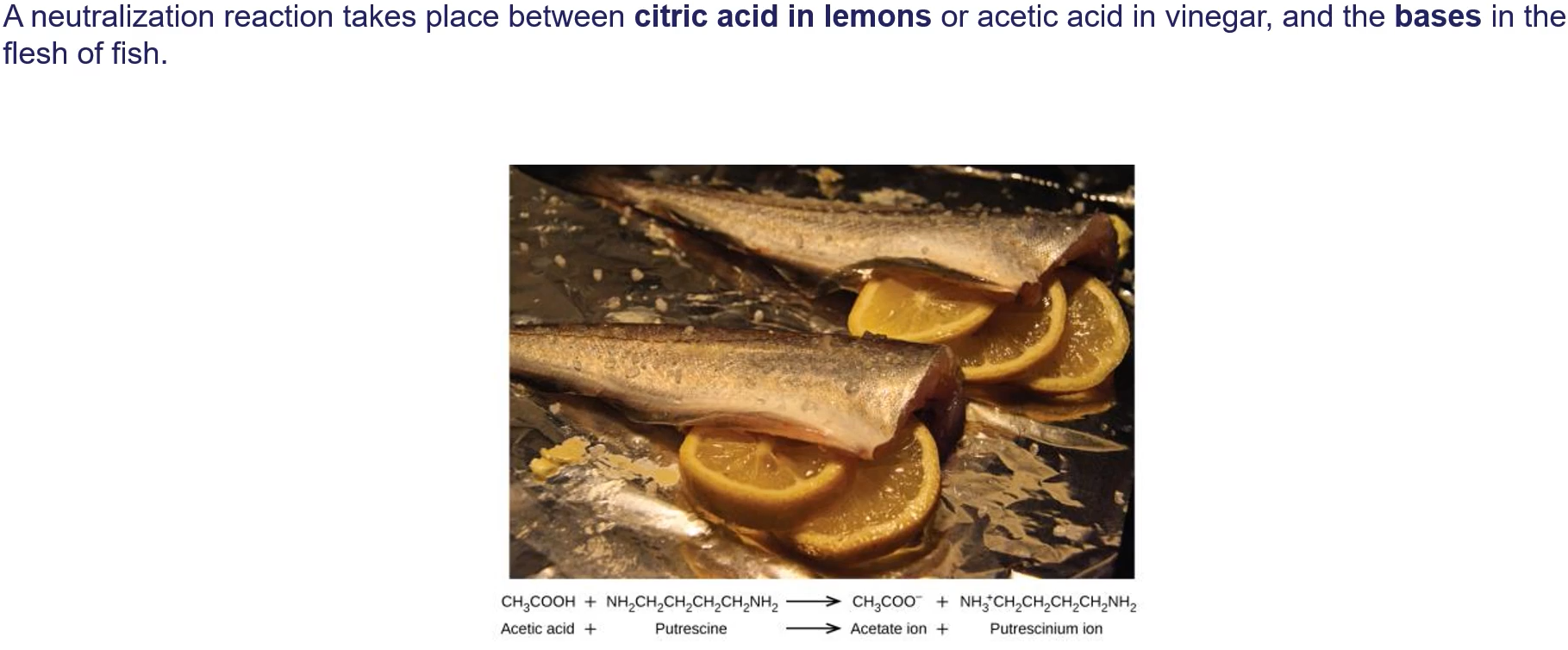
A neutralisation reaction is a specific type of acid-base reaction where an acid reacts with a base to form a salt and water, effectively "neutralising" each other’s properties. The acid donates a hydrogen ion (H⁺), and the base donates a hydroxide ion (OH⁻); these combine to form water (H₂O). For example:
HCl+NaOH→NaCl+H2O\text{HCl} + \text{NaOH} \rightarrow \text{NaCl} + \text{H}_2\text{O}HCl+NaOH→NaCl+H2O
This reaction is important in everyday situations like using antacids to neutralise stomach acid or treating acidic soils with lime. Neutralisation helps balance pH levels and is essential in many industrial and biological processes.
Redox reactions LOST IDK!!!!!!!
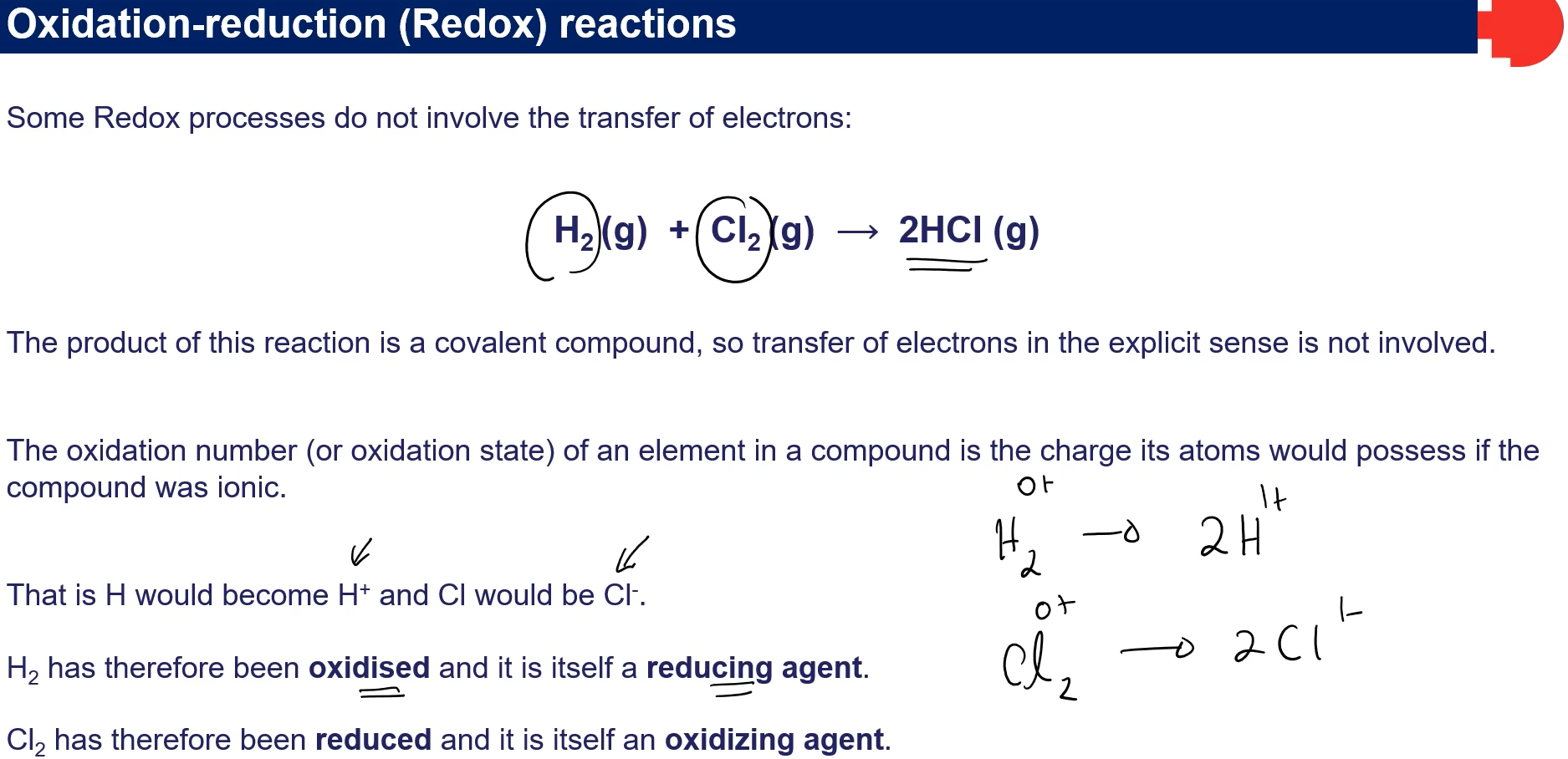
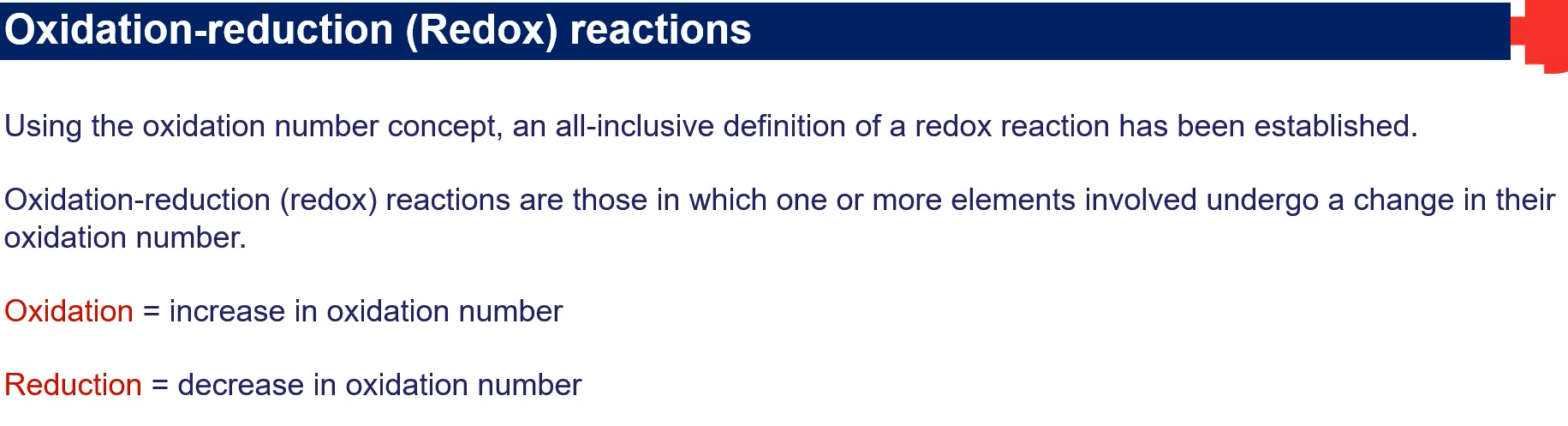
redox reactions involve the transfer of electrons between substances, leading to changes in oxidation states. These reactions are crucial in processes such as cellular respiration and photosynthesis, where energy is produced or stored.
The Na atoms lose electrons while the Cl atoms gain electrons.
For Redox reactions of this sort:
Oxidation is the loss of electrons, so Na is said to have been oxidised.
Reduction is the gain of electrons, Cl2 is said to have been reduced.
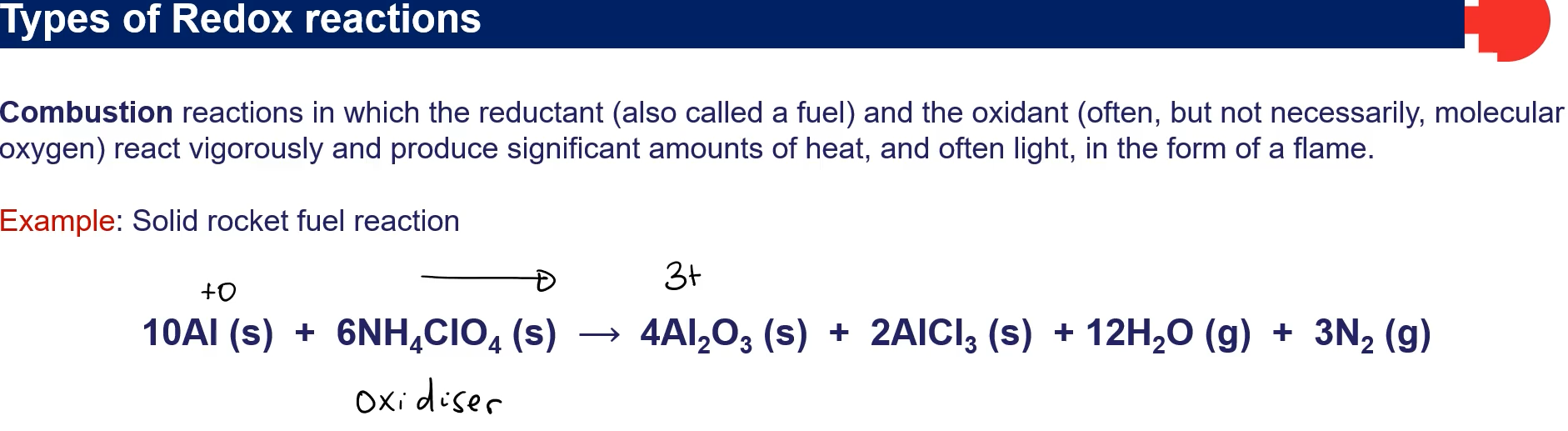
Na (sodium) functions as a reducing agent (reductant), because it provides electrons for (or reduces) chlorine.
Cl2 (chlorine) functions as an oxidizing agent (oxidant), because it effectively removes electrons from (oxidises) sodium.
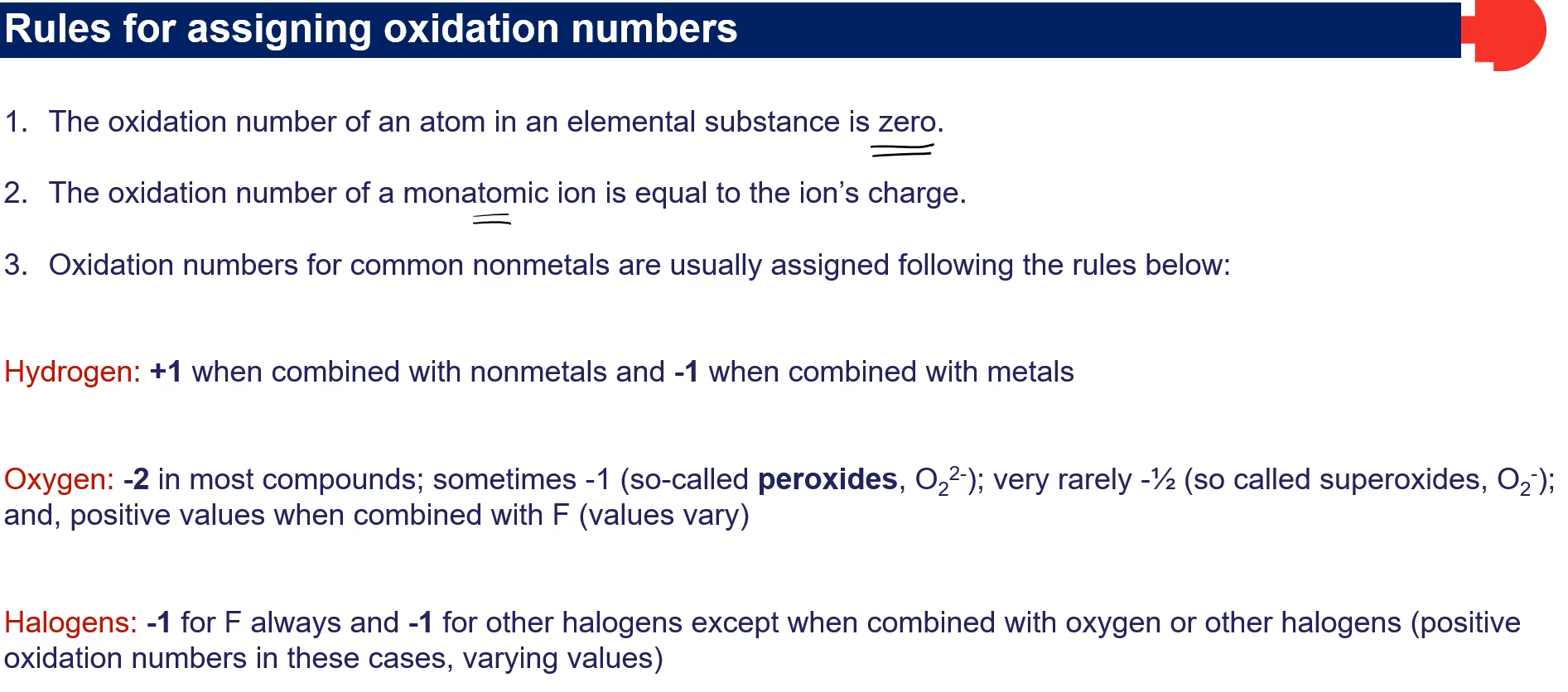
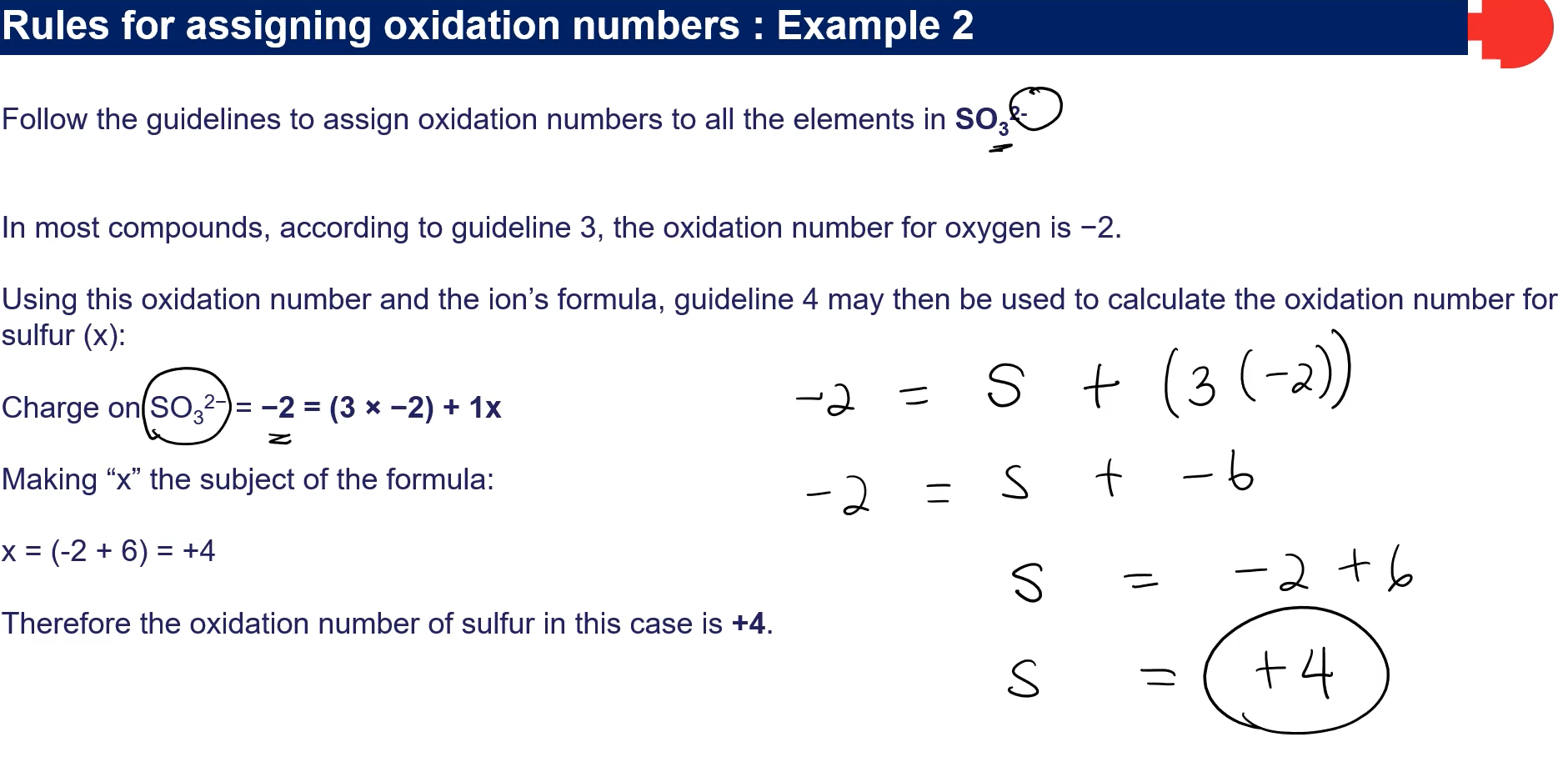
HOW TO ASSIGN OXIDATION NUMBER TO DIFFRENT ATOMS OR IONIC COMPOUND
IDENTIFY REDUCTION OXIDATION CHEM REACTIONS IN THE WORLD
Reaction stoichiometry
What is stoichiometry??— Stoichiometry is the branch of chemistry that deals with the quantitative relationships between the reactants and products in a chemical reaction. It allows you to calculate how much of each substance is involved or produced in a reaction based on the balanced chemical equation.
It is basically proptionality problems
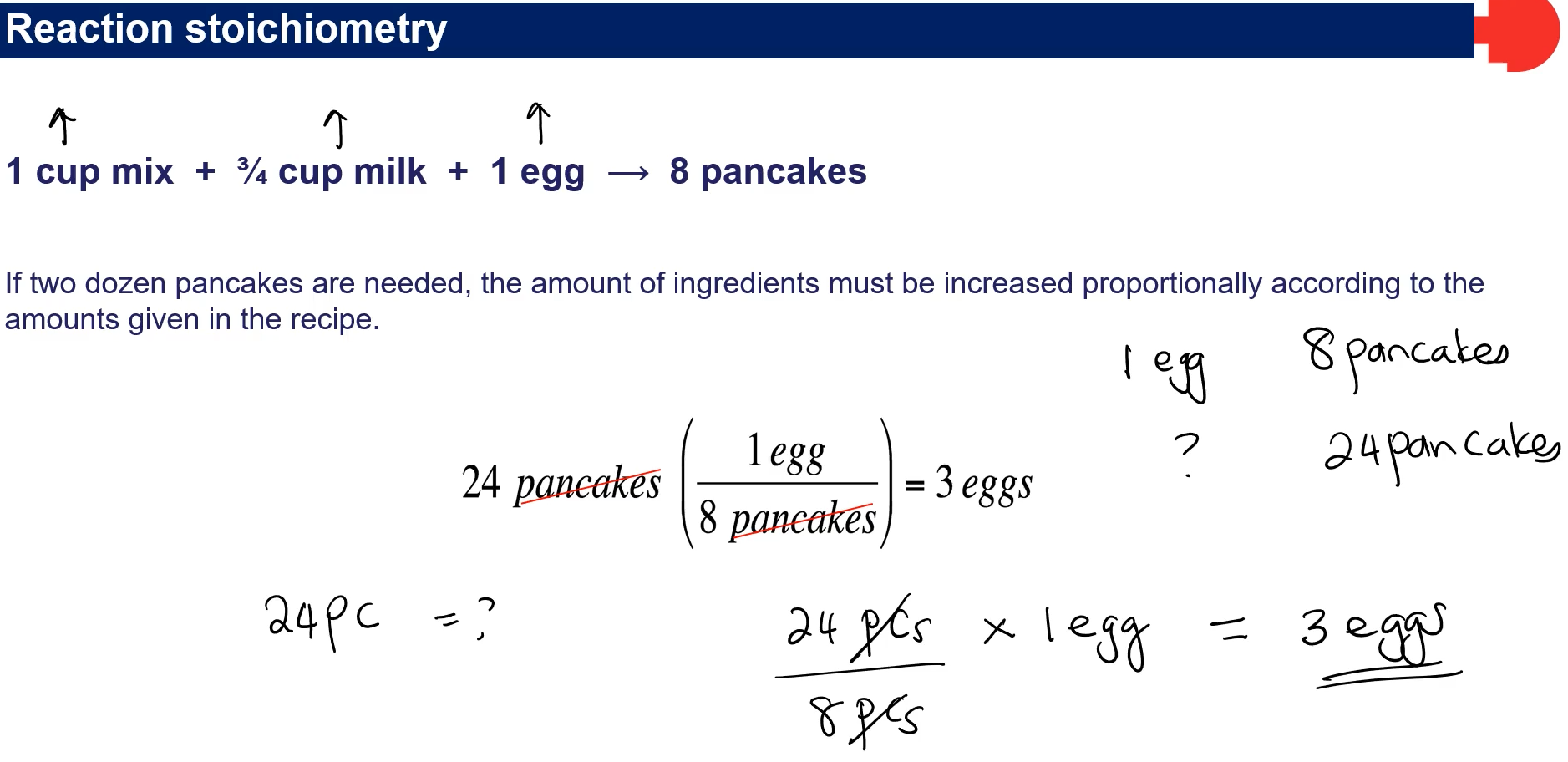
Using this similar logic for a balanced chemical equasion we can determine
the amount of one reactanat required with a given amount of another reactant
the amount of reactant needed to yeild a given amount of product
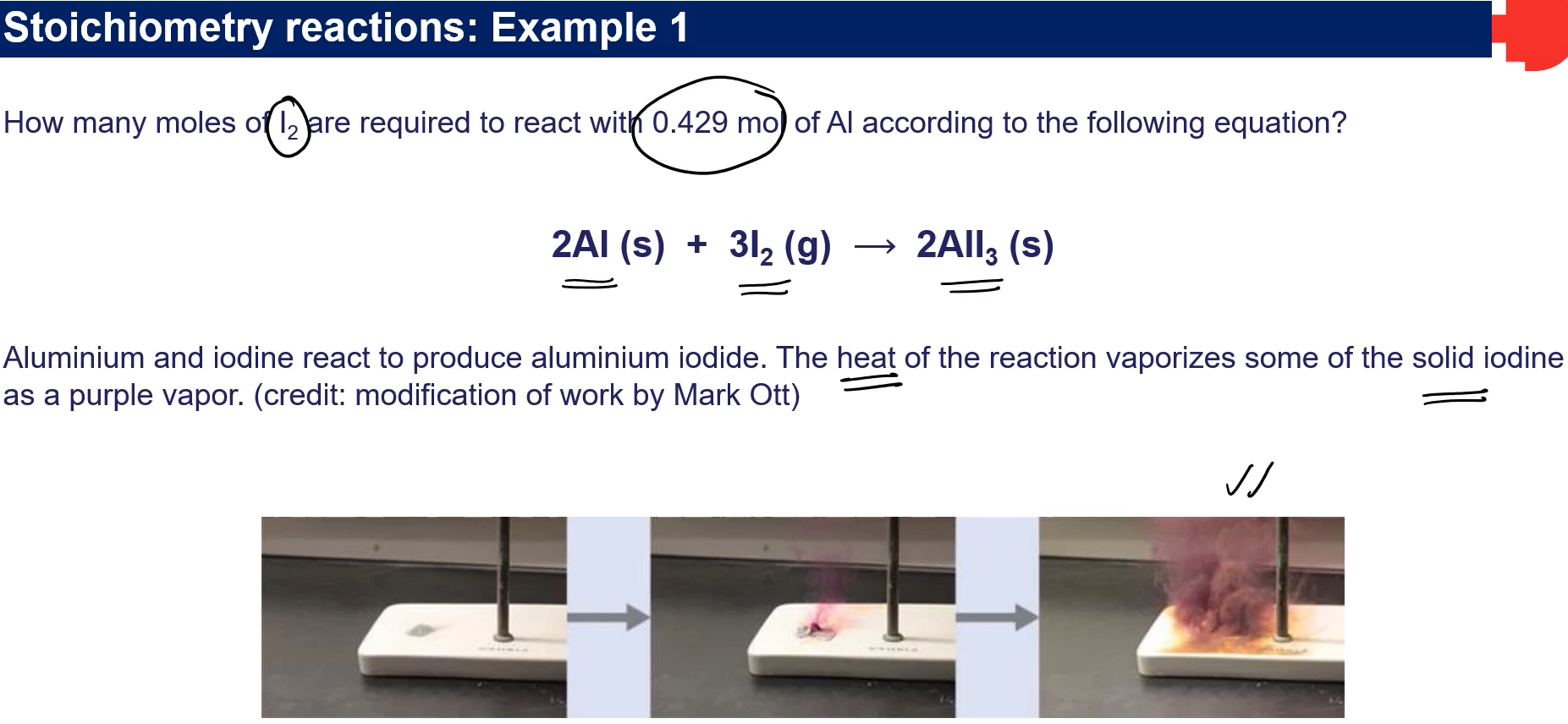
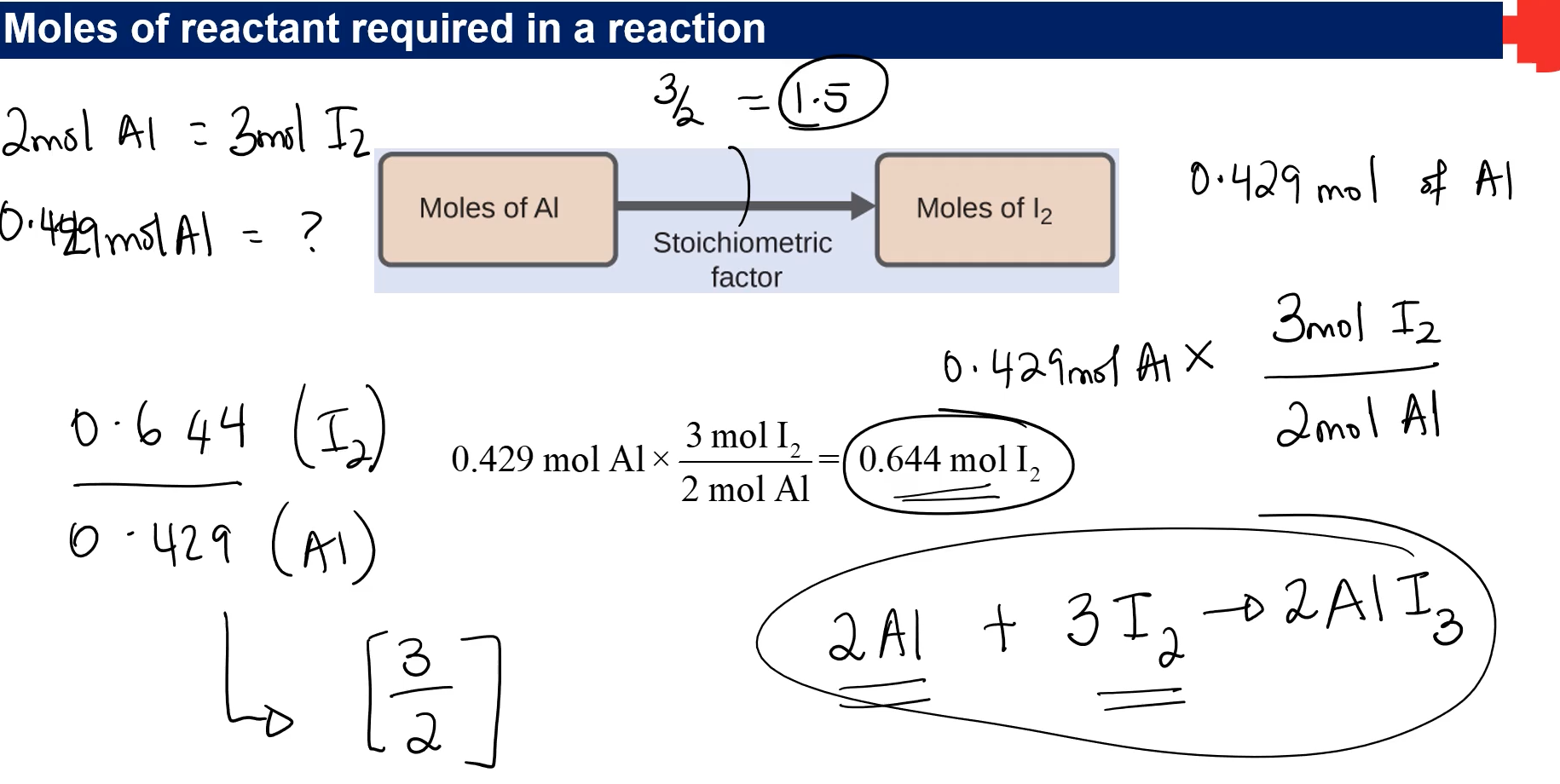
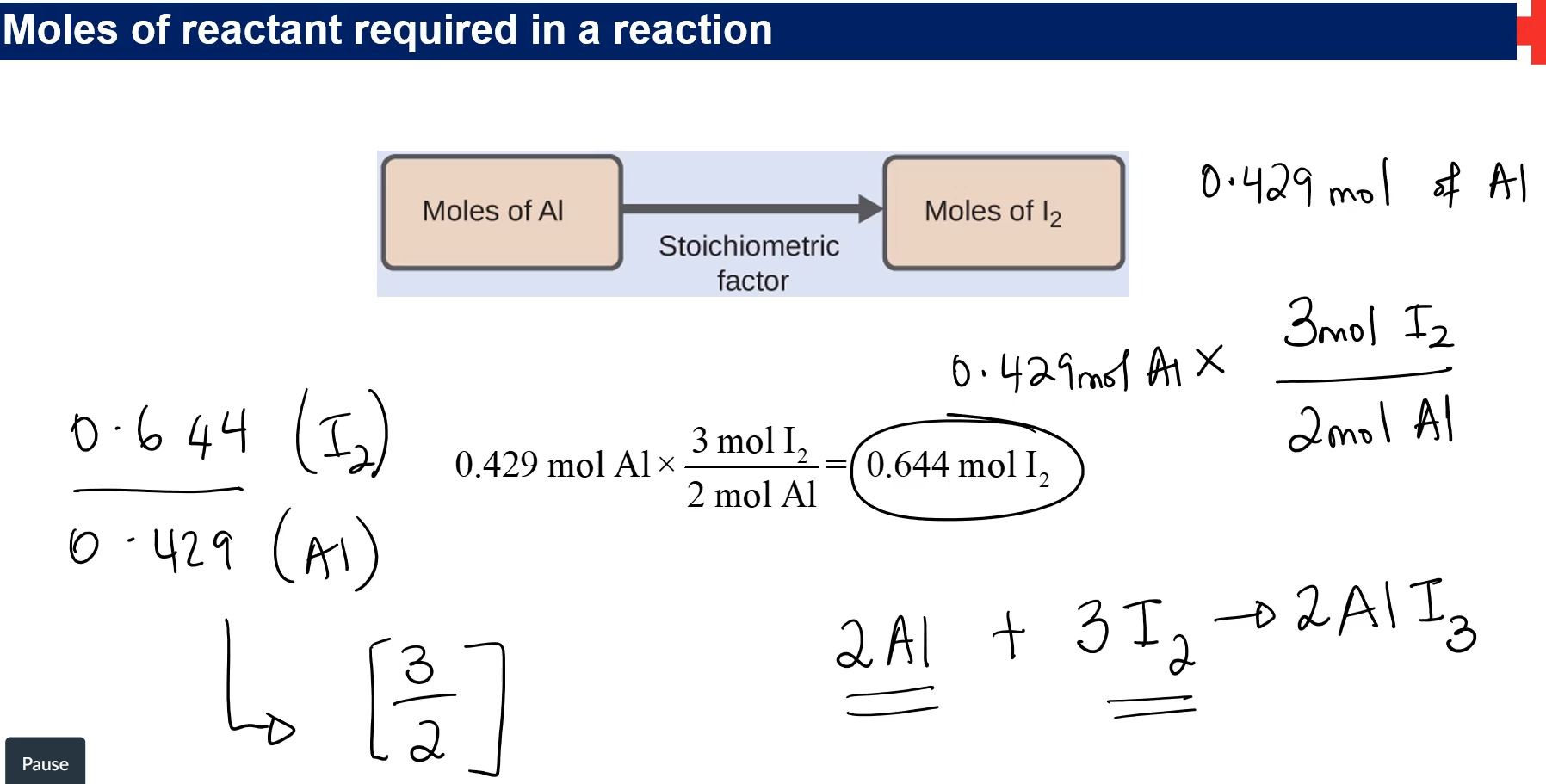
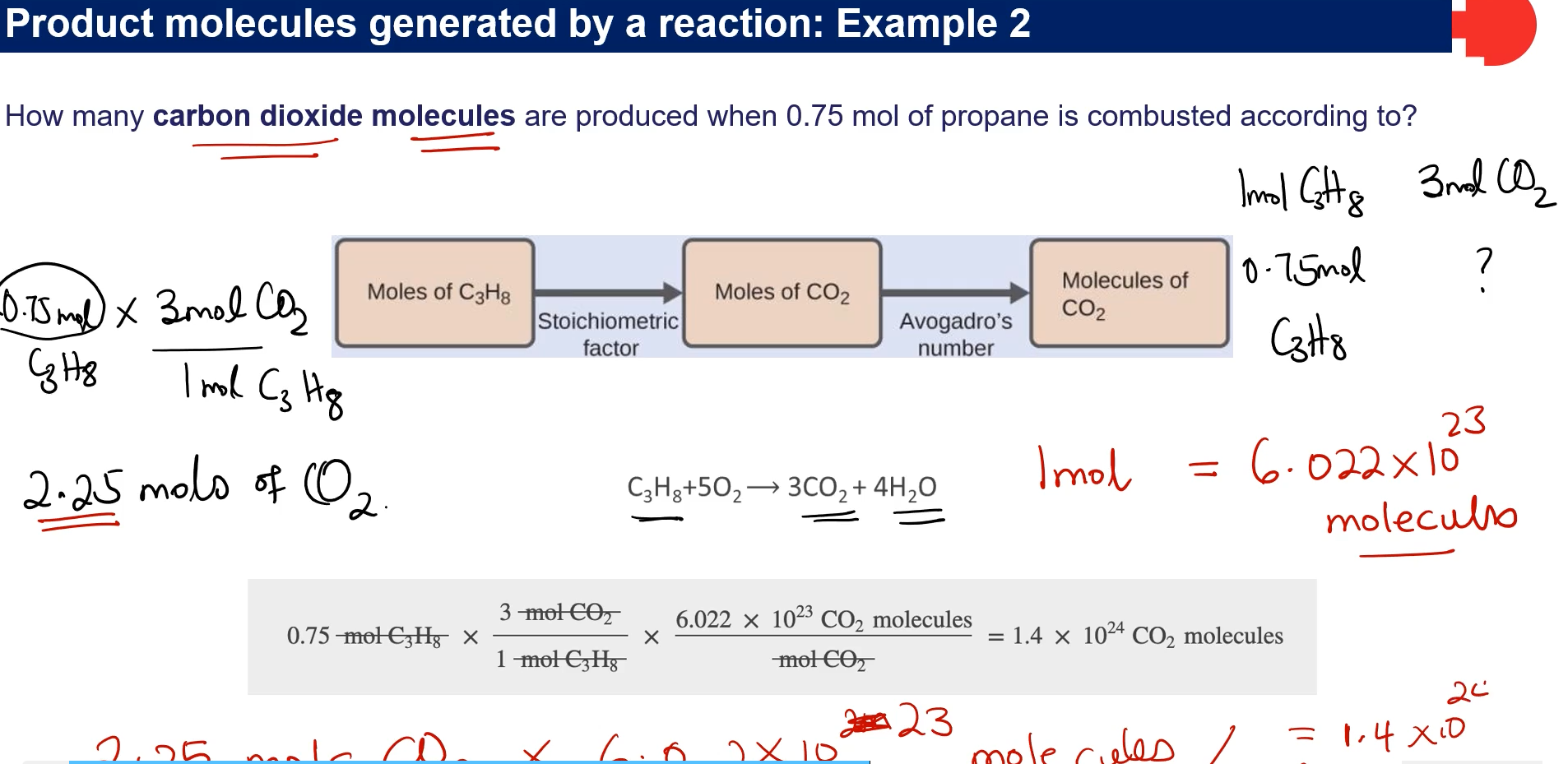
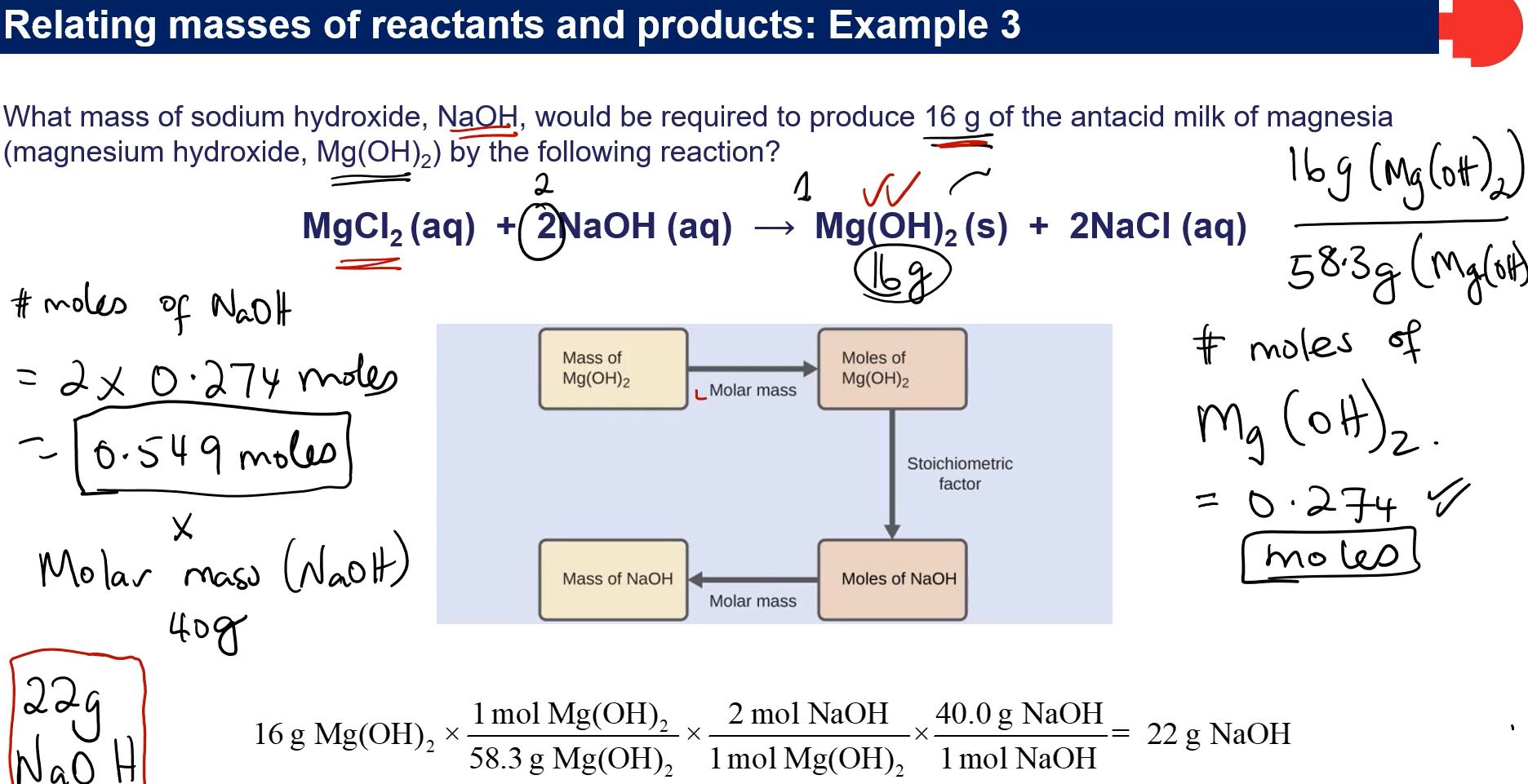
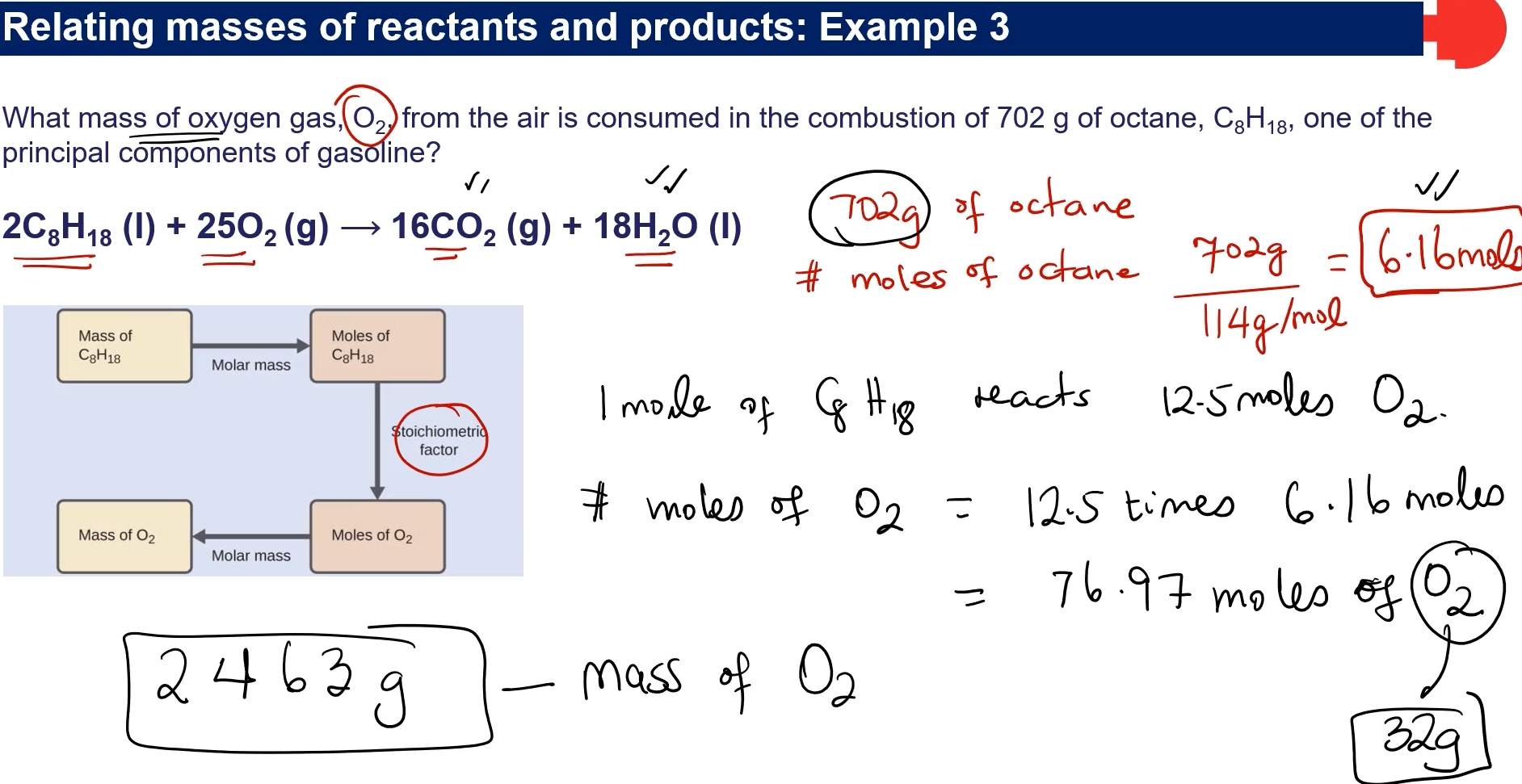
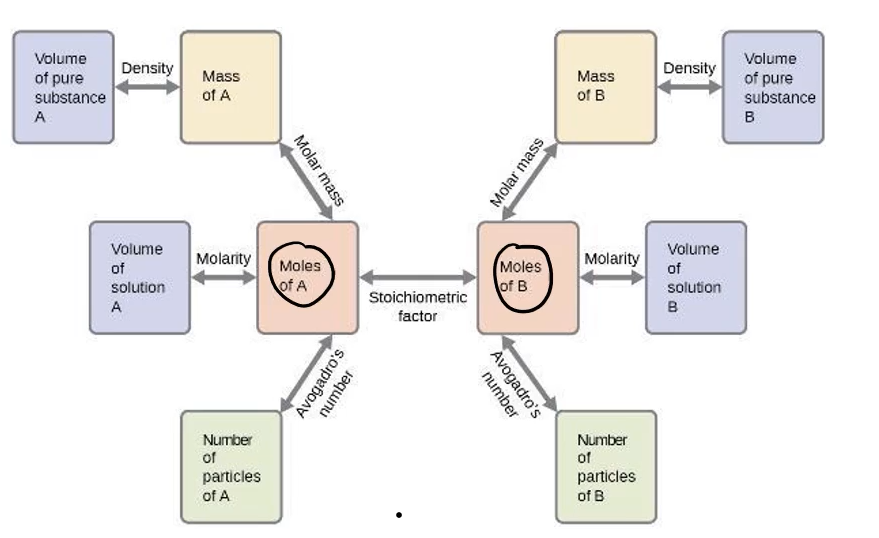
Stoichiometric Calculations
A balanced equation can be used similarly to a recipe, determining necessary and produced quantities based on ratios.
Example: From
2 moles of ammonia produced from 3 moles of hydrogen.
Limiting Reactants and Yields
Reaction yeilds
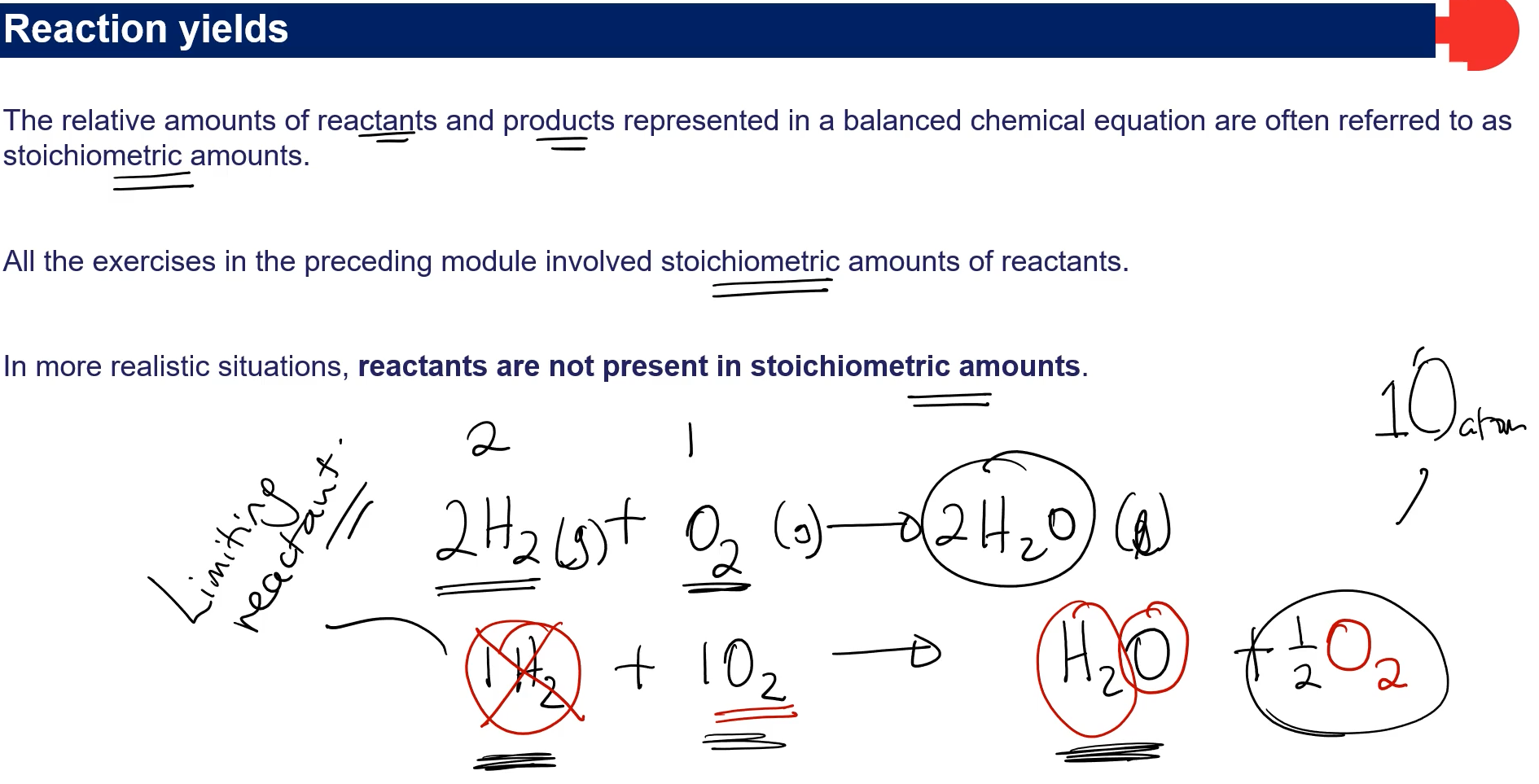
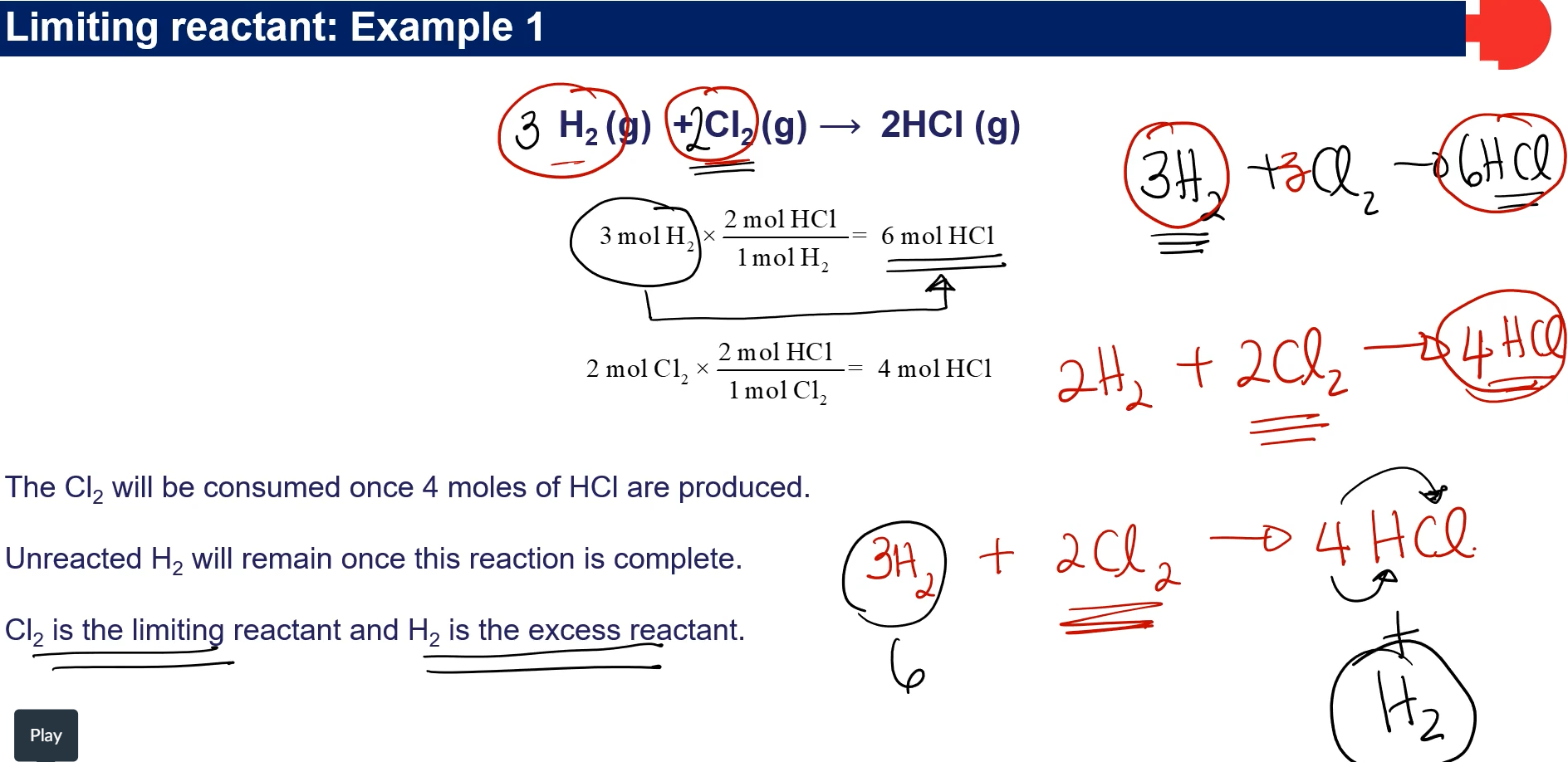
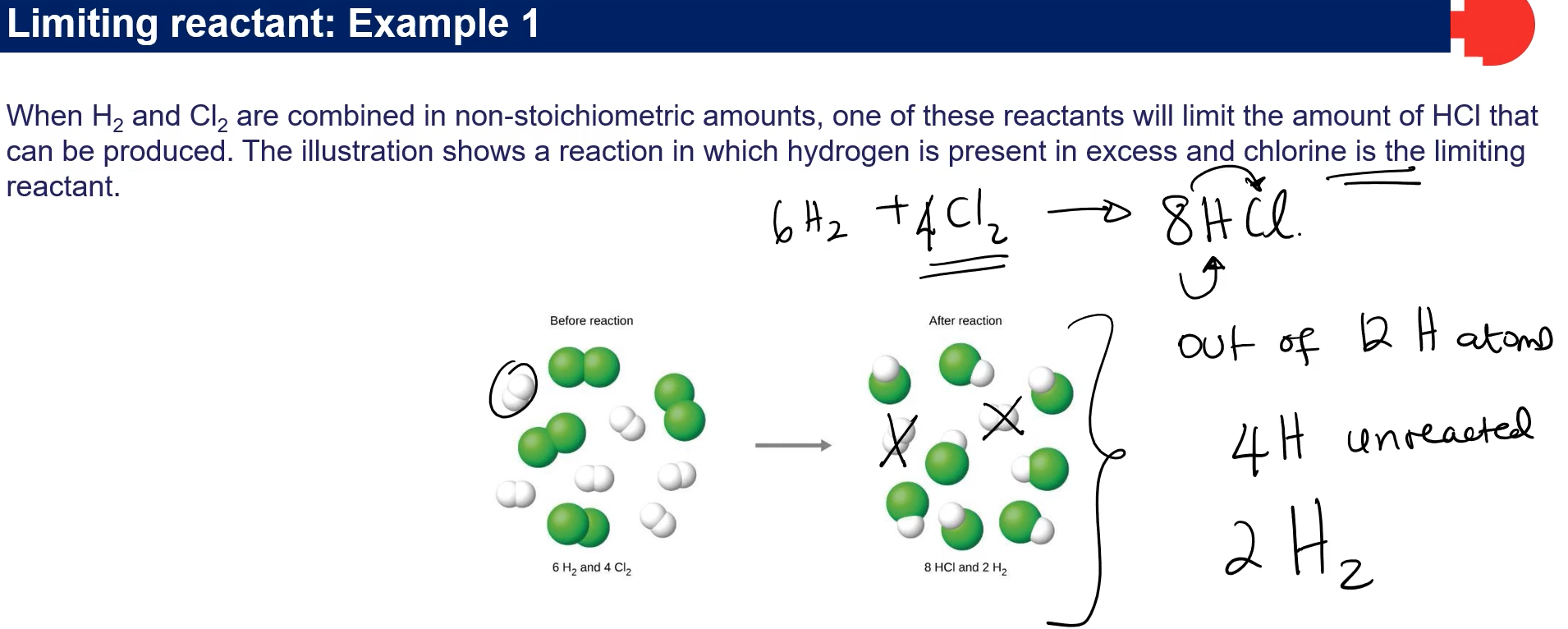
Limiting Reactant:
The substance that runs out first, limiting the amount of product formed.
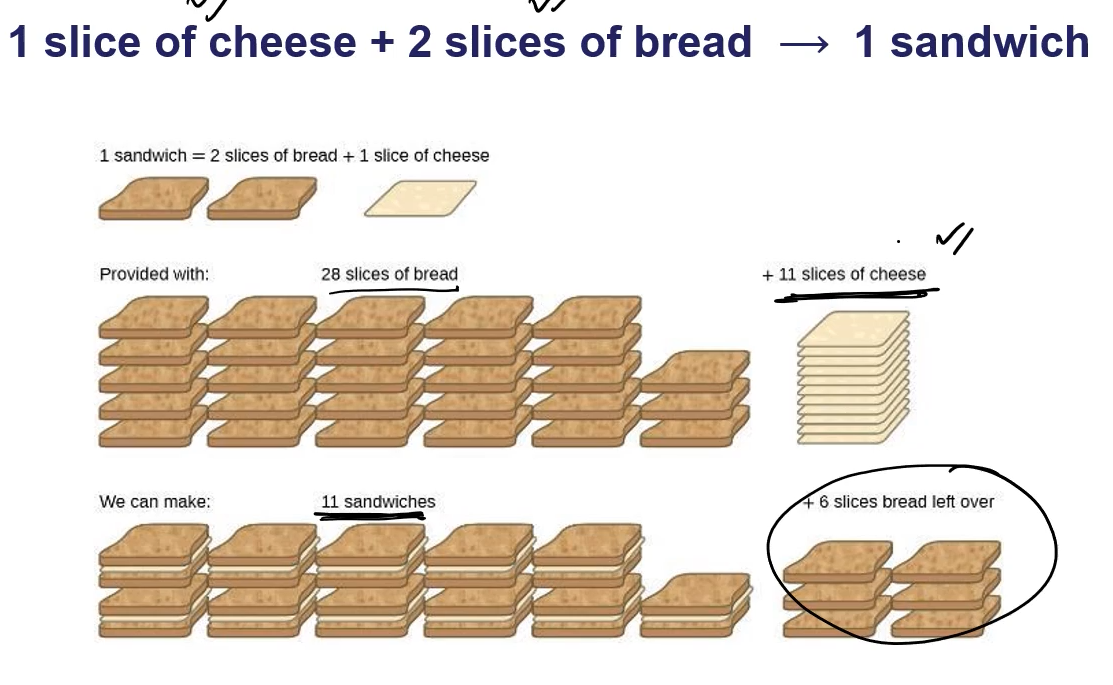
Yields:
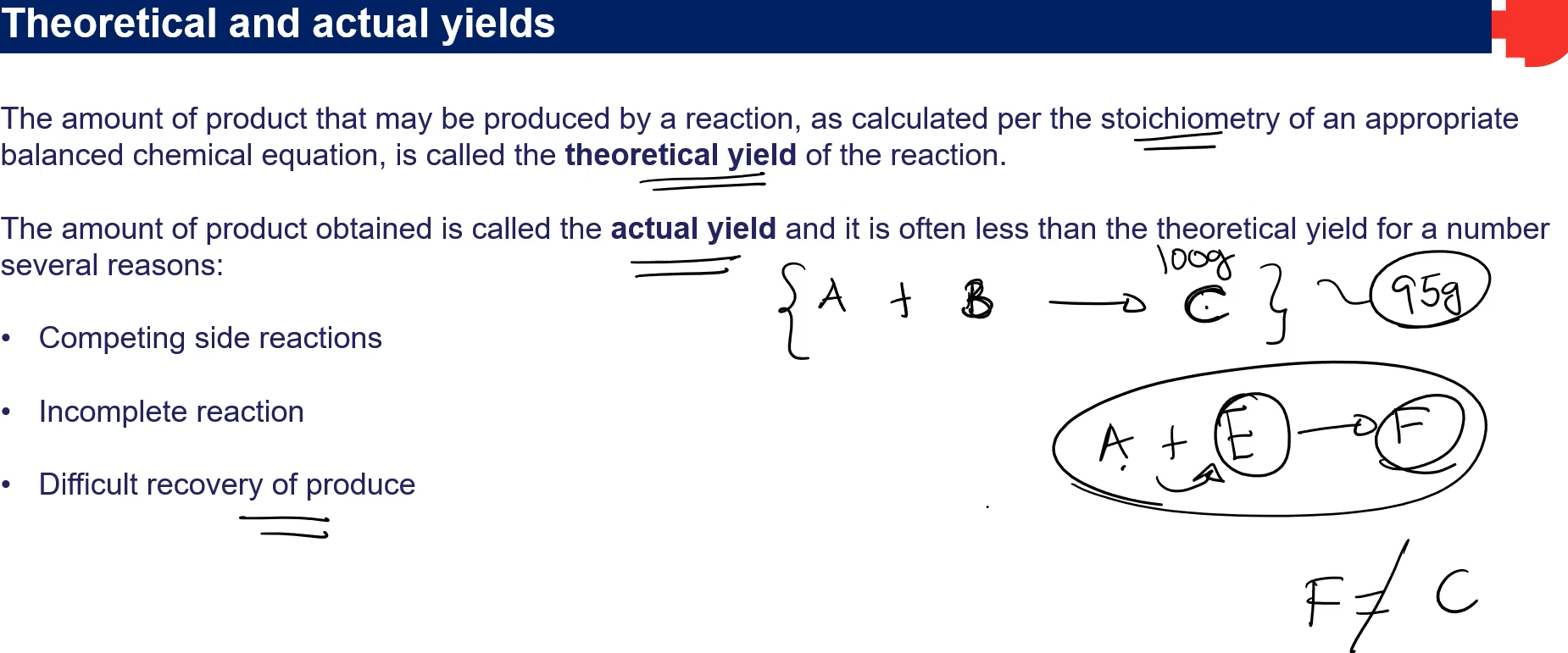
Theoretical yield is calculated based on stoichiometry; actual yield is what is obtained experimentally.
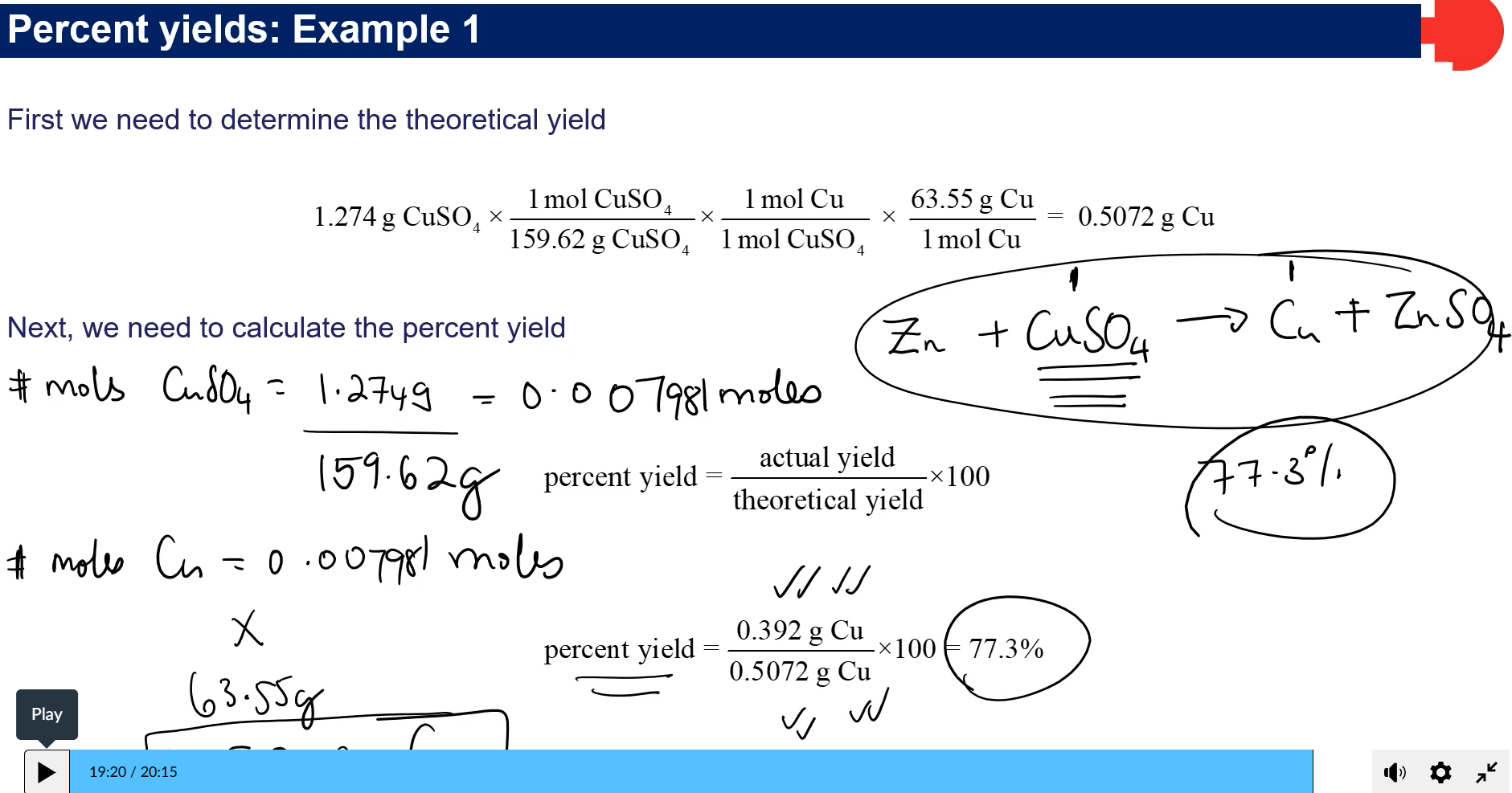
Percent Yield Calculation:
Percent yield = (actual yield / theoretical yield) × 100.
Quantitative Chemical Analysis
titrations
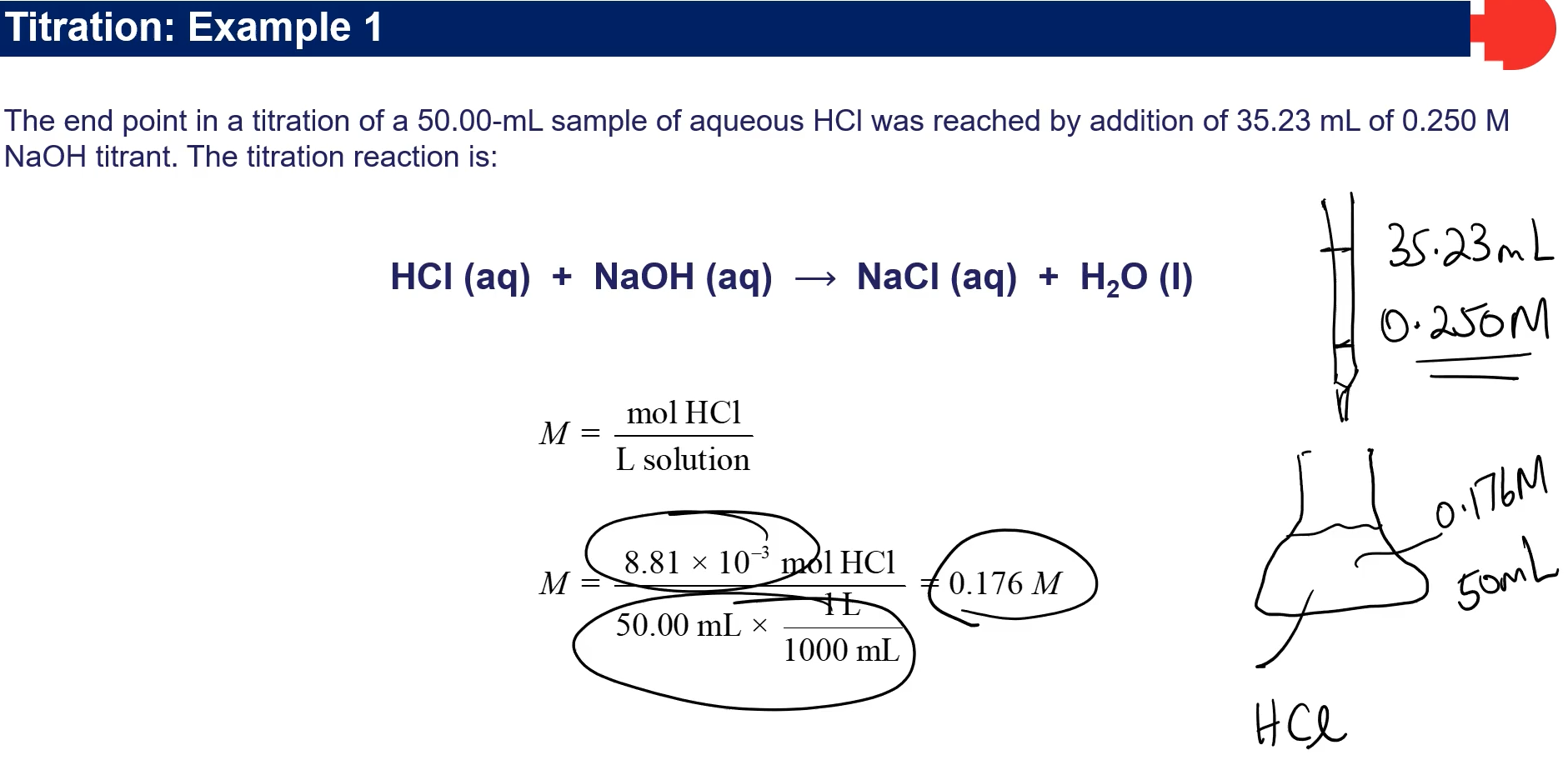
Titration is a laboratory method used to determine the concentration of an unknown solution by reacting it with a solution of known concentration. In an acid-base titration, the known solution (titrant) is added gradually to the unknown solution until the reaction reaches the endpoint, indicated by a color change using an indicator. By measuring the volume of titrant used and applying stoichiometric calculations, the concentration of the unknown solution can be accurately determined.
titration involve 2 solutions
Titrant: solution containing a kown concentration of one reactant
Analyte: Solution containing a reactant of a unknown amount of concentration
Measures the amount or concentration of a substance in a sample. Common methods include:
Titration: Involves interaction of titrant (known concentration) and analyte (unknown concentration).
Ensure precise end-point measurement, often using indicators for visual changes.
Example of Titration Calculation:
. Given volumes and concentrations, molarity can be calculated for the HCl solution.
Detailed Calculation:
, where volumes must be in liters.
Eqasion
The main equation used in titration is based on the relationship between concentration (C), volume (V), and moles (n):
n=C×Vn = C \times Vn=C×V
Where:
nnn = number of moles
CCC = concentration (mol/L)
VVV = volume (L)
For Acid–Base Titrations (Using a balanced equation):
nacid:nbase=molar ratio from the equationn_{\text{acid}} : n_{\text{base}} = \text{molar ratio from the equation}nacid:nbase=molar ratio from the equation
Steps:
Calculate moles of the known solution using n=C×Vn = C \times Vn=C×V.
Use the mole ratio from the balanced equation to find moles of the unknown.
Use C=nVC = \frac{n}{V}C=Vn to find the unknown concentration.