tectonic theory and convection currents
this contains tectonic plate theory and convection currents. in addition the definition of subducted
tectonic plate describe pieces of solid rock which make up the earth’s crust and the uppermost part of the mantle. there are two types of tectonic plates.
type one : continental plates which are thicker typically 30km to 50km thick, lighter and mostly made up of granite.
type two : oceanic plates which are thinner typically only 5km to 10km thick, denser and mostly made of basalt. oceanic plates are often subducted and is constantly being destoryed and replaced at plate boundaries.
these tectonic plates can be moved, however ever so slowly. the fastest moving plates only move around 2cm each year. they are moved by convection currents.
convection currents are a process of moving tectonic plates. this process starts in the upper mantle where molten rock is heated by the core (heat source). once the magma has been heated, it becomes less dense and rises to the top, where the crust lays. there, the magma will cool down , making it more dense and so it will sink back into the lower mantle to repeat this process again and again. the circular motion of the magma rocks pushing against the tectonic plates above it and then the plates being dragged by the sinking motion of the rocks is what drags tectonic plates. this process can cause natural phenomena such as earthquakes and volcano activity.
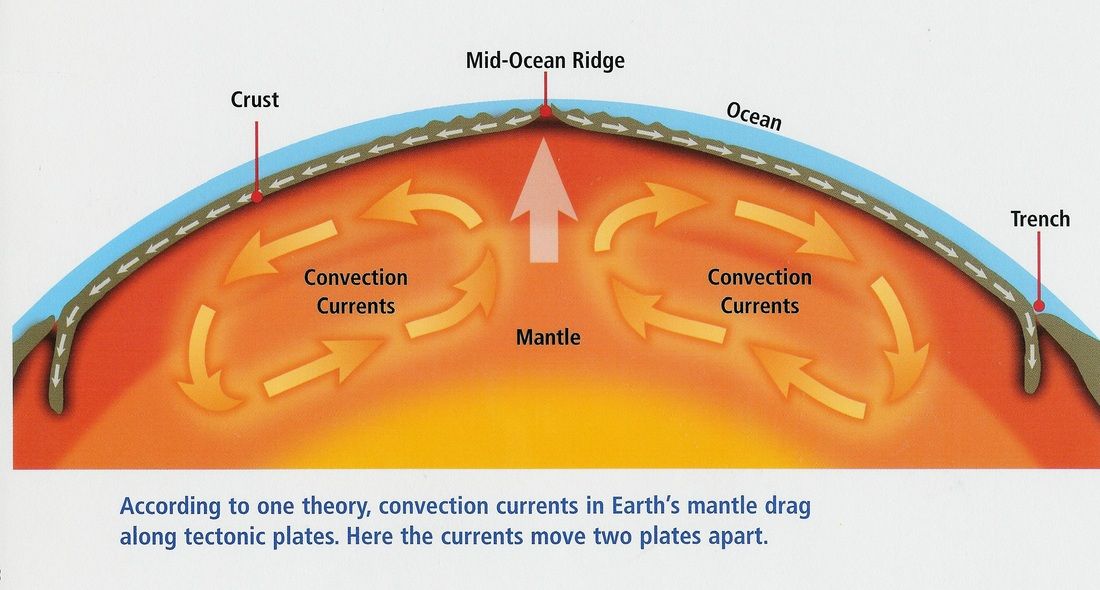
there is proof to suggest this tectonic theory.
evidence one : continental drift
continental drift explains that the coastlines of continents all fit together into one super continent (Pangea) like a puzzle piece. this is especially evident between south America and Africa coastlines suggesting they were once connected.
evidence two : fossil evidence
fossil evidence explains the discovery of the same exact land animal fossils found in 2 continents. this must mean that continents were once connected as the animal would not have been able to travel across water.