Fossils: Their Place in Time and Nature
The Past: Evidence for the present
Questions addressed:
what are fossils?
can pretty much be anything (not just dinos)
what do fossils tell us about the past?
construct past environments, evolutions
what methods do anthropologists and other scientists use to study fossils?
excavation, very risky
Fossils and the Principles of Faunal Succession
william smith (1769-1839)
principle of faunal succession
strata
fossils found in one layer were older or younger than the fossils below or above it.
not always the case but it very rare
Fossils: A Variety of Forms
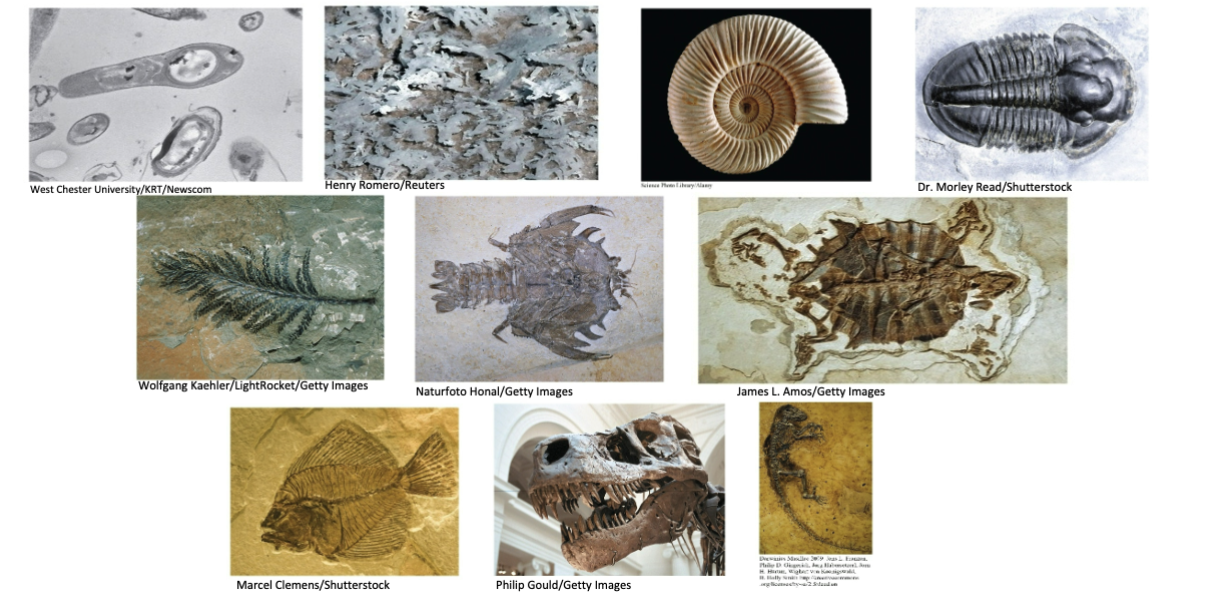
not just dinos
Fossils: Memories of the Biological Past
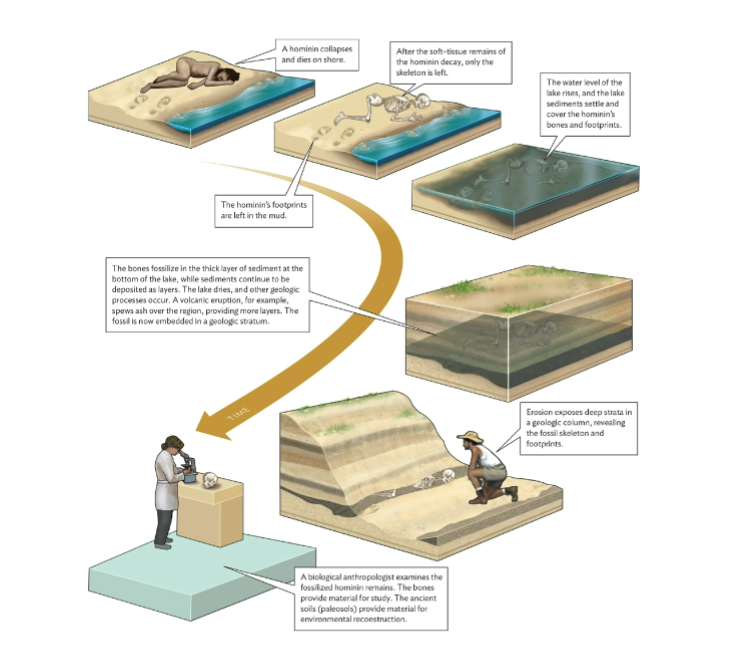
taphonomy
the study of how organisms decay and become fossils
introduced to paleontology in 1949 by Ivan Efremov
Basically, the study of everything that happens to an organism after it dies until it is recovered by an archaeologist, paleontologist, forensic anthropologist, etc.
includes things that happen in the lab too
what qualifies as absoultue dating
would hoinins splti again? has their been a recored spilt in human lifetime?
types of fossils and the limitations of the fossil record
bones in hole
footprints
paleontologists have searched for fossils only in some places, so have not discovered all fossil areas.
safety reasons, cant exavate in war zone
fossils are well preserved in some places and not in others
rock sequences are not always complete when they are discovered
because of erosion
Time in perspective
anthropocene
proposed new geological epoch
time period that we are currently in
commenced from the start of significant human impact on Earth’s geology and ecosystems, including, but not limited to, anthropogenic climate change
once we started planting crops it fuhed up
Geological time: earth history
Steno’s Law of Superposition
nicolaus steno (1638-1686)
law of superposition
relative dating
stratigraphic correlation
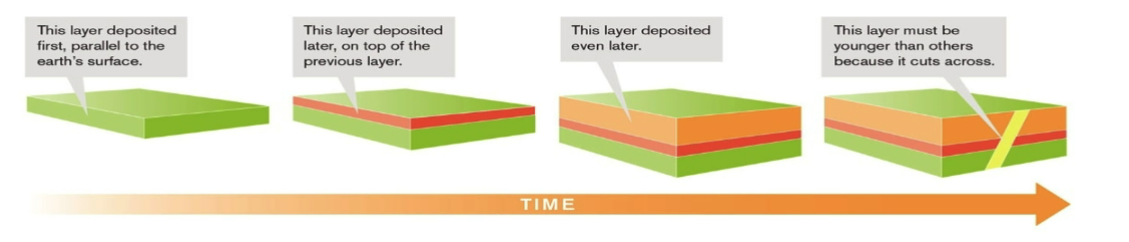
stratigraphic correlation
Krakatoa, indonesia
1883
anything under the Krakatoa ash layer, it came before
anything above the Krakatoa ash layer, it can after
can tell the difference with the chemical signature
Chemical dating
fluorine dating
bones buried deeper would have more fluorine than others
krapina neanderthal fossils
dragution gorjanović-kramberger
biostratigraphic (faunal) dating
index fossils
fossil pig molars
pigs in the current days thicker emanal than its predecessors, so if you find a pig with a thinner emanal, then it must be ancestor of our current pigs
thicker emanal = younger
thinner = older
irish elk
went extinct in 600 mya, anything in that layer is 600 ya, anything above it is younger
Cultural dating
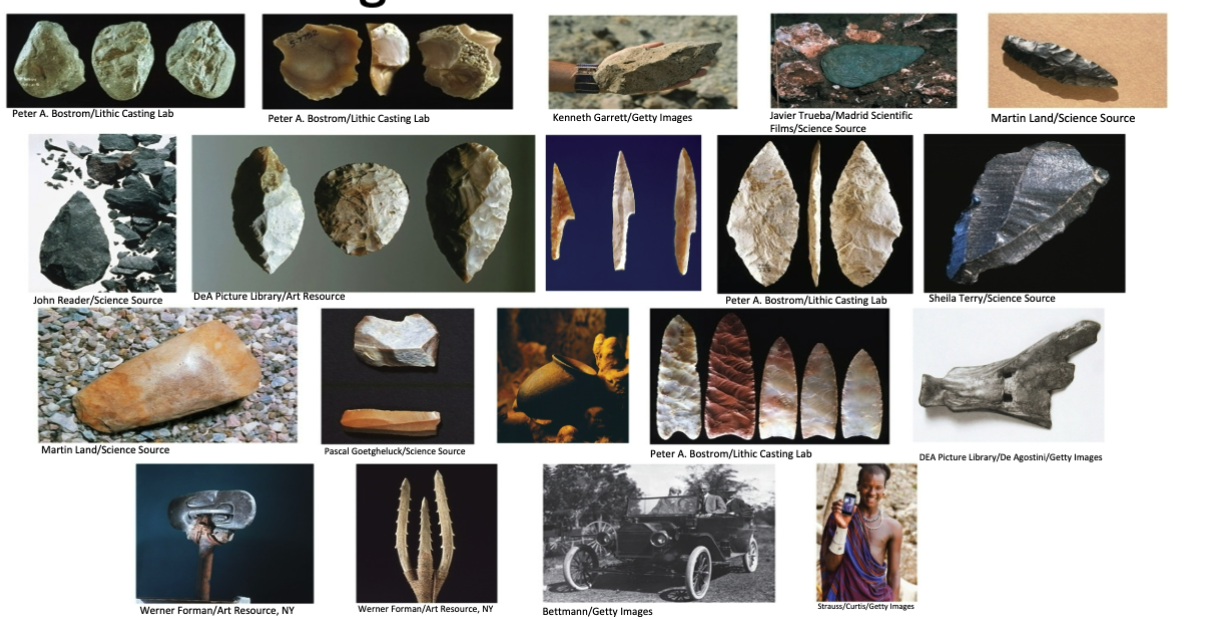
starts off from big rocks to shaper knifes
with more knowlegde, we evole
big rocks —> circle rocks = wheel = wagon = car = super car
relative and absolute dating (EXAM)
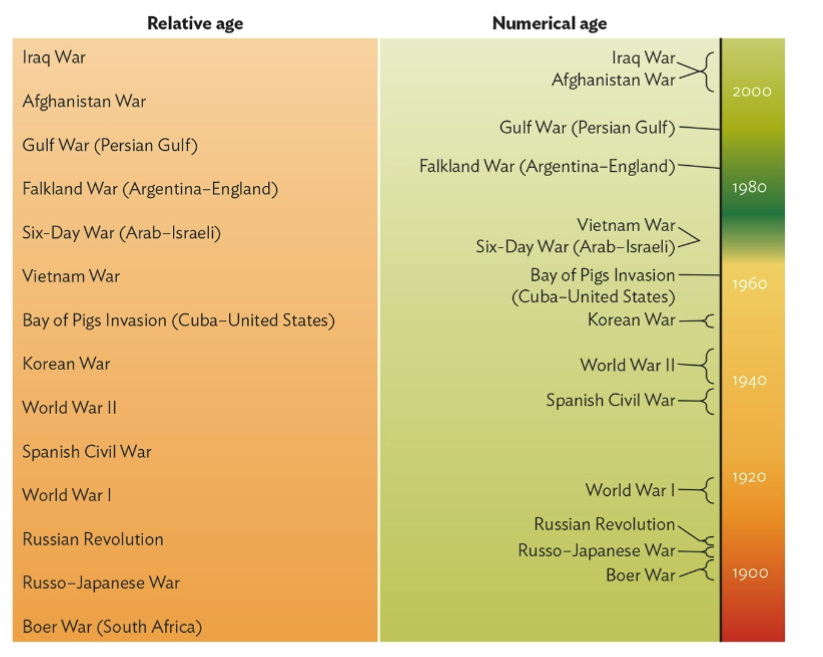
Absoute methods
tree ring dating
wider white section is not growth maybe drought
closer together = wet year
Radiocarbon dating and half lives (explain again)
carbon decays into nitrogen
only radioactive decays
all living things absorb carbon
Radiometric dating
clock in a rock
fission track dating ankylosaurus
date the rock
found by volcanos
paleomagnetic
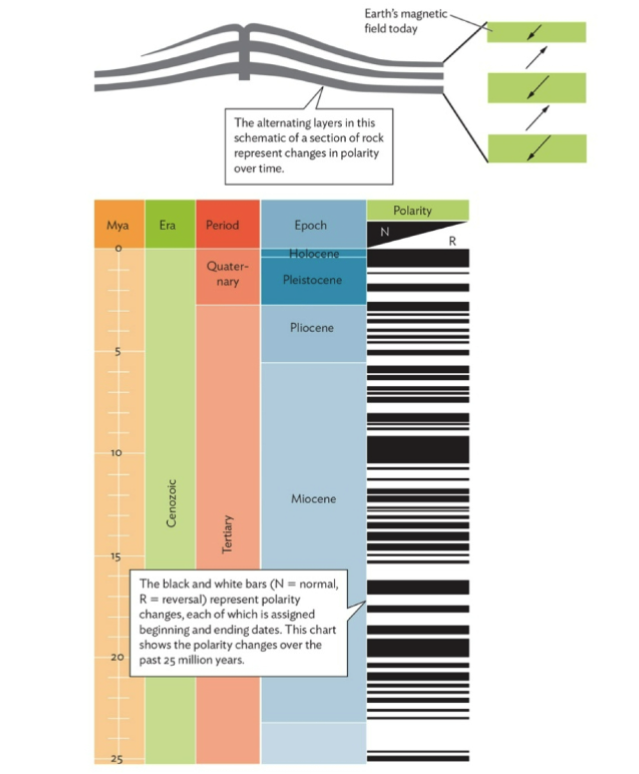
Nonradiometric dating methods
amino acid dating
racemization
electron spin resonance dating
thermoluminescence dating
Different dating techniques
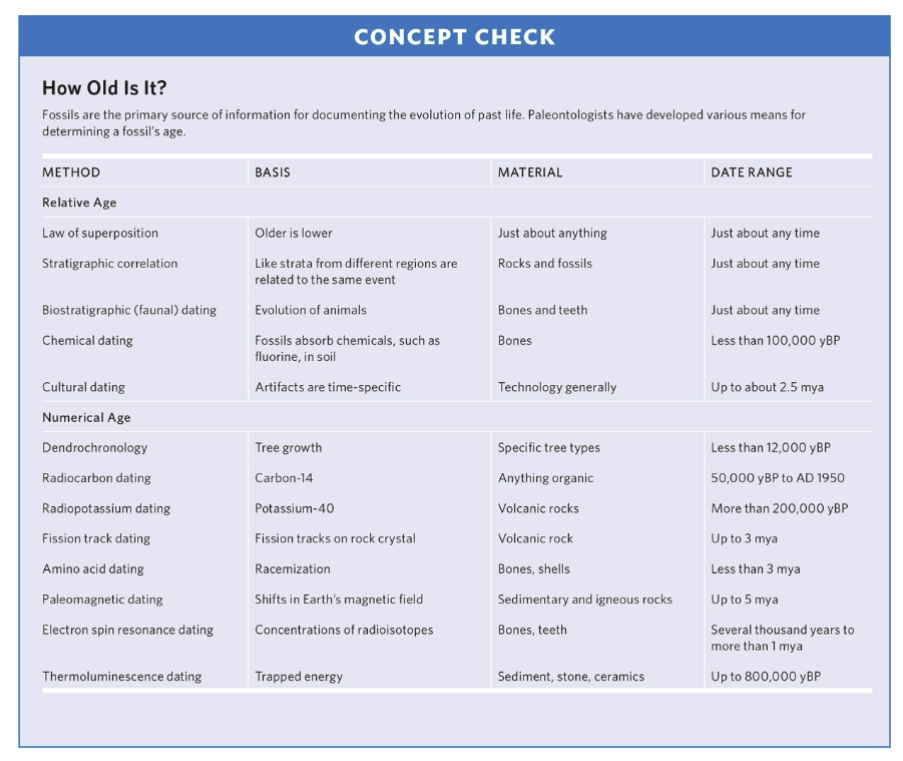
Genetic dating
Reconstruction of ancient environments and landscapes
foraminifera
high oxygen-18 = low temps
low oxygen-18 = high temperature
Chemistry of Acient Remains and Ancient Soils
C3 plant photosynthesis
wet-wooded plants
avoid carbon-13
C4 photosynthesis
grassland plants
high in carbon-13