4: Limited Companies and Multinationals
Features of a Limited Company:
They are incorporated which means they have a separate legal identity from their owners. They can own resources, form contracts, employ people, sue and be sued.
- The owners have limited liability. If a limited company has debts, the owners can only lose the money they originally invested
- The business raises capital by selling shares. Each shareholder owns a number of these shares
- They are joint owners of the company and they are entitled to vote on important matters and make key decisions
- They also get dividend paid from profits, those with more shares will receive more control and profit
- The shareholders elect directors to run the company. The board of directors headed by a chairperson is accountable to the shareholders
- If the company performs badly, directors can be voted out in the annual general meeting (AGM)
- Companies pay corporation tax on profits
Forming a limited company:
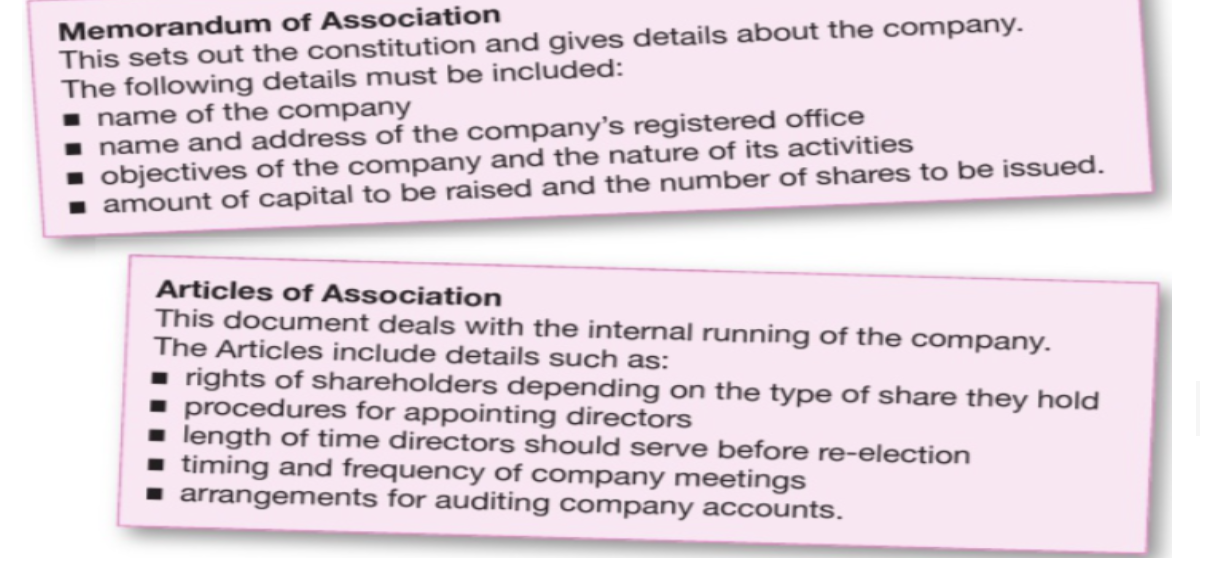
- Must have a minimum of two members
- Some important documents must be sent to the Registrar of companies
- If documents are acceptable, the company will get a certificate of incorporation, this allows it to trade.
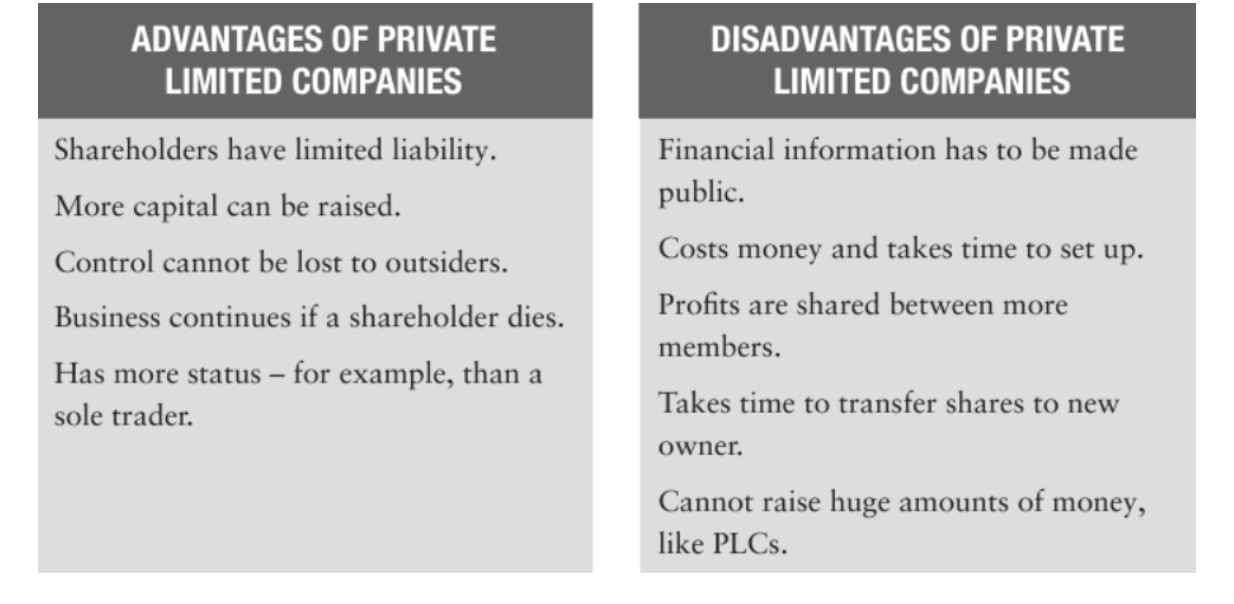
Private limited companies:
- Tend to be small or medium sized
- Their business name ends in Limited or Ltd
- Shares can only be transferred ‘privately’ and can not be traded in the stock market
- They are often family businesses owned by family or close friends
- The directors tend to be shareholders and are involved in the running of the business
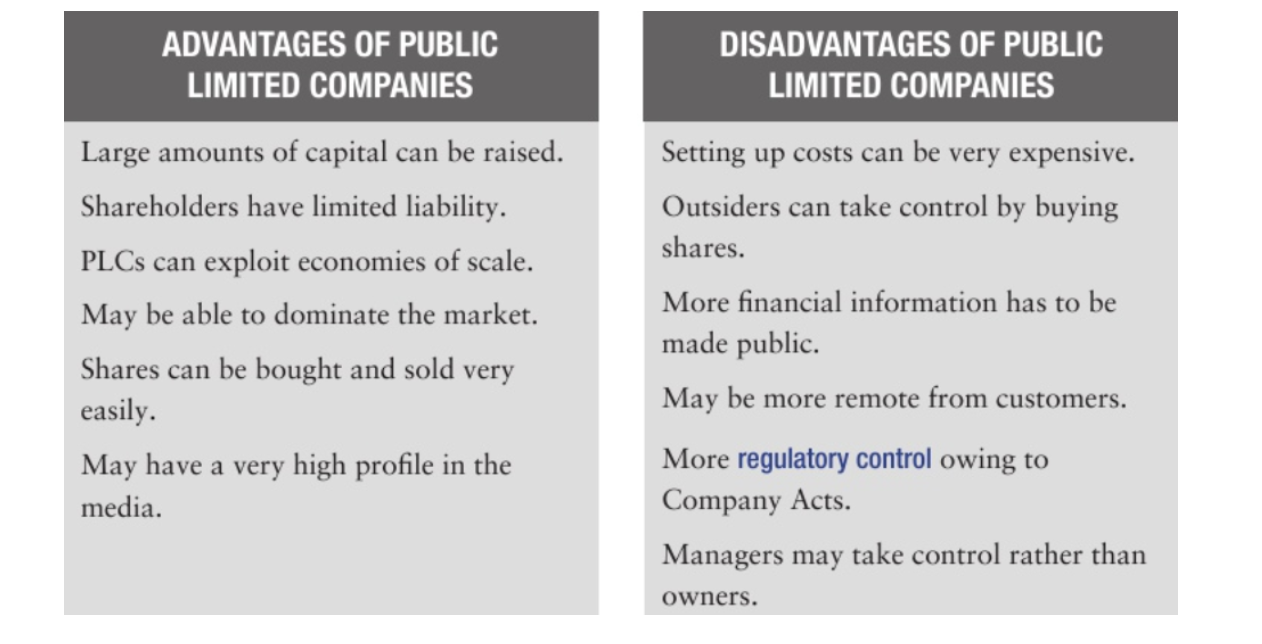
Public limited companies:
- They tend to be larger than private limited companies
- The shares can be bought and sold by the public on the stock exchange
- It is expensive because it needs lawyers to ensure the prospectus is legally correct
- There is advertising and administrative fees as well.
Features of Multinationals:
It is a large business with significant production or service operations in at least two different countries. Ex: Mcdonalds, and Coca-Cola.
- Huge assets (land, buildings, plant, machinery and money) and turnover, they are extremely well-resourced and can often afford to take on large-scale contracts and projects
- Highly qualified and experienced professional executives and managers
- Powerful advertising and marketing capability
- Highly advanced and up-to-date technology
- Highly influential both economically and politically
- Very efficient since they can exploit huge economies of scale
- Ownership and control is centred in the host country