Glucose Homeostasis
The synthesis and breakdown of glycogen are central not only to energy storage, but also to maintaining metabolic balance through glucose homeostasis. In humans, the normal range for the concentration of glucose in the blood is 70–110 mg/100 mL. Because glucose is a major fuel for cellular respiration and a key source of carbon skeletons for biosynthesis, maintaining blood glucose concentrations near this normal range is essential.
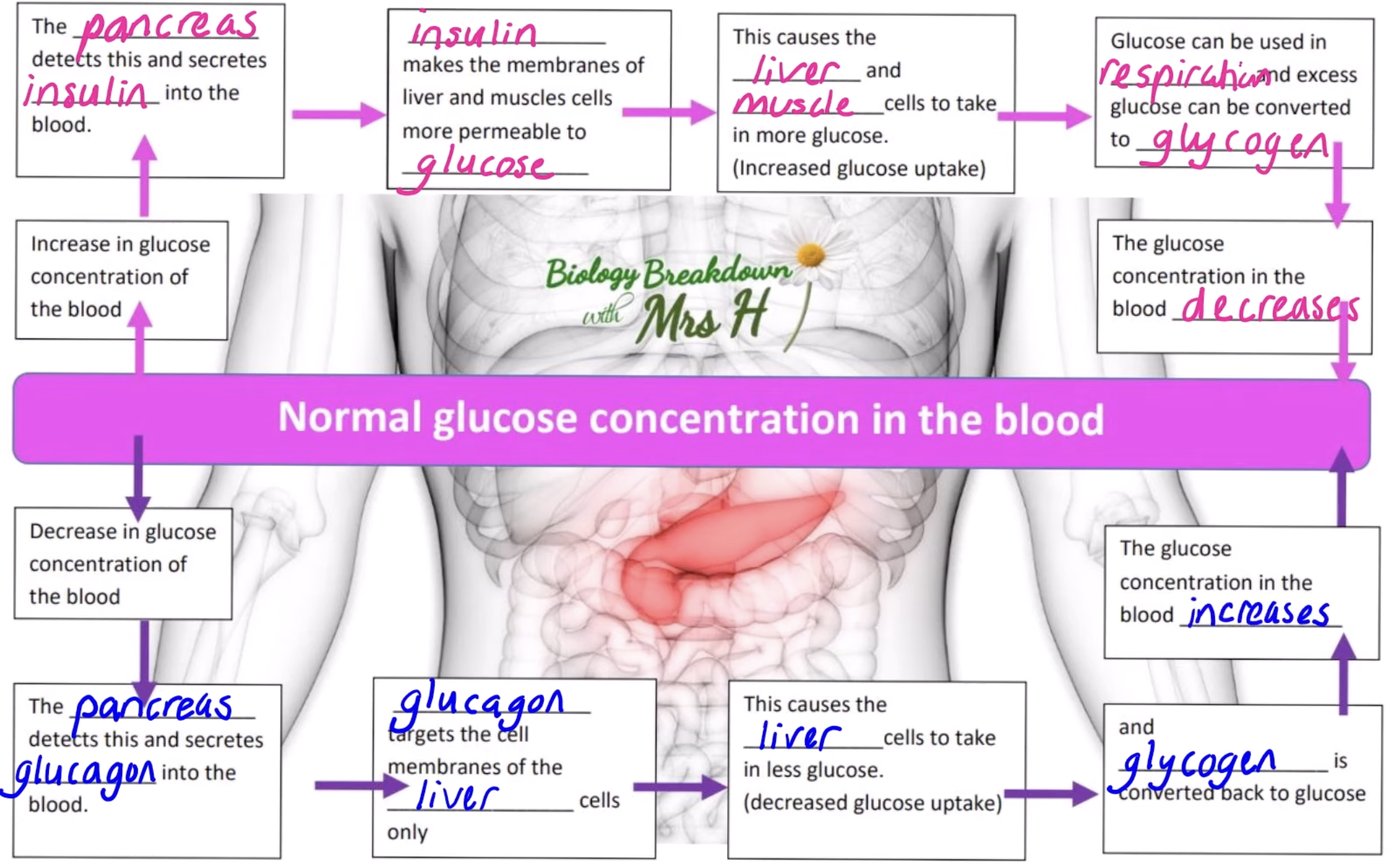
Glucose homeostasis relies predominantly on the antago- nistic (opposing) effects of two hormones, insulin and gluca- gon (Figure 41.23). When the blood glucose level rises above the normal range, the secretion of insulin triggers the uptake of glucose from the blood into body cells, decreasing the blood glucose concentration. When the blood glucose level drops below the normal range, the secretion of glucagon promotes the release of glucose into the blood from energy stores, such as liver glycogen, increasing the blood glucose concentration.
The liver is a key site of action for insulin and glucagon. After a carbohydrate-rich meal, for example, insulin secretion pro- motes biosynthesis of glycogen from glucose that enters the liver in the hepatic portal vein. Between meals, when blood in the hepatic portal vein has a much lower glucose concentra- tion, glucagon stimulates the liver to break down glycogen, convert amino acids and glycerol to glucose, and release glu- cose into the blood. Together, these opposing effects of insulin and glucagon ensure that blood exiting the liver has a glucose concentration in the normal range at nearly all times.
Insulin also acts on nearly all body cells to stimulate glu- cose uptake from blood. A major exception is brain cells, which can take up glucose whether or not insulin is present. This evolutionary adaptation ensures that the brain almost always has access to circulating fuel, even if supplies are low.
Glucagon and insulin are both produced in the pancreas. Clusters of endocrine cells called pancreatic islets are scat- tered throughout this organ. Each islet has alpha cells, which make glucagon, and beta cells, which make insulin. Like other hormones, insulin and glucagon enter the interstitial fluid and then the circulatory system.
Overall, hormone-secreting cells make up only 1–2% of the mass of the pancreas. Other cells in the pancreas produce and secrete bicarbonate ions and the digestive enzymes active in the small intestine (see Figure 41.11). These secretions are released into small ducts that empty into the pancreatic duct, which leads to the small intestine. Thus, the pancreas has functions in both the endocrine and digestive systems.