Week 1 Module 🪦 Grief
Learning Objectives
Discuss types of grief.
Describe the characteristics and responses of an individual experiencing grief and loss.
Explore factors that influence an individual’s response to grief and loss.
Explore the role of the nurse when caring for clients and families experiencing grief and loss.
Scope of Practice Note
For differences in the scope of practice between RNs and PNs, Engage Fundamentals includes callout boxes focused on PN practice considerations. In addition, PN scope of practice varies by state. For example, some states may allow the PN to contribute directly to a plan of care, while other states limit PN participation to assisting the RN to develop the plan of care. Similarly, most states require the PN to be under the supervision of an RN. As such, PN students should reframe certain discussions in this product to align with their state’s scope of practice. Ultimately, the PN is responsible for functioning within their scope by knowing and abiding by state guidelines for safe practice.
Introduction
Grief can be defined as the feelings or reactions that an individual has to a loss in their life. The loss that an individual faces is not always related to a death. Indeed, grief can be experienced with many types of loss. In this lesson, various types of grief are discussed, reflecting that every person experiences grief in their own unique way. Characteristics and responses of an individual experiencing grief and loss are explored through the lenses of various theories and conceptual frameworks. These theories and frameworks provide the nurse with the necessary knowledge to meet the needs of the client who is affected by grief and loss. This lesson also explores factors that influence a client’s response to grief and loss, such as age-related considerations, cultural influences, and spiritual influences. Lastly, nurses’ own experience of grief and loss when caring for clients and families facing a loss is explored, including approaches to self-care.
Types of Grief
Page 1
Most individuals, if not all, will experience grief at some point in their lives. Grief is an expected process that clients experience after they have suffered a loss. The American Psychological Association defines grief as “the anguish experienced after significant loss, usually the death of a beloved person.” This sensation is experienced when someone or something with which a client has a deep connection is lost. Grief can occur after receiving bad news about one’s health, experiencing a social loss, or loss from many life situations. A client may experience grief due to the loss of a loved one, such as a spouse, a parent, a sibling, a child, or a close friend. Other examples of losses that may trigger grief include divorce, retirement, loss of a job, loss of friendship, loss of financial stability, a miscarriage, or moving to a new city.
List examples of losses that may trigger a grief response.
Type and submit your response to compare it to an expert response.
Grief can include both emotional and physical manifestations, and it is usually accompanied by physiological stress. Clients may exhibit anxiety, difficulties in concentrating, thinking about the past excessively, and agitation. Just as there are different causes of grief, so there are different types of grief that clients may experience in response to a loss in their lives. Grief is the body’s way of healing after one has suffered a loss.
Normal Grief
Normal grief, also known as uncomplicated grief, is caused by the loss of a loved one, through death or the ending of a relationship. In addition, grief can be triggered by other experiences that are considered to be painful or traumatic to the client. Although the period of time for which an individual grieves a loss will differ for every person, most people will experience grief after a loss for several months to a year. Nevertheless, it is essential to remember that normal grief is different for everyone. Individuals’ display of grief is as diverse as the individuals themselves. Grief is experienced differently by everyone, as an individual’s sense of loss is unique to that person, and people’s feelings regarding loss reflect their own unique make-up. Feelings experienced during grief often include sadness, guilt, yearning, anger, and regret.
normal grief
There is no timeline for how long an individual will experience grief. Grief typically lessens over time as feelings decrease in intensity, and the person experiencing grief embarks on accepting the impending death or loss, finding a semblance of peace and closure. Not all individuals will process their grief in this way; however, some will instead follow a different path, leading to chronic and debilitating grief.
Grief is primarily thought of as being caused by the death of a loved one, but it has many other causes—for example, a social loss, loss of identity, loss of security, loss of autonomy, and loss of health. Loss of identity can be experienced when a client faces the loss of a role or relationship, such as after divorce or breakup, loss of one's career or employment opportunities, or the loss of one's health or fitness.
Loss of safety (think of Maslow’s hierarchy of needs) is experienced when clients perceive that they have lost physical, emotional, and mental happiness. Loss of security can be experienced when clients find themselves evicted or have erratic housing arrangements, among children of divorced parents, or when a survivor of physical abuse fears for their safety on a daily basis. Loss of autonomy is experienced as a result of older adults’ inability to take care of themselves and belief that they can no longer contribute to society, or when individuals have a worsening condition that affects their physical or cognitive capability.
Loss of dreams and expectations is experienced when an individual’s hopes and dreams remain unfulfilled. Examples include clients whose career path fails to mirror their expectations; students struggling to find where they belong in the real world; and a couple who are coming to terms with infertility. Thus, there are many causes of grief unrelated to death, and nurses need to be aware of clients experiencing all sources of grief so they can assist them in working through their grief with support and guidance.
A nurse is caring for a client who is experiencing normal grief following the loss of a job. What common findings should the nurse expect the client to display? (Click this card to reveal the answer.)
Common manifestations of normal grief include sadness, guilt, yearning, anger, and regret.
Anticipatory Grief
Anticipatory grief is defined as grief that is experienced before the loss of someone or something. This kind of grief arises when a loss is expected: A loved one is still living, but a substantial diagnosis has been made, the client’s health is worsening, or death is imminent. Anticipatory grief commonly occurs when a client has been identified as having a terminal illness or has been suffering from a chronic disease over an extended period of time. This type of grief can be experienced by clients who have a connection with the dying person or are the dying person themselves. As with normal grief, there is no exact amount of time over which a person may experience anticipatory grief. Prior studies have highlighted the coexistence of emotional and cognitive ambivalence, where there is an acknowledgment and acceptance of loss, yet at the same time, there is a need to shield oneself from this realization by maintaining hope to keep functioning.
anticipatory grief
Clients who suffer anticipatory grief can display both mental and physical manifestations. According to Bilić, Skokandić, & Puljak, common findings of anticipatory grief include sadness, grief, worry, fear, anxiety, anger, and helplessness. It is normal to have this type of grief when someone or something that a client loves is expected to be lost, including their own end of life.
Prolonged Grief Disorder
Prolonged grief disorder (PGD), previously known as complicated grief, is grief that lasts longer than 6 months for adolescents and children and 12 months or longer for adults. It can be so significant that it affects the client’s ability to function. Clients who are experiencing prolonged grief are unable to accept the death of a loved one. Their behavior is marked by a persistent need to find the deceased person, and they are preoccupied with thoughts of the deceased person. Other manifestations of prolonged grief disorder include feelings of guilt (self-blame), anger, and difficulty participating in new and different activities. It is not unusual for clients experiencing prolonged grief to detach themselves from their friends or family, making it harder for them to recover as they become isolated and lonely.
prolonged grief disorder (PGD)
Nursing interventions for PGD include showing concern, allowing clients to voice their feelings, and providing emotional support and guidance. If a nurse becomes concerned that a client has the potential for self-harm, the nurse has an ethical responsibility to notify the provider immediately to get mental health services for the client. Health care providers can diagnose complicated grief as a medical disorder and can provide the client with the most appropriate treatment available, including support and therapy.
Disenfranchised Grief
Disenfranchised grief refers to mourning a loss that is not socially recognized or supported, where the bereaved feels that their relationship to the deceased is not considered valid for open expression or public mourning. The loss is considered by society to be one of shame or socially uncomfortable and, therefore, not worthy of grief. Because the loss is not regarded as worthy of grief, social support is not provided to the grieving individual. Clients who are experiencing disenfranchised grief are left to grieve alone and in silence, as compared to clients experiencing normal grief, for whom rituals are routinely utilized to lessen the burden after a loss.
disenfranchised grief
Disenfranchised grief can occur as a result of a loss being unrecognized as significant (e.g., loss of a pet or miscarriage), an unrecognized relationship (e.g., an extramarital affair), an unrecognized griever (e.g., a young child), or the loss itself being disenfranchised (e.g., suicide). In all of these cases, a relationship has been lost as well as the griever’s ability to grieve in public and receive the social support that assists in the grieving process.
Clients experiencing disenfranchised grief can suffer from depression, unstable emotions, social isolation, physical symptoms, insomnia, and low self-esteem.
Match the type of grief with the appropriate statement. (Drag each option to the desired category.)
Type of grief experienced when a client is diagnosed with a terminal illness
Type of grief experienced when a client has lost a job
Type of grief experienced when the client is unable to accept the death of the loved one
Type of grief experienced when a client experiences the death of a pet
Anticipatory grief
Prolonged grief disorder
Normal grief
Disenfranchised grief
Responses of an Individual Experiencing Grief and Loss
Page 1
Although grief is a normal response to loss, every person has their own unique way of moving through the grieving process. Grief theories and models have been developed as a means of providing an explanation and guidance in anticipating how a person may cope and adjust when experiencing grief and loss. In addition to these grief theories and models, researchers have identified some other common responses to grief that clients may experience.
Kubler-Ross Five Stages of Grief
5 Stages of Grief
One of the best-known grief theories is Kubler-Ross’s Five Stages of Grief. This model is named after the psychiatrist Elizabeth Kubler-Ross, who initially developed the theory for the dying in 1969. Her theory was quickly adopted by therapists and other health care professionals to understand the grief process. The Kubler-Ross model identifies five stages in the grieving process: denial, anger, bargaining, depression, and acceptance. Originally, it was believed that those who were grieving had to go through all five stages in a precise, sequential order. Later, Kubler-Ross revised the theory, stating that the five stages were not sequential, and an individual may not necessarily experience all of them. In other words, an individual may go through three stages, or five stages, or may bounce back and forth between stages.
Kubler-Ross’s Five Stages of Grief
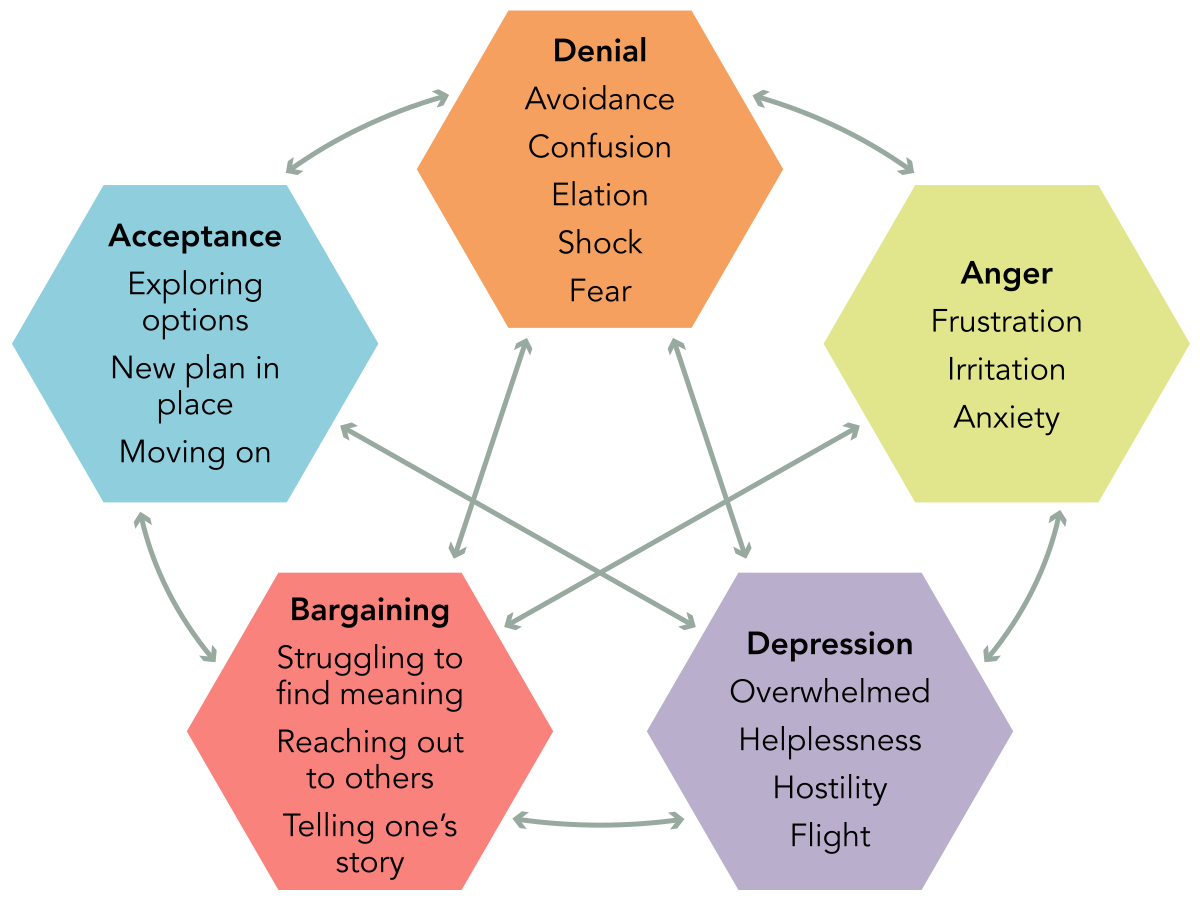
The stages of grief are denial, anger, bargaining, depression, and acceptance.
FIVE STAGES OF GRIEF
Denial
Denial, in which the client refuses to believe reality, is the first stage in the Kubler-Ross theory and is a common defense mechanism used to protect oneself from the pain of considering an upsetting reality. In this stage, it is not uncommon for the client to have a feeling of numbness and shock. The mind is trying to adjust to a loss of someone or something and wonders how life will continue in this altered state. The client is trying to understand what has happened and deal with the feelings of losing someone or something. Denial is a time in which the client reflects on and relives the time spent with the person, and questions how life can move forward without the person. It is the body’s way of slowing things down and giving time to process difficult information.
Anger
Anger is the second stage, in which the client is trying to adjust to the loss and is feeling severe emotional distress. The client thinks, “Why me?” and “It’s not fair.” If clients have a strong religious faith, they may question their belief in the deity. It is normal to feel angry after the loss of someone or something. Anger provides a means of releasing emotional discomfort. Blaming others for the loss can also occur, with anger being targeted at loved ones such as family and close friends. Anger is a necessary and natural response to grief. It will eventually dissolve, and the more anger that is felt, the faster a person will heal. After a loss, many people feel abandoned and left alone. The feeling of anger is commonly experienced and expressed by clients as they begin to accept the reality of a situation.
Bargaining
Bargaining is the third stage, as the client tries a different approach in an attempt to relieve or minimize the pain felt from the loss. Usually, clients try bargaining with a higher power by negotiating to do something in exchange for a different, better outcome. For example, “I promise I will be a better person if you let this person live.” This response is an attempt to avoid grief through the act of negotiating. In this stage, guilt is also commonly experienced as part of the bargaining stage. The client bargaining could be rational, such as a commitment to adhere to treatment, accept help, or could represent magical thinking, such as trying to appease misattributed guilt they may feel is responsible for the situation.
Depression
Depression is the fourth stage—the stage where reality sets in, and the loss of the loved one or thing is deeply felt. The realization that the loved one is gone or the situation is over becomes real. When a client experiences a significant loss, they may encounter an immense sense of emptiness and a level of sorrow that is deeper than they have felt before, causing them to disengage from their everyday tasks and to feel an overwhelming sadness. Some clients might withdraw, not wanting to be around others as they try to deal with the loss. It is natural and appropriate to have feelings such as sadness, fatigue, and anhedonia during the grieving process.
Acceptance
Acceptance is the last stage in the Kubler-Ross theory of grief: It is the point at which the person still feels the pain of the loss but realizes that all will eventually be well. The person acknowledges the new reality, while no longer protesting or struggling against it. Some days will be better than others, with a higher number of good days versus bad days. In this stage, the person begins to connect with friends again and may make new friendships. The person may focus on enjoying what they have left and reflecting on their memories.
A nurse is discussing the recent death of a client’s friend with the client. The client tells the nurse, “If only I had offered to bring my friend home after the party. My friend would still be here today, laughing at my silly jokes.” The nurse understands that this client is in which of the five stages of grief? (Enter your response and submit to compare to an expert’s response.)

Adolescents have an adult understanding of death, but they may have difficulty with processing their feelings of grief. They may turn to high-risk behaviors to distract themselves from their emotions. They may turn to their peers for support or withdraw socially.
The Dual Process Model of Grief
The Dual Process Model suggests that the process of grieving oscillates (shifts back and forth) between two types of responses: loss-oriented and restoration grief. During the loss-oriented process, grief is conveyed through intense thoughts and feelings. The person feels sad, longs for the person who has died, feels sad about how the person died, and believes it is unfair that the person will not be part of the griever’s future. The restoration grief process involves coping with other losses that come with the death of a loved one (secondary losses) and rebuilding one’s life without the loved one. The loss of a loved one brings about not only feelings of grief but also changes that are a result of the loss. The restoration process is a time of thinking about the future, filled with new tasks and obligations.
Dual Process Model
A fundamental aspect of the Dual Process Model is the process of going back and forth between the loss-oriented responses and restoration-oriented responses. Clients who are bereaved shift between these responses over and over again. For example, when a client becomes tired of focusing on feeling sad and longing for the person who has died, the client will switch to focus on their new roles and responsibilities. It is typical for the client who is grieving to move back and forth between the processes. Concentrating on one process too much can be detrimental, especially if the client uses this approach to avoid dealing with the emotions of losing a loved one.
Worden’s Four Tasks of Grieving
Dr. J. William Worden developed the Four Tasks of Grieving model as an alternative to Kubler-Ross’s Five Stages of Grief theory. Worden’s theory suggests that a grieving client commonly engages in four tasks as part of the grieving process. The key idea is that grieving clients can involve themselves in the grieving process, permitting themselves to acknowledge the loss and adjust to life after the loss. The four tasks of grieving are (1) accept the reality of the loss, (2) experience the pain of grief, (3) adjust to an environment without the deceased, and (4) find an enduring connection while embarking on a new life.
Four Tasks of Grieving
Drag the four tasks of grieving below into the correct sequence.
Experience the pain of grief.
Adjust to an environment without the deceased.
Accept the reality of the loss.
Find an enduring connection while embarking on a new life.
1
2
3
4
Accept the Reality of the Loss
The first task of this model is overcoming denial of the loss. This task consists of accepting the loss as reality versus believing that it never happened. Denying the loss does not make it go away. Grief is a natural way of mourning that requires facing and reorganizing one's thoughts regarding the loss, the nature of it, and the changed reality that must be now navigated. The first step in grieving is acceptance, and accepting the loss allows the mourner to move forward in the grieving process.
Experience the Pain of Grief
The second task is to be aware of the emotion and to experience the pain of grief. It involves providing individuals with the opportunity and environment to recognize and articulate their feelings of pain, anger, and sadness that come with the loss. They may do everything in their power to avoid feeling, yet preventing the feeling of strong emotions only makes the pain worse. Grief needs to be dealt with, and close contacts, such as friends or family, can help clients in sorting out their feelings. Coping with emotions can be handled through writing, creating songs, or whatever works best for the client. The survivor needs to analyze the pain of the loss to work through the grief process and not suppress or ignore the feelings.
Adjust to an Environment Without the Deceased
The task in this phase is to adjust and redefine oneself by developing a new identity to navigate life post-loss. Life is no longer the same, and the client may feel as if moving on in their life is a betrayal of the loved one or that becoming closer to a friend is betraying the friend whom they have lost. Clients in this phase have to find a way to remember who or what was lost while moving on with the rest of their lives.
Find an Enduring Connection While Embarking on a New Life
The final task is to comprehend the meaning and impact of the loss, find new purpose, and redirect emotional energy toward new connections, while simultaneously moving forward in one’s life. Even though the loved one is no longer in the client’s life, the client will always have lasting memories of times spent together. Instead of clients focusing on what they have lost, they should focus on what they had.
Individual Experiences of Loss and Death
Death is considered a normal occurrence in life, yet it is also one of the most difficult challenges that a person may experience. Bereavement is a term used to describe a period of time in which a person experiences grief and mourning after a loss. Mourning is described as the expression of grief in public. Mourning can be affected by religious beliefs, ethnic background, or cultural customs. Practices associated with mourning often provide structure to the grieving process.
bereavement
mourning
Manifestations
The response to the death of a loved one varies depending on the circumstances surrounding the death. Common findings include crying spells, difficulty sleeping, changes in food intake, and decreased productivity in the work setting. The client may at first find it difficult to believe that death has occurred, with this disbelief then being followed by anger that the person has died. Feelings may be extraordinarily intense and accompanied by mood swings, marked by a deep yearning for the one who has passed away or a constant fixation on them, coupled with profound emotional distress.
Causes
The reaction of the client experiencing a loss reflects the circumstances surrounding the death and the relationship with the deceased. If the client experiencing grief fails to process that grief within a month to a year, the person could be experiencing complicated grief. Most clients see a decline in grief manifestations after 6 months.
Losing a Family Member
After suffering the loss of a spouse or partner, the surviving partner may have to make numerous choices related to funeral arrangements and financial issues at one of the most difficult times possible. While society often treats death as a topic to be avoided and anticipates a swift recovery from grief, funerals offer a framework and a feeling of security that acknowledges the reality of death and supports individuals through the process of mourning.
The loss of a child is devastating to a parent and can be an overpowering experience. Parents must process additional issues along with the usual findings of grief after the death of a child. Parents may feel an injustice has occurred—that a parent should not lose a child. They may have days on which they feel pain, alternating with days on which they feel numb, in a cycle that can linger for months. A parent’s world often revolves around taking care of a child, even when the child is no longer living with the parent. Losing a child takes away the parent’s ability to fulfill the parenting role—a role that they anticipated carrying out for many more years to come. When a parent loses a child, they lose a piece of themselves, regardless of the child’s age.
The loss of a parent, caregiver, or guardian can be profoundly affecting for their children, regardless of the age of the parent and child. The grief response after a parent has died reflects factors such as the circumstances in which the parent died (violent deaths can lead to grief disorders), the child’s relationship with the parent prior to the parent’s death, if the child believes it was time for the parent to die, and the gender of the child and the parent. Not having an opportunity to say goodbye to a parent has an impact on a child’s coping ability and may lead to feelings of anger and depression. The death of a parent can be especially painful for children who have had a troubled relationship with the deceased parent.
Loss Due to Suicide
Managing grief from a loss due to suicide can be overwhelming for those left behind. It can be harder to process because of the feelings of shame, guilt, and rejection felt from the loss. In many cultures, suicide of a loved one is still associated with a sense of shame and disgrace. This may worsen the bereaved person’s feelings of loneliness. The bereaved person may be without some of the support previously provided in the past.
Loss of a Pet
It is common for the client who has lost a pet to experience intense feelings of sorrow. Pets provide companionship and acceptance, as well as social and emotional support. They are often thought of as members of the family. Some people may find it challenging to comprehend the strong emotions a person has over the death of a pet and, therefore, may be less understanding. The loss of a pet can be painful and cause a range of emotional responses, such as anxiety, stress, shame, and grief. Clients should allow themselves to fully grieve that loss.
Experiencing that grief and loss may include feeling shock and confusion, followed by extended periods of sadness and depression. The intensity of the unhappiness felt will lessen over time, however, and clients will typically return to their usual selves, provided the client has healthy behaviors and social support. There is no standard period for a person to grieve and recover from the loss of a pet.
Grief Responses
There are many different types of feelings and behaviors a client may experience after someone close to them has passed away. Grief is frequently recurring, as the intensity of grief comes and goes in cycles. A person may be feeling less grief, but then encounter the grief once again. Reactions to grief can involve complicated feelings, thoughts, physical sensations, and behaviors.
Common Grief Reactions
Grief reactions are defined as a person’s response to loss. The range of feelings for a client who has experienced a loss may include shock, anger, anxiety, numbness, denial, guilt, sadness, relief (if death is expected), and depression. A grieving client may begin to cry as they listen to a song that causes them to think of the person who has died. The range of psychological experiences may include disbelief, fixation, trouble concentrating, and hallucinations. Physical sensations related to grief include a tightness or heaviness in the chest or throat that is non-cardiac related, gastrointestinal findings such as nausea or upset stomach, dizziness, headache, muscle weakness, and tiredness. The behaviors of a person experiencing grief may include difficulty falling asleep or staying asleep, a loss of interest in consuming food or socializing, and becoming short-tempered or hostile. Every client’s experience with grief is unique to them, and feelings of grief will come and go. Sometimes feelings of grief are intensified around significant dates and anniversaries such as the deceased person’s birthday or death date, or around the holidays.
grief reactions
Factors Affecting Grief
The length of time for which a person grieves, the characteristics that the person displays during grief, and the intensity of grief can be affected by various factors. The circumstances in which a person dies can influence a person’s grief. For instance, was the death sudden, or had the person been suffering from a terminal illness? The deceased person’s age can influence the reaction to the death, including whether the deceased person was a young child versus an older adult. Customs, religious, or spiritual beliefs of the grieving person can also play a role in how the client displays grief for a loss. Prior experience with loss can have an impact on the client who is grieving, just as any previous experiences affect future experiences. For the person who has unresolved issues with the person who has died, the grieving process may be more difficult.
Individual Response to Grief and Loss
Page 1
Age-Related Considerations
The age of the person experiencing grief will influence their grief response. Death is a natural life event that all people experience at some time in their life. As health care providers, it is essential for nurses to be knowledgeable and understand how gender, age, personality, life conditions, vulnerability and circumstances related to the loss influences a client’s view of and response to death.
Infants and Toddlers
Even though infants and toddlers are unable to express what they are feeling, they can grieve for loss of nurturance and can be soothed by a substitute caretaker. Infants and toddlers can sense the anxiety or distress of the adults who are around them. Common reactions of infants and toddlers include irritability, changes in eating or sleeping patterns, or increased crying. The infant or toddler may be clingy, jumpy or anxious, or less active, or may experience weight loss.
Preschoolers
Preschoolers may expect the person to return, as they perceive death as temporary and reversible. They may think that they are to blame for a person’s death, as they believe that thoughts or feelings can cause death. Some preschoolers may appear unaffected by death, a response caused by a child’s inability to understand that death is permanent. Common reactions include searching for the person who has died, anxiety, clinging to people, irritability, increased tantrums, trouble sleeping, toileting problems, and changes in eating.
Middle Childhood (8 to 12 Years)
Children who are in the middle childhood stage of development understand that death is everlasting. Because they recognize that the world does not revolve around them, they can have increased fears related to death and are more preoccupied with both their own well-being and the well-being of their loved ones. Common reactions to death during middle childhood include anger, sadness, anxiety, aggressive behavior, and potentially trouble in school. Children in this age bracket may hold back their feelings, appearing withdrawn—a response that is more prevalent in boys.
Adolescence (12 to 18 Years)
Adolescent children have a complete understanding of death, although they may not respond to it in the same manner as an adult does. It is not unusual for adolescents to have feelings that “no one understands me,” and these feelings may become increasingly evident in the adolescent experiencing grief. Some may have difficulty revealing their feelings. The inability to express these feelings can lead to high-risk behaviors as a way of escaping emotions and reality while seeking comfort. Adolescents may or may not overtly display their emotions, as they may fear being seen as strange or different. During this time, adolescents may rely more on their friends, or they may detach themselves from others. Adolescents must be supported during this trying time while still enabling them to maintain their sense of independence.
Adulthood
Bereavement more typically occurs during adulthood, and as people get older, the occurrence of death among their loved ones increases. Grief is different in adulthood as compared to other stages of growth and development, as adults have full comprehension of death and have memories of the deceased. Manifestations experienced by adults may include depression, anxiety, anger, and rapid changes in mood. They may react to grief with emotions of shock, numbness, or doubt. Some adults experiencing grief may also have physical manifestations such as tightness in the chest similar to a heart attack, upset stomach, lightheadedness, and fatigue. Other responses to grief that may occur are known as “looking for” behaviors; they include hallucinations, dreams in which the deceased person continues to exist, “observing” the deceased person in the road, and other illusions and misconceptions.
List age related considerations and their grief response.
Type and submit your response to compare it to an expert response.
Grief and Loss Practice Activity
Watch the video and respond to the questions below.
Grief and Loss
Which of the following nursing care goals did the nurse implement during the visit with this client? (Select all that apply.)
A
Art of presence
B
Discussion of spiritual issues
C
Alleviation of physical symptoms
D
Effective communication
When documenting this visit with the client, the nurse could summarize this client as being in which of the following stages of the grieving process?
A
Denial
B
Anger
C
Bargaining
D
Acceptance
Which of the following is a common grief reaction of an adolescent?
A
Tightness in the chest
B
Looking for the person who had died
C
Having trouble in school
D
Failure to express their emotions
Cultural Influences on Grief
People throughout the world experience grief and loss after the death of a loved one. Every culture has its own beliefs, values, behaviors, traditions, and rituals. One’s culture provides suggestions, models, and atmospheres about how grief should be experienced, which serves as the foundation for the grieving person’s actions. How people and communities demonstrate grief differs among cultures. For instance, in China, the color of mourning is white, whereas in Western culture, the color of mourning is black. The prevailing cultural framework within a community offers direction for the process of constructing meaning: it proposes a collection of norms regarding the "appropriate" approach to addressing experiential dilemmas. In this context, the bereaved attempt to find significance in life and death while being presented with cultural narrative frameworks that shape their perceived worth and existence.
Rituals and customs can serve as a method for a person, family, and community to process and communicate their grief as well as to create positive memories, hope, and new meanings. Rituals serve as a guide to grief expressions, actions, or behaviors that are expected within the culture. They may describe how the dying person is cared for and what is stipulated after the person’s death, including who is present and which formal procedures are performed, who handles the body after death, how the body is cleansed and dressed, and whether the body is cremated or buried. Other rituals guide how grief is expressed (silently or loudly), the expected length of the grieving process, how family members act during the mourning phase, and ongoing rituals in celebration of the loved one’s death. Cultural factors may define expected family roles, such as when the widow or widower may remarry, and whether the oldest son becomes the head of the family.
It is important to note that there is no way to know all cultures and their norms; thus, asking appropriate questions and being curious and nonjudgmental will help build cultural intelligence and move nurses toward cultural competence.
Spiritual Influences on Grief
Religious–spiritual rituals can help a person who is grieving to deal with death and the grieving process. Indeed, practices involving the use of religion and spirituality have produced better client outcomes post-bereavement. For the person who is grieving, having religious or spiritual beliefs can trigger support from the faith-based community. Having support within a community can offer the opportunity to discuss one’s feelings in a positive, nourishing environment.
Religious and cultural traditions can provide comfort during the grieving process by offering rituals defining what should happen after death. Members of the Christian faith traditionally hold a wake where the deceased body is displayed for viewing, and family and friends come together to see the deceased, share memories, and comfort one another. In Judaism, the body is buried as soon as possible, followed by a week-long period of intense mourning in which the community provides meals, prayer, and comfort called shiva. Many religions believe in an afterlife or reincarnation in some form. An afterlife can be described as any condition of mind or state of being that happens after a person has departed this earth.
It is essential for nurses who are caring for persons who are grieving to acknowledge and be sensitive to the differing beliefs among the various religions to ensure the delivery of patient-centered care.
Sort the following items into cultural or religious–spiritual influences. (Drag each option to the desired category.).
Determines whether the body is cremated or buried
Defines which formal procedures are performed
Provides support within the community
Decides the expected length of the grieving process
Has produced better client outcomes
Believes in afterlife or reincarnation in some form
Cultural influences
Religious–spiritual influences
Both cultural and religious–spiritual influences
Nurse Caring for Clients and Families Experiencing Grief and Loss
Page 1
Nurses may encounter many challenges in providing support to those who are experiencing grief and loss when a client dies. Sometimes their formal education may have included limited training in assisting families at the time of death or loss. Most nurses at some time in their career will experience grief from a personal loss. Many will find themselves in a position where they will be required to support family members or other loved ones who are experiencing grief and loss. Nurses are responsible for providing and expected to deliver compassionate nursing care to both clients and their families. To ensure they are capable of delivering the best care for those experiencing grief and loss, nurses need to remain emotionally balanced while caring for clients and families experiencing grief and loss.
Nurse Self-Care When Caring for the Grieving Client/Family
Nurses may experience grief after a client’s death. Their reactions may differ in the way grief is expressed, however, and are affected by the clinical circumstances of the client’s death, as well as personal factors specific to the nurse. Some grieving nurses may display anger, depression, irritation, or helplessness. Nurses may experience grief after a client’s death. Their reactions may differ in the way grief is expressed, however, and are affected by the clinical circumstances of the client’s death, as well as personal factors specific to the nurse. Some grieving nurses may display anger, depression, irritation, or helplessness.
Self-Care
A plan for self-care begins with nurses performing a self-reflection and evaluation of their current state of being. In performing a self-evaluation, they may want to take a holistic view of their life, including their physical, psychological, spiritual, relationships, and financial status. Once the evaluation is complete, each nurse can identify areas in which opportunities for growth exist and work on those areas. For example, physical improvement self-care activities might include eating healthy, getting regular exercise, and maintaining a healthy weight. Psychological improvement can be attained through the use of relaxation and imagery techniques, reading books, and engaging with groups that facilitate happiness. Spiritual self-care is achieved through participation in activities such as joining a religious group that develops the higher self, practicing meditation, or yoga. Economic self-care includes living within one’s financial budget. Psychological self-care activities focus on participating in activities that stimulate one’s mind through creativity and play.
Recognizing Personal Grief
Grief can be exhibited through various emotional and physical manifestations, including anxiety, difficulty sleeping, headaches, and joint pain. The majority of findings are psychological. Nurses need to find a place that is supportive of their feelings and where they can heal. Keeping emotions to oneself and not dealing with them can cause nurses to be less effective in providing care for their clients. Nurses, like clients, need to verbalize and process feelings of grief. As part of this healing, they need to set aside time for themselves and make taking care of themselves a priority. The American Nurses Association’s Code of Ethics states that nurses have a duty to take care of themselves as they do others (including health and safety), preserve competence, protect their character and dignity, and continue personal and professional growth. Self-care through maintaining a balance of work, family, self, and enjoyment in life must occur to combat stress, fatigue, and burnout, as well as to restore the ability to be compassionate and empathetic, which promotes safety and higher-quality client care. Strategies for self-care focus on maintaining a healthy body and mind, including eating a healthy diet, participating in physical exercise, socializing with family and friends, and getting adequate rest.
Compassion Fatigue
By its very nature, nursing practice focuses on showing compassion when caring for clients and their families, and forming emotional relationships, such as when caring for a dying client. Nurses find themselves repeatedly caring for clients who are suffering and injured, and as they care for them, they share in the pain and suffering of these clients. Compassion fatigue is defined as cumulative stress that develops from the desire to help those who are suffering combined with the inability to relieve that suffering, which results in a feeling of professional uselessness and self-blame.
compassion fatigue
Certain types of nursing specialties (e.g., emergency room, critical care, and end-of-life care) are at increased risk of compassion fatigue. Findings of compassion fatigue include difficulty in focusing, feeling nervous, anxiety, disruptive behavior with coworkers, and problems connecting with clients. Strategies to prevent compassion fatigue include reflective journaling, participating in continuing education activities to restore the mind, and engaging in non-nursing activities that reduce job-related stress, such as meditation, spiritual practices, reading, going to the movies, spending time with family and friends, and exercising.
A nurse is dealing with personal grief. Which strategies can the nurse use to process these feelings of grief? (Enter your response and submit to compare to an expert’s response.)
Assisting Clients and Families Experiencing Grief and Loss
The first task in providing support for clients and families as they cope with grief and loss is to build rapport and develop a relationship with them. Once the nurse has established a relationship, it is necessary to evaluate for common indications of grief and loss. If manifestations of grief and loss are seen, the nurse should persuade the client or family to share not only their psychological feelings but also their physical feelings, while being truthful, open, and honest. When listening to their expressions of these feelings, the nurse should make sure to utilize active listening techniques and provide an environment that is free from criticism.
One therapeutic communication skill that nurses can utilize when discussing emotional subjects is called the NURSE technique. Using the NURSE mnemonic when having conversations with clients and families who are experiencing grief provides an opportunity for the nurse to demonstrate empathy and build a relationship. NURSE stands for Name, Understand, Respect, Support, and Explore. An example of the NURSE technique follows.
A family member or loved one states: “This is overpowering.”
The nurse replies:
Name: “This is overpowering.” Identify what the person stated a moment ago. The nurse is identifying the emotion expressed by the client.
Understand: “There is a lot happening right now. What can I do to assist you?” The nurse demonstrates understanding by recognizing the client’s feelings and providing an opportunity for the client to discuss those feelings.
Respect: “I’m very impressed with your ability to manage everything.” Voice your respect for the client under these circumstances.
Support: “I’m here all day for you.” Inform the client that you are available to them.
Explore: “What is the most difficult aspect?” Asking an open-ended question will extend the conversation and provide a more detailed expression of the client’s feelings and beliefs.
NURSE Mnemonic
Name: “This is overpowering."
Understand: “There is a lot happening right now. What can I do to assist you?"
Respect: “I’m very impressed with your ability to manage everything.”
Support: “I’m here all day for you.”
Explore: “What is the most difficult aspect?”
Match the appropriate nursing response to the NURSE mnemonic. (Drag each option to the desired category.).
“If I am understanding you, you are feeling angry about your loss.”
“I’m going to be here all shift for you if you need me.”
“Sounds like you are feeling overwhelmed at the moment.”
“I’m really amazed at how you have dealt with everything.”
“You seem upset. Can you tell me what you are thinking about?”
Name
Respect
Support
Explore
Understand
The Nursing Process in Caring for Client’s and Families Experiencing Grief and Loss
The manner in which a client or family processes grief varies from one individual to another, although the role of the nurse remains unchanged. As a nurse assists the client and families experiencing grief and loss, the goal is for those involved in the grieving process to verbalize their feelings and have a reliable support system. In determining a nursing diagnosis of grief, the nurse’s initial action is to assess for indications that the client is grieving. Assessment is the first step in the nursing process, a methodical guide that nurses use in providing client-centered care. The nursing process consists of five sequential steps: assessment, analysis, planning, implementation, and evaluation.
PN Nursing Process
Data collection: The PN collects data through observation, checking, and monitoring of the client. The PN reports the data to the registered nurse.
Planning: The PN recommends or assists the RN in developing the plan of care and plans for monitoring the effects of treatments.
Implementation: The PN provides supportive or restorative care, which includes participating in interdisciplinary care, recommending referrals and consults, choosing the correct communication, implementing interventions, and reinforcing instruction.
Evaluation: The PN participates in care evaluation and suggests revisions to the plan of care.
Assessment
When using the nursing process, the nurse first assesses whether the client or family member is experiencing grief. This includes assessing for signs or behaviors that suggest grieving, such as crying, speaking loudly, or exaggerated body movements. The practical nurse (PN) can interview the client or family member to collect data. Remember that a person’s response to grief is influenced by many factors, including customs, religion, age, and gender. Once the nurse determines that the person is experiencing grief, the nurse must further assess which phase of grieving is being experienced. The nurse should also determine whether the client’s grieving is healthy or complicated. The client’s capacity to make decisions should be assessed as well. In addition, it is important to determine the reliability of the client’s support system and assess the need for other assistance such as spiritual support, psychological referrals, peer support, or social services.
Analysis
Once a nurse has gathered all the information, the nurse uses clinical judgment to make an educated decision about a potential or actual health problem with a client. In this case, the nurse should evaluate a client’s potential or actual problem related to the grieving process. The nurse can then develop a personalized care plan tailored to manage the client’s unique needs. The actual or potential problem depends on the client’s condition and medical needs, and its identification begins the planning phase of the nursing process. Establishing a potential or actual problem determines which interventions a nurse will utilize in caring for the person and their expected outcomes.
Planning
In the planning phase, the nurse develops a plan of care (treatment plan), which includes client-specific goals and outcomes. In this phase, the PN recommends or assists the registered nurse (RN) in developing the plan of care and the methods for monitoring the treatments. For example, the nurse might use the following interventions in a care plan related to grief:
Therapeutic communication techniques to facilitate the verbalization of feelings
Providing a nonjudgmental and trusting environment
Encouraging the client to learn about and utilize effective coping strategies
Providing additional resources, including community resources
Highlighting strengths and progress to the client and family
Recognizing the need of the client or loved one to reassess the loss experience
Implementation and Evaluation
In the implementation phase, the nurse carries out the treatment plan. The interventions should be both individualized to the client and feasible. In this phase, the nurse monitors the client for signs of change or improvement, cares for the client, and provides education and guidance to the client about progress in the treatment plan.
Lastly, the nurse evaluates whether the plan of care was successful and if the desired outcomes were met. Expected outcomes for clients experiencing grief and loss include the ability to verbalize and express their feelings, the client asking for help and support as needed, and successful use of coping strategies.
Summary
Page 1
Grief is the pain experienced after significant loss, typically the death of a loved one. It is a sensation that is felt when someone or something that a client loves is lost.
Grief can be experienced after any important loss—for example, a divorce, retirement, joblessness, financial instability, a miscarriage, the end of a friendship, or moving to a new city.
Grief is usually accompanied by physiological stress, separation anxiety, disorientation, longing, thinking about the past excessively, and nervousness or anxiety about the future.
Normal grief, also known as uncomplicated grief, is caused by the loss of someone very close through death or the ending of a relationship. Other causes of grief include loss of identity, loss of safety, loss of autonomy, and loss of dreams or expectations.
Anticipatory grief is grief that is experienced before the loss of someone or something. This type of grief can be experienced by the client who has a connection with a dying person, or the dying person can experience anticipatory grief.
Prolonged grief disorder (PGD), previously known as complicated grief, may be experienced by clients who are unable to accept the death of a loved one. Their behavior is marked by a persistent need to find the deceased person, and they are preoccupied with thoughts of the deceased person.
Disenfranchised grief is grief related to a relationship that does not coincide with what is considered by society to be a recognized or justified loss.
Grief theories and models have been developed to provide explanations and guidance in anticipating how a person may cope and adjust in experiencing grief and loss.
One of the best-known grief theories is Kubler-Ross’s Five Stages of Grief. According to this theory, individuals typically experience five stages during the grieving process: denial, anger, bargaining, depression, and acceptance. These stages are not sequential, and an individual may not necessarily go through all of them.
The Dual Process Model suggests that the process of grieving oscillates between two types of responses: loss-oriented and restoration grief. During the loss-oriented process, grief is conveyed through intense thoughts and feelings. The restoration grief process involves coping with other losses that come with the death of a loved one (secondary losses) and rebuilding one’s life without the loved one.
Worden’s Four Tasks of Grieving model suggests that a mourner commonly completes four tasks that minimize the risk of developing complicated grief: accept the reality of the loss; experience the pain of grief; adjust to an environment with the deceased not there; and find an enduring connection with the deceased while embarking on a new life.
Common manifestations of grief include crying spells, difficulty sleeping, changes in food intake, and decreased productivity in the work setting.
Culture may provide guidelines for how people express their grief experience and, in turn, serves as the foundation for their actions.
Religious–spiritual rituals can help a person who is grieving to deal with death and the grieving process. Religion can provide comfort during the grieving process by providing knowledge of what supposedly comes after death.
The NURSE mnemonic is a therapeutic communication skill that nurses can utilize when discussing emotional subjects. NURSE stands for Name, Understand, Respect, Support, and Empathy. This technique provides an opportunity for the nurse to demonstrate empathy and build a relationship.
As the nurse assists clients and families experiencing grief and loss, the goal is for those involved in the grieving process to verbalize their feelings and have a reliable support system.
Nurses, like clients, need to verbalize and process their own feelings of grief. Nurses need to take the time to care for themselves and make self-care a priority.
Compassion fatigue is defined as cumulative stress that develops from the desire to help those who are suffering combined with an inability to relieve the suffering, which leads to a feeling of professional uselessness and self-blame. Certain types of nursing specialties (e.g., emergency room and end-of-life care) can increase the risk of developing compassion fatigue.
Children's Understanding of and Reaction to Death: Sibling Bereavement
00:00
13:40
Transcript
Grief: What Can I Say?
00:00
05:19
Transcript
Lesson References
Click to download this file.
Click to download this file.