Monetary and Fiscal Policy
Laissez-Faire Debate
All proponents agree less government intervention in the free market, the better the economy
Should the Government Intervene?
Fiscal policy is the change the government makes in spending or taxation, so as to achieve full employment and stable growth.
Pres and congress determine fiscal policy
Pros and cons
Some say that political officials may trad-off bad times now for better times in the future to advance their positions
Philip’s Curve
The idea that unemployment and inflation were directly correlated
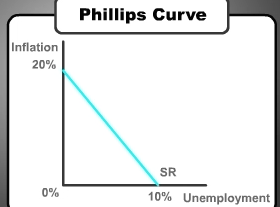
This, however was proven wrong by the stagflation in the ‘70s
3 other theories emerged:
Adaptive Expectations
Rational Expectations
Natural rate hypothesis
Natural Rate Hypothesis
There’s a natural rate of growth for real variables, like unemployment, RGDP, and real interest rates
it says these variables have a natural value, and the economy will readjust to put them back at their normal levels
Some believe that the philip’s curve is still useful in the short run because lower inflation will lead to higher unemployment.
So a politician can use expansionary fiscal policy during a recessionary gap to increase his odds of capturing his position
However, if the natural rate hypothesis is true, then the politician using expansionary fiscal policy may accelerate inflation without necessarily achieving lasting reductions in unemployment, as the economy adjusts back to its natural levels over time.
Monetary Policy
Changes in money supply designed to achieve full employment without inflation
Though, those at the FED are not as susceptible to the political arena, they do not congressional and presidential support
increasing money supply increases output in the short run, but in the long run results in inflation and contractionary gaps
Adaptive Expectations
People base their expectations of the economy’s performance on the recent past
Rational expectations
People make decisions on information they gather, so they make predictions based on how they know the economy works
Other implications
The 2 ‘80s recessions could have been less severe if the public had more trust that the FED could carry out its policy
A lot of inflation in the ‘70s was stopped through tight monetary policy, which caused many recessions in the early ‘80s
Many times the FED tried to enact a contractionary policy to decrease inflation, but the policy leaders would not allow for more unemployment
A contractionary policy increases interest rates, decreases investments, and the economy contracts, but the interest does lower as wells as the price level and RGDP
Fiscal and monetary policy both rely on the publics expectations
Permanent income theory: people spread their income over their lifetime
If the gov decreases taxes to stimulate the economy, households have more money, but will only spend it if they believe the tax cut is permanent, then fiscal policy is effective, but if they believe it is not permanent, then they will save it
Supply-side economics
production drives the economy, so making it easier on firms stimulates the economy
AKA Trickle-down economics
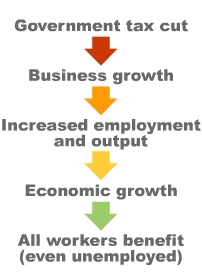
It did not work, but is related to fiscal policy