Sept. 12: Cancer Treatments
SLIDE 2:
Cancer medical interventions
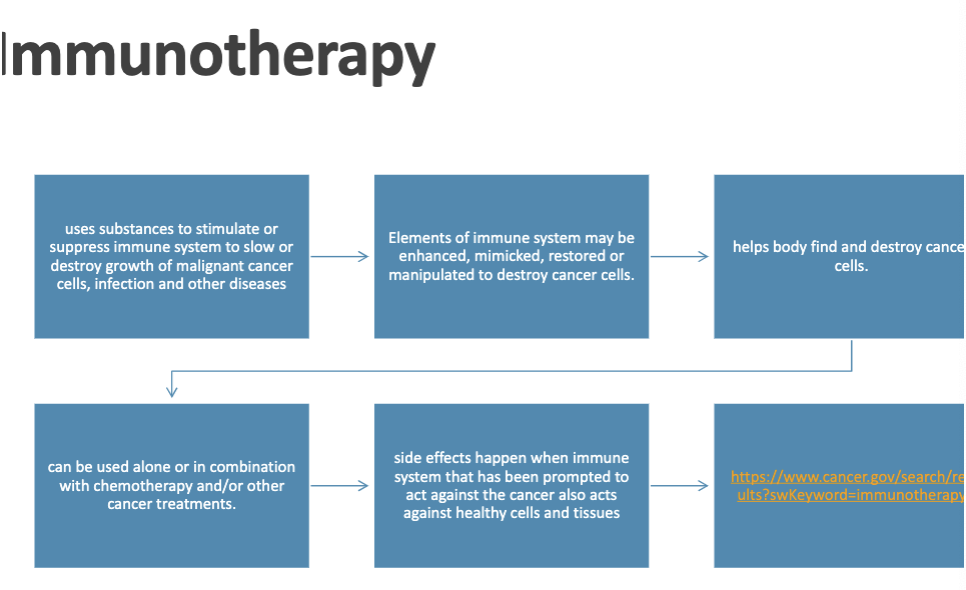
Surgery, Radiation therapy, Chemotherapy, Targeted therapy, Immunotherapy or Biological Therapy, Stem Cell Transplantation
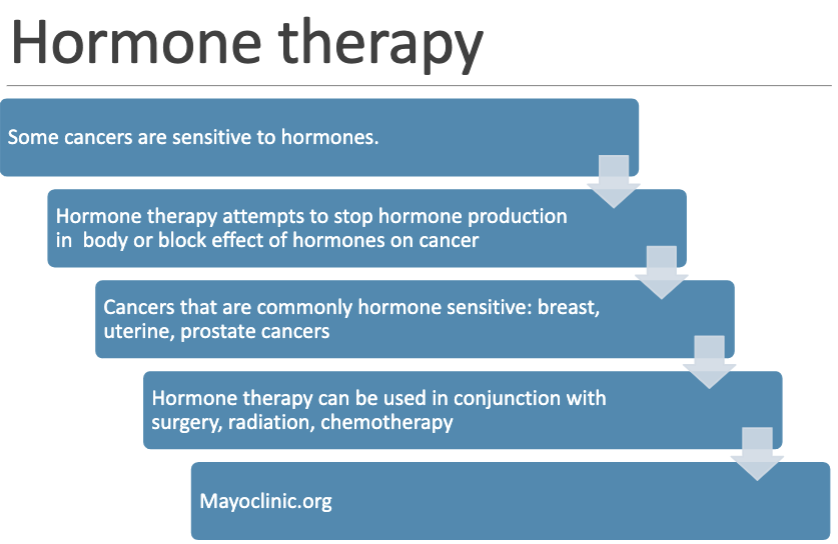
Hormone therapy- involves decreasing hormone lvls
Angiogenesis Inhibitor- focuses on inhibiting role blood vessels play in feeding cancer cells nutrients and 02
SLIDE 3:
Neoadjuvant therapy: (neo before)
first step treatment to shrink tumor before primary treatment status
chemo; radiation therapy; hormone therapy
primary tx is usually surgery
SLIDE 4:
Prehabilitation (PT first step):
after diagnosis and b4 medical intervention
helps to make you stronger and prepare for medical tx
SLIDE 4:
Adjuvant Therapy:
additional cancer treatments given after primary treatment to lower cancer recurrence risk
recurrence: new occurence of cancer that happened or appeared before
after surgery: radiation, chemo, immunotherapy, etc
SLIDE 7:
Resection/Excision:
tumor removal + surrounding healthy tissue (margin)
Cryosurgery:
liquid nitrogen spray or extremely cold probe to freeze and kill abnormal cells (bladder and prostate)
Electrocauterization:
high frequency electrical current to destroy/burn (rectal or colon)
Fulguration:
electrical current for destruction
Biopsy:
Excisional biopsy: small tumors + some normal tissue
Incisional Biopsy: diagnostic purpose
*****Don’t need to know hard definitions*****
SLIDE 10:
En bloc resection: surgical removal of entire tumpr w/o violating its capsule
resection of tumor encased by continuous margin of healthy tissue
SLIDE 12:
Mediastinum- membranous partition b/2 2 body cavities or 2 parts of an organ, especially that between lungs
SLIDE 15,16:
Radiation Therapy:
use of high-energy radiation to damage/kill cancer cells
Goal of Radiation therapy:
damage cancer cells while limiting harm to nearby healthy tissue
SLIDE 17:
When is radiation therapy used?
alone or in combo w/ other tx to TREAT ALMSOT EVERY TYPE OF SOLID TUMOR
Adjuvant radiation therapy focuses on area around oroginal cancer site
Prophylactic radiation therapy
preventative radiation therapy
Palliative radiation therapy
makes person more comfortable by killing something off
SLIDE 18:
External- most common-external beam
Internal- (brachytherapy)-implants placed directly into body near tumor
Systemic-radioactive materials (iodine) that are injected or taken orally (thyroid cancer)
Stereotactic (stereotaxic) radiosurgery uses large dose of radiation to destroy brain tumor (not actual surgery)
SLIDE 22:
Radiation Side Effects
Skin erythema and alopecia (HAIR LOSS) (often permanent)
pneumonitis (lung inflammation)
Xerostomia: dry mouth
Fatigue and mental fatigue
Neuropathy (numbness and tingling)
cardiomyopathy: heart muscle disease
SLIDE 24:
Chemotherapy
PURPOSE: damage DNA → apoptosis (self destruction)
Systemic: kills cancer cells regardless of location
SLIDE 25:
How is chemotherapy administered?
topical (skin cancer)
oral
injection (into vein or superficial tumor)
INTRAVENOUS- most commonly used- most efficient
intra-arterial (targeted administration)
Intra-peritoneal
peritoneum: membrane lines walls of abdominal (peritoneal) cavity and encloses abdominal organs
SLIDE 26:
Normal cells affected by chemotherapy
ALOPECIA (cells that grow hair)
ANEMIA, INCREASED RISK OF INFECTION, FATIGUE (cells in bone barrow— decreased red/wbc)
cells of skin/mouth — dry skin and oral sores, STOMATITIS (inflamed and sore mouth)
cells of gastrointestinal tract — NAUSEA, VOMITING, DIARRHEA
SLIDE 28,29,30:
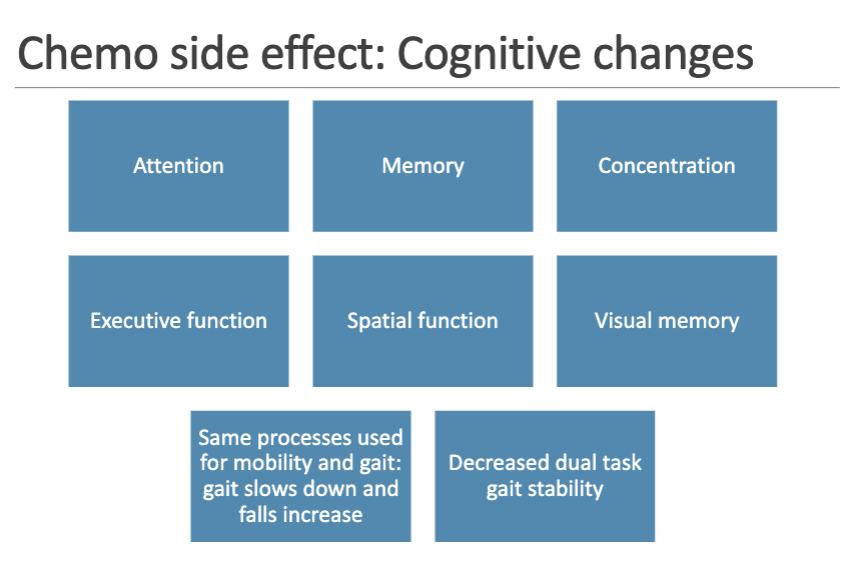
Chemo Side effects: CIPN
Chemotherapy induced peripheral neuropathy
Consequences:
bilateral involvement
numbness, decreased proprioception (knowing where you are in space)
****anything SYSTEMIC (blood stream) goes everywhere so your problems are BILATERAL****
CHEMO SIDE EFFECTS: Neuropathic pain (neuralgia)
CHEMO SIDE EFFECTS: impaired vision
increases fall risk
SLIDE 32:
Targeted Therapy
uses drugs or other substances to precisely indentify and attack certain cancer cells
LESS LIKELY TO HARM NORMAL CELLS than CHEMOTHERAPY
SLIDE 34:
Keytruda:
used alone or w/ other drugs to treat many types of cancer
very expensive (Jimmy Carter was in Stage IV and overcame)
SLIDE 37:
Stem Cell Transplantation (Bone MARROW)
best way to get rid of cancer (from ur own or someone elses)
AUTOLOGOUS: marrow previosly saved from pt. is given back when needed
ALLOGENIC: marrow from a living donor other than patient
SLIDE 38:
CLINICAL TRIALS
Phase 1 (determining safe dose)
Phase 2 (efficacy of tx)
Phase 3 (DETERMINE WHETHER NEW TX IS ACTUALLY MORE EFFECTIVE THAN CURRENT TX)
SLIDE 40:
TAKE HOME MESSAGE:
cancer is not deadly
never say we suspect its cancer
PT’s can help save lives by finding cancer (we know how to screen, listen, palpate)
early detection is huge in increasing chances of living