Instrumental methods
Chemical tests are very good at identifying elements and compounds, however instrumental methods can also be used to analyse substances.
Instrumental methods advantages and disadvantages
Advantages:
they are more sensitive - only require a very small amount of substance
They are much quicker
They are highly accurate
Disadvantages:
usually very expensive
Takes specialist training to use
Gives results that can often be interperated only by comparison with data from known substances ( e.g say you have copper info, can find copper. Don’t have potassium info, can’t find potassium )
In summary - instrumental methods are more accurate than chemical tests but more expensive, chemical tests are less accurate but cheaper.
Uses of instrumental methods of analysis:
Analysing blood, urine and tissue samples
Analysing purity of medicines
Analysing the quality of water and air
Analysing the contents of food
Flame emission spectroscopy
As you know, when some metals ions are heated they produce distinctive colours. But, these colours are often difficult to see and it is easy to mistake the colour of one metal ion with the colour of another ( e.g lithium and calcium ions ). It is also difficult to identify a metal ion in a sample using a flame test if the sample contains more than one metal ion, producing a different flame colour (( the colours would become mixed together )
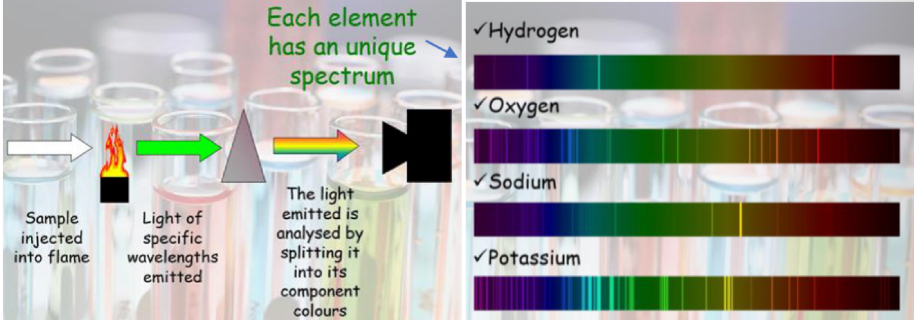
Flame emission spectroscopy is an example of an instrumental method used to analyse metal ions in solutions.
It is used for:
identifying metal ions in solution
Measuring the concentration of metal ions in solution
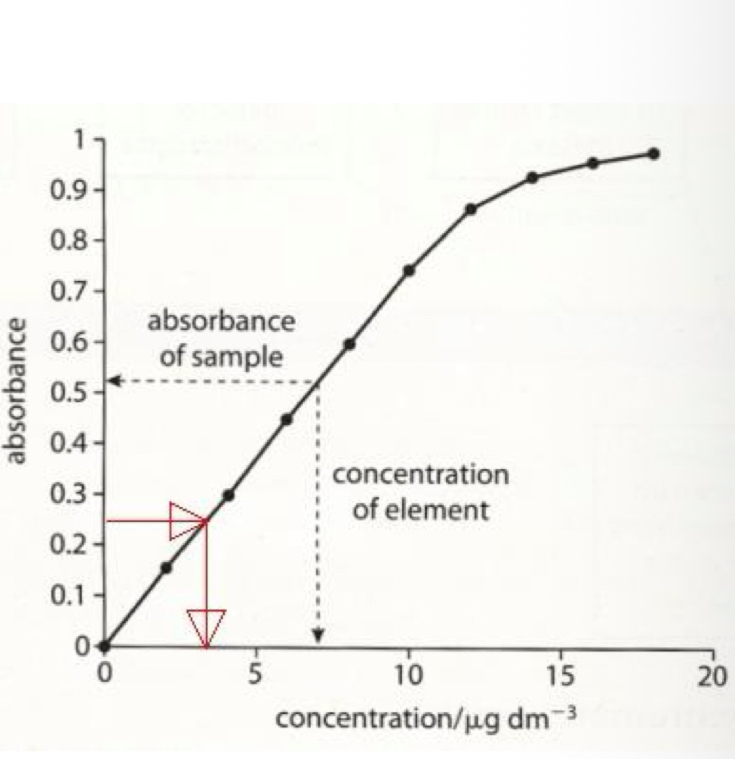
Sometimes, you may be given a graph of concentration vs absorbance. Usually you would be given one and asked to find the other, to do this simply use the one you have and follow it up/ across to where is meets the graph and then go down/ across from there top the axis and get your result.