W10 L2: Adolescence II
identity in adolescence
puberty plays part
advances in cognitive development - self reflection opportunity
self efficacy - how skilled someone believes they are going to be
self esteem - individuals confidence in their own worth or abilities
self concept - view constructed of ones self, developed through experiences and evaluations from others
self evaluation - perception and beliefs that a person holds about themselves, thinking about oneself positively or negatively, can differ across life domains
self esteem: theoretical approaches
I
James (1892) - high self esteeem results from good performance in domains deemed important
empirical work demonstrates this for individuals (Harter 1999) as well as for groups (Harter 1990)
physical appearance is main domain predicting self esteem (in US and UK samples)
II
Cooley (1902) - looking glass self opinions of others a large determinant of self esteem
additive model supported by data from older children and adolescents (Harter, 1987, 1990)
development of self concept
shifts from concrete to abstract self portraits
shift from social comparisons & normative standards during childhood/ early adolescence to internalised standards in later adolescence
shift towards differentiation to self into multiple domains
final task: integration of multiple selves into a unified self concept
imagined selfs
Rogers, 1950: adolescents able to distinguish between actual and real ideal selves
Strachen and Jones, 1982: greatest discrepancy in middle adolescence
Markus and Nurius, 1986: possible selves - balance between ideal and feared self
true vs false selves
Harter and Lee, 1989: presentation dependent on audience
identify formation
task to describe self in terms of attributes but also considering general roles within society
Erik Erickson (1902 - 1994)
freud’s student
emphasised societal factors in development
contributed the theory of psychosocial development across the life span (1982)
8 stages, each with a specific crisis to resolve
adolescence stage - crises between identity and identify diffusion
men - must achieve a stable identity prior to intimacy
woman - after intimacy
Marcia’s 4 identity statues
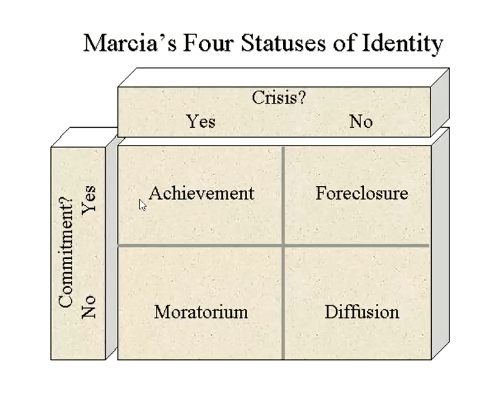
achievement: individuals who aster a period of exploration emerge with firm identity commitments
moratorium: the active period of exploration when individuals examine alternatives in an attempt to arrive at a choice
foreclosure: individuals have adopted identities prescribed by parents or other authority figures without ever exploring options or experiencing an identity crises
diffusion: individuals who have little sense of commitment and are not actively seeking to make decisions
identity status continued
continues well into adulthood - STUDY
parental influences - STUDY
attachment with freedom to voice opinions - achievement or moratorium
overly close bonds w/out separation - foreclosure
low warmth w/ open communication - diffusion
cultural / historical influences
self concept and life outcomes
- positive associations
general wellbeing
quality of life
confidence in actions and abilities
- negative associations
adjustment problems
externalising problems
internalising problems
self concept and emotional disorders
negative self concept - higher anxiety and depression
worthlessness and guilt
fear of negative evaluation from others
positive self concepts function as protective factor in development of emotional disorders as these individuals are more resilient to life’s stressors
adolescents with social anxiety are more likely to perceive relationships with peers as more negative - perceptions
they consider themselves to be less attractive and less athletic
more emotional unstable
low self esteem + concept associated with depression - overlapping abstracts
early onset psychosis associated with low self concept - could play a role in the development in psychosis symptoms
STUDY - longitudinal, as self concept declined there is a higher risk of developing psychosis symptoms
Gender differences
females significantly more negative self concepts than males
adolescents girls on average rate themselves more poorly than boys
adolescent girls outperform boys academically but boys rate themselves higher than girls rate themselves academically on average