Neuroscience
Neuroscience methods
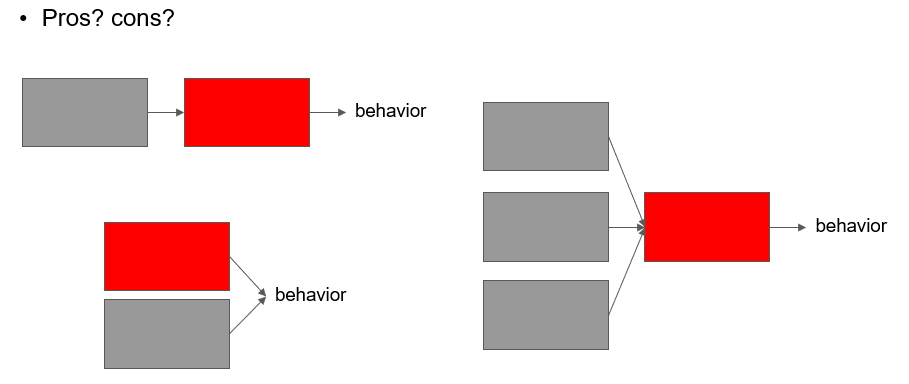
•Investigation of brain damage
○Human lesion studies (i.e. case studies)
The woman without fear
○Animal lesion studies
Create temporary or permanent lesions and compare behavior to control animals
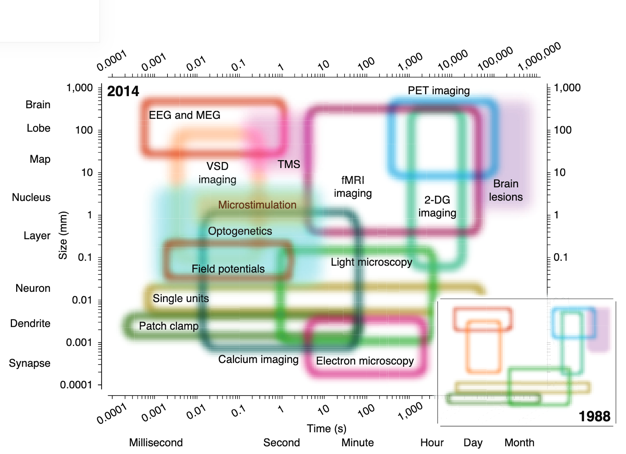
•Recording brain activity
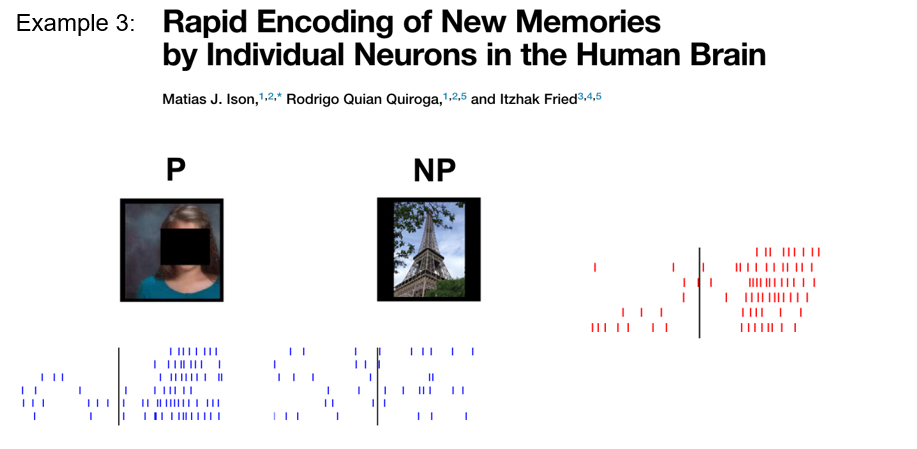
○Cellular recording techniques(of the brain activity)
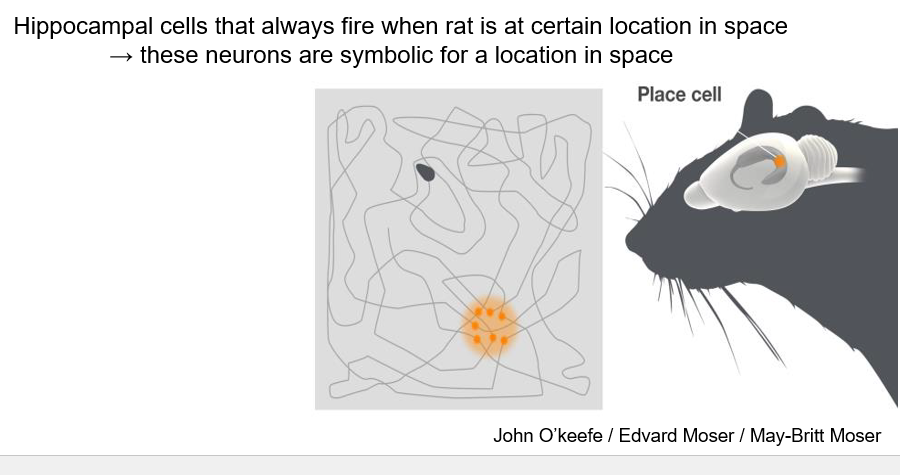
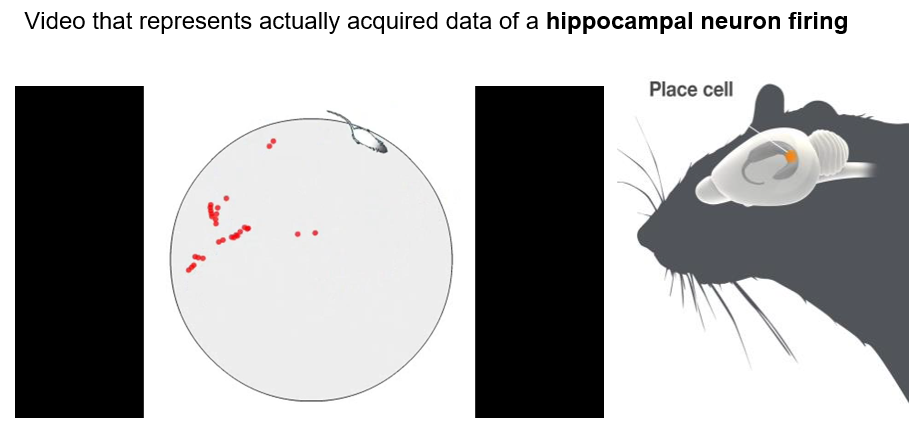
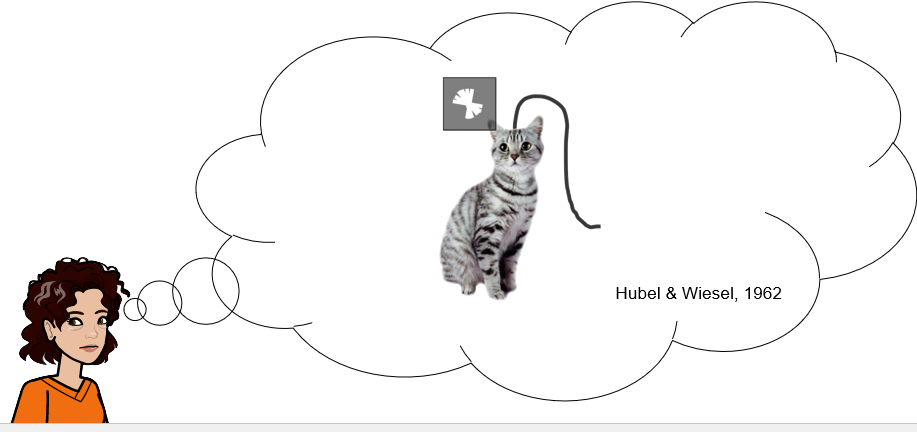
•Single cell recording: electrode inserted into or adjacent to a neuron
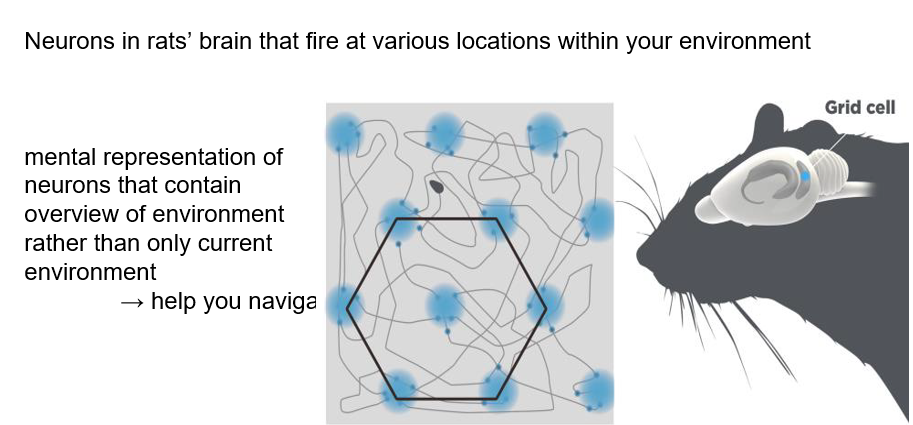
•Multi unit recording: a larger electrode is used to measure a group of neurons
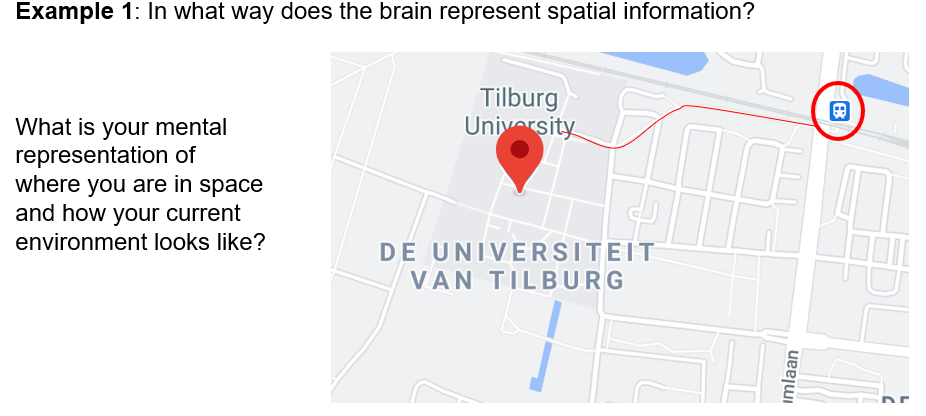
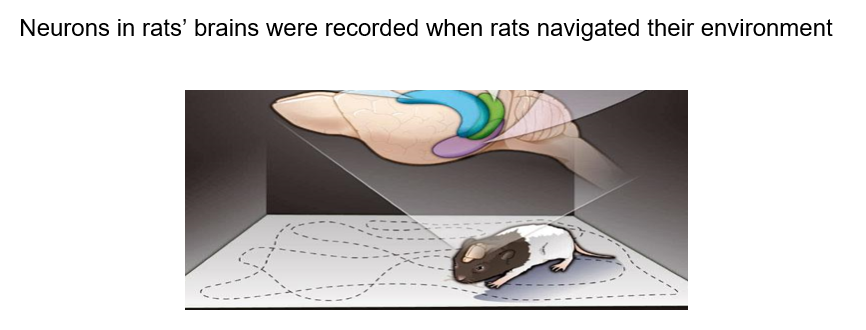
Recording larger patterns of brain activity
Recording brain activity at a larger scale
Some common methods:
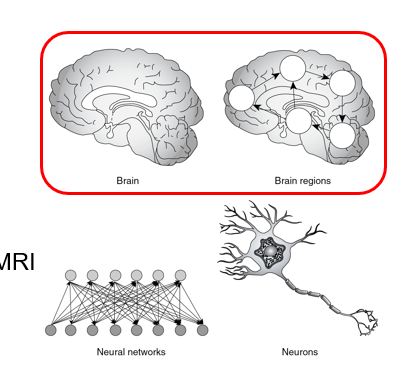
•Electroencephalogram EEG
○Event-related potentials ERP
•Computerized Axial Tomography CAT
•Positron Emission Tomography PET
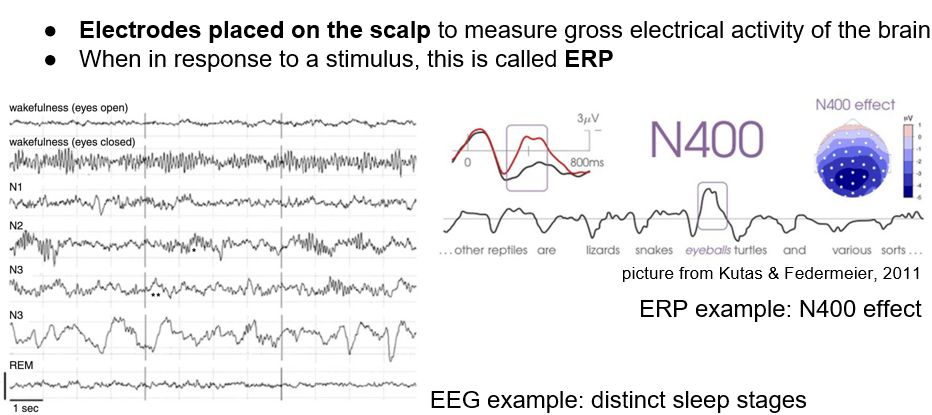
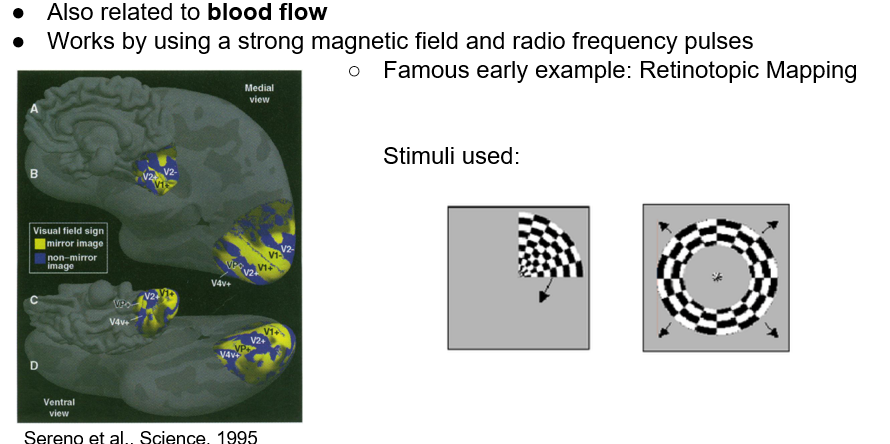
•(functional) Magnetic Resonance Imaging (f)MRI
EEG and ERP
CAT
●X-ray source rotates around the brain (temporal resolution about 1 image per second)
●Mostly used for structural analysis of the brain
PET
●Measure blood flow in the brain while participant does a cognitive task
●Inject radioactive isotopes attached the carrier molecules (e.g. oxygen)
●Interpretation: active area → greater blood flow → more radioactive isotope visible
(f)MRI
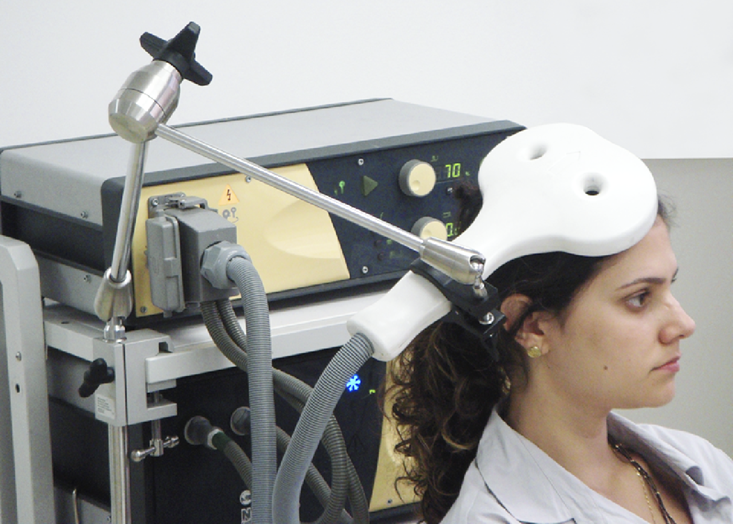
•Direct stimulation of the brain
●Electrical current through bipolar electrode
○Causes neurons of localized area to become active
○Facilitating behavior governed by the stimulated area
Neuroscience basics
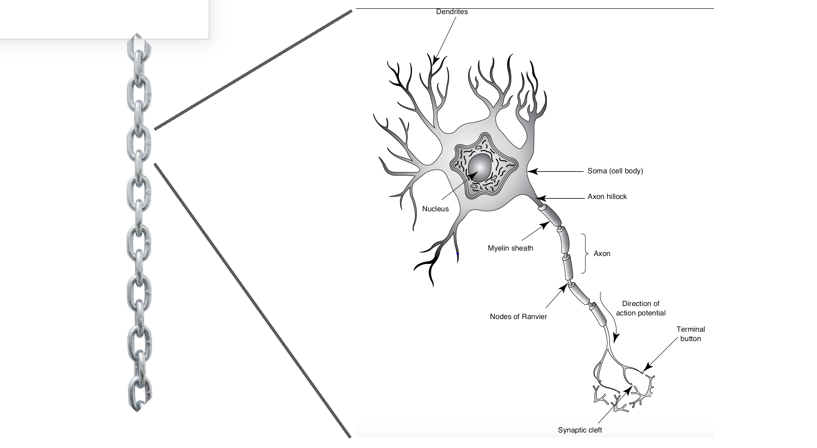
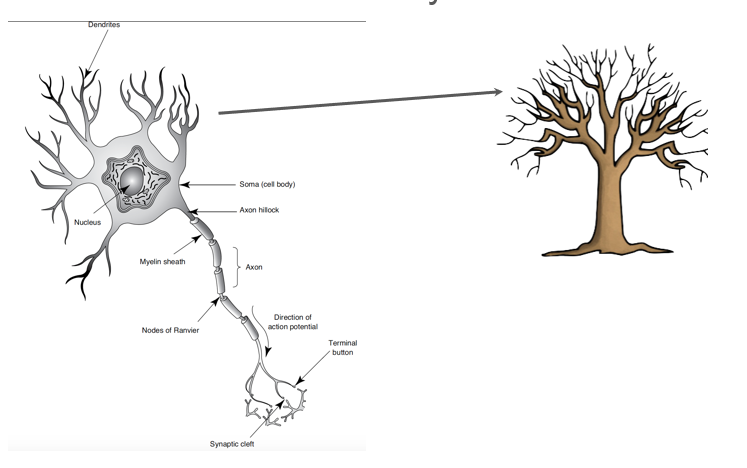
Anatomy: Neuron
Anatomy:Synapse

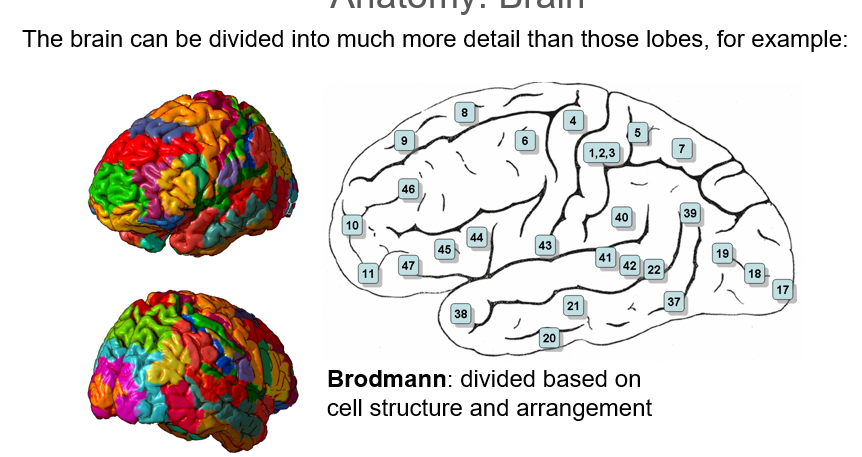
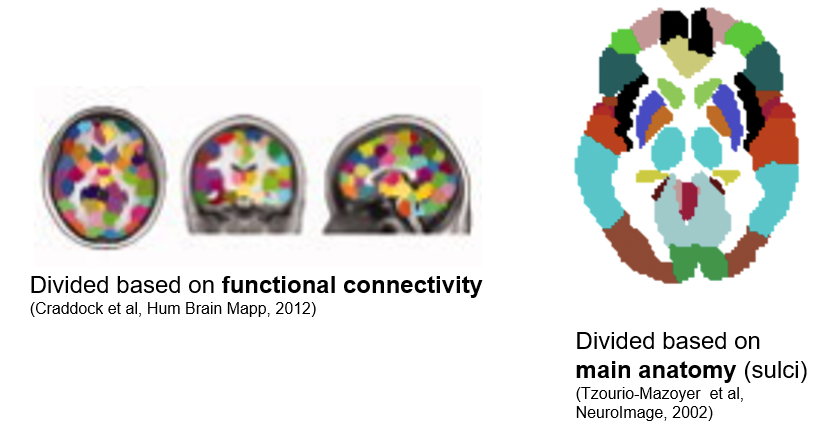
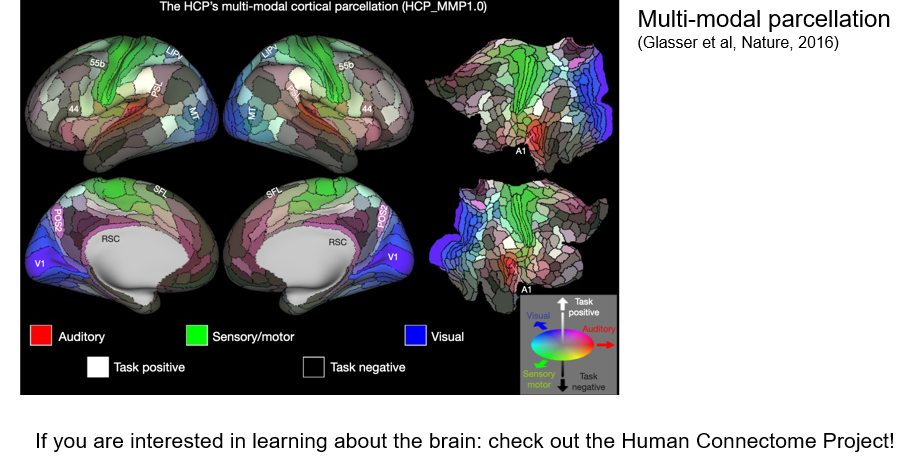
Anatomy:Brain
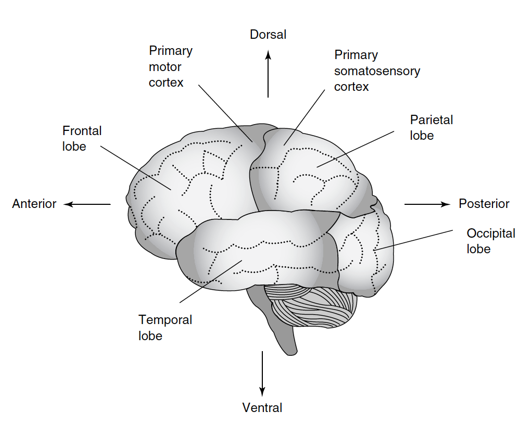
Directions:
•Dorsal top
•Ventral bottom
•Anterior front
•Posterior back
•Medial middle
•Lateral side
•Contralateral opposite side
•Ipsilateral same side
Cognitive neuroscience
Object recogintion
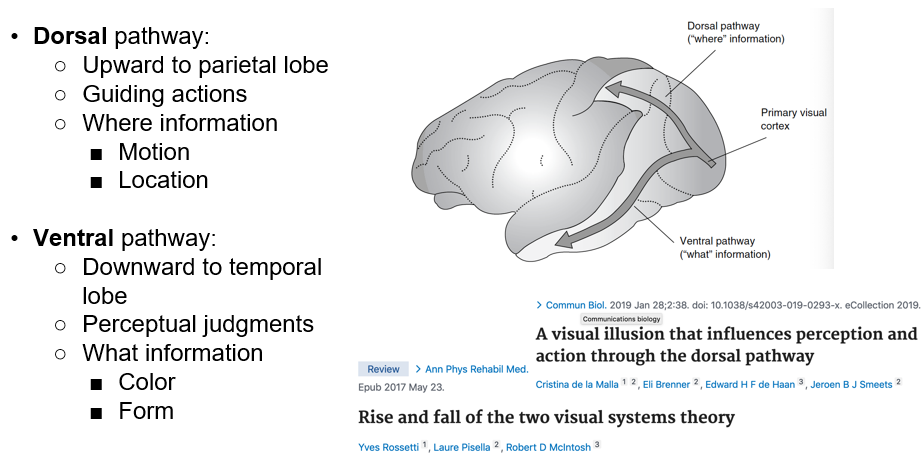
Dorsal vs ventral pathway
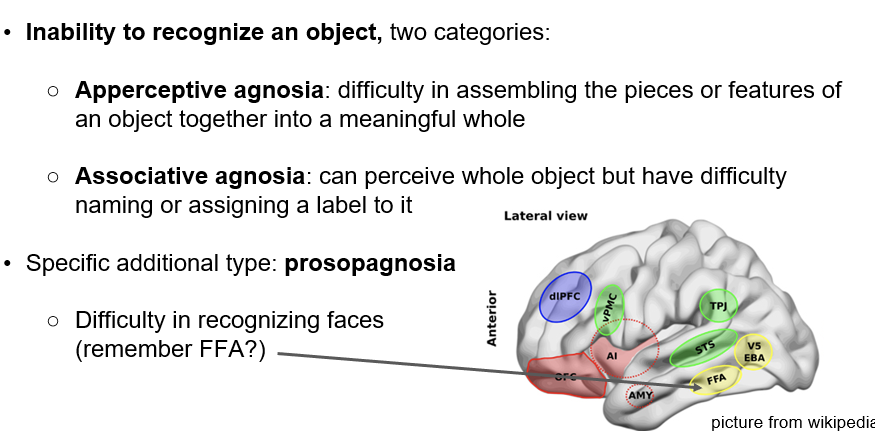
Visual agnosias
Attention
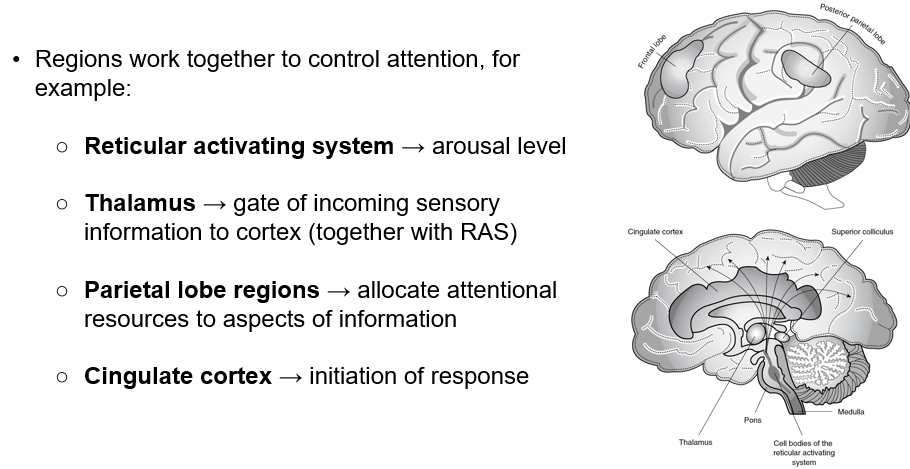
Important brain regions for attention
Memory
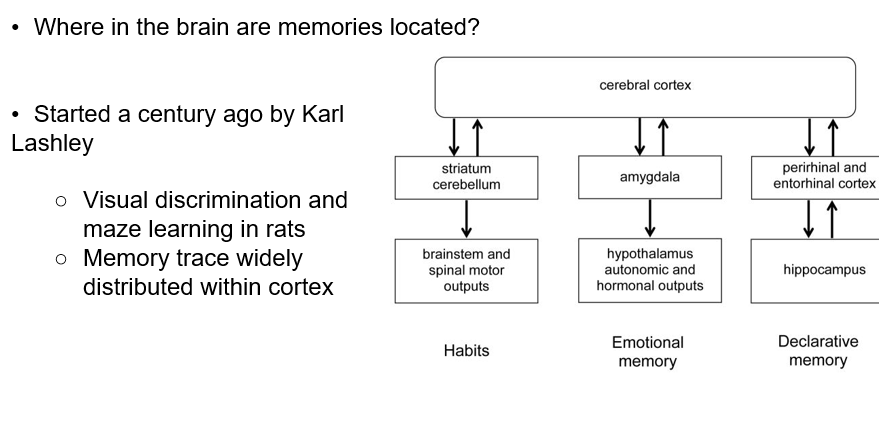
Cellular mechanisms underlying learning
•Hebb rule
○How do changes among neurons explain learning?
○Connections between neurons increase after repeated activation of that connection → pathways/circuits are formed
○Basis of learning and memory
○Circuit itself represents the learned material
○Retrieval of the learned material equivalent to reactivation of circuit
•Synaptic plasticity → ability of synapses to strengthen or weaken
•Long-term potentiation → underlying synaptic plasticity, persistent strengthening of synapses
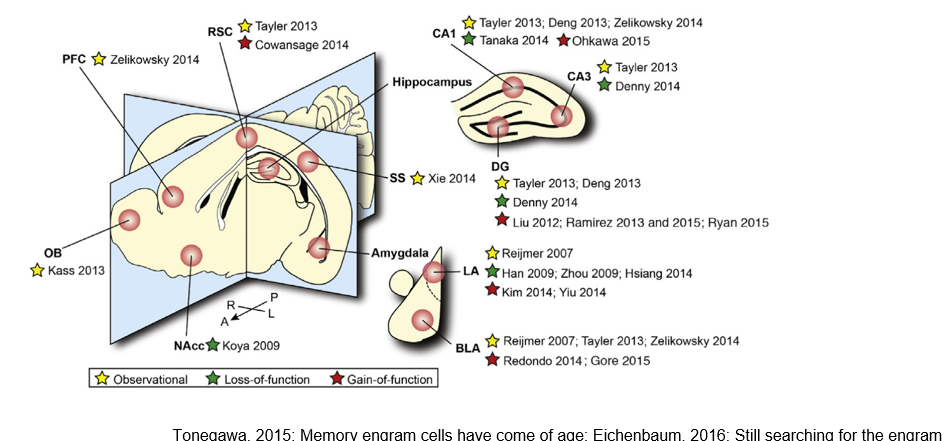
Engram
Engram in the hippocampus?
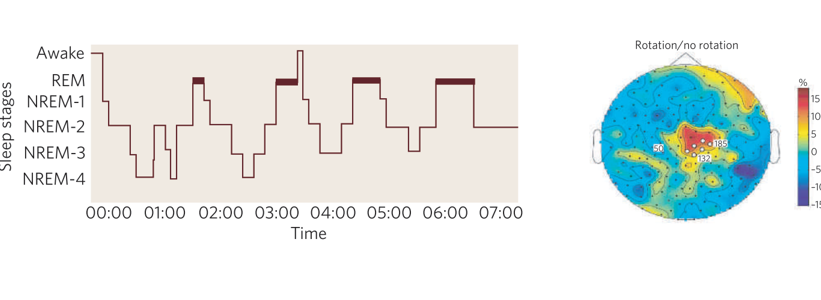
Consolidation
•Memories revisited during sleep
•Use EEG to measure sleep stages, conduct memory experiment before/after a period of sleep
Big data in neuroscience
Recent move towards “big data”, also in neuroscience, this comes with multiple challenges/issues:
Data is from many different scales (single neuron to whole brain)
2.Different animal models used, difficult to extrapolate findings across models
So many different neuroscience labs, difficult to keep up and stay informed
4.Dataset become larger and more complex, need for more advanced methods
5.Small models based on limited data → model using accumulated knowledge, leading to deeper understanding