Biology Chapter 3 Notes
Organic Chemistry
Organic Chemistry
the study of compounds that contain carbon regardless of origin.
because carbon can form four bonds, these building blocks can be used to make an inexhaustible variety of organic molecules.
the great diversity of organisms on the planet is due to the versatility of carbon.
Carbon
has 4 electrons in its outer shell - it can make up to four bonds.
framework of biological molecules consists primarily of carbon bonded to - Carbon, O, N, S, P, or H.
carbon only forms covalent bonds.
can form polar or nonpolar bonds.
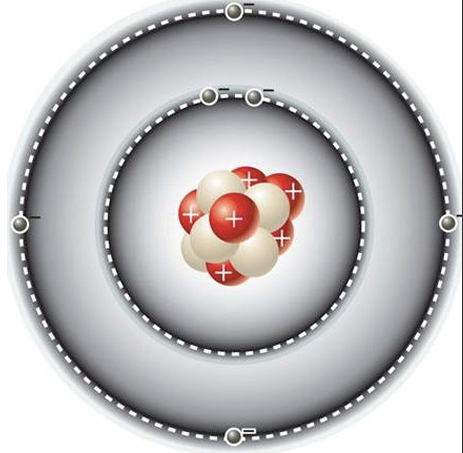
Oxygen + Nitrogen
form polar bonds with carbon
hydrophilic and soluble in water.
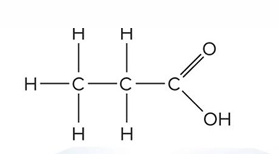
Hydrocarbons
organic molecules consisting of only carbon and hydrogen.
many organic molecules (fats) have hydrocarbon components.
undergo reactions that release a large amount of energy.
nonpolar
only have C-C and C-H bonds.
hydrophobic and poorly soluble.

Functional Groups
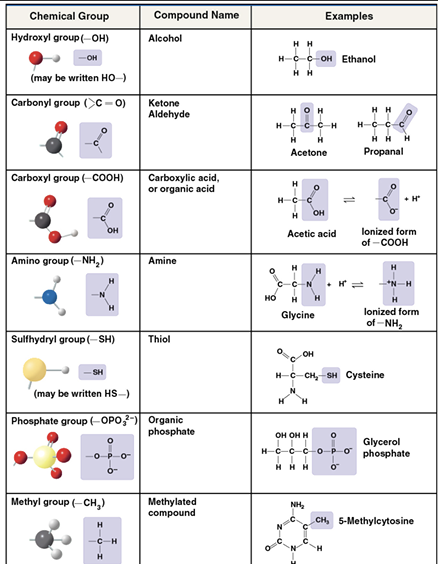
components of organic molecules that are most commonly involved in chemical reactions.
the number and arrangement of functional groups give each molecules its unique properties.
Ex - amino group acts as a base.
Most Important Functional Groups in Chemistry of Life:
Hydroxyl group
Carbonyl group
Amino group
Sulfhydryl group
Phosphate group
Methyl group
Isomers
compounds with the same molecular formula but different structures and properties.
Structural Isomers
have different covalent arrangements of their atoms.
Cis-trans Isomers (Geometric Isomers)
have the same covalent bonds but differ in their spatial arrangements.
Enantiomers
isomers that are mirror images of each other.

Macromolecules
large polymers - known as macromolecules for their huge size.
Polymer
a long molecule consisting of many similar building blocks.
Monomers
the repeating units that serve as building blocks.

The Synthesis and Breakdown of Polymers
Dehydration Reaction
occurs when two monomers bond together through the loss of a water molecule.
Hydrolysis
polymers are disassembled to monomers.
essentially the reverse of dehydration reaction.
Carbohydrates
include sugars and polymers of sugars.
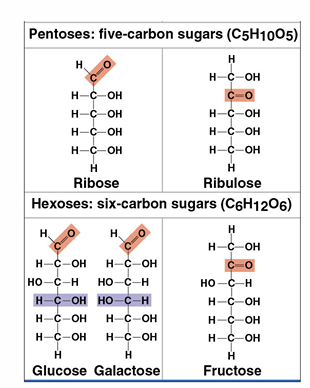
simplest carbohydrates = monosaccharides or simple sugars
carbohydrate macromolecules are polysaccharides; polymers composed of many sugar building blocks.
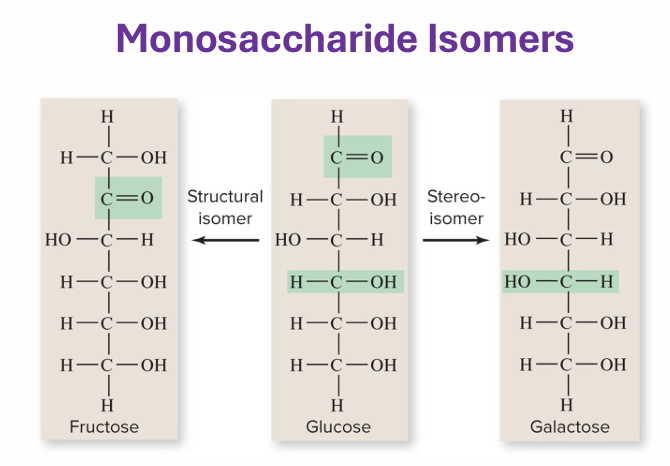
Monosaccharides
simplest sugars
most common are 5 or 6 carbons.
Pentoses - Ribose , Deoxyribose
Hexose - Glucose
Serve as a major fuel for cells and as raw material for building blocks.
Disaccharides
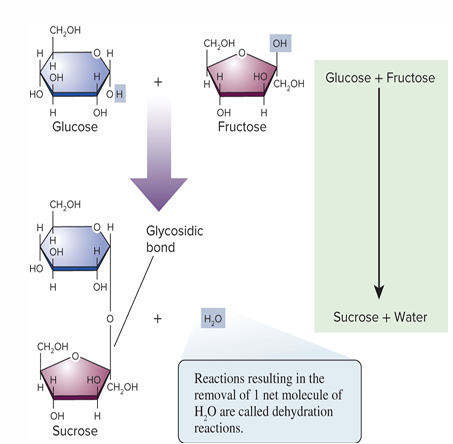
composed of two monosaccharides.
joined by dehydration reaction - Glycosidic bond
broken apart by hydrolysis
Ex - sucrose, maltose, lactose
Polysaccharides
many monosaccharides linked in long polymers.
Energy Storage - Starch, Glycogen
Structural - Cellulose, Chitin

Storage Polysaccharides
Starch
storage polysaccharide of plants.
composed of glucose monomers.
plants store surplus starch as granules within chloroplasts and other plastids.
Glycogen
storage polysaccharide in animals.
stored mainly in liver and muscle cells.
Structural Polysaccharides
Cellulose
structural polysaccharide of plants.
most abundant organic compound on Earth.
composed of long chains (never branched) of glucose monomers.
parallel sheets of straight chains provide great strength to plant cell walls.
to digest cellulose, you need an enzyme that breaks the glycosidic bond between the glucose monomers - animals don’t produce this enzyme.

Chitin
structural polysaccharide in exoskeletons.
Nucleic Acids
responsible for the storage, expression, and transmission of genetic information
Two classes
Deoxyribonucleic acid (DNA) - stores genetic information encoded in the sequence of nucleotide monomers.
Ribonucleic acid (RNA) - decodes DNA into instructions for linking together a specific sequence of amino acids to form a polypeptide chain.
Components of Nucleic Acids
Monomers → Nucleotides
made up of phosphate group, a five-carbon sugar (either ribose of deoxyribose), and a single or double ring of carbon and nitrogen atoms known as a base.
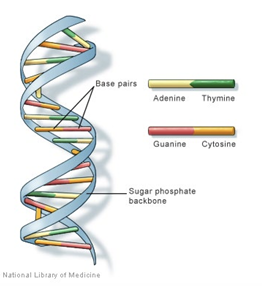
Nucleotides - linked into a polymer by a sugar-phosphate backbone.

Deoxyribonucleic Acid (DNA)
encodes information for amino acid sequence of protein - sequence of bases.
double helix- 2 polynucleotide strands connected by hydrogen bonds.
Base - Pairing Rules → A + T, C+G
RNA
single-stranded
the sugar is ribose
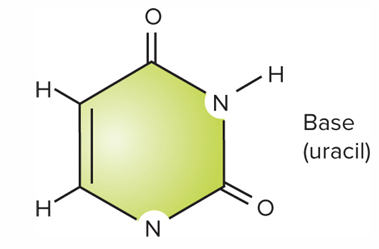
uses uracil (U) instead of thymine (T)
Several forms → messenger RNA (mRNA), ribosomal RNA (rRNA), transfer RNA (tRNA)
Proteins
nearly every function of living things depends on proteins
Functions
speeding up chemical reactions
defense
storage
transport
cellular communication
movement
structural support
Life would not be possible without enzymes - chemical agents that selectively speed up chemical reactions without being consumed in the reaction (so it can be used repeatedly)
Proteins account for more than 50% of the dry mass of most cells.
Humans produce tens of thousands of different proteins each with their own specific structure and therefore function
Amino Acids
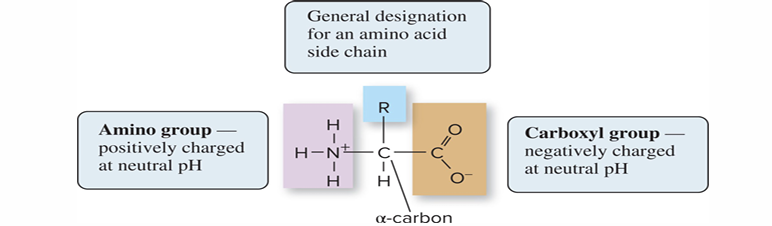
building blocks of proteins.
20 different amino acids.
common structure with variable sidechains that determines structure + function.
Polypeptide Formation
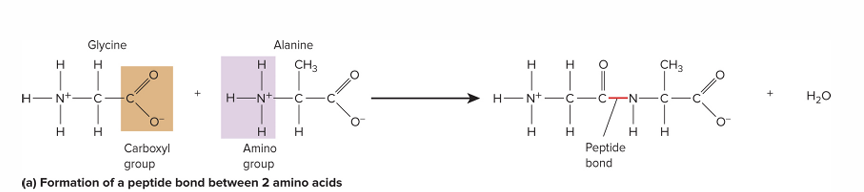
amino acids joined by dehydration reaction.
Carboxyl + amino forms peptide bond.
Polypeptides
polymers of amino acids.
broken down by hydrolysis.
Protein
a biologically functional molecule made up of one or more polypeptides each folded and coiled into a specific 3-D structure.
Protein Structure and Function
Protein structure and function is determined by the sequence of the amino acids in a polypeptide.
Proteins structure = determines how it functions.
Ensuring that a protein has its correct/appropriate shape is critical for it to function correctly.
Levels of Protein Structure

Primary Structure
unique sequence of amino acids.
determined by inherited genetic information.
Secondary Structure
consists of coils and folds in the polypeptide chain.
chemical and physical interactions cause protein folding.
a helices and B pleated sheets - key determinants of proteins characteristics.
Tertiary Structure
determined by interactions among various side chains (R-groups).
folding gives protein complex 3D shape.
the final level of structure for a single polypeptide chain.
Quaternary Structure
results when a protein consists of multiple polypeptide chains.
made up of two or more polypeptides.
protein subunits - individual polypeptide chains.
proteins can be formed from several copies of the same polypeptide.
multimeric - composed from different polypeptides.
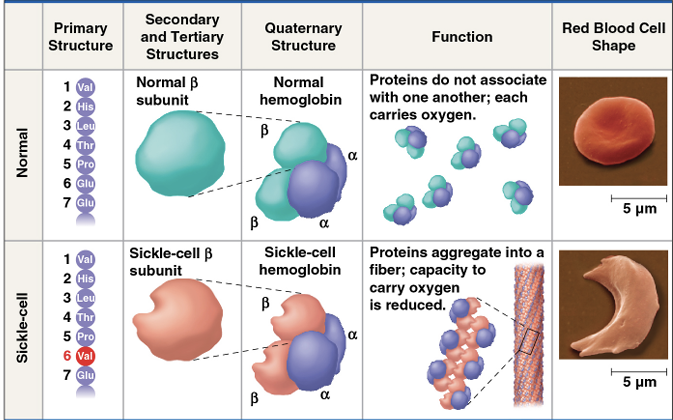
Ex - Hemoglobin
Sickle-Cell Disease
an inherited blood disorder, results from a single amino acid substitution in the protein hemoglobin.
slight change in primary structure can affect a protein’s structure and ability to function.
the abnormal hemoglobin molecules cause the red blood cells to aggregate into chains and to deform into a sickle shape.
Lipids
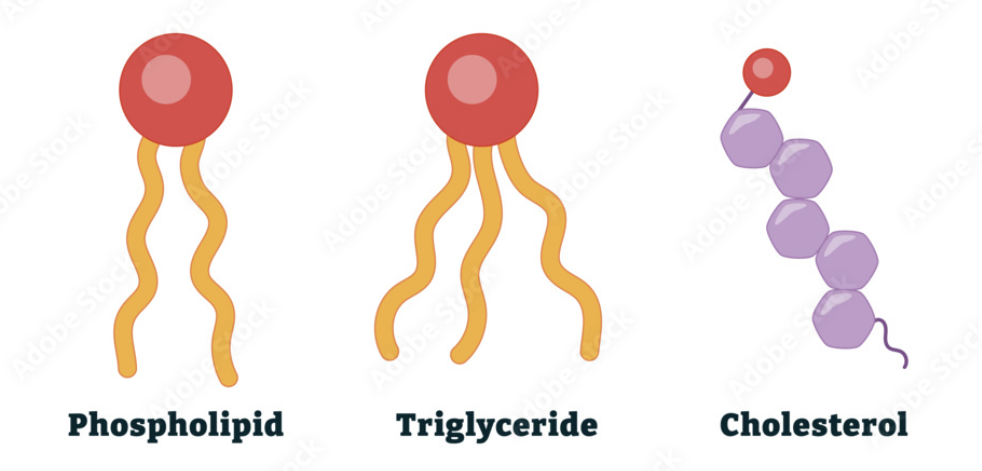
composed predominantly of hydrogen and carbon atoms
nonpolar - insoluble in water.
include: fats, oils, phospholipids, steroids, waxes, and even some vitamins
comprise about 40% of the organic matter in the average human body.
Fats
known as triglycerides or triacylglycerols
formed by bonding glycerol to 3 fatty acids.
joined by dehydration; broken apart by hydrolysis.
Fatty Acids
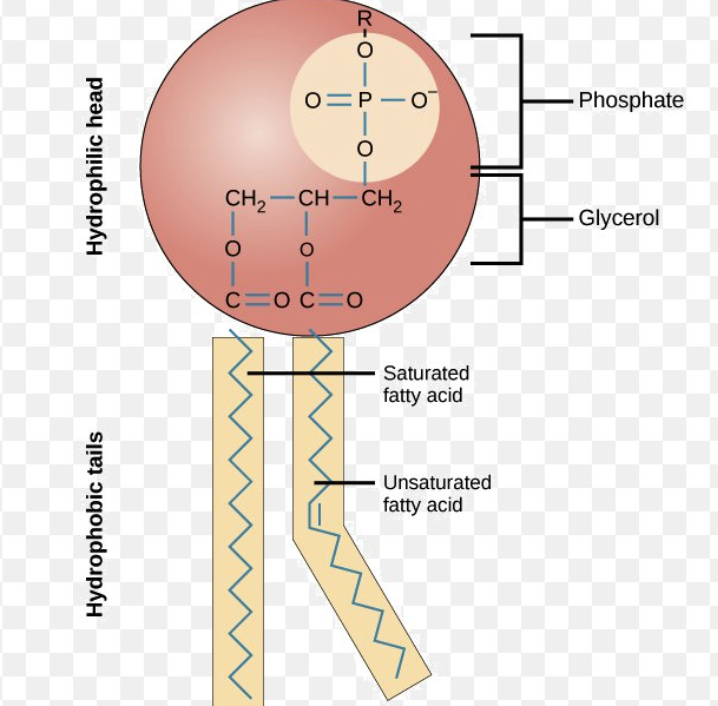
Saturated
all carbons linked by single bonds.
straight, linear structure.
solid at room temperature.
Unsaturated
contain one or more double bonds
liquid at room temperature (oils)
Monounsaturated fatty acids: contain one double bond (C=C)
double bond adds a kink.
olive oil.
Polyunsaturated: contain 2 or more C=C bonds.
canola oil.

Function of Fats
energy storage
fatty acid tails - hydrocarbons
Hydrocarbons - contain a lot of energy that can be released by chemical reactions.
fats contain twice the energy as the same mass of polysaccharide.
Mammals store their long-term food reserves as fats in adipose tissue - serves as a cushion around vital organs as well as insulation under the skin.
Phospholipids
formed from glycerol. two fatty acids, and a phosphate group.
amphipathic molecules.
Phosphate head → polar/hydrophilic
Fatty acid tail → nonpolar/hydrophobic
Steroids
four interconnected rings of carbon atoms.
insoluble in water.
tiny differences in structure can lead to profoundly different specific biological properties.
