CHAPTER 1 - MANAGERS AND MANAGING
CHAPTER 1 - MANAGERS AND MANAGING
what is management
organization - people work together and coordinate their action to achieve certain goals.
managers - people responsible for supervising organization’s resources to meet goals.
management - include planning , organizing , leading and controlling
( human & resources )
what is resources
type of resources : -
tangible resources ( physical essentials )
equipment & tools ( physical devices )
financial device ( budget )
physical material ( supplies & material )
intangible resources ( non-physical essentials )
skills, expertise ( human resources - skills pekerja )
technological resources ( software & digital platform )
managing schedules
information & data ( knowledge guide decision making )
brand value & reputation
why management is important
learn through personal experience / others experience
for economic benefits
make good decisions in nonwork contexts
what managers do
identify & select appropriate organizational goals
develop strategies to achieve goals with high performance ( maximum profit )
organize resources ( human resources - chemistry between coworkers )
monitor performance of individuals , departments , organization ( to meet performance standards )
how managers use organizational resources efficiently and effectively
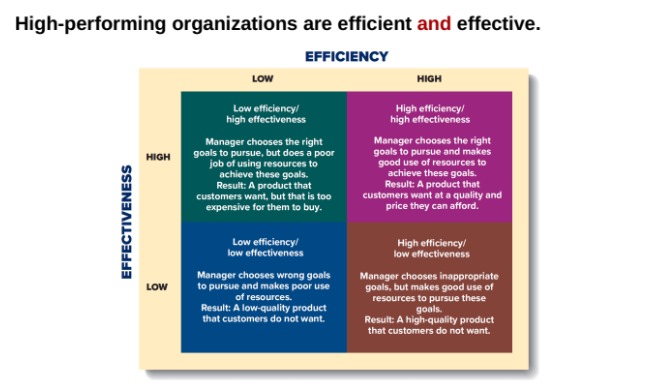
organizational performance - measure how efficiently and effectively managers use the available resources ( satisfy customers & achieve performance goals )
efficiency - how good resources were used to achieve goals
effectiveness - appropriate measure of goals is used to achieve goals
distinguish four managerial tasks
planning - decide ( goals , strategies , how to allocate resources )
organizing - structuring working relationship ( member in the organization will cooperate with each other )
organizational structure - formal system of task & reporting relationship ( coordinate & motivate organizational members )
leading - having a clear vision on the plan & enable the members to understand the role they play in achieving goals
( use managers power , personality , influence , communication skills to coordinate people in the organization )
controlling - evaluate how well organization is ( achieve goal/not )
- taking action to maintain / improve performance
outcome of controlling - ability to measure performance accurately & regulate organization effectiveness and efficiency
explain how managers’ ability
decisional - develop innovative goods & services (entrepreneur) , take corrective action (disturbance handler) , allocate organizational resources (resource allocator) and work with people to reach agreements (negotiator)
interpersonal - outline future goals (figurehead) , give direct command & make decision (leader) and coordinate work of managers of many departments (liaison)
informational - evaluate performances of managers with different tasks & improve their performance (monitor) , informing about changes that will affect employees/organization (disseminator) and launch national advertising campaign (spokesperson)
differentiate 3 level of management
top ( general manager )
middle ( supervisor but level up )
first-line ( supervisor )
CEO (kiv)
tasks and responsibilities of managers at different hierarchy
CEO - making major corporate decisions, managing operations and resources , main point of communication between the board of directors and corporate operations.
top ( general manager ) - responsible on every department’s performance , decide on the interaction between different department , supervise middle managers
middle - supervises supervisor , finding best way to use all resources to achieve goals
first-line ( supervisor ) - daily supervision of nonmanagerial employees ( employees who only have to do their work , don’t have responsibility to overseeing other’s work )
distinguish 3 kinds of managerial skill
conceptual - analyze situation & differentiate between cause and effect
human - understand , control behavior of other individual/groups
technical - know the job scope & technique require to perform role in organization
why managers divided into different department
major changes in management practices ( globalization & use of advanced technologies )
restructuring - downsizing the company ( eliminating large numbers of employees )
example : Boieng

outsourcing - make contract with other companies ( offshore & onshore )
empowerment - employees got more authorities & responsibility over their work ( choose and perform the work they want )
self-managed teams - employees who assume collective responsibility ( organize , supervise , control their own work )
principal challenges managers face ( competitive global environment )
competitive advantage - outperform other organization ( produce desired services efficiently & effectively than competitors )
innovation - process creating/improved/developing better ways to provide services
must have elements - efficiency , innovation & flexibility , responsive ( gain customers trust ) , quality ( meet/exceed customers expectation )
maintain ethical and socially responsible - managers work under great pressure so they may behave unethically & become irresponsible
manage diverse workforce - create highly trained & motivated workforce ( human resources management [HRM] ) must be established to not discriminate organizational members & must be legal !
utilize new technologies - using the efficient & effective technologies ( enable employees perform better in their work/role )
global crisis management - build a team on rapid decision making , organization chain ( elak anything bad spread too fast ) , recruit the eligible people to lead the team , develop negotiating strategies ( manage conflicts )
Global Crisis Management :-
Natural Causes - cause by natural disaster
Human Causes - everything that happened due to human bad behavior
extra knowledge ?
department - group (managers & employees) work together by using the same skills , techniques
turnaround management - creation of new vision ( company yang tengah struggle ) using new approach ( planning , organizing to use resources better & allow the company to survive )