WK2: PHARMACODYNAMICS
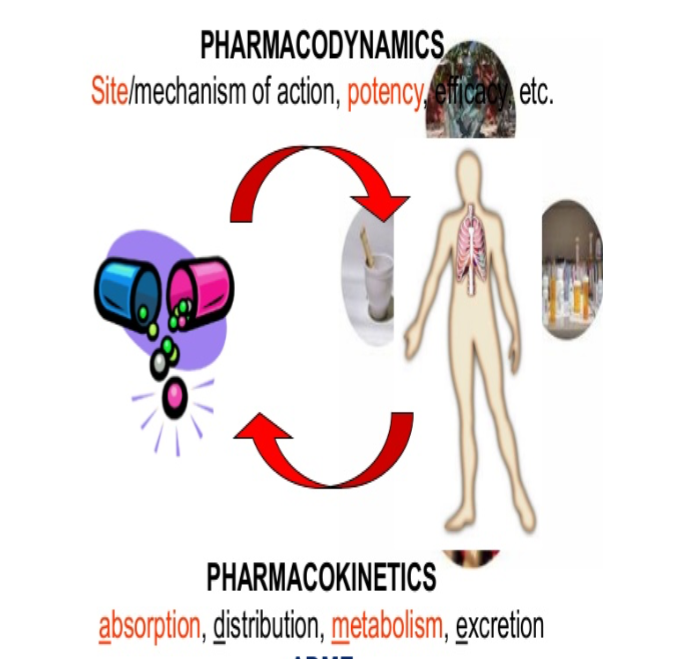
Pharmacodynamics = is the study of the effect of drugs on the body.
Drugs act within the body to mimic the actions of the body’s chemical messengers.
Dose-Response Relationship = is the body’s physiological response to changes in drug concentration at the site of action.
Physiological = how organisms, organ systems, individual organs, cells, and biomolecules carry out chemical and physical functions in a living system
Potency – refers to the amount of drug needed to elicit a specific physiologic response to a drug.
Efficacy – the magnitude of effect a drug can cause when exerting its maximal effect.
Maximal efficacy – the point at which increasing a drug dosage no longer increases the desired therapeutic response
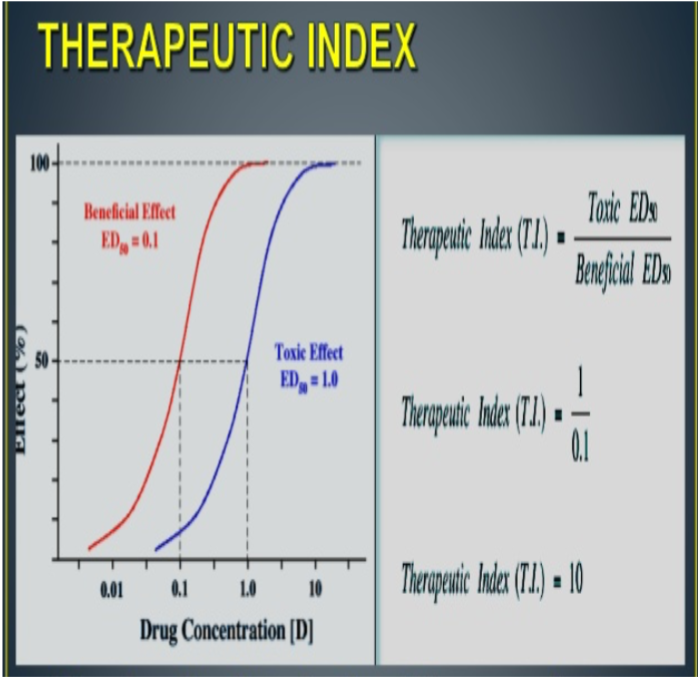
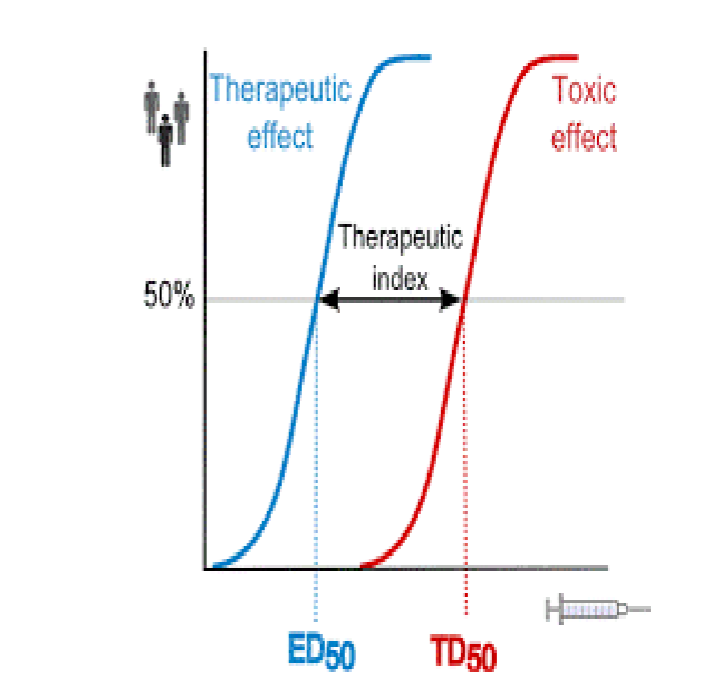
Therapeutic Index – (TI) describes the relationship between the therapeutic dose of a drug (ED50) and the toxic dose of a drug (TD50)
Therapeutic dose of a drug – is the dose of a drug that produces a therapeutic response in 50% of the population.
Toxic dose of a drug – is the dose that produces a toxic response in 50% of the population.
Parameters of Drug Action
If the ED50 and TD50 are close - drugs have a narrow therapeutic index. require close monitoring to ensure patient safety.
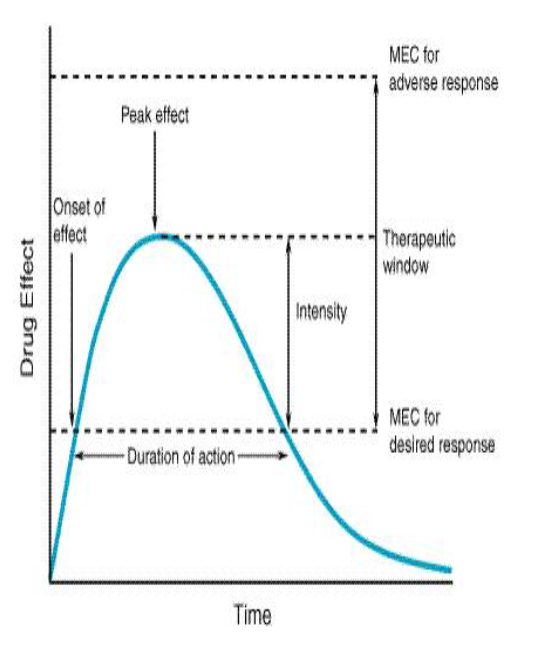
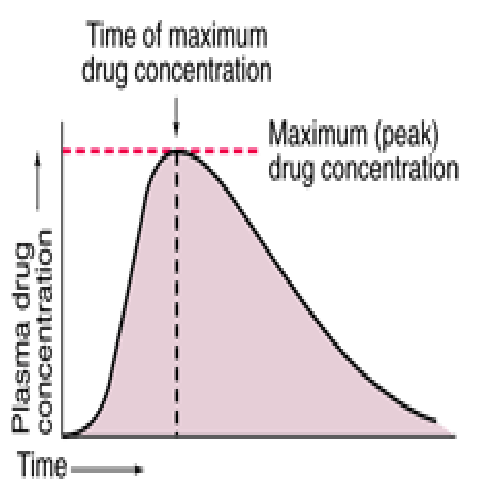
Onset – is the time it takes for a drug to reach the minimum effective concentration (MEC) after administration.
Time from drug administration to first observable effect (T0-T1)
Peak – occurs when it reaches its highest concentration in the blood/plasma concentration. T0-T2
Duration of action – is the length of time the drug exerts a therapeutic effect. period from onset until the drug effect is no longer seen. T1-T3
Therapeutic Drug Monitoring
Drug concentration can be determined by measuring peak and trough drug levels.
peak – highest plasma concentration. 30 minutes after infusion.
trough – lowest plasma concentration. 30 minutes before the next infusion
Theories of Drug Action
A. Drug-Receptor Interaction
Certain portion of the drug molecule (active site) selectively combines with some molecular structure (reactive site) on the cell to produce a biological effect
Receptor site - drugs act at specific areas on cell membranes; react with certain chemicals to cause an effect within the cell
“Lock and Key Theory” - specific chemical (key) approaches a cell membrane and finds fit (the lock) at receptor site- affects enzyme
the system within the cell - produces certain effects.
Drug+Receptor=Effect
B. Drug-Enzyme Interaction
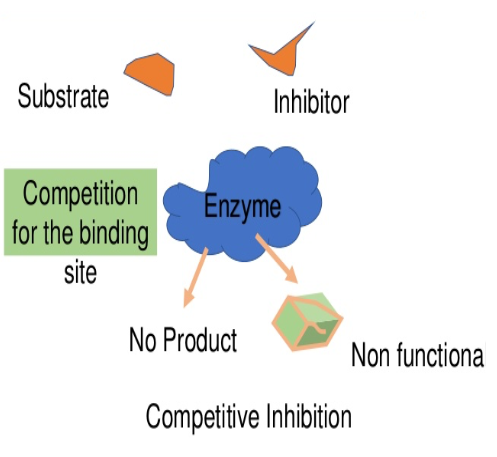
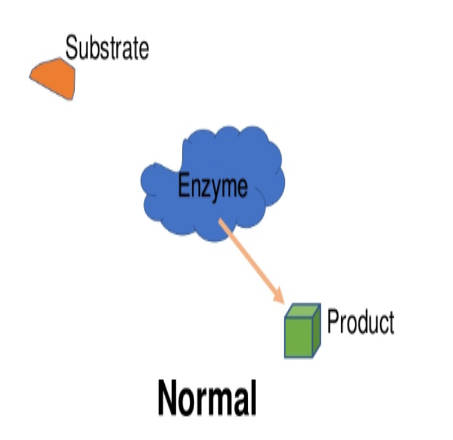
Interferes with enzyme systems that act as catalysts from various chemical reactions
If single step in one of enzyme system is blocked- normal function is disrupted
C. Nonspecific Drug Interaction
Act by biophysical means that do not affect cellular/enzymatic reactions.
drugs do not bind to receptors but instead saturate the water or lipid
part of a cell - drug actions occur based on the degree of saturation.
Neutralization of stomach acid by antacids.
D. Selective Toxicity
Specific action on cellular structures that are unique to the microbe.
All chemotherapeutic agents would act only in one enzyme system needed for life of a pathogen or neoplastic cell.
It is essential to the pathogen but not to the host.
DRUG RESPONSE
Primary - always desirable/physiologic effects
Secondary - desirable or undesirable
Example: Diphenhydramine (Benadryl)
Primary effect: antihistamine; treat symptoms of allergy
Secondary: Drowsiness
Classification of Drug Action
Rapid - few seconds to minutes
IV, SL, Inhalations
Intermediate- 1-2 hours after administration
IM, SC
Delayed/Slow- several hours after administration
Oral, rectal
Categories of Drug Action
Stimulation/Depression
Stimulation - increased rate of cell activity/secretion from the gland
T3/T4 for hypothyroidism
Depression - decreased cell activity and function of a specific organ.
Iodine, propylthiouracil
Replacement - replaces essential body compounds
Example: Insulin
Inhibition/Killing of Organism
¡Interfere with bacterial cell growth
¡Example: Antibiotics
Irritation
Example: Laxative- irritate the inner wall of colon---increased peristalsis-increased defecation
Drug-Drug Interaction
Additive Effect - 2 drugs with similar actions are taken for a doubled effect
1+1=2
Ibuprofen + paracetamol= added analgesic effect
Codeine with acetaminophen = better pain control
Synergistic - combined effect of 2 drugs is greater than the sum of the effect of each drug given alone; 1+1=3
Aspirin = 30% analgesic effect
codeine – 30% analgesic effect
combination = 90% analgesic effect
Potentiation - a drug that has no effect enhances the effects of the second drug
0+1=2
Alcohol enhances the analgesic activity of aspirin.
Prozac + Zestril
Antagonistic - one drug inhibits the effect of another drug
1+1=0
Tetracycline + antacid= decreased absorption of tetracycline
Charcoal in alkaloidal poisoning
Adverse Drug Effects
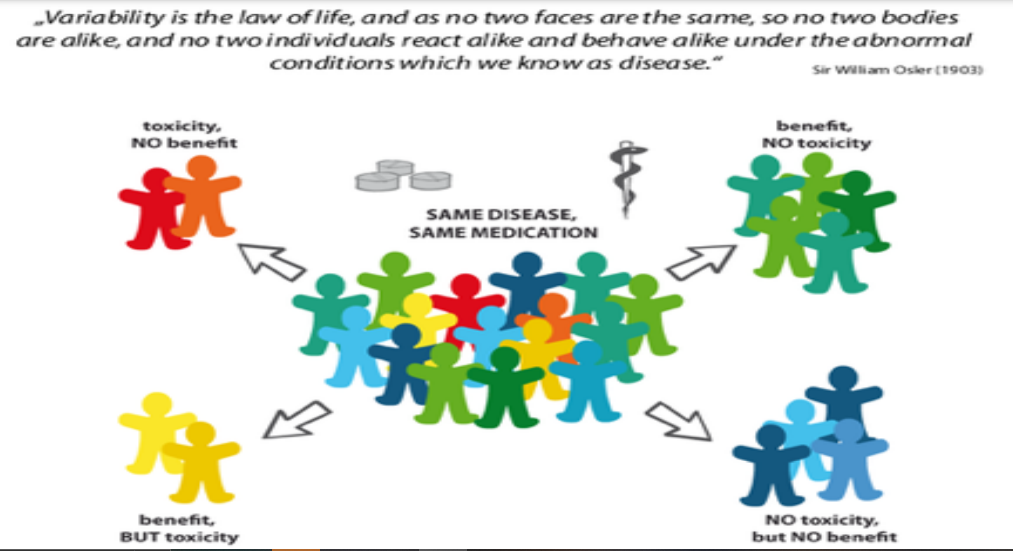
Side Effects
Results from the pharmacologic effects of the drug
Most common as a result of lack of specificity of action within the therapeutic range.
Allergic Reactions
Unpredictable adverse drug effects; more serious
Response to patient’s immunological system to the presence of the drug
Do not occur unless the patient has been previously exposed to the agent/chemical related compound
Idiosyncratic Reaction
Occurs when the patient is first exposed to the drug
Abnormal reactivity to the drug caused by a genetic difference between the patient and normal individual.
a patient with G6PD deficiency will have anemia by using antioxidants.
Toxicity
The degree to which a drug can be poisonous and thus harmful to the human body.
Iatrogenic responses
Unintentional responses as a result of medical treatment
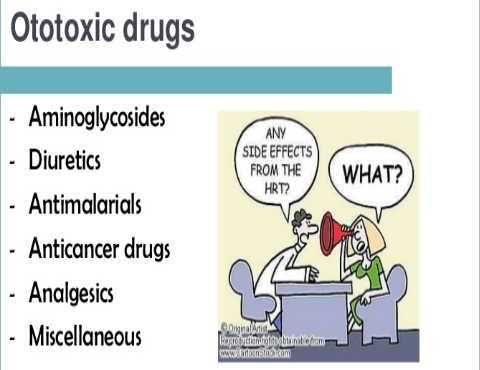
Nephrotoxicity; ototoxicity
TERMINOLOGIES
TERMINOLOGIES
● Pharmacodynamics - is the study of the effect of drugs on the body.
● Dose-Response Relationship - is the body’s physiological response to changes in drug concentration at the site of action.
● Potency - refers to the amount of drug needed to elicit a specific physiologic response to a drug.
● Efficacy - the magnitude of effect a drug can cause when exerting its maximal effect.
● Maximal efficacy – the point at which increasing a drug dosage no longer increases the desired therapeutic response.
● Therapeutic Index – (TI) describes the relationship between the therapeutic dose of a drug (ED50) and the toxic dose of a drug (TD50)
● Therapeutic dose of a drug – is the dose of a drug that produces a therapeutic response in 50% of the population.
● Toxic dose of a drug – is the dose that produces a toxic response in 50% of the population.
● Onset – is the time it takes for a drug to reach the minimum effective concentration (MEC) after administration.
● Peak – occurs when it reaches its highest concentration in the blood/plasma concentration. T0-T2
● Duration of action – is the length of time the drug exerts a therapeutic effect.
● Trough – lowest plasma concentration. 30 minutes prior to the next infusion.
● Additive Effect - Two drugs with similar actions are taken for a doubled effect
● Synergistic- combined effect of two drugs is greater than the sum of the effect of each drug given alone.
● Potentiation- a drug that has no effect enhances the effects of the second drug
● Antagonistic- one drug inhibits the effect of another drug
● Side Effects - results from the pharmacologic effects of the drug
● Allergic Reactions - unpredictable adverse drug effects; more serious
● Idiosyncratic Reaction - abnormal reactivity to the drug caused by a genetic difference between the patient and normal individual.
● Toxicity - the degree to which a drug can be poisonous and thus harmful to the human body.
● Iatrogenic responses - unintentional responses as a result of medical treatment