CH 9 Micro control
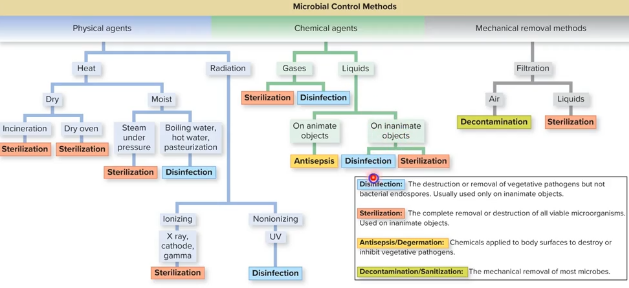
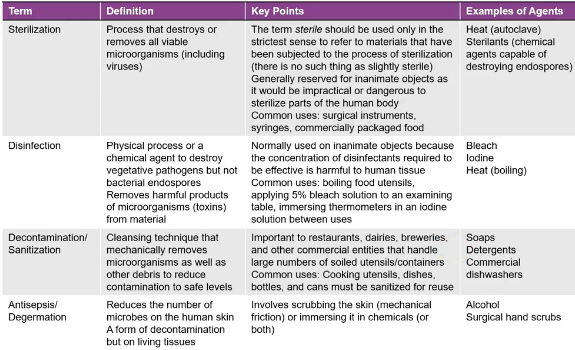
Disinfection: The destruction or removal of vegetative pathogens but not bacterial endospores. Usually used only on inanimate objects.
Sterlization: The complete removal or destruction of all viable microorganisms. Used on inanimate objects.
Antisepsis/Degermation: Chemicals applied to body surfaces to destroy or inhibit vegetative pathogens.
Decontamination/Sanitization: The mechanical removal of most microbes. Like wipping down surfaces
Inanimate objects: Tools like surgery tools.
Mechanical removal methods: Filters to clean air (decontaminate) or liquids (sterlization)
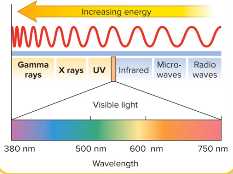
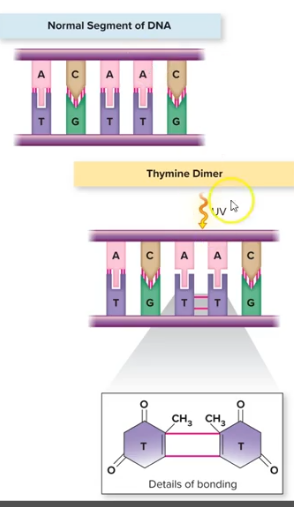
Physical agents: Heat (dry-incineration-sterlization or moist-steam underpresssure - sterlization. Dry- dry oven-sterlization. Moist-boiling water/hot water/pasteurization-disinfection) or radiation (ionizing-x-ray/cathode/gamma- sterlization. nonionzing-uv-disinfection)
Chemical agents gases or liquids can be used on animate objects aka skin/body surfaces.
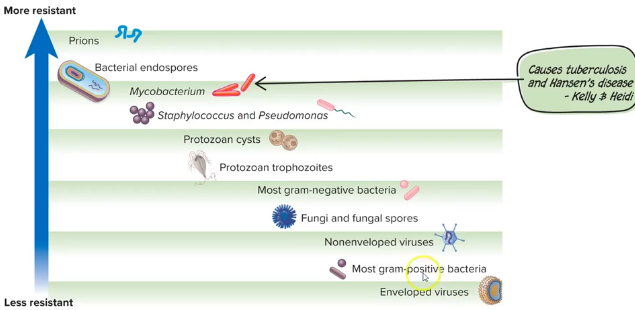
Bacterial endospores have traditionally been considered the most resistant microbial entities. Bacterial endospores are built to live in hars environments.
The goal of any sterilization process is the destruction of bacterial endospores: Any process that kills endospores will invariably kil all less resistant microbial froms.
Does disinfection kills or destroys all microbial entities, including endospores? NO
kjl
Prions smaller than viruses are infectious protiens the most resistant.
suffix cide: kills
Sterilization and disinfection processes
Agents used in the process
Bactericide: Chemical that destroys bacteria except for those in the endospore stage
Fungicide: Chemical that can kill fungal spores, hyphae, yeasts
Vircucide: Chemical known to inactivate viruses, especially on living tissue
Sporicide: An agent capable of destroying bacterial endospores
Germicide/microbicide: Chemical agents that kill microorganisms
Sepsis: The growth of microorganisms in the blood and other tissues
Asepsis: Any practice that prevents the entry of infectious agents into sterile tissues and thus prevents infection.
Aseptic techniques: Practiced in health care; range from sterile methods to antisepsis
Antiseptics: Chemcial agents applied directlhy to exposed body surfaces (skin and mucous membranes), wounds, and surgical incisions to prevent vegetative pathogens.
Preparing the skin before surgical incisions with iodine compounds
Swabbing an open root canal with hydrogen peroxide
Ordinary hand washing with a germicidal soap
Stasis and static mean “to stand still” also inhibit
A static agent does NOT completly kill it just slows down the groth or inhibits further spread/growth
Bacteristatic: Chemcial agents that prevent the growth of bacteria on tissues or on objects in the environment
Fungistatic: Chemicals that inhibit fungal growth
Antiseptics and drugs often have microbistatic effects because microbicidal compounds can be toxic to human cells
Eve n a -cidal agent does not necessarily result in sterilization, depending on how it is used
What is microbial death?
Death: Permanent termination of an organism's vital process which prevents the ability to reproduce even under optimum growth conditons.
Death of the whole population is not instantaneous
Begins when a certain threshold of microbicidal agent is met, death continues in a logartithmic manner as the time or concentration is increased. Active cells tend to die more quickly than less metabolically active cells. Evenatually, a point is reached at which survival of any cells is highly unlikely; this point is equivalent to sterilization.
Technical error that makes these agents less effective.
Some factors that contruibe is the number or microbes changes in temperature and ph of environment because it can affect thier virulence. Also consider concentartion or dose of the agent, diluting it can make it less effective. Saliva, blood, and feces can inhibit it as well. UV radiation is most effective at 260 nm.
Modes of action of antimicrobial agents
Antimicrobials have a range of cullular targets: Lease selevetive agents tend to be effective against the widest range of microbes (heat and radiation). Selective agents target only a single cellular component (drug)
Cellulular targets of physical and chemical agents
Cell wall, cytoplasmic membrane, cellular synthetic processes (DNA, RNA), proteins.
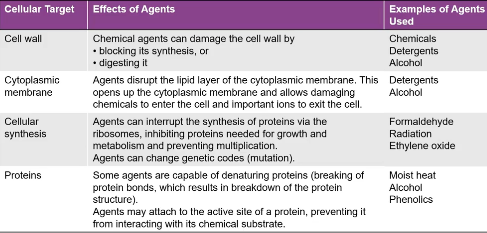
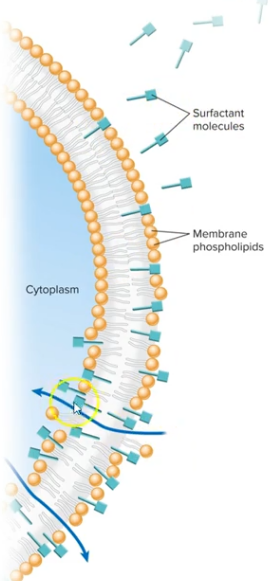
Cytoplama and ions leak out therefore not function correctly.
jlkjl
lkjn
Bioling water is disinfection a moist heat method. After the water cools it can become decontaminated.Exposing materials to boiling water for 30 minutes will kill most non-endospore-forming pathogens including resistant species such as the tubercle bacillus and staphylococci.
asdf’
Cold is a static process so does not kill but will inhibit/slow down groths. Most microbes are not adversely affected by gradual cooling, long term refrigeration or deep-freezing. Temps from -70 to -135c can preserve cultures of bacteria, viruses,a dn fungi for long periods of time.
Desiccation
Vegetative cells directly exposed to normal room temp gradually become dehydrated. Some micrboes are killed by desiccation; many other are not killed and some are even preserved.
Lyophilization
Combination of freezing and drying. Method of preserving microorganisms in a viable state for many years. Pure cultures are frozen instantaneously and exposed to a vaccum that removes water, avoiding the formation of ice crystals.
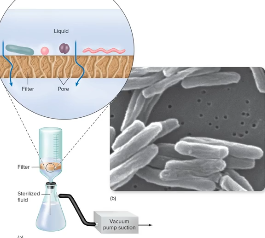
Filtrations
To prepare liquids that cannot withstand heat such as serum, blood products, vaccines, drugs, IV fluids, enzymes, and media. Alternative method fo rdecontaminating milk and beer without altering their flavor. Important step in water purification. Filters out particulate impurities )crystals, fibers, and so on) that can cause severe reaction in the body. High efficiency particulate air )HEPA) filters are sued in hospital rooms and sterile rooms.
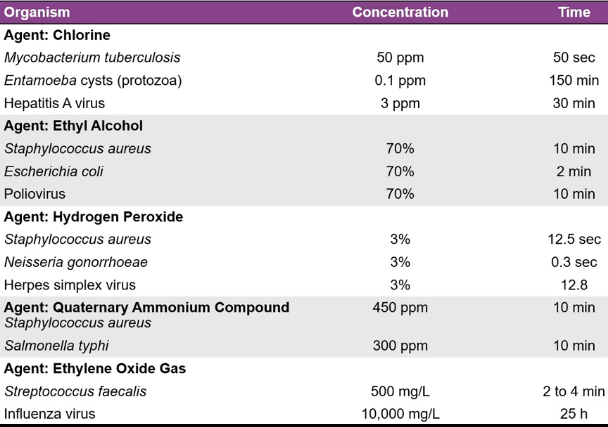
Sterlization kills or destroys all microbial entities including endospores.
Disinfection does not.
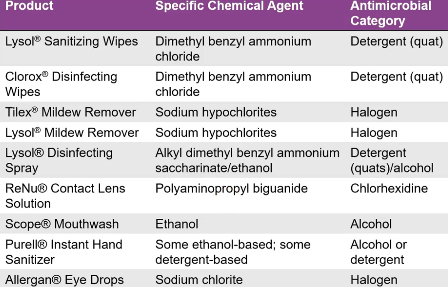
Part of aseptic techniques: Sterilizing your inoculating loop with dry heat, sterilizing or disposing used equipment using moist heat in an autoclave, wiping and disinfecting counter tops with lysol or bleach, scrubbing living tissue with betadine during surgical preparation.
Alcohol is a chemical agent that can efffectively target: proteins, cell membrane, cell wall in order to reduce or kill microbes.
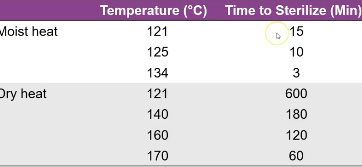
A method for sterilizing milk, called ultra hight temperature treatment, uses 134 C for 1 to 2 seconds.
The process that destroys or removes all microorganisms and microbial froms including bacterial endospores on inanimate objects is: sterilization
The removal of all life forms from inanimate objects is termed: Sterilization
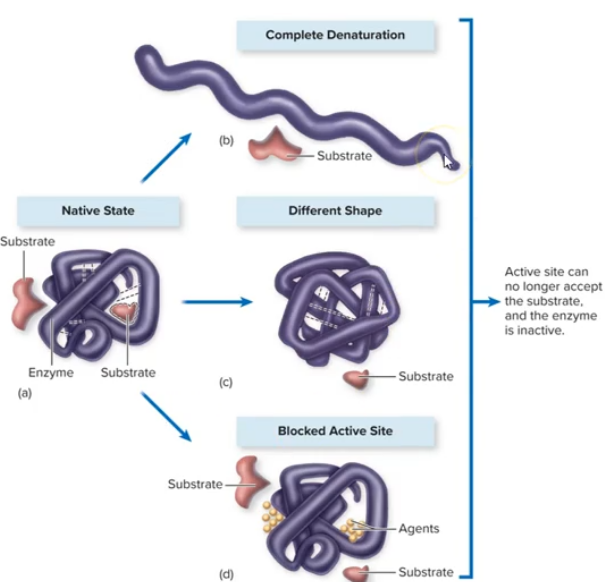
Agents that can denature microbial protiens: Metallic ions, alcohol, moist heat, acids.
Agents that can NOT denature microbial proteins: X-rays
HEPA filters are used to remove microbes from: Air
Dry heat is less efficient than moist air
Scrubbing or immersing the skin in chemical to reduce the numbers of microbes on the skin is: antisepsis
Surfactants works by: disrupting membrane integreity
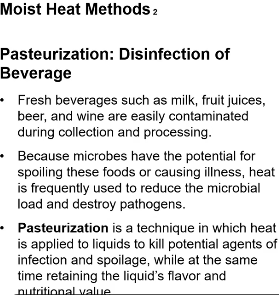
Disinfection of beverages, such as apple juice, milk, and wine, is optimally achieved by: pasteurization
Filtration: is a control method that removes microorganisms rather than inhibiting or killing them.
The most efficient sterilizing condtions in a steam autoclave are: 121 C at 15 psi for 15 mins
The use of a physical or chemical process to destroy begetative pathogens is: disinfection
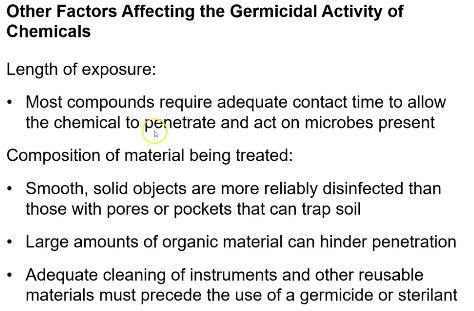
Facotors that affects germicidal acitivity: The microorganism being treated, the strerngth of the germicide, material being treated, length of exposure. j
Pair of physical control methos will achieve complete sterilization: autoclabing and ionizing radiation.
Anitimicrobial agents can target the cell wall by: Inhibiting peptidoglycan synthesis, digesting it, and blocking its synthesis.
Disinfectant: would be used to destroy bacteria on a countertop. Antispetic would be used on skin prior to making an incision.
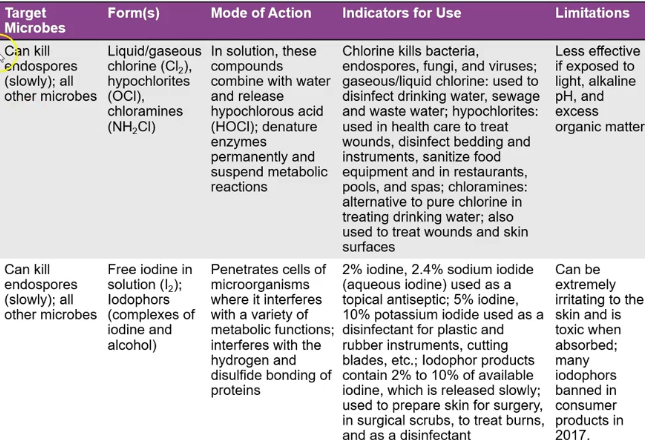
A halogen used in gaseous and liquid form for large scale disinfection of drinking water and sewage: Chlorine
In lab, inoculating loops are sterilized suing: Incineration
Used as an antisepctic: Iodophor, chlorhexidine, 2% hydrogen peroxide, betadine (povidone-iodine).
Glutaraldehyde is NOT used as an antiseptic.
Both moist heat and dry heat methods can achieve complete sterilization.