1.5
debt financing
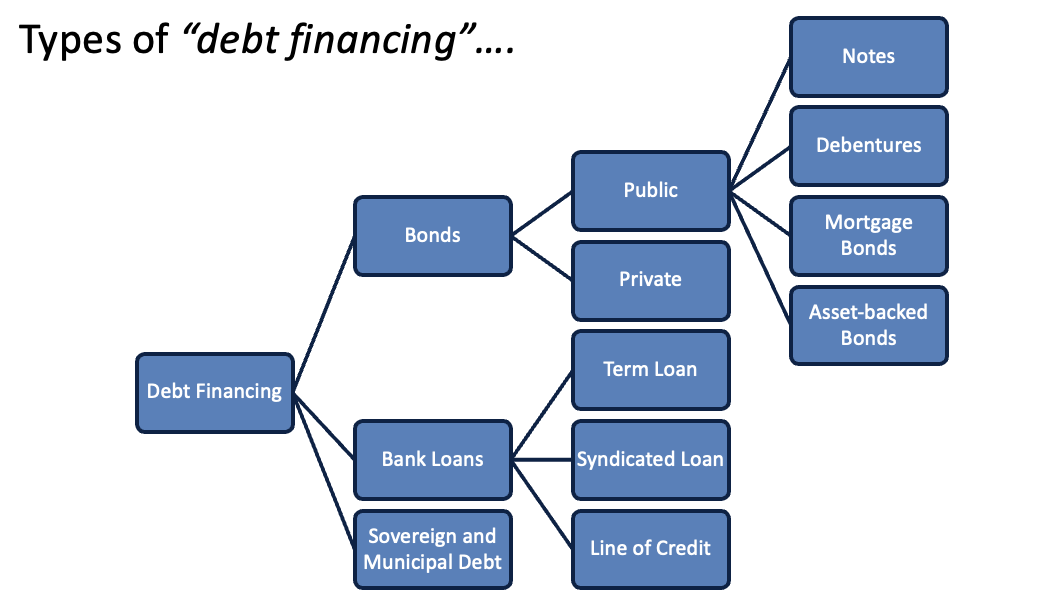
there are 2 main ways of external funding:
equity financing
debt financing
bank loans
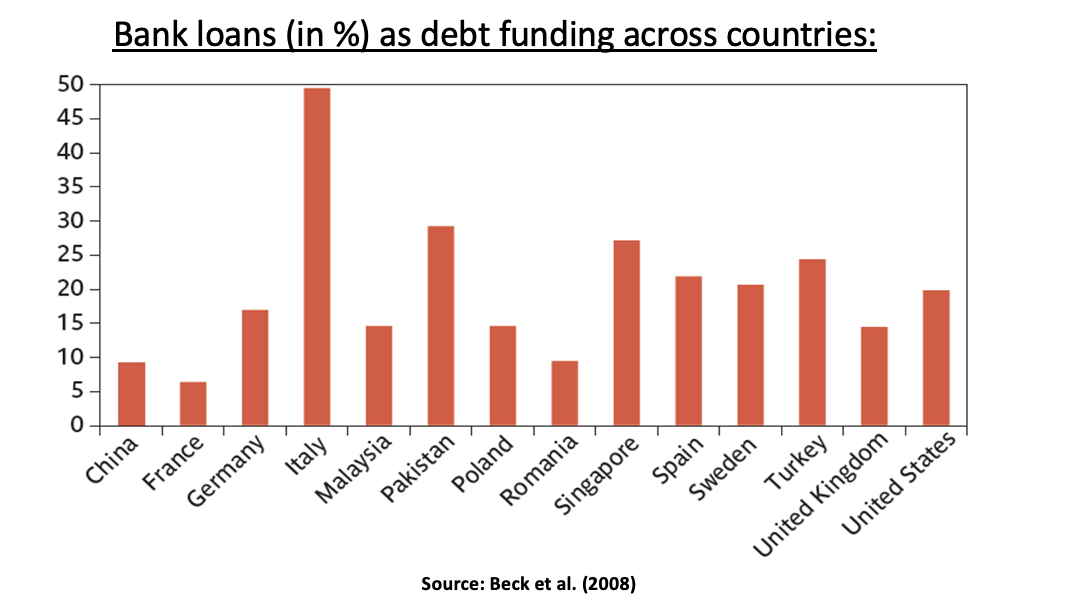
it is still quite a common way of external financing method by firms across countries
there are 3 main types of bank loans:
term loan - for a short and specific term, bank agrees to lend money to firm. interest rate is predetermined and the loan is committed
syndicated bank loan - it is a single loan that is funded by a group of banks rather than just a single bank
revolving line of credit - a credit commitment for a specific time period, typically 2-3 yrs, which a company can use as needed
the maximum amount of funding is determined but not the interest rate; so, banks may charge any interest rate it wants any time. thus, firm has the flexibility to decline the funding
during the term, firm can pay down the loan and borrow more; thus it is called a revolving line of credit
sovereign debt
aside of bank loans and corporate bonds, there are other types of external debt financing alternatives for companies:
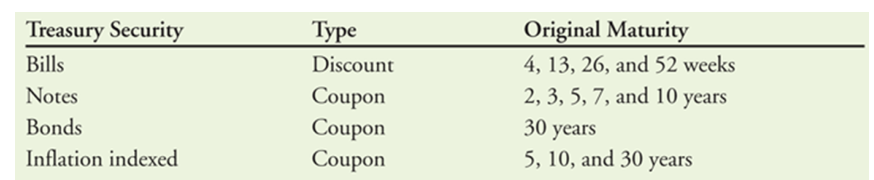
sovereign debt - it is the debt issued by the national governments. most investors think it is the safest debt; after all, governments are “too big to fail“
often used to fund national projects or bridge fiscal gaps e.g. US treasury bonds
generally backed by issuing country’s ability to tax or produce currency
![sovereign debt defaults [1990 - present]](https://knowt-user-attachments.s3.amazonaws.com/f2cab4a3-e7fd-46dd-ba37-3b26ab88d390.png)
video - the European debt crisis [bloomberg]
even though there is a risk of default [when a national government fails to fulfil its debt obligations], sovereign debt is still considered a fairly safe investment and thus the return is usually the lowest. how can we be sure that it is safe to invest?
municipal bonds [munis]
bonds issued by state and local governments
they are not taxable at the federal level [and sometimes at the state and local level as well]; thus they are quite popular among investors
most pay semi-annual coupons in fixed or floating rate
corporate bonds
similar to shares, firms can issue bonds either via public or private placement.
private placement
with private placement, bonds are not publicly traded.
a bond is sold to a small group of investors [insurance companies, pension funds, etc.] rather than the general public
they have a longer term to maturity [more than 15 yrs]
they require less restrictive rules
disadvantages of private placement:
limited liquidity - privately placed bonds are not publicly traded, making it harder for investors to sell them before maturity
higher interest costs - issues may need to offer higher interest rates to attract investors due to lower liquidity and increased risk
restricted investor base - since private placements target a limited group of investors, issuers may miss out on the broader investment base available in public markets
less transparency - private placements are subject to fewer regulatory requirements, which may mean less information is available to investors, increasing perceived risk
public placement
for public placement, the logic is quite similar to issuing shares. company appoints a “trust company" to manage the bonds issued to investors
bonds are offered with a face value [principle value] and an interest rate for a term of maturity to investors
to protect bondholders in case of a default by the company, the firm should show a property it owns as collateral
also some of the borrowing firm’s actions are limited by protective covenants [restrictions] to secure the bondholders against the risk of default. the covenants, divided into negative and positive covenants, include:
negative covenants:
limits on dividend payments to shareholders by the borrowing firm
limits on merging with another firm
limits on pledging any assets to other lenders
limits on leasing and selling of it assets without permission
limits on issuing any additional long term debt
positive covenants
requirement of keeping the working capital above a minimum level
requirement of disclosure of the periodic financial statements to lenders
bonds
there are 4 types of publicly traded bonds:
notes:
a type of unsecured corporate debt - in the event of bankruptcy, bondholders can claim only the assets f the firm that are not already pledged as collateral on other debt
notes typically are coupon bonds with maturities shorter than 10 yrs
debentures:
a type of unsecured corporate debt with longer maturity, up to 30 yrs
mortgage bonds:
a type of secured corporate debt in real property is pledged as collateral that bondholders have a direct claim to in the even of bankruptcy
asset-backed bonds
a type of secured corporate debt
specific assets are pledged as collateral that bondholders have a direct claim to in the event of bankruptcy
asset backed bonds
asset-backed securities are financial instruments that derive their cashflows from underlying assets or financial securities. these securities are made up of other financial assets that generate income, such as mortgages, auto loans, or credit card receivables.
this is how they work. when companies [including banks and even governments need to raise funds from investors, they can issue asset-backed bonds. these bonds offer investors a steady stream of payments, often guaranteed by the assets held by the issuer. for example, the issue may lend money to other borrowers or hold assets that generate cash flows [such as interest, revenue or coupon payments]. in this way, the payments to the bondholders are secured by these underlying assets.
one common type of asset-backed bond is the mortgage backed bond. here, firms use mortgage contracts [loans secured by property] to create a security that produces cash flows. these mortgage-backed bonds are a specific subset of ABS , backed by payments on home mortgages
governments, or sovereign entities, can also issue asset-backed bonds, including mortgage-backed bonds or bonds backed by other assets, like student loans
private companies, such as banks, regularly issue various types of asset backed securities, including those backed by consumer loans like home mortgages, auto loans, and credit card receivables
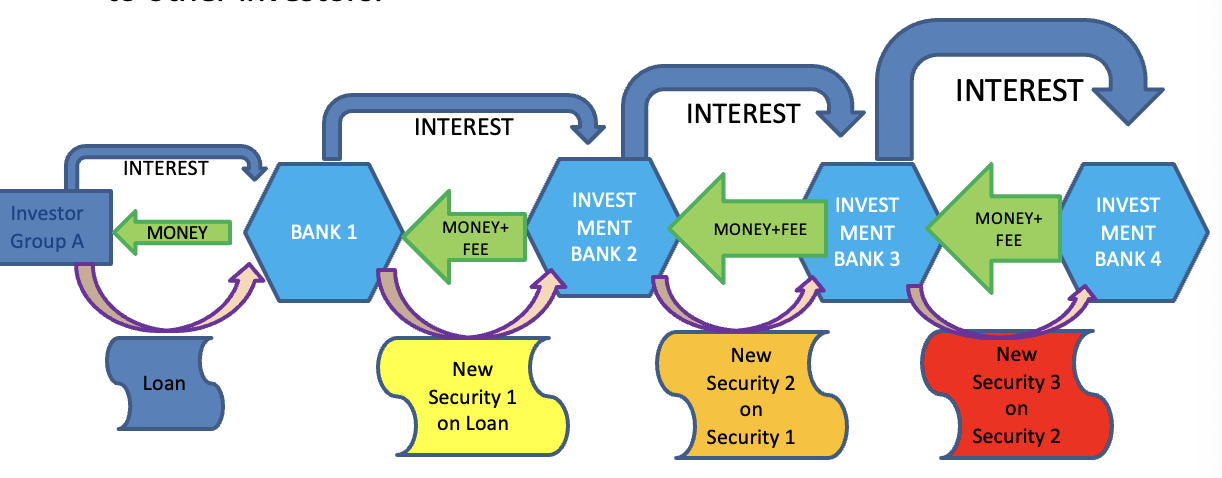
frequently, banks package different asset-backed securities into more complex financial instruments called collateralised debt obligations [CDOs]. these CDOs are often divided into tranches, or levels, which determine different assigned repayment periods, depending on priority.
banks also re-securitise other asset backed securities and sell them to other investors:
bond types
Bonds are called local bonds if they are traded in local markets, in local currency and for local investors. Alternatively, there are four types of international bonds:
Domestic bonds are issued by local entity, in local markets, in local currency for foreign investors.
Foreign bonds are issues by foreign entity, in local markets, in local currency for local investors. Examples include:
Yankee Bonds: Foreign bonds in the United States
Samurai Bonds: Foreign bonds in Japan
Bulldogs: Foreign bonds in the United Kingdom
Eurobonds are international bonds that are not necessarily denominated in the local currency of the country in which they are issued. Thus, they can be denominated in any number of currencies that might or might not be connected to the location of issuer.
The name should not imply anything about those bonds being connected to Euro zone.
Global bonds are offered for sale in several different markets simultaneously. What type of risks do you think are attached to these different kind of bonds?
interest rate
currency risk [relates to exchange rate risk]
political risk
credit risk [risk of liquidity]
default risk
how should investors protect themselves against those risks?
putting collateral or covenants
hedging
bond refunding [examined]
normally, bond issuers repay bonds by making regular interest [coupon] payments and a final principal payment according to the bond contract
some issuers prefer callable bonds. these bonds allows the issue to “call” [repurchase] the bonds before they mature, usually at a predetermined price known as the call price. the call premium is the difference between the call price and the bond’s face value
face value + call premium = call price
issuers like callable bonds when they think interest rates might drop in the future. if rates fall, they can call the existing bonds [which pay higher interest] and issue new bonds at the lower rate, saving money on interest [there can also be tax advantages]
issuers are likely to call bonds when interest rates decrease, allowing them to issue new bonds at these lower rates
callable bonds are less attractive to investors than straight [non-callable] bonds because investors face the risk of the bond being called before maturity, cutting off their future interest earnings
issuers can offer benefits to make callable bonds more appealing to investors:
higher coupon [interest] payments
higher call premium
selling bonds at lower price to offer better yield to investors upfront
corporate bonds example:
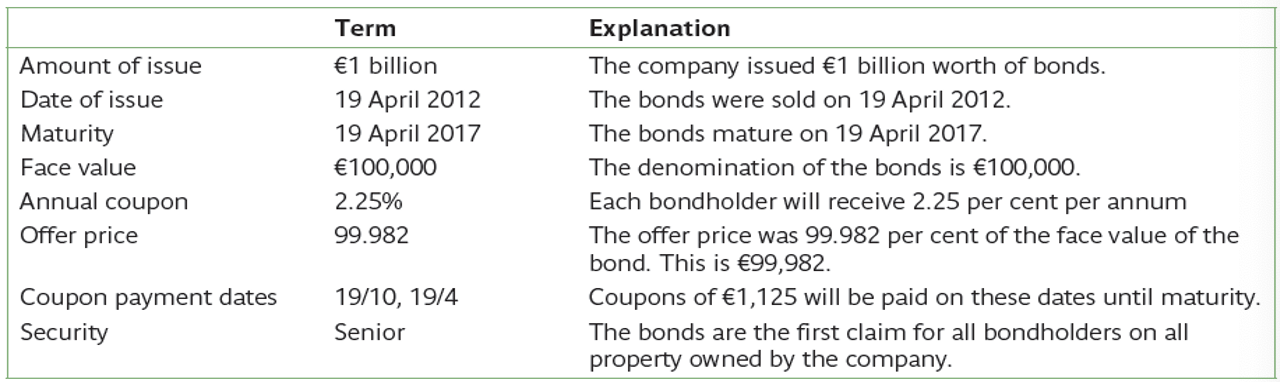
What is the term to maturity?
5 years
What is the structure of the coupon payments; how many payments will be made till maturity?
2 payments pr yr , 10 payments in total
If it was a callable bond in 3 yrs, what can you say on how much the call price and the offer price should be?
call price should be greater than face value [100K], sell price should be less than 99,982
bond refunding example
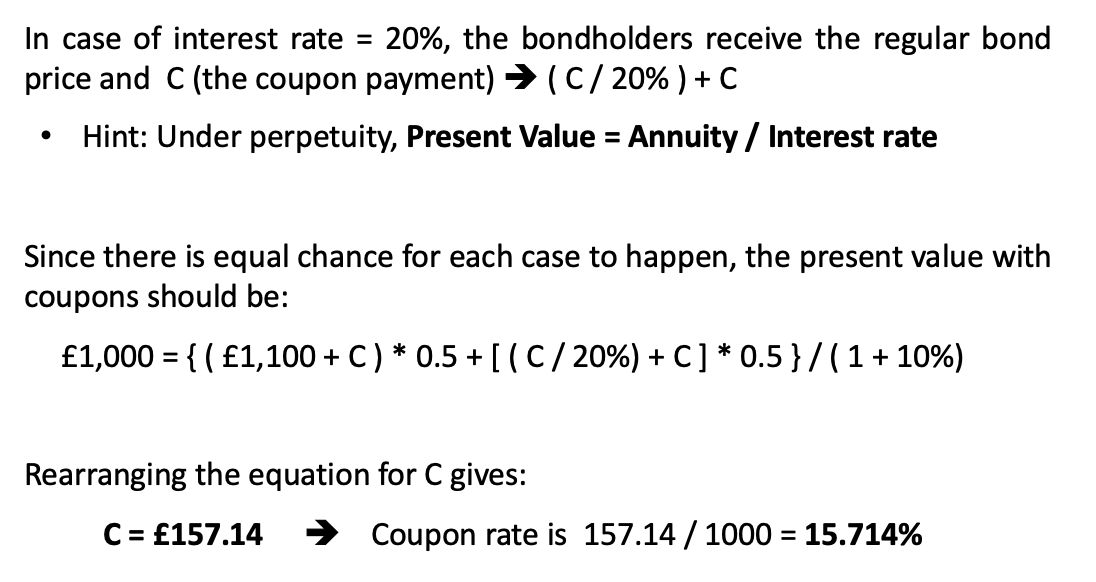
The British firm TTB wants to issue perpetual callable bonds of £1,000 face value and a call price of £1100 for the first year. The current market interest rate is 10%. There is equal chance of the rates will either fall to 6.67% or increase to 20% next year. The firm will call the bonds if the interest rate falls because it can engage in cheaper investments. What should the coupon rate be to attract investors if the bond sells at par?
solution:

bond ratings
how do potential debt holders [bondholders] decide on which company to lend money to invest? —bond ratings
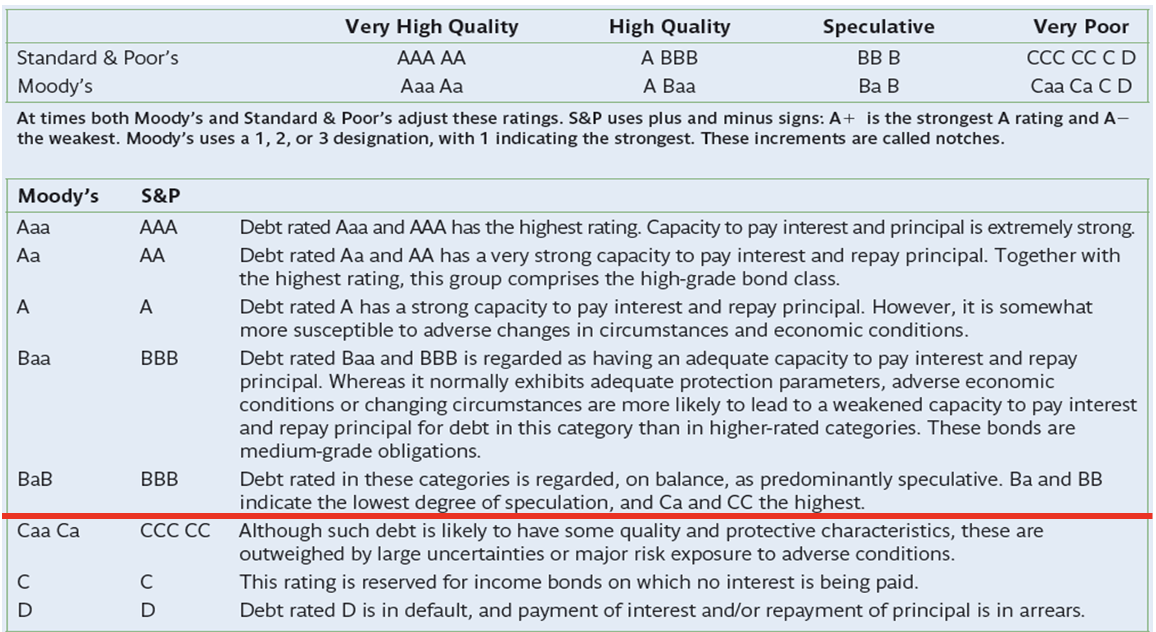
how reliable are the rating agencies? not fully, because this is what led to the 2008 financial crisis. there is a need for new rating agencies, reduction of prices and increase in competition.