Energy and Biomass
Here's a streamlined overview of energy flow, biomass, and biogeochemical cycles with examples and diagrams for each.
---
1. Energy Flow in Ecosystems
- Definition: Energy flow is the transfer of energy through different trophic levels (producers, consumers, and decomposers) within an ecosystem.
- Source: Energy originates from the sun, which is captured by producers (plants) through photosynthesis.
- Trophic Levels:
- Producers (1st Trophic Level): Capture solar energy and convert it into chemical energy.
- Primary Consumers (2nd Trophic Level): Herbivores that eat producers.
- Secondary/Tertiary Consumers (3rd & 4th Trophic Levels): Carnivores and omnivores.
- Decomposers: Break down dead organisms, releasing energy back into the ecosystem.
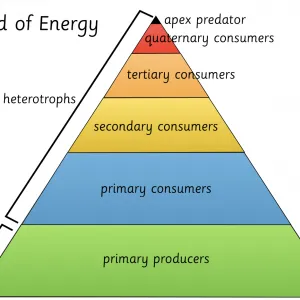
- Energy Loss: Approximately 90% of energy is lost as heat at each trophic level; only about 10% is passed on to the next level, depicted by a pyramid of energy.
- Diagram: Pyramid of Energy
- A pyramid where the base is broadest at the producer level, narrowing upwards to represent energy loss at each trophic level.
---
2. Biomass in Ecosystems
- Definition: Biomass is the total mass of living organisms in a given area or ecosystem at a given time, typically measured in terms of dry weight.
- Biomass Pyramid:
- Shows the total biomass at each trophic level, generally decreasing at higher trophic levels.
- Primary Productivity:
- Gross Primary Productivity (GPP): Total energy captured by producers.
- Net Primary Productivity (NPP): Energy available to consumers after plant respiration; NPP = GPP - Respiration.
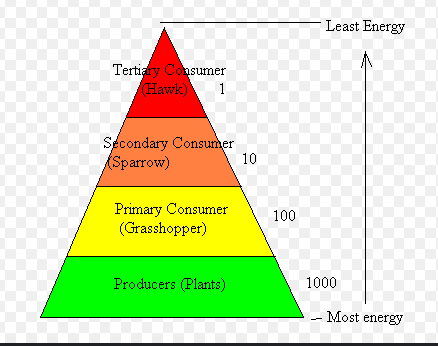
- Diagram: Biomass Pyramid
- Similar to the energy pyramid, with the largest biomass at the base (producers) and decreasing biomass at higher trophic levels.
---