dental amalgam
declining in use: mercury content - bad for environment, bioaccumulates
no evidence to suggest that release of mercury from materials is at a level that can cause harm to patients
phase down - can’t place in children or pregnant women
what is an amalgam?
a mixture of two or more metals one of which is mercury
difference between amalgam and dental amalgam is dental amalgam has silver and mercury
what is dental amalgam?
mercury + silver/tin alloy (amalgam alloy)
amalgamation reaction (combining mercury with metallic powder) results in hard shiny silver grey restorative
mercury is liquid at room temp so no need to heat up
in capsule form (encapsulated):
to protect clinician to exposure from mercury vapour
vapour has neurological affects
activate capsule - break seal between mercury and inter metallic alloy
place in amalgamator
process of amalgamating molten mercury with solid silver/tin alloy - trituration
mixing is important - react away all elemental mercury, get mixed with all solid alloy in capsule otherwise won’t set properly
solid shiny mass if mixed properly
follow manufacturers instructions by second - can overmix or undermix
temperature has big effect on setting reaction of material
composition of amalgam
general composition - will vary between manufacturer
intermetallic compound - Ag-Sn-Cu - alloy of the metallic components within the powder part - usually a mixture of two types of particles - spherical and lathe cut (irregular) particles
^^ provide adv and disadv in terms of shape and size for handling and setting
modern amalgams - main constituent of inter metallic compound are silver, tin and copper
copper v important - improves properties of material - need at least 12% to optimise properties of material
normally mixed with 40-50% of mercury - dependant on shape and size of particles manufacturer uses
inter metallic phase referred to as gamma ᵞ
role of components:
Mercury - binds metals together
Silver - strength
Tin - controls physical change as material sets
^^too little and significant expansion, causes fracture of tooth structure (pain)
too much significant shrinkage/contraction (marginal gap)
Copper -
increases strength
reduces tarnish and corrosion,
decreases creep and marginal deterioration
improves mechanical properties
Zinc - optional
used by certain manufacturers
reduces oxidation reactions, keeps alloy clean during production
helps to delay corrosion
can be problematic
if zinc containing amalgam is moisture contaminated or too much zinc, can lead to:
delayed expansion
surface blistering
internal corrosion
High Cu Single Phase Amalgams
 trying to wet every particle with as much mercury as possible
end up with some particles left
and other types of metal alloys that form crystallised from solution to harm material
copper stops weak phases forming e.g. low copper traditional amalgams Sn8Hg formed - weak phase
weak phases can form if material isn’t mixed properly!!!
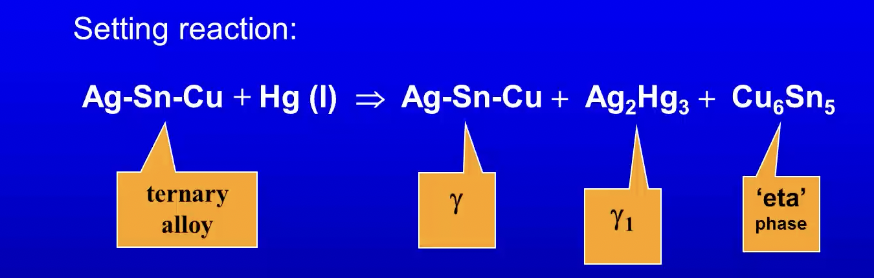
copper prefers joining with tin than tin does with mercury - stops formation of gamma 2 to form eta phase
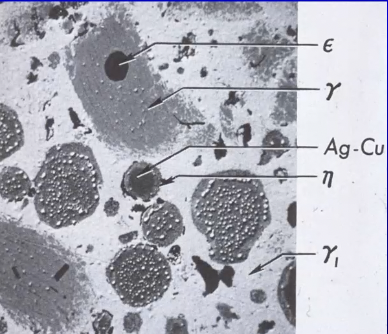
so modern amalgams - gamma 1 and eta phase formed
reaction that happens through mercury being soluble in the solid phase
General Setting Reaction
this all happens by vigorous mixing
mercury is diffusing into outer later of Ag-Sn-Cu particles
particle size decreases
discrete phases formed
Key Characteristics
ease of manipulation
mix, pick up with amalgam carrier, insert into cavity, condense with force
quicker materials to place
acceptable marginal adaptation
less physical change, over long period of time, condensing materials into cavity, more likely to create acceptable marginal adaptation
less technique sensitive
bulk placement, less issue with bonding/bonding system
self-sealing
over time as material corrodes and produces corrosion products, can fill gaps formed on placement
biocompatibility
mercury is a toxic element
if handled appropriately and placed correctly, then limited release of mercury with fully set restoration
mechanical properties/wear resistance
metal alloys are stronger materials, tougher, and wear resistance
low cost
refers to time and placement
quicker, easier to place, so lower cost implication
Mercury Content
40-50% by weight
dependant on composition of material itself
if reacted out, not left with elemental mercury, different phases lock in elemental mercury
residual Hg may be left
trituration consumes all Hg so less is released
so need to mix properly
to optimise reaction, need to condense material (amalgam condenser), apply force to condense material into cavity - if don’t do properly then might not get rid of excess mercury
if delay time between mixing and condensation, don’t bring particles close together by condensing and reducing volume - can lead to problems
ideal range is 44-48 wt.%
>55 wt% gives decrease strength, increase corrosion, increase creep
poor condensation techniques
delay between trituration and condensation
highest residual Hg at surface and margins
Mechanical Properties : Strength
strength
24h+ to reach 100%
by 1h, 40-60%
if on occlusal surface, try not to eat anything on that side for hour or so
set amalgam exhibits brittle failure
weak in thin sections
unsupported edges fracture easily
can snap if thin enough
important that amalgam is placed with supported remaining tooth structure
Physical Properties : Creep
progressive deformation of a material under constant stress
not a problem anymore
can be a problem if don’t mix or place material properly
time dependant response to force or stress
creep increases as melting point is reached
phases containing increased Hg results in inc creep over time
can be through masticatory force, through gravity
start to deform over time
consequences
amalgam flows over marginal ridge
thin sections fracture easily
marginal deterioration; ditching
creep of traditional amalgams » modern types due to less copper
if don’t condense material properly then chances of creep increases
Micro leakage
Key factors
2-20 micrometer gap
poor condensation technique
corrosion by-products
differences in TEC (thermal expansion coefficient)
materials that have different thermal properties to tooth tissue
restorative material may expand and contract differently to tooth tissue that surrounds it
can create gaps at interface if happens too much
resin has this issue more
Operator Variables
Trituration
coat each particle with Hg
ensure thorough amalgamation
use recommended times
condensing
process of reducing volume of material, packing it into cavity
create marginal adaptation
eliminate voids within material (porosity)
remove excess Hg
Spherical alloys more difficult to condense/easier to polish
carving/polishing
function of particle morphology
becomes naturally polished (>6months)
polishing - inc hardness, dec porosity
Trends in use of amalgam
most popular direct restorative
ease of use
less technique sensitive than resin composites
cost effectiveness
adequate mechanical properties
generally, clinical performance > RBCs
usually outlast resin composites however if good at placing resin composites, then last a long time
use of amalgam is declining
different rates internationally
aesthetic demand
alleged health effects
environmental concern
Dental amalgam use
no single study has categorically confirmed or allayed fears in relation to dental fillings
Environmental Hazards
Natural emission
Human activity
low amount of mercury used in dentistry compared with total use of mercury in every industry
ethical obligation to minimise and eliminate mercury waste
major amalgam particles
surplus in trituration capsules
carved surplus
minor amalgam particles
produced during carving, polishing (sucked up)
minimata convention
minimata convention on mercury is global treaty which aims to reduce neg impacts of mercury on environment and human health
eu regulations on restrictions of how dental amalgam should be disposed of properly
specfies dental amalgams shouldn’t be placed in primary teeth in children under 15 yrs old or pregnant or breastfeeding women unless deemed strictly necessary by dental practitioner due to specific medical need
dental amalgam presents no direct risk to patients who have amalgam restorations
elemental mercury in amalgam is more stable form than methylmercury which is found in aquatic organisms - main source of exposure to general population
dental amalgam can indirectly cause harm when released into environment and converted into methylmercury by aquatic microorganisms
active recall questions
what is an amalgam
what is a dental amalgam
what does amalgamation result in
describe the encapsulated form of amalgam
describe the composition of amalgam
describe the role of each component
describe the high copper setting reaction
describe the general setting reaction
what are the key characteristics of amalgam
describe mercury content
what must be done to optimise trituration reaction
what is the ideal mercury weight
describe the mechanical property of strength
what does set amalgam exhibit
describe the physical property of creep
what are the key factors for micro leakage
what are operator variables for tituration
what are operator variables for condensing
what are operator variables for polishing
what are the trends in the use of amalgam
why is the use of amalgams declining
when are major amalgam particles produced
when are minor amalgam particles produced
what is the minimata convention