Chapter 1
Vocab:
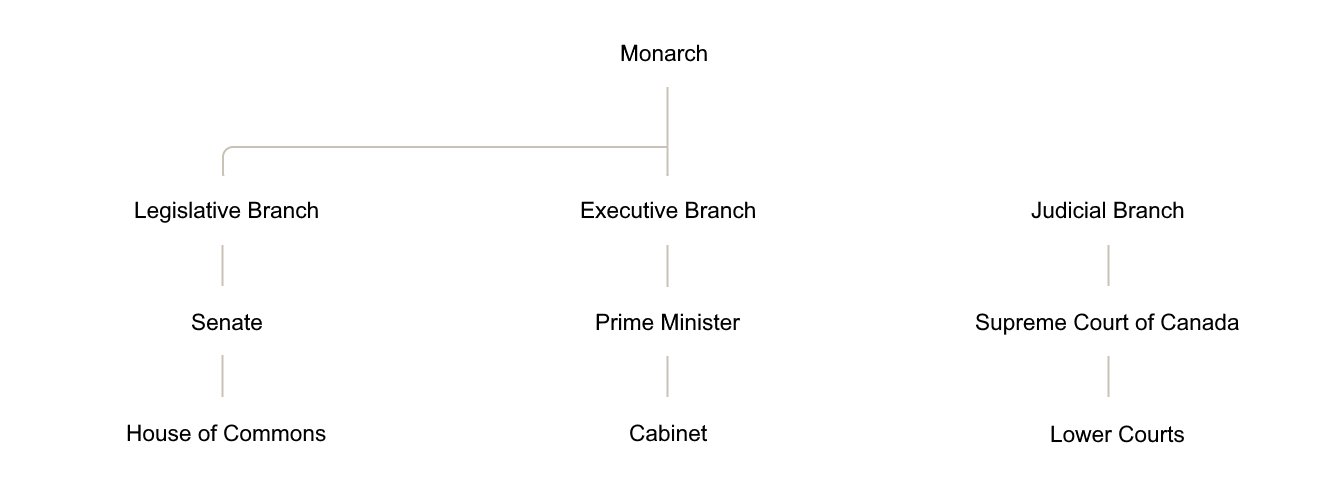
The executive branch- includes the PM and enforces the laws, the heart.
The legislative branch: write laws (parliament) Important- any MP appointed as the PM’s cabinet members must be a part of both branches so the government can be responsible
The judicial branch- interprets and applies laws by making legal judgments. Important- the judicial branch never overlaps with the other branches so the people who write and enforce the laws cant influence the people who interpret them (like the same people)
Popular vote- the TOTAL VOTES cast, different from the total SEATS won
Constituency or Riding- an area where an MP represents. Electoral district. Like how each MP has their area of sorts
Lobby groups- Not a part of the government. Hired to influence MPs and government officials. Represent important issues in society. Ex. MADD- Mothers Against Drunk Driving
Civil service- serve Canada as government employees, not the actual government. (Canada Post)
Official opposition party- party with the second most seats in the government
Bias- a type of prejudice rooted in a person’s POV
Lobbyists- a person in a lobbyist group that is hired to convince MP’s and government officials. They represent important issues in society. ex. MADD (mothers against drunk driving)
How a Bill becomes a Law
Note that the process usually starts with the H of C but is not required
introduction and 1st reading
2nd reading
committee stage
report stage
3rd reading
sent to the other chamber (senate of H of C) to repeat
Royal assent- The governor general represents the queen and approves the law (only a formality)
What is the FAA
The Federal Accountability Act. After a scandal in which the government gave money to groups that supported them instead of using it for good things, the FAA was implemented. It makes sure that the government is responsible with its money, and protection for employees who “blow the whistle” (tell on them.)
Parliament
there are two parts to parliament: the House of Commons and the Senate
The Senate is considered more powerful (commons- commoners)
Senate- the PM appoints senators
House of Commons- MPs are elected by the citizens
Supreme court judges are decided based on the recommendation of the prime minster
Majority government
if a political party has the majority seat has the majority of seats. They can introduce and pass laws. If a minority government wants to pass laws, they have to win the support of other parties to make a law and it isn’t a guarantee that they will unite or not.