Spirometry
Key words
Tidal volume
amount of air exchanged in a single breath
approx. 500cm³ at rest
expiratory reserve volume
the extra volume that can be exhaled with an extra deep breath
inspiratory reserve volume
the extra volume that can be taken in with an extra deep breath
vital capacity
the max volume of air that can be breathed in when the strongest possible exhalation is followed by the deepest possible inhalation
residual volume
the volume of air that remains in your lungs after fully breathing out
cannot be measured directly
total lung capacity
residual volume + vital capacity
ventilation rate
total volume of air inhaled in one minute
tidal volume x breathing rate
Measuring lung volumes
peak flow meter
measures the rate at which air can be expelled from the lungs
PEFR = peak expiratory flow rate (l/min)
measurements are compared to tables of expected values
vitalograph
measure FEV1
forced expiratory volume in 1 second
a measure of how fast air can be breathed out
spirometer
more detailed investigation of lung function
different lung volumes
breathing patterns
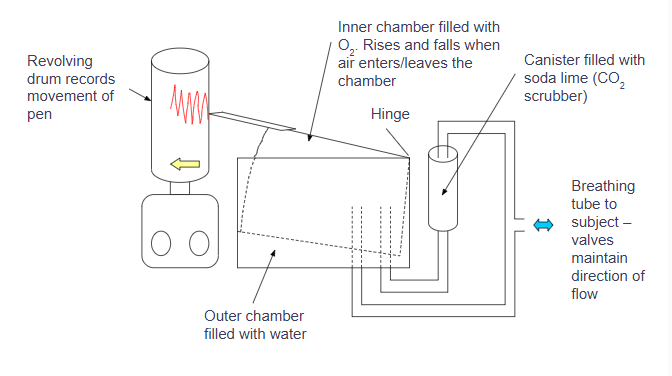
Spirometer function
breathe via tube into oxygen filled chamber
chamber is hinged and floats on a tank of water
exhale and chamber rises
inhale and chamber falls
CO2 scrubber (soda lime) to remove CO2 from recirculated air
movement of spirometer is recorded on a revolving drum or kymograph
each up and down trace represents a single breath
drum revolves at a set speed so can calculate:
breathing rate
breathing depth
tidal volume
expiratory reserve volume
inspiratory reserve volume
vital capacity
spirometer should be filled with medicinal grade O2
subject should have no heart or respiratory problems
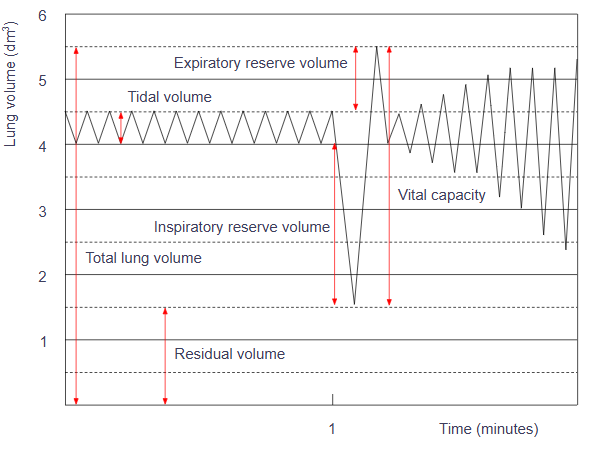
Spirometer trace
series of peaks and troughs
peak to peak is one breath
count number per minute
Oxygen consumption
the air breathed into the spirometer has the CO2 removed by the soda lime
volume of gas decreases
decrease = oxygen consumption
gradient = rate of oxygen consumption
gradient is steeper during exercise as more oxygen is needed