1.8 supply
defined as the quantity of a good or service that producers are willing and able to provide at a given price in each time period
law of supply: is that as the price of a product rises, businesses expand supply
→higher prices provide a profit incentive (motivated) for firms to expand production
→supply + quantity are directly proportional
rational firms choose an output and price that aims to maximise profits
an increase in market price creates an opportunity for businesses to expand production (output) to earn a higher profit
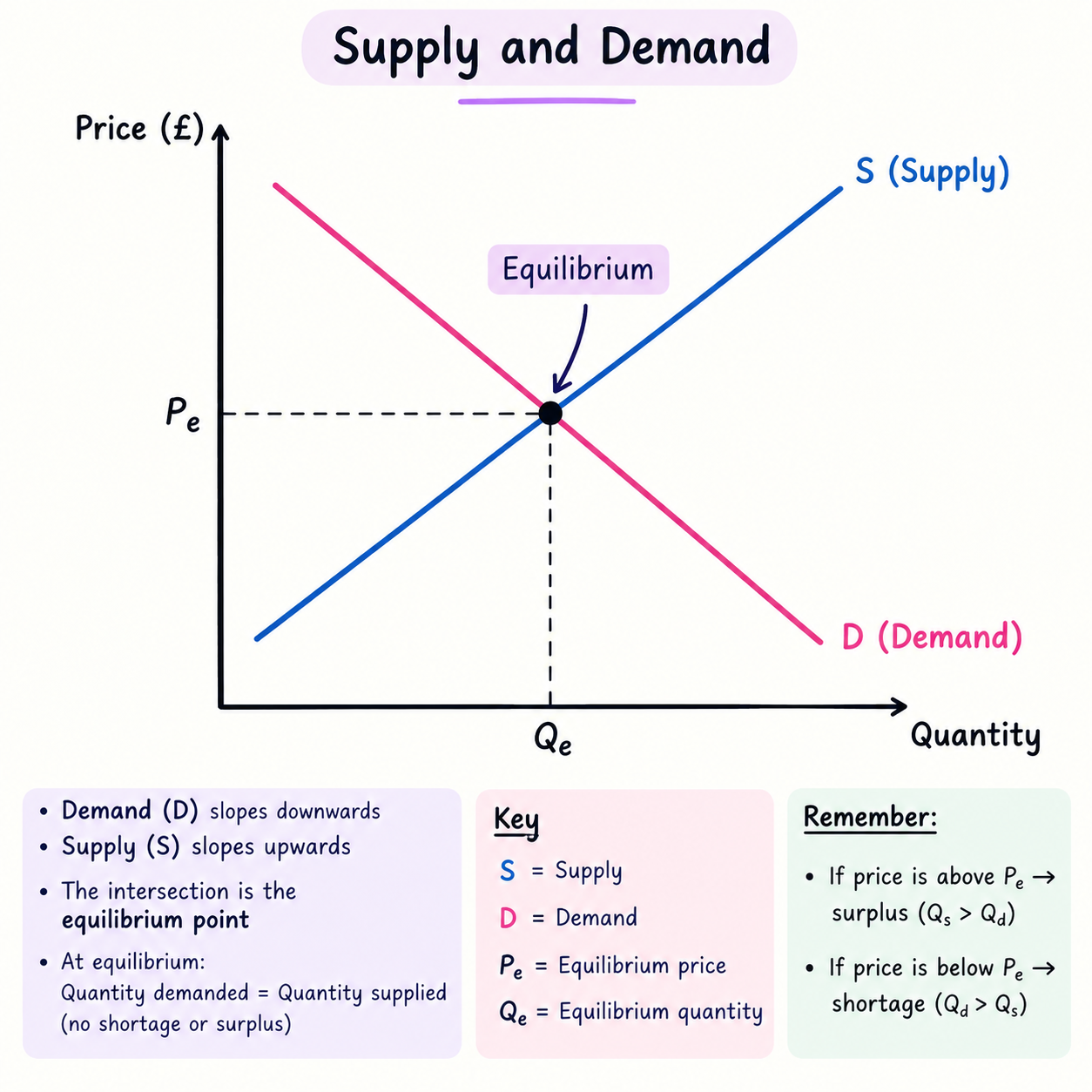
costs + links to supply
→fixed costs : are unchanged expenses firms may have to manage e.g. rent/mortgage
→variable costs: changes with production e.g. raw materials costs
when supply increases, firms are able to cover their fixed + variable costs for their business to maintain stability
+therefore if a firm has high costs, they will not be willing to supply a good when prices are low as they will be unable to cover these costs
extension: a rise in price
contraction: a fall in price
shifts in market supply
Increase in supply = supply curve shifts right
Decrease in supply = supply curve shifts left
factor | effect on supply |
|---|---|
cost of production goes down | supply increases, graph shifts right |
cost of production increases | supply decreases,graph shifts left |
technology improves | supply increases, graph shifts right |
productivity increases | supply increases, graph shifts right |
Indirect taxes increases | supply decreases,graph shifts left |
subsidies(financial aid or support given by the governemnt to firms) increase | supply increases, graph shifts right |
number of firms increases | supply increases, graph shifts right |
number of firms decreases | supply decreases,graph shifts left |
good weather | supply increases, graph shifts right |
bad weather | Supply decreases,graph shifts left |
external shocks: unexpected events outside a country that suddenly and heavily impacts its domestic economy
j o i n t : is where an increase in the supply of 1 good leads to an increase or decrease in the supply of another (by-product)
→Cattle (Beef and Leather): When farmers produce more beef, they automatically produce more hides for leather.
→Sheep (Mutton and Wool): Raising sheep for meat also increases the available supply of wool.
→Crude Oil (Petrol and Diesel): Refining crude oil creates multiple fuels and chemical products at the same time.
→Honey and Beeswax: Extracting honey leaves behind beeswax as a useful by-product.