Rhetoric/ Argument/ Reasoning
Rhetoric: The art of speaking or writing that is intended to effectively persuade people.
Examples: Politicians giving moving speeches to persuade people to act, advertisers creating catchy slogans to persuade people to buy products, lawyers presenting emotional arguments to sway a jury.
Claim: Position taken by the person who is making the argument- what they are hoping to persuade the audience to believe.
| Arguable claim: A claim that is subject to debate; there must be at least two possible sides to this claimEx: Children should be allowed to have cellphones in school | Unarguable claim: If a claim is a generally accepted fact or is only based on personal preference, it is not arguable. Ex: The earth revolves around the sun |
|---|
There are two types of reasoning used to support a claim. . .
| Deductive reasoning: General to specific; Following one factual claim to a logical conclusion. | Inductive reasoning: Specific to general; drawing general conclusions from a set of specific observations |
|---|---|
| Ex: All human beings are mortal. (First premise)Snoopy is mortal. (Second premise)Therefore Snoopy is a human being. (Conclusion)This is an invalid conclusion- plugging it into the back All humans are mortal. (First premise)Socrates is a human. (Second premise)Therefore, Socrates is mortal. (Conclusion)This is a valid conclusion- plugging it into the front | Ex: All the swans I have seen are white. (Premise)Therefore all swans are white. (Conclusion)This is a weak argument- if the premises were true, the conclusion could be false. All the swans I have seen are white. (Premise)Therefore most swans are probably white. (Conclusion)This is an example of a strong argument- if the premises were true, the conclusion would be very likely to be true. |
There are many types of evidence used to support a claim:
- Personal experiences and anecdotes
- Generally accepted facts
- Scholarly research and expert opinions
- Data and statistics
Logical fallacies: an error within the reasoning that occurs when invalid evidence or irrelevant points are introduced. It is an argument that may sound convincing but is actually flawed.
| Word | Definition | Examples | Examples in “Argument Against State Constitution” |
|---|---|---|---|
| Logical Fallacy | Gaps in logic/ reasoning | (All of the others are examples of logical fallacies) | Women’s characteristics vs. Men’s characteristicsCan’t some women have other characteristics than that? |
| Ad Hominem “The man” | when a speaker or writer attacks the character of his or her opponent rather than the opponent’s ideas. | For instance, in an argument in favor of the construction of a new school building, someone might point out that a person holding an opposing view was recently fined for speeding or texting while driving. | N/A |
| Bandwagon Appeal | Go with the crowd- the fallacy that occurs when an argument is based on the logic stating because a number of people believe something, it must be true or right. | you might argue that because millions have used the latest herbal diet supplement, then it must be both safe and effective. | N/A |
| Either-Or Fallacy“False dilemma” | a speaker or writer makes a threat by reducing a complex issue to two options: either you see it my way or this bad thing will happen | You’re either with us or you’re with the terrorists | Women cannot be in the home and in politics and do a good job at both |
| Hasty Generalization | an inference or conclusion is drawn on the basis of insufficient evidence | you make an argument that a company is guilty of ageism because your grandfather applied for a job and was not hired | N/A |
| Slippery Slope“Floodgates fallacy” | the slippery slope occurs when someone argues that if you allow X to occur, Y will surely follow, and it relies on fear. By doing one thing, you’re on a slippery slope to a far worse and (usually exaggerated) situation.DEDUCTIVE REASONING | if you argue that convicted felons should be allowed to vote after they have served their sentences, someone might respond that soon criminals will be running the country. | if a women goes into politics, she won’t do a good job at home. If a women doesn’t do a good job at home, she won’t teach her daughters to be good. If she doesn’t teach her daughters to be good, . . . |
Rhetorical situation:
All arguments exist within a context that not only influences what is presented but also how it is presented.
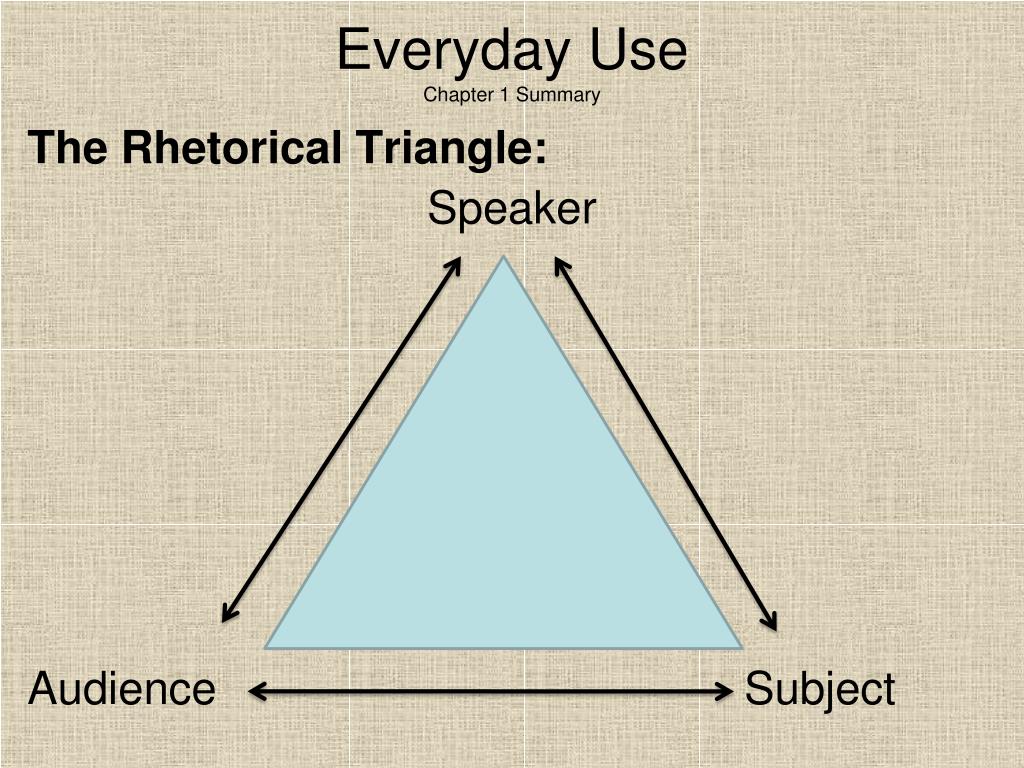
A rhetorical situation also includes the author’s purpose, and the occasion that has prompted the text.
Example: Martin Luther King’s “I Have a Dream” speech. Speaker- Martin Luther King; Subject- racial inequality; Audience- colored people in America; Purpose- to demand racial equality; Occasion/ setting- in front of the Washington monument, in the middle of the black rights movement
SoapsTone Framework:
- It provides a concrete strategy to help students in narrative, persuasive, and analytical writing
- It is an acronym to use before analyzing a rhetorical text. (Speaker, occasion, audience, purpose, subject, tone)
The tone in SOAPSTone is established by the work’s rhetorical appeals (Ethos, Pathos, Logos) and use of rhetorical devices.
Example: St. Crispin’s Day Speech
| Speaker | King Henry the 5th, who was king of England at the time. He is commanding an army to fight against France- France has insulted him. | Who is putting forward the claim? a person, an organization, a political partyWhat do you know about the speaker? age, gender, race |
|---|---|---|
| Occasion | Before a battle on Saint Crispen’s Day in the 1400s- England vs. France. Saint Crispen’s day was an important Christian religious holiday. | What circumstances give rise to the argument? Is there a controversy? |
| Audience | Both peasants and nobility serving in the army. It was an economically diverse group of soldiers. | There are multiple audiences that a speaker is addressing, but they usually have a primary audience in mind that they will tailor their claim depending on the expectations. |
| Purpose | To rally or motivate the troops. | What is the speakers intention? What do they want the audience to do? |
| Subject | to provide unity around honor, they are fighting around honor and pride | What is the speakers general topic or content? |
| Tone | inspiring, effective | What is the speakers attitude? |
Rhetorical appeals:
Ethos:
- Definition: Appeal to the credibility and authority of the speaker
- Examples:
- Expert opinions
- Professional titles
(It is used to demonstrate authority and shared values)
Pathos:
- Definition: Appeal to “passions” or emotions
- Examples:
- Sad or tragic scenarios/ anecdotes
- Fear-inducing messages
(while pathos can be a powerful strategy, pathos alone results in a weak argument)
Logos:
- Definition: Appeal to logic and reasoning- it can be very powerful in our data-driven society
- Examples:
- Statistical data
- Scientific evidence
- Logical arguments
Rhetorical devices: Tools that are used to manipulate language and construct arguments.
There are two types. . .
- syntactic strategies (such as different types of parallelism or rhetorical questions)
Ex: alliteration, anaphora
- literary devices (such as different types of figurative language)
Ex: metaphors, allusion, humor, irony, hyperbole
Bias: a prejudice notion that prevents a person from approaching a topic in a neutral or objective way
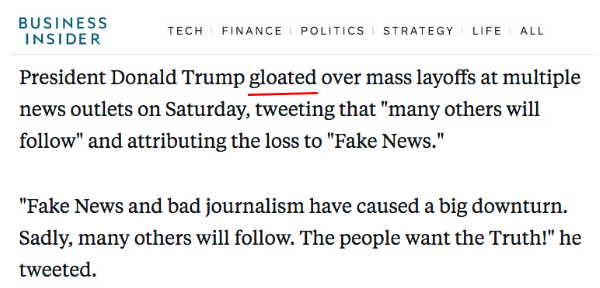
Counter argument: an opposing viewpoint to the viewpoint you are trying to get across.
-Ignoring or dismissing any position not in agreement with yours demonstrates bias
-Use concession when dealing with a counter argument
You start out by agreeing with the opposition (conceding) to show that you respect the views of others, even those you disagree with. Then you refute the argument by pointing out how the opposition either doesn’t account for important issues or is outweighed by other considerations.