Industrial cracking
 Call Kai
 Learn
Learn Practice Test
 Spaced Repetition
 Match
Match Flashcards
 Knowt Play
1/28

There's no tags or description
Looks like no tags are added yet.
Name | Mastery | Learn | Test | Matching | Spaced | Call with Kai |
|---|
No analytics yet
Send a link to your students to track their progress
29 Terms
What is the economic purpose behind cracking?
To ease the higher demand for shorter-chained alkanes, such as naphtha or petrol
What is cracking?
Large alkanes are broken up into smaller alkanes
What is another product of cracking besides smaller-chained alkanes?
Alkenes
Why is the production of alkenes good economically?
They are very valuable
What is decane, C10H22 broken up into when cracked?
Decane → octane + ethene
C10H22 → C8H18 + C2H4
What are the two types of cracking?
Thermal cracking and catalytic cracking
What does thermal cracking involve?
Heating alkanes to a high temperature, 700-1200K, under high pressure, up to 7000kPa
What happens when the C—C bonds break?
One electron from the pair in the covalent bond goes to each carbon atom
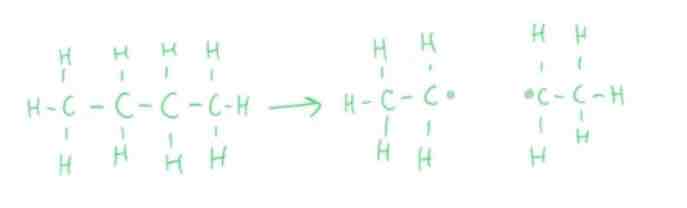
What is initially formed when the C—C bond of a long-chained alkane breaks?
Two shorter chains that each end with a carbon atom with an unpaired electron - free radicals
The free radicals produced from the thermal cracking of butane:
C4H10 → C2H5
What do the free radicals do due to their high reactivity?
They reactive in a number of different ways to form a variety of shorter chain molecules
Why is one of the new molecules produced from the free radicals always an alkene?
Because there are not enough hydrogen atoms to produce two alkanes so one of the new chains must have a C=C bond
Products from the thermal cracking of butane
Ethane and ethene
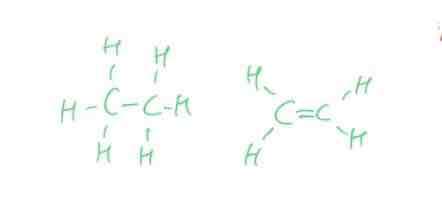
Is the example of the cracking of butane above reflective of industrial cracking?
No - the chain does not always break in the middle and any number of of C—C bonds could break
What is another possible product of thermal cracking?
Hydrogen - H2
Which type of cracking produces a higher proportion of alkenes?
Thermal cracking
What are the conditions of catalytic cracking compared to thermal cracking?
Takes place at a lower temperature - around 750K
Lower pressure
A catalyst is used
What is the catalyst that is typically used in catalytic cracking?
Zeolites
What are zeolites make up of?
A mixture of silicon dioxide and aluminium oxide
What type of structure do zeolite catalysts have and how is this useful?
Honeycomb structure which has an enormous surface area - small amount can be used
What products does catalytic cracking produce? (3)
Not so many alkenes but branched alkanes, cycloalkanes and aromatic compounds
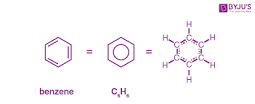
What are aromatic compounds based on?
The benzene ring C6H6
Catalytic cracking in a lab experiment
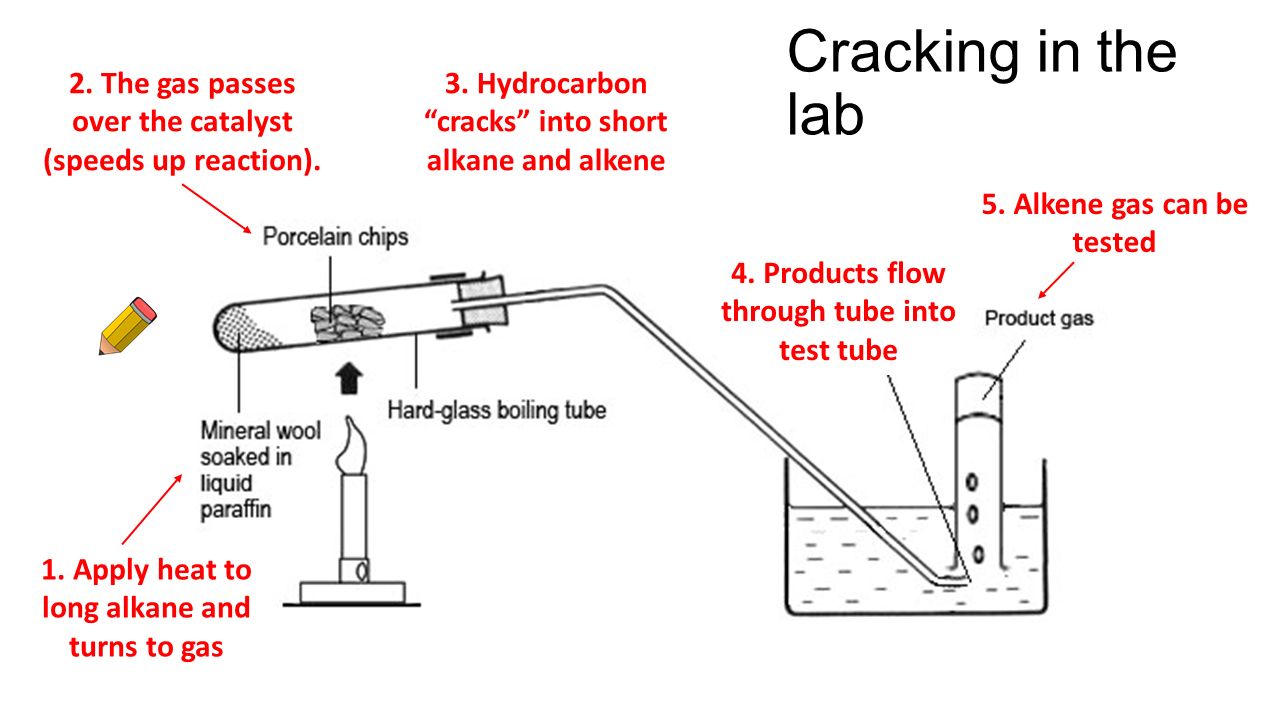
What catalyst is used in the experiment?
Aluminium oxide catalyst
What does the product of gases show about their chain lengths?
They are short hydrocarbons - less than C5
What is the product of gases a mixture of?
Alkanes and some alkenes
How do you test for alkenes?
Adding the sample to bromine water will decolourise it if alkenes are present
Does cracking always provide you with similar-chain hydrocarbon products?
No, it gives you a mixture of products
How would you obtain refined products from the products from cracking?
By fractional distillation