L7 - What are Proteins?
 Call Kai
 Learn
Learn Practice Test
 Spaced Repetition
 Match
Match Flashcards
 Knowt Play
1/12

There's no tags or description
Looks like no tags are added yet.
Name | Mastery | Learn | Test | Matching | Spaced | Call with Kai |
|---|
No analytics yet
Send a link to your students to track their progress
13 Terms
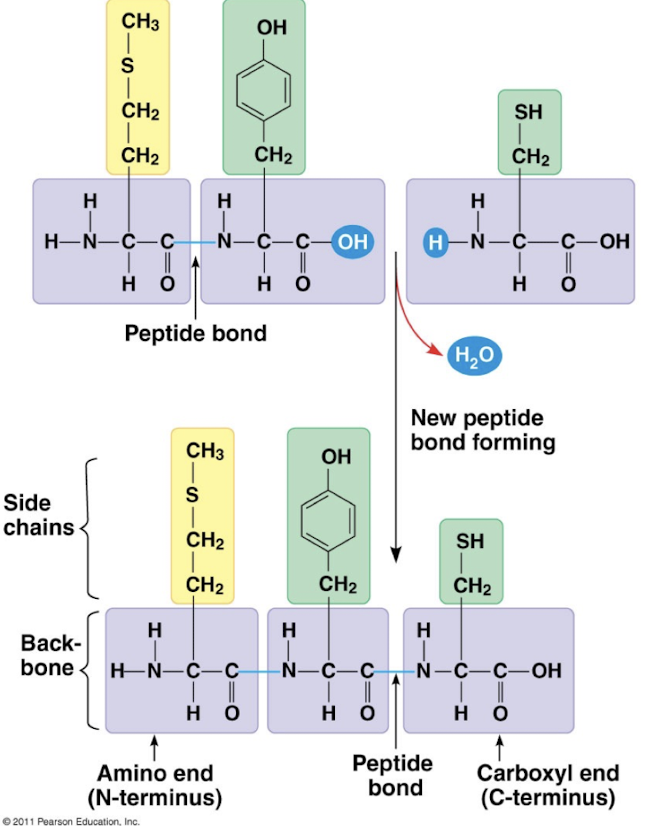
polypeptide
= AA joined via peptide bond
How many protein encoding genes do humans have?
< 21,000
ex. 9,379 in heart cell
How big is our largest protein?
34,000 AA (Titan - lecture 26)
→ average human protein is 450 AA in size
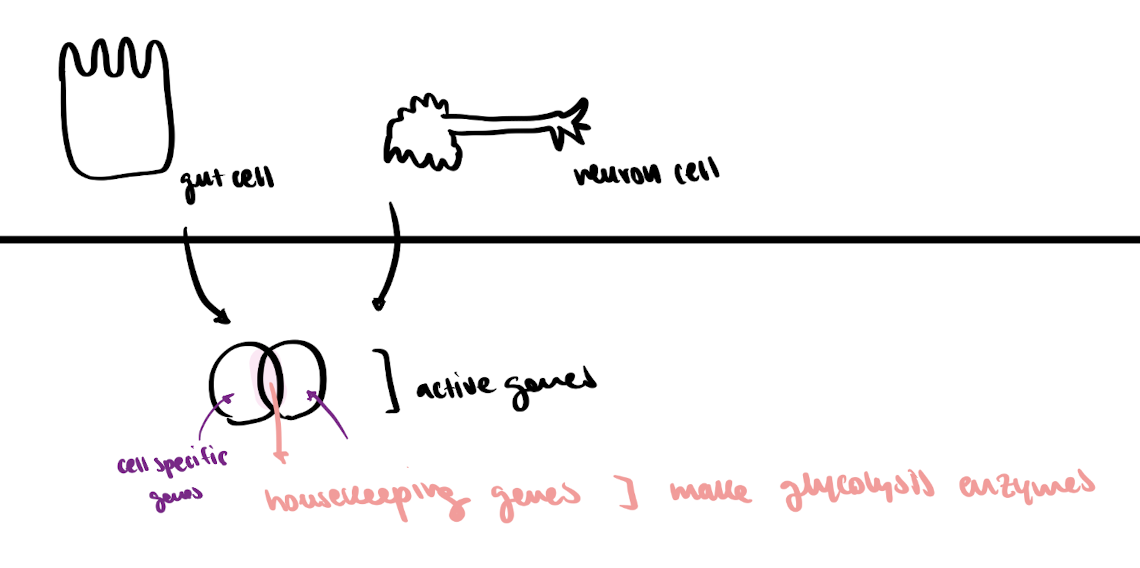
Active Genes in cells
housekeeping genes = common active genes b/w different cells → make glycolysis enzymes
cell specific genes = genes specific to a cell
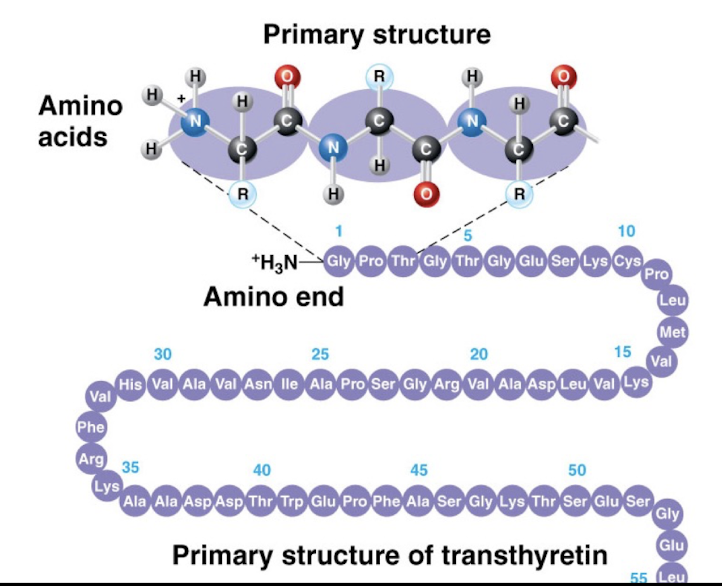
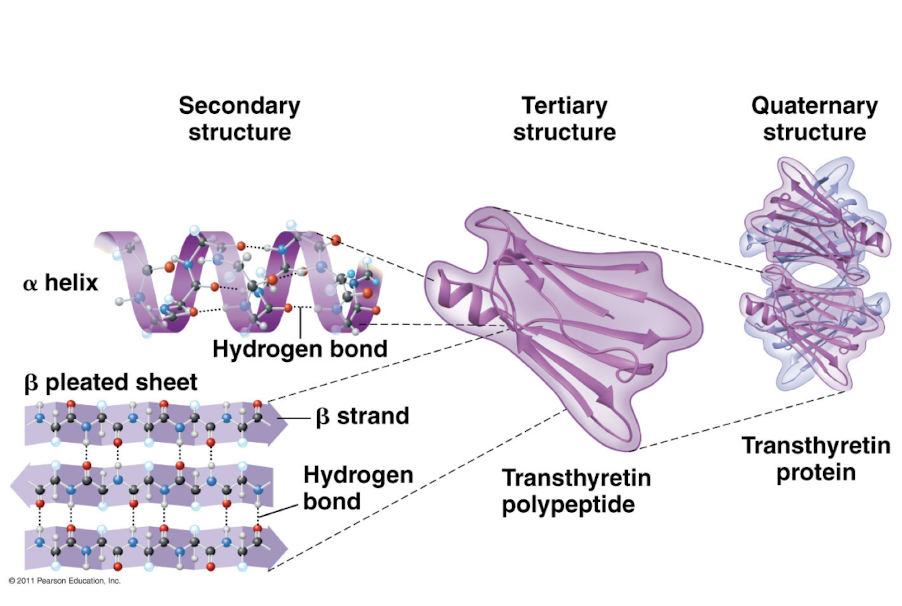
Structure of Proteins
primary = AA sequence
secondary
b-sheets & alpha-helix
tertiary
disulfide bonds are part of tertiary structure
quaternary
8 general functions of proteins
enzymes = catalyze covalent bond breakage/formation
structural proteins = provide mechanical support to cells & tissues
transport proteins = carry small molecules/ions
motor proteins = generate movement in cells & tissues
storage proteins = store AA’s or ions
signal proteins = carry extracellular signals b/w cells
receptor proteins = detect signals & transmit them to the cells response machinery
gene regulatory proteins = bind to DNA to to turn on/off genes
special purpose proteins
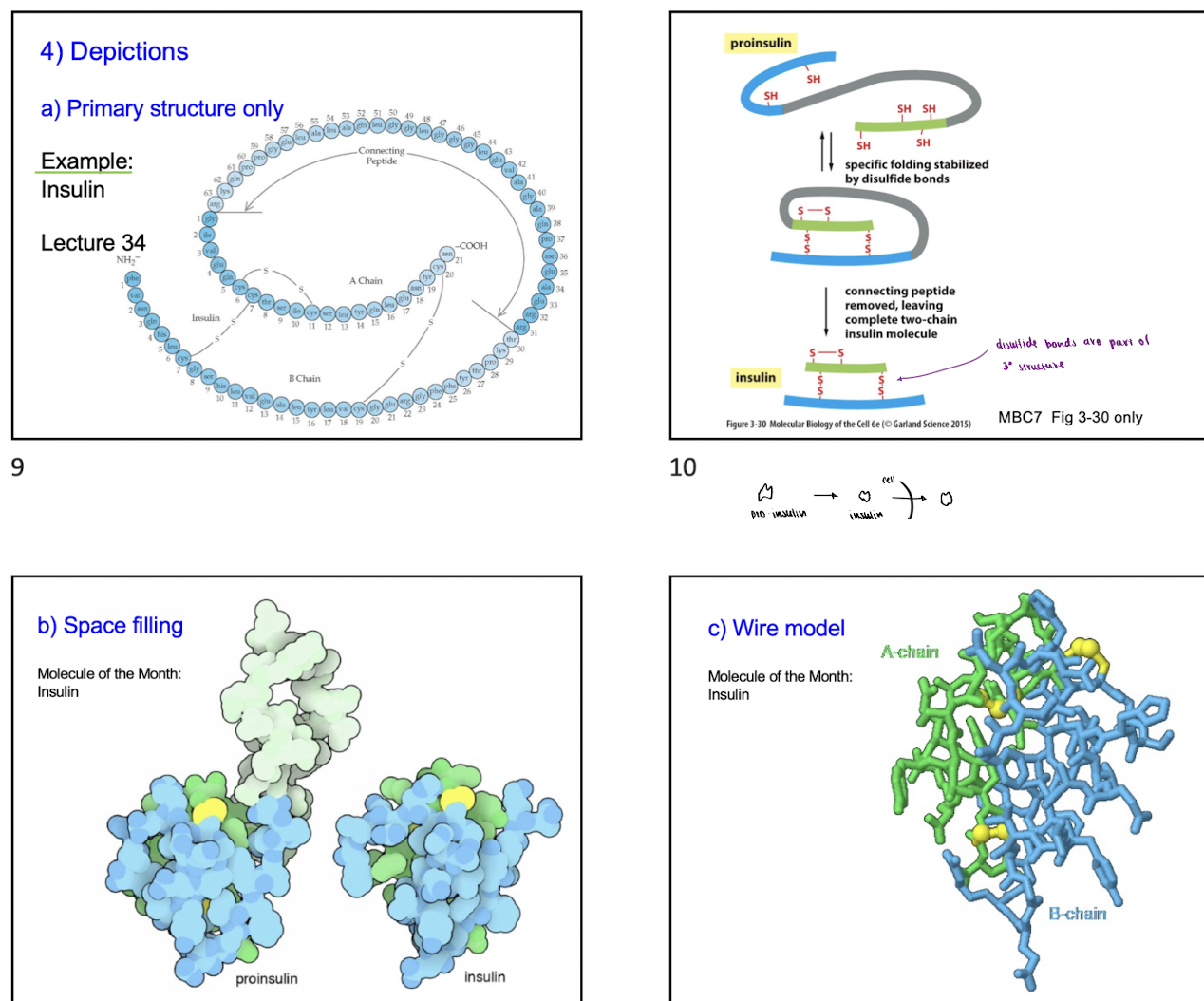
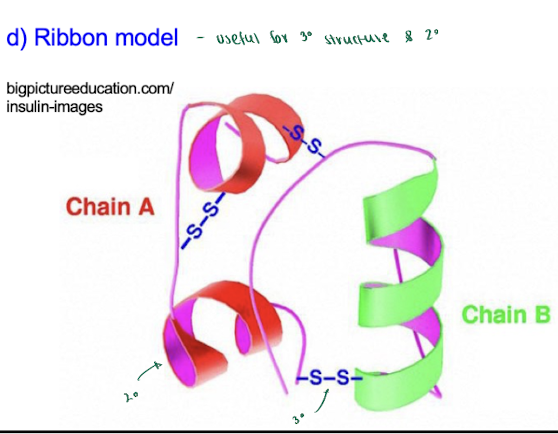
4 Ways to depict proteins
primary structure only
space-filling
wire model
ribbon model - useful for tertiary & secondary structure
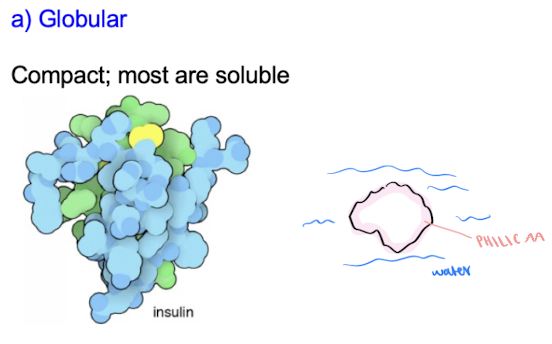
3 main shapes of proteins
Globular = compact + most are soluble
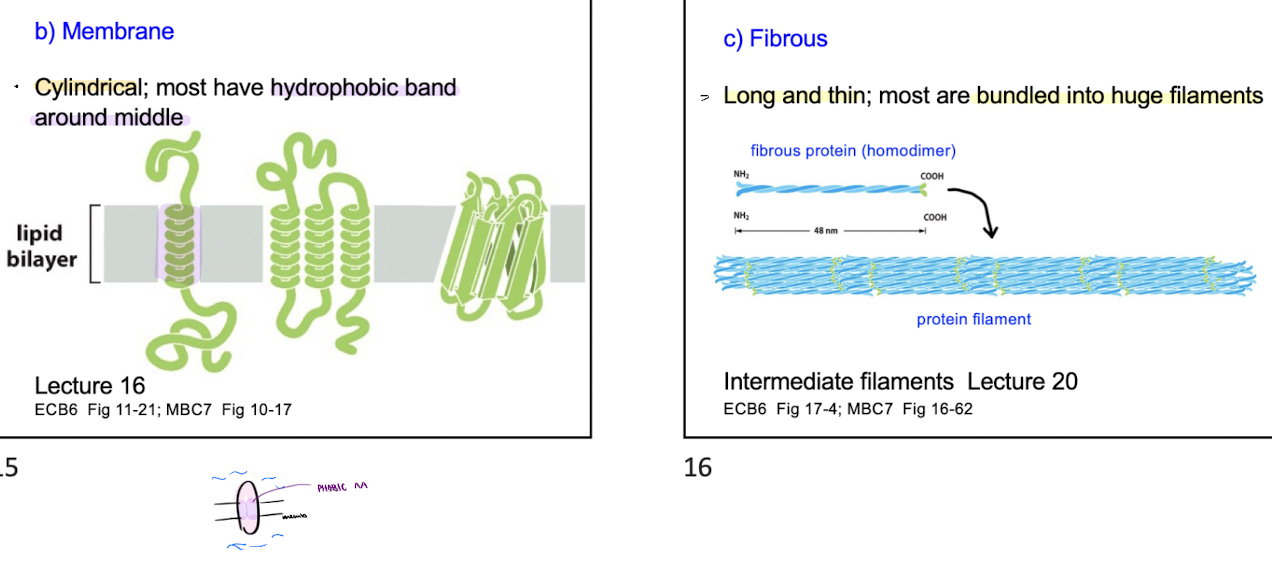
membrane = cylindrical + most have PHOBIC band around middle
Fibrous = long & thin + most are bonded into huge filaments
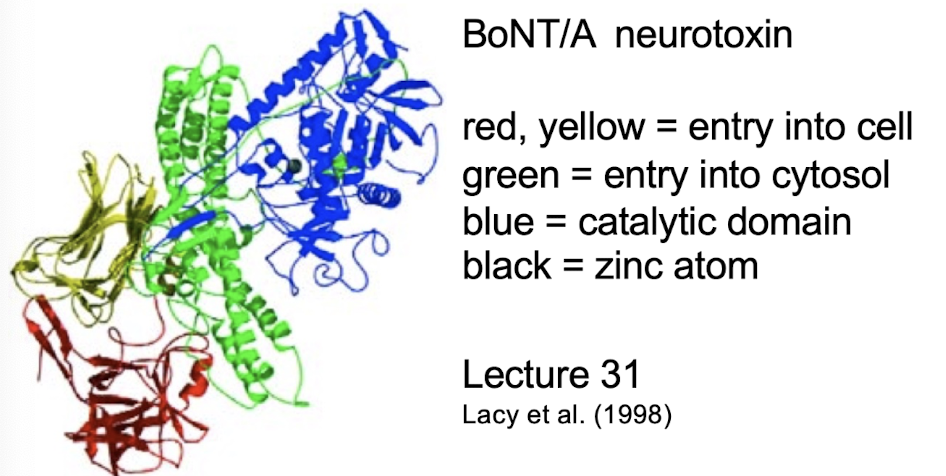
a protein domain
= portion of proteins that can fold, function, and evolve INDEPENDENTLY of each other
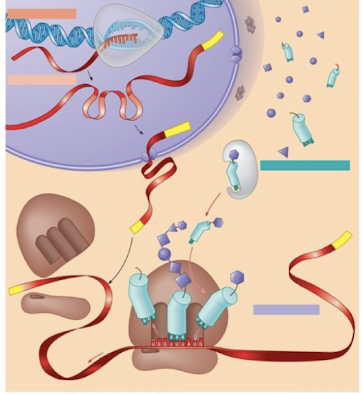
How can a cell make some proteins, but NOT make others?
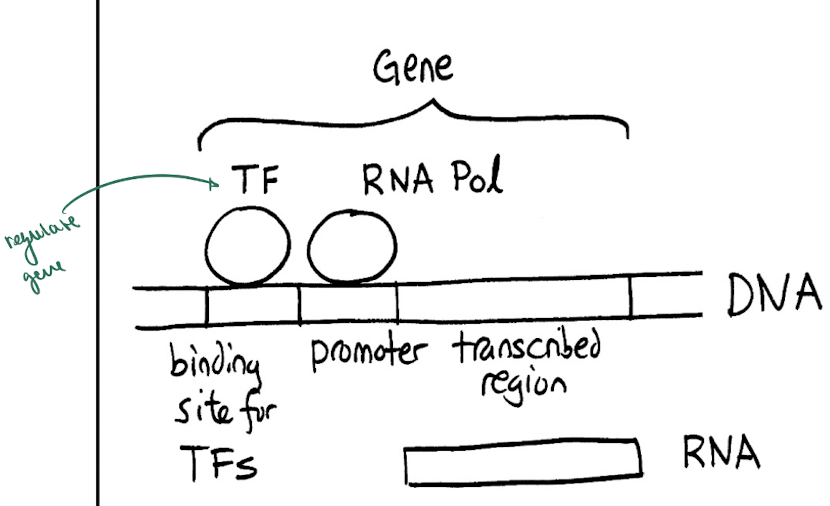
most regulation of proteins synthesis occurs at the level of RNA synthesis initiation → requires proteins that can bind to genes
genes are regulated by Transcription Factor proteins (2 types) → that increase or decreases gene expression
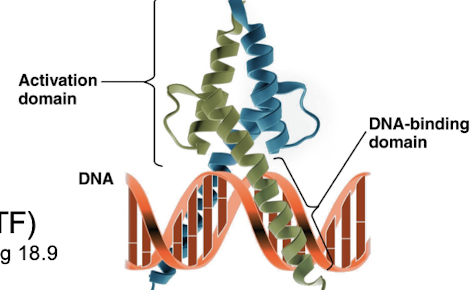
Transciption Factor proteins
= regulate gene expression
(+) TF = recruit RNA pols → get increased gene expression
(-) TF = block promoter of gene → get decreased gene expression
How can a cell control the activity of proteins?
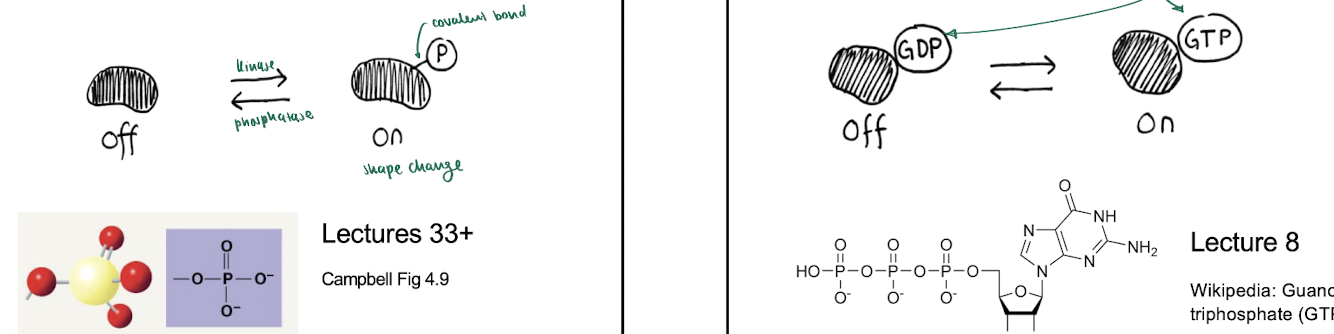
regulation by phosphates: kinase adds p, phosphatase removes p
→ results in a shape change ( P attached w a covalent bond + turned ON)
regulation by nucleotides
ex. GDP (off) → GTP (on)
regulation by activator or inhibitor proteins
What happens to old and unwanted cells?
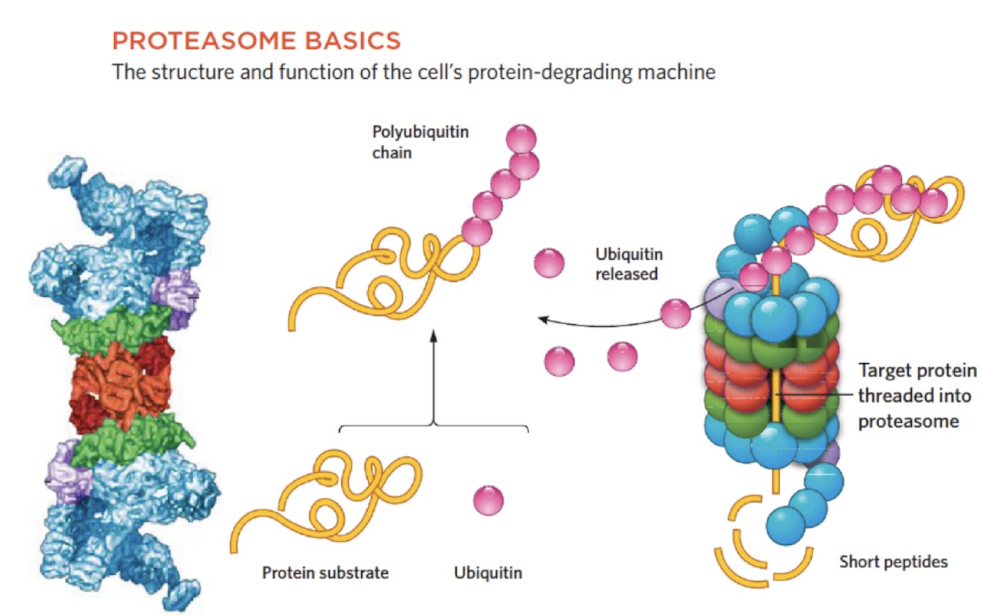
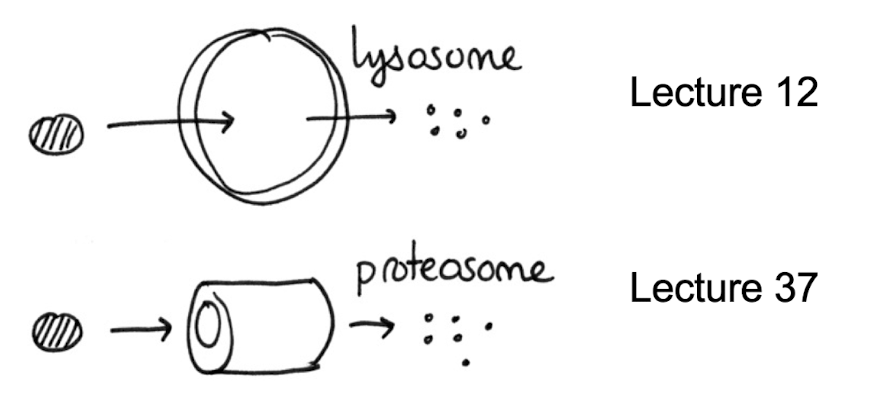
recycled into AA by lysosomes (organelles) & proteasome (protein complexes)
NOTE: some proteins are deliberately marked for destruction with small Ubiquitin proteins