STAge 2
 Studied by 0 people
 Call Kai
 Learn
Learn Practice Test
 Spaced Repetition
 Match
Match Flashcards
 Knowt Play
1/151

There's no tags or description
Looks like no tags are added yet.
Name | Mastery | Learn | Test | Matching | Spaced |
|---|
No study sessions yet.
152 Terms
Water availability- tolerance limits
Balance between the intracellular and extracellular space
hypertonic, isotonic, hypotonic solutions
Blood glucose level- tolerance limits
Too low = hypoglycaemic
Too high= hyperglycemic
Steroid:
Diffuse through membrane
Binds to intracellular receptors
Non-steroid:
Cannot diffuse through membrane
Therefore must bind to receptor on cell membrane
Sensory receptors
Detect Stimuli (Changes in internal/external environment)
Effector receptors:
A gland or muscles that carries out response to combat initial stimuli
Peripheral nervous system (PNS)
Somatic: We control / voluntary = involved in moving skeletal system and muscles
Autonomic: We don’t control / involuntary = involved with heart rate and gland
Endocrine system
Involves a system of glands that secrete hormones that trigger responses.
Peptide hormones:
Hormones that are made of short polypeptide chains
Protein Hormones:
Amino acid-based
Made from longer polypeptide chains
Tyrosine based
Steroid hormones:
Fat-based (lipids)
Insoluble in water
Sensory Neurons
Type of nerve cell that transmits information from a receptor (cell or tissue that detects stimuli) to CNS
Longest neuron/dendrites
Centred Cell Body
Dendrites:
Receive signals from sensory receptors from other neurons and transmit towards the cell body
Is complementary in shape to the neurotransmitters
Cell body:
Contains the nucleus and many organelles
Axons or axon terminals:
transmit information to another cell or an effector
VERY long
Small swelling at the end, containing neurotransmitters
Chemicals that transmit messages between neurons or an effector (cell)
Interneurons
Found in CNS and communicates information from the sensory neuron to the Motor Neuron
Shorter in length
Short Axons
Motor neurons
Transmits the message from the CNS to the Effector (gland or muscle)
Cell body connected to dendrites
Describe the role of sensory receptors.
Detect the stimuli and relay the information to the motor neurons through interneurons
Describe the role of effectors.
Effectors (glands or muscles) relay the response from the sensory neurons
Exteroceptor
Detect external stimuli and are found on the skin or near
Interoceptors
Detect internal stimuli from organs and blood vessels
Proprioceptors
Detect Stimuli from skeletal muscle, tendons and ligaments
Explain the stimulus–response model.
Stimulus:
A variable factor in the internal or external environment that can be detected by an organism through receptors.
Receptor:
A cell or tissue that identifies and detects changes from the internal or external environment
Response:
Outcome that occurs because of the initial stimulus
Effector:
A gland or muscle that causes the response to the stimulus
Nervous system (endocrine system)
Hormones
Feedback:
Impact of the response (POSITIVE OR NEGATIVE)
Positive: Reinforces stimulus
eg, blood clot via platelets
Negative: Diminishes and stops stimulus
Negative: (COUNTERACT)
Either reverse the stimulus or diminish its effects
Positive: (ENHANCE)
Reinforces the initial status or increases it
Describe the structure of a nerve pathway from receptor to effector.
The stimuli is initially detected from either the internal or external environment
The stimulus is detected by the sensory receptors which then signals to the → sensory neuron, → inter neuron → motor neuron
which then signals to an effector (gland or muscle) triggering a response.
Describe the role of adrenaline in the 'fight or flight' response.
The fight or flight response is resulted due to psychological change like stress. Thus, the adrenal gland secretes adrenaline into the bloodstream where it increases ones blood pressure, increase in respiration rate in the lungs and increase in metabolic rate. Additionally, glycogen is broken down into glucose, which is covered into ATP for energy use.
Explain how a decrease in the pH of the blood would be responded to by the nervous system.
When a decrease in pH of the blood is evident, this means that the concentration of carbon dioxide is greater than oxygen. Carbon dioxide crosses the blood brain barrier into the ceribal spinal fluids. Carbon dioxide combined with water to create carbonic acid. The carbonic acid is dissociates into H+ ions and hydrogen carbonate. The H+ ions bind to the receptors of the medulla oblogata, where is sends a electrical impulse to the diaphram telling it to respire more. As a result, oxygen is breathed in and carbon dioxide is expelled, returning the pH back to its optiumum pH.
Synapse
Synapses are the small space between an axon and dendrites
axon connects to dendrites
Neurotransmitters:
Chemicals that bind to receptors in the synapses and either transmit a message or stimulate a response
How does a reflex response differ from a regular response?
Reflex = faster response
Unconscious response NOT involving brain
How hormones stimulate responses: Protein and peptide hormones
Polar (water soluble) = do not travel into cell directly
Actions occur as a result of binding to target cell membranes that possess complementary receptors to the hormones
How hormones stimulate responses: Steroid hormones
Non-polar (lipid soluble) and travelling directly into the cell
Bind to internal receptors
high blood glucose levels
b pancreatic cells secrete insulin into blood stream
insulin binds to receptors on liver and fat cells increasing glucose uptake
liver cells converts glucose to glycogen
reduction in blood glucose
low blood glucose
a pancreatic cells secrete glucagon into bloodstream
glucagon binds to receptors on liver cells.
convert glycogen to glucose
increase blood glucose
Hormonal balance:
Insulin and glucagon work in balance to maintain homeostasis in animals
When the two are NOT balanced = DIABETES (diabetes mellitus)
Diabetes causes harm in animals as organisms lack insulin to regulate the amounts of sugar in the bloodstream.
Symptoms of diabetes:
Frequent Urination: body’s attempt to clear glucose to not overwork the kidneys
Thirsty: body uses water to expel excess glucose. This increases thirst levels as water is lost
Hungry: can not absorb glucose in the bloodstream, and cells are drained of energy to signal to continue eating.
Type 1 diabetes
Genetically inherited
Unable to produce insulin
The immune system does not recognise healthy cells and destroys insulin-producing cells in the pancreas
Type 2 diabetes
Diet-based
No longer respond to insulin
high body temp- nervous
change in temp detected by thermoreceptors in hypothalamus
transmission: near skin
sweating: cools skin upon evaporation
vasodilation: increase heat loss by widening blood vessels.
low body temp- nervous
change in temp detected by thermoreceptors in hypothalamus
transmission: near skin
shivering: muscles contract to produce heat
vasoconstriction: reduce heat loss from skin by narrowing blood vessels
low body temp- endocrine
change in temp detected by thermoreceptors in hypothalamus
stimulates pituitary gland to secrete TSH into bloodstream
TSH binds to receptors of thyroid
thyroid secretes thyroxine into bloodstream
increase metabolic rate + increase body temp
high body temp- endocrine
inhibits pituitary gland
no secretion of TSH
Thyroid reduces secretion of thyroxine
increase osmolarity (define)
increase solute concentration
decrease water concentration
decrease osmolarity (define)
decrease solute concentration
increase water concentration
high blood osmolarity
change detected by osmoreceptors on hypothalamus
stimulates pituitary gland to secrete ADH into bloodstream
ADH binds to kidney receptors on the collecting ducts on nephrons
promotes insertion of aquaporins into collecting duct membrane
allows greater water reabsorption into blood stream
decrease water in urine + increase BP and BV
decreases blood osmolarity
urine is more concentrated
low blood osmolarity
change detected by osmoreceptors on hypothalamus
inhibits pituitary gland from secreting ADH into bloodstream
permeability of collecting ducts decreases
less aquaporins are inserted into membrane
decrease water reabsorbed into bloodstream
blood osmolarity increases
decrease BP and BV
Explain why drinking alcohol at a social event leads to dehydration.
Drinkign alcohol inhibits the pituitary gland, meaning ADH can not be secreted in the bloodstream onto the kidney. A decrease in ADH means less aquaporins are present in the collecting ducts on the nephron. This means less water is reabsorbed into the bloodstream and more water is excreted out.
Explain why drinking alcohol at a social event could also raise blood pressure.
Drinking alcohol can raise ones blood pressure due to vasoconstriction. As the blood vessels are constricted, a decrease in heat loss is exhibited but also an increase in blood pressure due to the constriction.
RNA- Pre-historic evidence
First genetic material
RNA is thought to have existed before DNA, either single or double stranded.
Ribozymes act as enzymes but are made of RNA
The suggested role of ribozymes in first cells was to catalyse chemical reactions such as RNA replication.
Comparative genomics:
Relies on the fact that mutations accumulate over time and the rate of mutation is relatively constant over time.
The Longer two organisms have been separated from common ancestor = greater No. of differences in DNA (gene) in corresponding proteins.
Comparative genomics reasoning:
Organisms have common features attributable to commonly shared sequences of DNA
Similar in function = similar in proteins (e.g. enzymes) between species
Similar proteins = similar DNA sequences (genes)
Similarities between different organisms= similarities in DNA and protein molecules.
DNA sequencing
Comparing two DNA sequences to one another and the differences between them.
These differences could be from point mutations (insertions, deletions or substitution).
greater accumilations of mutation = CA diverged longger ago)
Mutations in the DNA would have accumulated over time
Common Protein sequencing
See the difference between 2 different amino acid sequences from same protein
It only works if there is a common protein between all species
Species that you're looking at.
Cytochrome c is a protein that is necessary for the aerobic respiration pathway in almost all living organisms.
This makes cytochrome C an excellent protein to analyse for identifying evolutionary relationships.
Different species produce proteins with very similar amino acid sequences = infer that their DNA is very similar (inherited from common ancestor)
DNA HYBRIDISATION (mechanics)
Takes samples of DNA from different organisms and recombines to see how effectively they bind together.
If bound together, they need to be reheated to identify DNA melting point of recombinant DNA
High melting point: similar (closer to CA)
Low melting point: different (diverged from CA)
DNA HYBRIDISATION LIMITATIONS
More time consuming (labour intensive)
outdated
Subject to more errors
Bacterial genetic analysis
Can’t guarantee hybrid DNA formation
Not comparing individual base differences
DNA HYBRIDISATION STEPS
A gene sequence from two species is isolated using a gene probe and restriction enzymes. (act as pair of biological scissors)
The DNA of the two species is then heated to 95 degrees
The heated strands are then mixed together and allowed to cool down.
The cooling down allows Species A and B DNA mixed together the DNA hybrid to form.
The new hybrid DNA is then heated again to work out the melting point, which will identify how similar the two species
Species:
Species are a group of organisms that share:
Physical characteristics
Can exchange genes
Interbreed to produce FERTILE offspring
Additionally species look similar, are biochemically similar and share a common gene pool
Species can be defined by:
Morphological similarity: The way they look
Biochemical similarity
Sharing a common gene pool.
PRE-ZYGOTIC reproductive isolation mechanisms
OCCURS BEFORE THE ZYGOTE FORMS
Temporal isolation
Species remain isolated as their mating seasons occur at different times
Behavioural isolation
Species remain isolated as their Courting process and mating behaviour are different
Mechanical/Chemical isolation
Species remain Isolate as there are Structural and Chemical barriers stopping fertilisation
Gamete isolation
Species remain isolated as proteins on the surface of the egg stop incorrect sperm
POST-ZYGOTIC reproductive isolation mechanism
OCCURS AFTER THE ZYGOTE FORMS
Hybrid Sterility
Two species breed
Offspring is unable to undergo Meiotic cell division and is infertile
Cannot contribute to the Gene Pool
Hybrid inviability
Two species breed
Their offspring is born weak and is unable to reach maturity
Cannot contribute to the Gene Pool
Variation in the meiosis process:
Crossing over
Independent assortment
Random fertilisation
Genetic Variation
The extent of genetic variation will differ depending on whether the species reproduces by sexual or asexual means.
ASEXUAL - variation can only occur via mutations
SEXUAL - variation is occurs by
Mutations
Random Fertilisation
Crossing over (prophase 1)
Independent assortment (metaphase 1)
Gene pool:
A population is the sum of all the alleles (of all the genes) of all in the individuals in a populations
All genetic information across all individual organisms
Within a gene pool various alleles and allele frequencies influence variation
increase gene pool = increase genetic variation
increase gene pool = increase chnace of overcoming selection pressures
Mutations
Occurs in DNA of organism
Changes in an organism's DNA can give rise to new allelic forms of genes.
Only if the changes are in the germ line will they be inherited by their offspring
If mutation occurs and its inheritable, an offspring will have this new mutation
Selection pressures influence the outcome the mutation has in gene pool
Gene Flow
Gene flow occurs between two populations of the same species
It is the exchange of alleles between populations
Occurs when an individual from one populations move to another,
sharing genes INTO the gene pool
Increased gene flow keeps two population from differing
increse gene flow = decrease differeing
decrease gene flow = increase differing
Genetic Drift
Change in the allele frequency of brought from random sampling:
Allele frequency is the proportion of individuals carrying a particular allele in a population
Caused by two mechanisms
Bottleneck effect
Founders effect
Bottleneck effect
A reduction in population size which causes a drastic change in allele frequency
This leads to an over representation of certain alleles in the population
Founders effect
One population migrates to a new isolated geographical area
contributing to the gene pool in that area
These new individuals make up the gene pool and may be a non-random representation of the original population
In the new habitat with different proportions of alleles
cant provide favourable alleles
decrease gene pool, increase change of selection pressures
Selection pressure
The environmental selection pressures will determine the success of a group, rather than the group ‘adapting’ to the conditions
Biotic
Predators
Diseases
Competition with other organisms
Abiotic
Weather Changes
Rainfall
Temperatures
Light intensity
Overuse of medication
(humans)
Natural selection steps
There is a high degree of genetic variation and allele frequency within the populations
Selection pressures act on population those individuals with favourable alleles survive
Therefore they have a higher chance of sexual reproduction and offspring inheriting favourable characteristics
As individuals with favourable characteristics continue to survive and reproduce, the frequency of the favourable characteristics increases, eventually becoming a permanent adaptation.
Speciation:
The evolutionary process by which populations evolve to become new and distinct.
ALOPATRIC SPECIATION
occurs when populations of a species become geographically isolated.
Geographical isolation of the original population
Isolation of a population means the separated populations cannot share Gene pool
Isolation into separate populations occurs via geographic barriers
Isolation prevents gene flow throughout the population, stopping any differences in one population from reaching the other population
The isolated populations are now subjected to different environments and selection pressure
Time is needed for new Alleles to arise by mutation
Any new alleles that arise by mutation in one isolated population cannot spread to the other isolated population
Beneficial mutations increase the variation in the gene pool of the different populations
Variation is necessary for natural selection
Time is needed for natural selection to occur
Now isolated by geographical barriers, natural selection selects those individuals best adapted to the different environments
Over time the isolated populations begin to evolve different characteristics and different gene pools
Eventually the populations will be so different that they will not be able to interbreed even if isolation stops. They are then different species
Over time, the morphology of the Kakapo has become extremely specialised. In particular, its beak has become adapted to the food available on land, comprising the tips of high rimu branches, juicy supplejack vines and orchard tubers grubbed out of the ground.
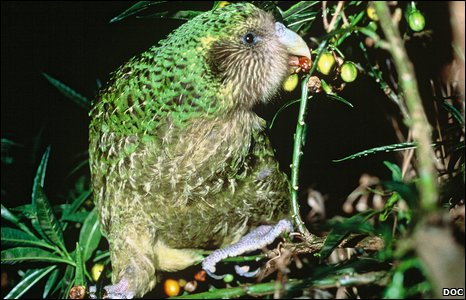
Discuss the effect of specialisation Kakapo on the size of its gene pool, and how this may be impacted by the reduced availability of their preferred food source, owing to climate change and human impacts.
A high degree of specialisation may indicate that these differentiated species would have to adapt to the food avaliability, which takes time through an accumilation of mutations. However, due to anthropogenic sources which contribute to climate change and deforestation, the species would need to adapt to the changes. However, with a smaller gene pool due to specialisation, selection pressures are more likley to act on the species, thus are more prone to extinction.
SYNPATRIC SPECIATION:
share same habitat, but reproductively isolated
Divergent Evolution
recent common ancestor
produce homologous structures
each group is separated
exposed to different selection pressures
differences in geonomes
mutations
no gene flow
speciation occurs
slow
adaptive radiation
one splitting into a lot
rapid divergence
Convergent evolution
differen species develop similar features
different common ancestor
analogous structures
if different
similar habitat = similar selection pressures
therefore: similar structures/behaviours
homologous structures
divergent
similar internal anatomy = different function
from CA
analagous
convergent
similar function different structure
Primary succession
Starts UN-INHABITAL
It begins as a Pioneer species arrives and reshapes the land, breaking down rock into soil and adding nutrients to the soil.
Spores from small plants that can grow quickly inhabit the area and then slowly over long periods of time larger and more complex species can inhabit the area.
Secondary Succession
A previously inhabited land has been wiped clean by a bush fire or other disaster.
Regrowth in this area is fast as the soil is nutrient rich due to all of the dead organic matter.
This results in opportunistic species to inhabit the area first and then eventually more complex and larger species will arrive over time.
Succession Productivity
Productivity: the rate of which biomass is formed.
This would involve the use of nutrients to form organic life.
In secondary succession the pioneer phase is the most productive as the pioneer species grow rapidly.
Niches
An environmental role an organism occupies in a community.
Organisms physical and environmental conditions
Habitat, food sources, water sources, etc
bio-accumilation
chemicals released into environment
NOT excreted.
biomagnification: organisms in high trophic levels accumulate increase amounts of chemicals
TRANSCRIPTION
RNA polymerase attaches to the promoter region of the template strand separating the strands by breaking the weak hydrogen bonds.
RNA polymerase attaches RNA nucleotides to their complementary counterpart on the template strand.
Synthesis continues until RNA polymerase reaches the terminator region and detaches.
The 5’ to 3’ pre-mRNA copy of the coding strand exits to the cytosol via nuclear pores.
Coding Strand:
has same sequence as the mRNA produced during transcription but thymine is replaced with uracil
Template Strand:
The strand in which RNA polymerase is used as a guide to synthesize mRNA.
TRANSLATION
Translational mRNA enters the cytosol
Small ribosomal subunits (SRS) bind to the start codon. SRS attracts the large ribosomal subunit to form the ribosomal complex.
Ribosomes read each codon on the mRNA in a 5’ to 3’ direction, attracting the tRNA with complementary anticodon to bind.
tRNA releases the associated amino acid in the ribosomal complex binding each together with a peptide bond growing into a chain (polypeptide chain).
Translation continues until the ribosome reaches the release factor bound to stop codons dissociating and releasing a full polypeptide chain.
Anabolic
Aligns substrate in the active site with correct orientation to support synthesis of new bonds
Proto Oncogenes:
Promoting cell division, yet if uncontrollable, it can lead to cancer formation.
Acetylation and Demethylation will cause an over production of Proto Oncogenes
Cells with errors in DNA will be allowed to divide uncontrollably = Cancer formation
Tumor Suppressor:
Slows down cell division (definition of cancer is uncontrolled cell division)
Hyper-methylation and deacetylation will prevent expression of Tumor suppressor gene
Increased DNA methylation on tumor suppressor genes will switch them off, and proteins suppressing tumor formation can no longer be produced.
Point mutation:
One base change
Silent Mutation
alters codon corresponding to same amino acid (e.g. GUA [Val] is changed to GUU [Val])
Missense mutation
Changes the amino acid sequence, altering codon coding for different amino acid
Nonsense Mutation
Changes the amino acid to code for a STOP
Shortens polypeptide chain
PCR (needs + purpose_
PCR enables single copy of a gene to be amplified (REPLICATED)
Called thermal cyclers
To perform a PCR, it must meet the requirements:
DNA Sample
Free DNA nucleotides
2 Primers complementary to the ends of the region to be amplified (replicated)
Thermostable DNA polymerase, otherwise it will denature
A PCR machine (no shit)
Buffer
Describe PCR STEPS (IN THE TEST)
Step 1 (denaturation): Heating and Cooling
A DNA molecule is denatured by heating a reaction mix to 95° to break weak hydrogen bonds between base pairs.
Destroy weak hydrogen bonds between bases
Step 2 (annealing): Primers
When temp is 55°, primers are added
Cooling to 55° to allow primers to bind by complementary base pairing to the start of the target DNA strands to guide DNA polymerase synthesis
5’ to 3’
Step 3 (extension): Free nucleotides
When temp is raised to 72° and the thermostable DNA polymerase and free DNA nucleotides are added to start the replication process: synthesis of new DNA
This is optimum temp
Primers
Primers act as the prompt region to allow for DNA polymerase to bind to the site.
Short stretches of nucleotides complementary bind to the ends of the opposite strands of the regions to be amplified.
Two primers are needed for PCR. Become part of new DNA
Usually 18-20 nucleotides (unique and specific) are long and bind to the target DNA.
Heat-resistant enzymes
hermostable DNA polymerase is a heat resistant enzyme that builds new strands, complementary to single stranded DNA of templates.
‘Heat resistant’ = no Denature at high temps
Steps of Electrophoresis:
Creating Gel
Agarose and buffer are mixed together and microwaved to create a gel.
Gel is poured into mold and has a ‘comb’ placed into it to make wells.
When cooled, the comb is removed to leave wells where DNA fragments can be placed.
Preparing for Electrophoresis
Gel is placed in electrophoresis box and buffer solution is added
Buffer solution provides ions to conduct electrical current
Restriction enzymes
Restriction enzymes must be used to cut DNA into different sized pieces
Inserting DNA samples
DNA samples are inserted into wells using micropipette
Marker DNA
DNA fragments of a known size are put into one well (Marker DNA)
Marker DNA is used as a ruler
*****
Electrical current is turned on
Negative charge on DNA is attracted to positive electrode (Anode)
Smaller DNA fragments = Further passes through Gel
Using UV light
After Electrophoresis, DNA in gel is stained
Expose to UV Light = Stained DNA fluorescence makes bands visible.
 Note
Note  Flashcards (24)