MCAT biology
 Call Kai
 Learn
Learn Practice Test
 Spaced Repetition
 Match
Match Flashcards
 Knowt Play
1/103

There's no tags or description
Looks like no tags are added yet.
Name | Mastery | Learn | Test | Matching | Spaced | Call with Kai |
|---|
No analytics yet
Send a link to your students to track their progress
104 Terms
Nucleoid Region
DNA region in prokaryotes
Nucleolus (function & location)
Makes ribosomes. Sits in nucleus, no membrane.
Peroxisomes function?
Collect and break down material
Rough ER function?
Accept mRNA to make proteins.
Smooth ER function?
Smooth ER
Golgi Apparatus (function & what it’s specific to)
Modify / distribute proteins. Only in eukaryotes.
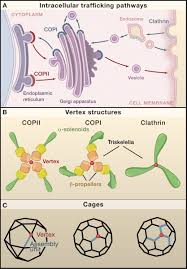
COPI vs COPII
COPII → forward
COPI → return
Centrioles (structure and function)
9 groups of microtubules, pull chromosomes apart.
Lysosomes (functions and properties)
Demo & Recycling center. Made by Golgi. Single membrane.
Plasmids (function & what it’s specific to)
In prokaryotes. Carry DNA not necessary for survival.
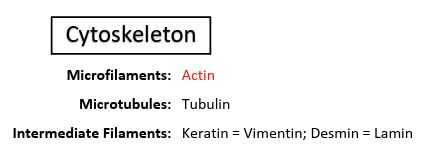
What are the 3 cytoskeletal proteins found in eukaryotes?
Obligate Aerobe vs Obligate Aerobe
Obligate Aerobe: Requires O2.
Obligate Anaerobe: Dies in O2.
Facultative Anaerobe vs Aerotolerant Anaerobe
Facultative Anaerobe: Toggle between Aerobic / Anaerobic.
Aerotolerant Anaerobe: Does not use O2 but tolerates it.
Gram+ vs Gram - bacteria
Gram + is PURPLE, THICK peptidoglycan/lipoteichoic acid cell wall.
Gram – is PINK-RED, THIN peptidoglycan cell wall & an outer membrane.
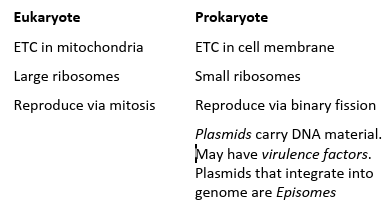
Eukaryote vs. Prokaryote
Prions
Infectious proteins. Trigger misfolding. a-helical → b-pleated sheets. Decreased Solubility.
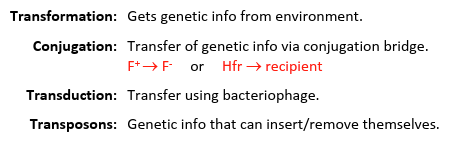
Types of Bacterial Genetic Recombination (hint: 3 Ts 1C)
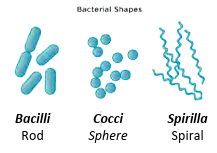
What are the 3 shapes of bacteria?
Positive sense vs negative sense viruses
If Single Strand:
Positive Sense: Can be translated by host cell.
Negative Sense: RNA replicase must synthesize a complimentary strand, which can then be translated.
Viral Genome
May be DNA or RNA. Single or double stranded.
Retrovirus mode of action
Single stranded RNA. Reverse transcriptase needed to make DNA.
Bacteriophage mode of action
Lytic: Virions made until cell lyses.
Viral lifecycle
Lysogenic: Virus integrates into genome as provirus or prophage. Goes dormant until stress activates it.
Cell cycle
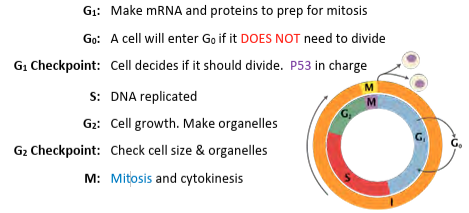
What signals cell cycle progression?
1) CDK + Cyclin create a complex
2) Phosphorylate Rb to Rb + P
3) Rb changes shape, releases E2F
What halts cell cycle progression?
1) CDK inhibitors block phosphorylation of Rb
2) So, E2F stays attached
3) Cell cycle halts
Bulbourethral Glands function?
Makes viscous fluid to clean out urethra.
Seminal Vesicles & Prostate Gland function?
Make alkaline fluid to help sperm survive acidic environment of female reproductive tract.
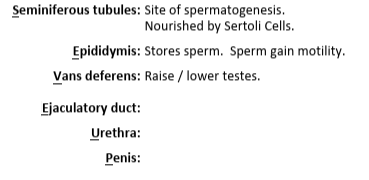
Sperm pathway
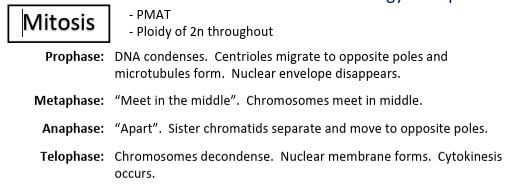
Mitosis
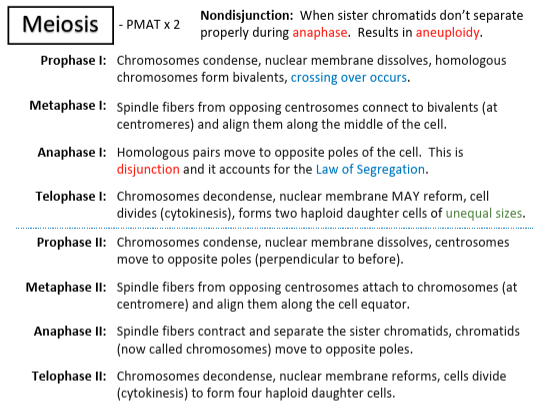
Meiosis
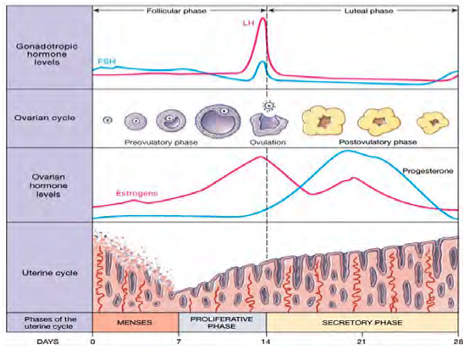
FSH in males and females
Males: Triggers spermatogenesis, stimulates Sertoli Cells.
Females: Stimulates development of ovarian follicles.
LH in males and females
Males: Causes interstitial (leydig) cells to make testosterone.
Females: Induces ovulation.
The Menstrual Cycle
Embryogenesis and Development steps
Fertilization
Morula
Blastula
Gastrulation
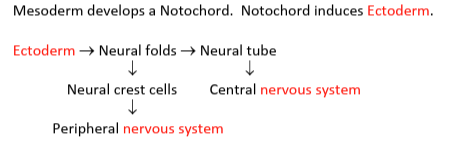
Neurulation
Fertilization steps
Occurs in the Ampulla of fallopian tube.
Sperm’s Acrosomal enzymes penetrate corona radiate & zona pellucia.
Acrosomal enzymes inject pronucleus.
Cortical reaction releases Ca2+ which depolarizes ovum membrane and makes it impenetrable.
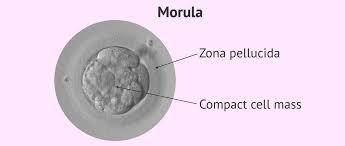
Features of morula
Early. Solid mass of cells
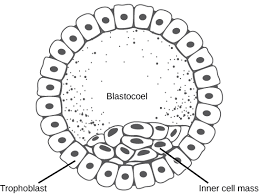
Features of Blastula
• Implants in endometrial lining
• Fluid filled blastocoel
• Trophoblast → Chorion / placenta
• Inner Cell Mass → Organism
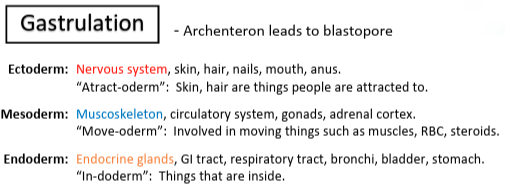
What does the Ecto, meso, and endoderm differentiate into?
Neurulation process and results
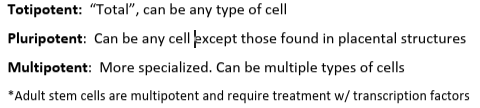
Stem Cells types
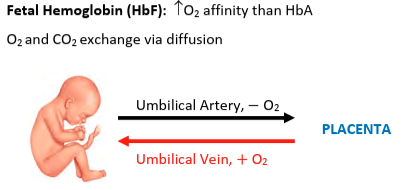
Fetal Circulation
2 types of genetic twins
Fraternal = dizygotic
Identical = monozygotic
Determination vs differentiation
Determination: Cell commits to becoming a certain type of cell
Differentiation: Follows determination. Selectively transcribe genes appropriate for cell’s specific function
What are the 3 Fetal Shunts?
Skip Lungs:
Foramen ovule: R atrium → L atrium
Ductus Arteriosus: Pulmonary artery ® Aorta
Skip Liver:
Umbilical vein → inferior vena cava
Temporal vs spatial summation
Temporal: Same space / Different time
Spatial: Different space / Same time
Neurotransmitter removed from synaptic cleft via…
• Breakdown by enzymes
• Reuptake
• Diffusion out of cleft
Types of glial cells and function?
Astrocytes: Blood-brain barrier. Controls solutes moving from bloodstream → nervous tissue.
Ependymal Cells: The barrier between cerebrospinal fluid and interstitial fluid of the CNS.
Microglia: Digest waste in CNS.
Schwann Cells: PNS, makes myelin.
Oligodendrocytes: CNS, makes myelin.
What are the essential amino acids?
PVT TIM HiLL (i doesn’t stand for anything and one L is lysine)
Where is white and grey matter located in the brain and spinal cord?
Brain: White deep / Grey outer
Spinal Cord: Grey deep / White outer
Monosynaptic vs polysynaptic reflex arcs
Monosynaptic: Sensory neuron → motor neuron Polysynaptic: Sensory → interneuron → motor
The central nervous system is composed of?
Brain & spinal cord
PNS is made of?
Somatic and autonomic nervous systems
Somatic = voluntary
Autonomic = non-voluntary
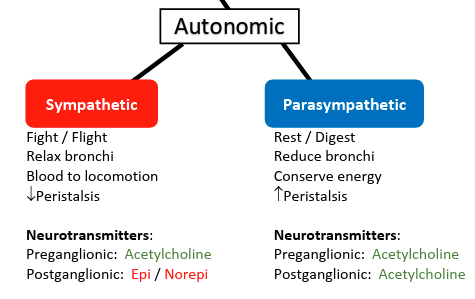
What are the 2 divisions of the autonomic nervous system? Functions?
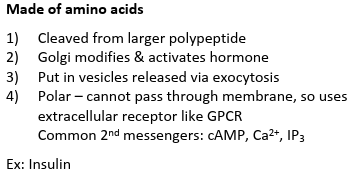
Properties of peptide hormones
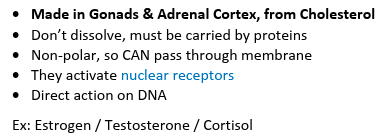
Properties of steroid hormones
Properties of Amino Acid-Derivative Hormones
Share traits from both peptide & steroid hormones
Ex: Catecholamines use GPCR, Thyroxine bind intracellularly
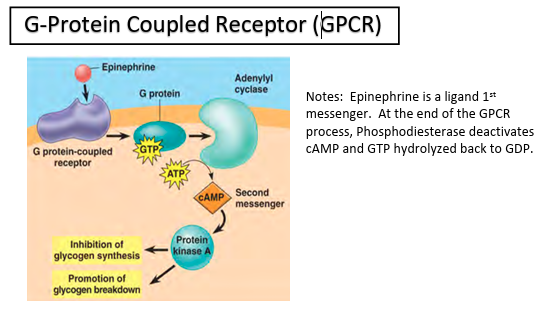
How does a GPCR work?
Direct vs. Tropic Hormones
Direct Hormones: Act directly on target tissue/organ. Ex: Insulin.
Tropic Hormones: Require an intermediary. They only affect other endocrine tissues. Ex: GnRH and LH are both tropic.
Type 1 vs 2 diabetes
Type 1: No insulin, so glucose is not able to enter cells.
Type 2: Desensitized insulin receptors. Glucose unable to enter cells.
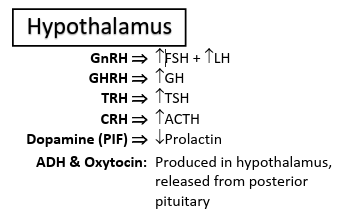
Hypothalamic hormones and their functions?
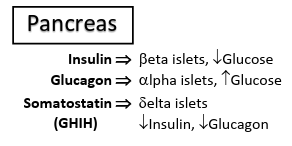
Pancreatic hormones and their functions?
Gonadal hormones M & F
Testosterone in Testes
Estrogen / Progesterone in ovaries
Where does melatonin come from? Function?
Pineal gland: Melatonin controls circadian rhythm
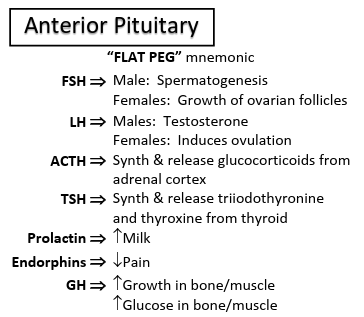
Hormones in the anterior pituitary and functions
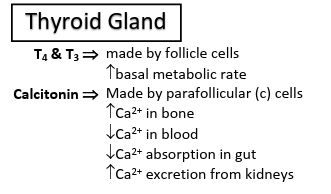
What are the hormones in the thyroid gland and function?
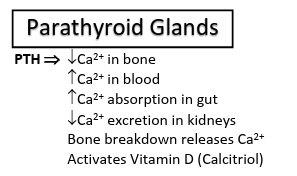
Parathyroid gland hormone and function?
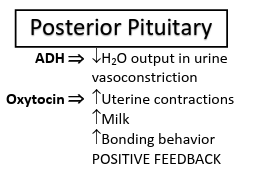
Posterior pituitary hormones and functions?
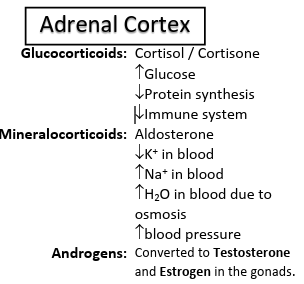
Adrenal cortex hormones and function?
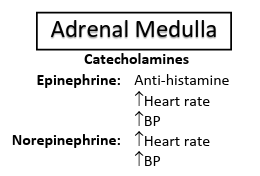
Adrenal medulla hormones and function?
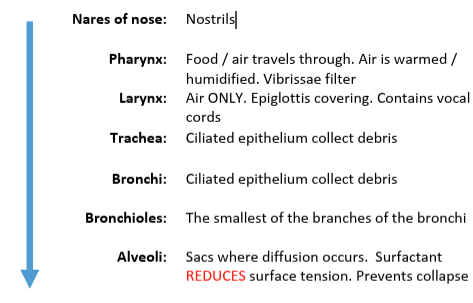
Air Pathway
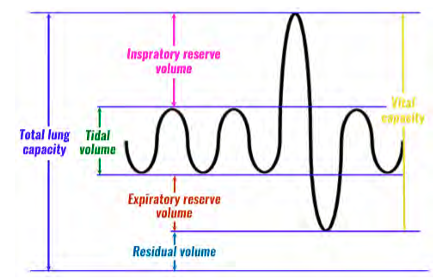
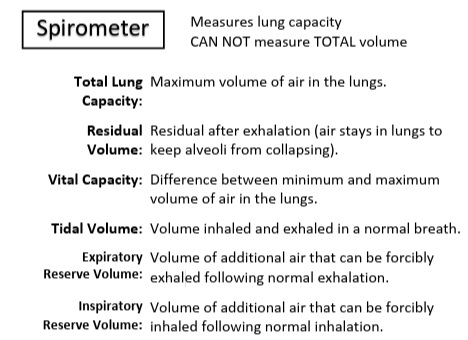
Explain each component on the spirometer
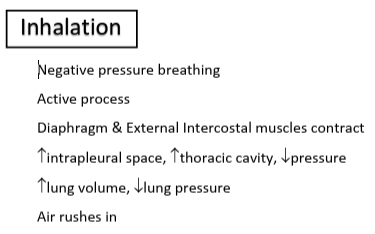
Inhalation process
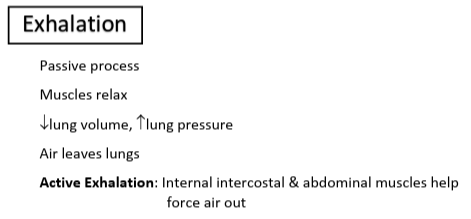
Exhalation process
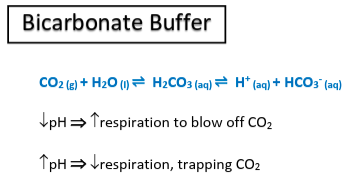
Bicarbonate Buffer (what happens if pH is high or low?)
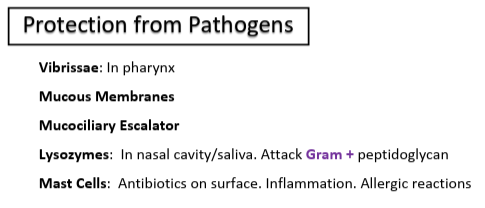
Protection present in the air pathway (for pathogens)
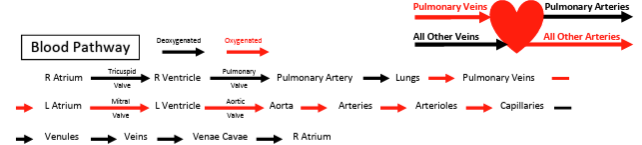
Blood Pathway
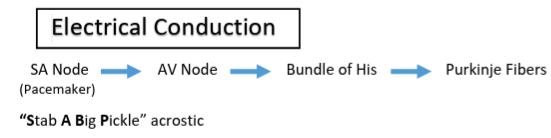
Electrical Conduction pathway in the heart
What is systole and diastole?

Normal BP (systole/diastole). How is it maintained?

What happens during high BP? (how is it regulated?)
ANP: lowers blood pressure and promotes fluid loss (Diuresis)

What happens during low BP? (how is it regulated?)
Fluid retention (vasocontriction)

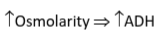
What happens during high osmolarity? (how is it regulated?)
ADH: Promotes water reabsorption
Cardiac output formula
Cardiac Output = Heart Rate x Stroke Volume.
CO = HR × SV
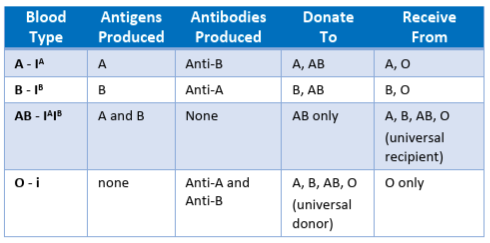
Blood types and traits
Coagulation process
Prothrombin → Thrombin
Fibrinogen → Fibrin (mediated by Thrombin)
Plasmin function?
Breaks blood clots
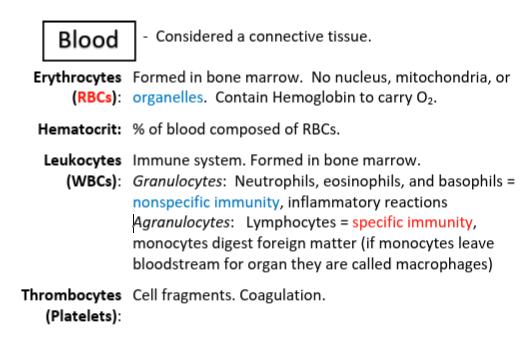
Blood cell types
Hydrostatic Pressure
Moves fluid out of the blood vessel and into the interstitial fluid around it.
Osmotic Pressure
“Sucking” pressure generated by solutes as they draw H2O into the bloodstream.
How is O2 and CO2 carried in the blood?

Non-cellular innate defenses
Skin: Physical barrier. Secretes antimicrobial enzymes like defensins
Mucus: On mucous membranes. Traps pathogens. In respiratory system mucous is propelled upward by cilia via mucociliary escalator
Lysozymes: In tears and saliva. Antimicrobial compound
Complement System: Can punch holes in the cell walls of bacteria making them osmotically unstable, leading to lysis. Also triggers opsonization.
Interferons: Given off by virally infected cells. Interfere with viral replication and dispersion
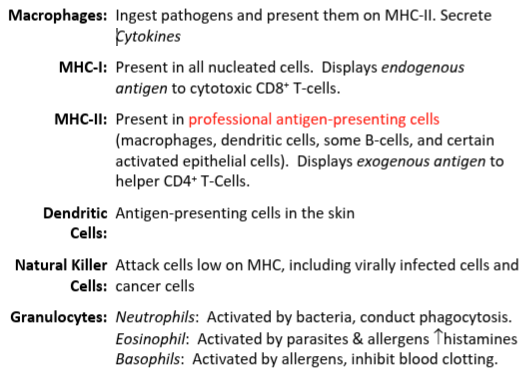
Cellular innate defenses
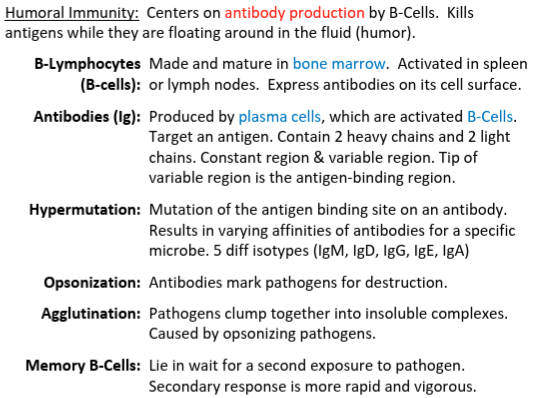
Components of humoral immunity (adaptive immune system)
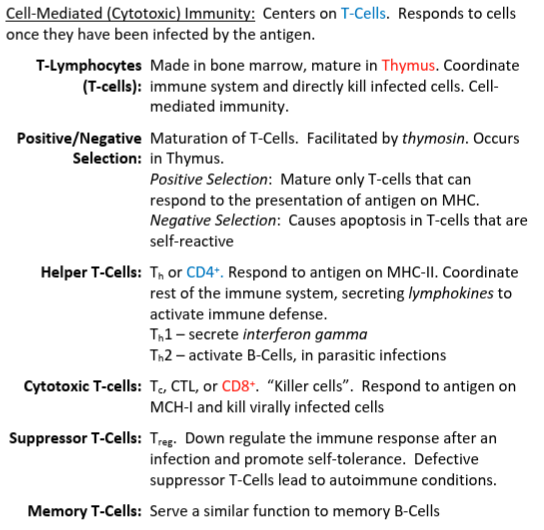
Components of cell-mediated immunity
Autoimmune vs allergic reactions
Autoimmune Conditions: A self-antigen is recognized as foreign, and the immune system attacks normal cells
Allergic Reactions: Nonthreatening exposures incite an inflammatory response
Intracellular Digestion
The oxidation of glucose and fatty acids to make energy.
Extracellular Digestion
Process by which nutrients are obtained from food. Occurs in alimentary canal.
Mechanical Digestion
Physical breakdown of large food molecules into smaller particles.
Chemical Digestion
The enzymatic cleavage of chemical bonds such as the peptide bonds of proteins or the glycosidic bonds of starches.