midterm explanations
 Call Kai
 Learn
Learn Practice Test
 Spaced Repetition
 Match
Match Flashcards
 Knowt Play
1/22

There's no tags or description
Looks like no tags are added yet.
Name | Mastery | Learn | Test | Matching | Spaced | Call with Kai |
|---|
No analytics yet
Send a link to your students to track their progress
23 Terms
ecological hierarchy
ecosystem: community + abiotic factors
community: all different living species interacting with each other in the river but excluding non-living surroundings
population: group of individuals of the same species living somewhere
biosphere: global sum of all ecosystems; the entire zone of life on Earth
population → community → ecosystem → biosphere (smallest to largest)
standard taxonomic hierarchy
smallest to largest
Dear King Philip Came Over For Good Soup
Domain, Kingdom, Phylum, Class, Order, Family, Genus, Species
independent variable
the cause
this variable changes or manipulates
dependent variables
the effect
factor being measured or observed to see how it responds to the independent variable
energy flow through an ecosystem
almost all ecosystems get their initial energy from the sun in the form of light energy, captured by plants and other photosynthetic organisms
as organisms. use this energy to live, grow and move, a lot is converted into mechanical energy and metabolic processes
significant amount is lost to the environment as heat energy
energy flows one way and must be constantly replenished
nutrients are continously recycled within an ecosystem
atomic number
number of protons in the nucleus of an atomc
atomic mass
atomic mass = protons + neutrons
measured in Daltons (Da)
valence electrons
1st and innermost shell: 2 electrons
2nd shell: 8 electrons
3rd shell: 18 electrons
bonding capacity
bonding capacity = shell - valence electrons
number of covalent bonds it can form to achieve stability
hydrogen bonds + surface tension
property of the surface of a liquid that allows it to resist an external force
happens in water because of cohesion
hydrogen bond: H2O is polar molecule and causes neighbouring water molecules to attract one another, forming weak electrical attachments
at the surface: creates tight, compressed skin of molecules at the surface, giving water its exceptionally high surface tension
Big Six
CHNOPS
Carbon, Hydrogen, Nitrogen, Oxygen, Potassium, Sulfur
make up over 97% of the mass of the living organisms
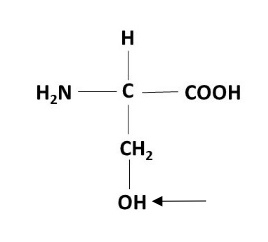
serine functional groups
hydroxyl group: (-OH)
amino group: left side of central carbon (-NH2)
carboxyl group: right side of the central carbon (-COOH)
methyl group: (-CH3)
amino acid polarity
if it ends -OH, -NH2, or O, it’s polar, or charged
these heteroatoms are electronegative powerhouses that create dipoles and love interacting with water
if it consists only of carbons and hydrogens (-CH2,-CH3), it’s non-polar
hydrocarbons share electrons equally, meaning they’re hydrophobic
serine is a polar, uncharged amino acid because -OH
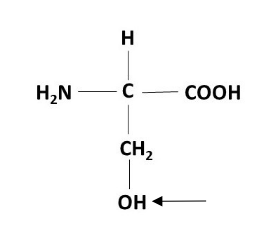
amino acid and position
polarity at the absolute tip, it will always face outward toward the aqueous cellular solvent or reach out to bind with other molecules
functions as an environmental sensor
polarity close to the central carbon, it spends its time forming tight, local hydrogen bonds to fold and stabilize the protein’s internal backbone architecture
movement is restricted
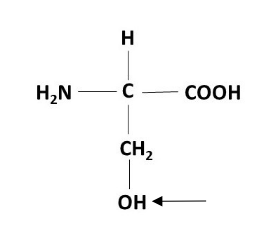
unsaturated fatty acids
unsaturated hydrocarbon chain contains fewer than the max possible number of hydrogen atoms
one or more pairs of carbon atoms share a double bond
these double bonds introduce a rigid kink or bend into the fatty acid chain
only generally saturated fats are solid at room temp and unsaturated fats are liquid
glycogen
large, highly branched polysaccharide that animals use to store glucose
animal equivalent of starch
found in animals, mostly stored in the liver and skeletal muscle tissue
source of starch
plant-based foods
they store their excess glucose in the form of startch
and build their cell walls out of cellulose
prokaryotes cells
don’t have a membrane-bound nucleus to house their DNA
genetic material is loosely coiled up in a specific, open region of the cytoplasm called nucleoid
eukaryotic cells
plants and animal cells
larger and more complex compared to prokaryotes
still share several basic cellular features with prokaryotes
both cells need: ribosome, plasma membrane and cytosol
endomembrane system
coordinated network of internal
electron transport chain in the cellular respiration
at the end of the electron transport chain, the electrons have dropped down their energy gradient and must be removed so the chain doesn’t get backed up
water: product of the final step
glucose: original electron source at the beginning
ETC complex 4: final protein complex in the chain passing the electrons off to oxygen
ATP synthase: enzyme channel that uses the proton gradient to manufacture and doesn’t transport or accept electrons from the chain
cellular respiration
the cell breaks down glucose and harvests high-energy electrons using two specific coenzymes as molecular shuttles
NAD+/NADH: primary electron shuttle used throughout glycolysis, pyruvate oxidation and the critic acid cycle
NAD+ picks up two electrons and one hydrogen ion, it’s reduced to ADH
FAD/FADH2: shuttle used during the citric acid cycle
FAD picks up two electrons and two protons, it’s reduced to FADH2
they travel to the inner mitochondrial membrane to drop their electrons off at the electron transport chain
photorespiration
wasteful metabolic pathway that occurs when the enzyme Rubisco accidentally binds to O2 instead of CO2
the plant destroys stored carbon and wastes energy to clean byproduct, reducing photorespiration and standard mesophyll cells
decreased yield: C3 plants
have no specialized mechanism to prevent photorespiration
they close their stomata to save water on hot days, so oxygen gas builds instead the lead while CO2 runs out.
reduces potential photosynthetic yield by up to 25% or more